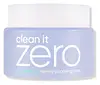
This oil-based makeup remover is made to dissolve makeup, sunscreen, and daily buildup.
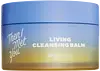
This oil-based makeup remover is made to dissolve makeup, sunscreen, and daily buildup.


What's inside
What's inside
 Key Ingredients
Benefits
Concerns
Ingredients Side-by-side
Cetyl Ethylhexanoate
EmollientEthylhexyl Stearate
Emollient




PEG-20 Glyceryl Triisostearate
Emollient
PEG-10 Isostearate
Emulsifying
Synthetic Wax
Abrasive
1,2-Hexanediol
Skin Conditioning
Water
Skin ConditioningButylene Glycol
Humectant
Olea Europaea Fruit Oil
Masking

Centella Asiatica Extract
Cleansing




Simmondsia Chinensis Seed Oil
Emollient
Onsen-Sui
Dipropylene Glycol
HumectantEucalyptus Globulus Leaf Oil
Perfuming


Citrus Aurantium Bergamia Fruit Oil
Masking
Guaiazulene
Antimicrobial
Rosmarinus Officinalis Leaf Oil
Masking
Anthemis Nobilis Flower Oil
Masking
Chamomilla Recutita Flower Extract
Masking
Lactobacillus Ferment
Skin Conditioning
Asiaticoside
Antioxidant
Asiatic Acid
Skin Conditioning
Madecassoside
Antioxidant
Madecassic Acid
Skin Conditioning
Cetyl Ethylhexanoate, Ethylhexyl Stearate, PEG-20 Glyceryl Triisostearate, PEG-10 Isostearate, Synthetic Wax, 1,2-Hexanediol, Water, Butylene Glycol, Olea Europaea Fruit Oil, Centella Asiatica Extract, Simmondsia Chinensis Seed Oil, Onsen-Sui, Dipropylene Glycol, Eucalyptus Globulus Leaf Oil, Citrus Aurantium Bergamia Fruit Oil, Guaiazulene, Rosmarinus Officinalis Leaf Oil, Anthemis Nobilis Flower Oil, Chamomilla Recutita Flower Extract, Lactobacillus Ferment, Asiaticoside, Asiatic Acid, Madecassoside, Madecassic Acid
Olea Europaea Fruit Oil
Masking
Vitis Vinifera Seed Oil
Emollient
Cetyl Ethylhexanoate
EmollientPEG-20 Glyceryl Triisostearate
Emollient
PEG-8 Isostearate
Emulsifying
Cera Microcristallina
Emulsion StabilisingHippophae Rhamnoides Oil
Emollient
Ceresin
Emulsion StabilisingSynthetic Wax
Abrasive
Orbignya Oleifera Seed Oil
Emollient
Diospyros Kaki Fruit Extract
Skin ConditioningAniba Rosodora Wood Oil
Astringent
Citrus Paradisi Peel Oil
Masking
Rosmarinus Officinalis Leaf Oil
Masking
Tocopheryl Acetate
Antioxidant

1,2-Hexanediol
Skin Conditioning
Bis-Diglyceryl Polyacyladipate-2
Emollient
Ethylene/Propylene Copolymer
Abrasive
Limonene
Perfuming
Olea Europaea Fruit Oil, Vitis Vinifera Seed Oil, Cetyl Ethylhexanoate, PEG-20 Glyceryl Triisostearate, PEG-8 Isostearate, Cera Microcristallina, Hippophae Rhamnoides Oil, Ceresin, Synthetic Wax, Orbignya Oleifera Seed Oil, Diospyros Kaki Fruit Extract, Aniba Rosodora Wood Oil, Citrus Paradisi Peel Oil, Rosmarinus Officinalis Leaf Oil, Tocopheryl Acetate, 1,2-Hexanediol, Bis-Diglyceryl Polyacyladipate-2, Ethylene/Propylene Copolymer, Limonene
Reviews
Ingredients Explained
These ingredients are found in both products.
Ingredients higher up in an ingredient list are typically present in a larger amount.
1,2-Hexanediol is a synthetic liquid and another multi-functional powerhouse.
It is a:
- Humectant, drawing moisture into the skin
- Emollient, helping to soften skin
- Solvent, dispersing and stabilizing formulas
- Preservative booster, enhancing the antimicrobial activity of other preservatives
Cetyl Ethylhexanoate is an emollient ester. It comes from cetearyl alcohol and 2-ethylhexanoic acid.
Cetyl Ethylhexanoate is an emollient that adds a velvety feel to skin without being greasy or oily. Emollients help trap moisture into your skin, keeping your skin soft and hydrated.
This ingredient is also known as olive oil. It has been used in skincare for centuries and science largely backs up its reputation as a nourishing emollient.
The main components of olive oil are oleic acid (55-83%), linoleic acid (3.5-20%), and palmitic acid (7-20%). Oleic acid promotes skin regeneration and helps regulate inflammatory responses.
Squalene is also naturally present in olive oil and exhibits moisturizing and antioxidant properties.
The polyphenols in olive oil also show anti-aging promise; one clinical study found a measurable improvement in skin appearance after 30 days of topical serum use.
Just be aware that applying olive oil directly to skin can weaken the barrier and cause redness. One study with volunteers found even people without sensitive skin experienced a significant reduction in stratum corneum integrity and induced mild erythema.
It's best to use this ingredient as part of a carefully crafted formula (instead of putting it on skin directly from the bottle).
Because it has a 0-2 on the comedogenic scale, it is low risk for acne-prone skin. Just remember the overall formulation of a product matters more than a few ingredients with comedogenic ratings.
This ingredient may not be fungal acne safe because of the oleic and palmitic acid content. These fall within the C11-24 fatty acid range that the Malassezia yeast can metabolize to grow.
Overall, olive oil is a well-studied and nourishing skincare ingredient.
Learn more about Olea Europaea Fruit OilPEG-20 Glyceryl Triisostearate is a synthetic, oil-loving helper ingredient that does two jobs:
This ingredient is made by joining three building blocks: PEG, Isostearic Acid and glycerin. The PEG gives it the oil-and-water blending power.
This ingredient has been found safe for use in cosmetics and broader PEG family testing shows minimal irritation/sensitization. The molecule's large size also means it isn't expected to penetrate skin to any meaningful degree.
Fungal acne note: This ingredient may not be fungal acne safe due to isostearic acid (C18). Isostearic acid falls into the C11-24 range that Malassezia can feed on.
Learn more about PEG-20 Glyceryl TriisostearateRosmarinus Officinalis Leaf Oil is an essential oil also known as rosemary essential oil. In skincare, it is a skin conditioning agent and also acts as a natural fragrance that gives products a fresh/herby smell.
The oil is a mix of over 100 volatile compounds with 1,8-cineole, α-pinene, camphor, and verbenone usually leading the pack.
Lab studies credit this oil with antioxidant, anti-inflammatory, and antimicrobial activity. Some research even show rosemary compounds calming acne-related inflammation.
The Cosmetic Ingredient Review (CIR) has concluded rosemary-derived ingredients to be safe when formulated to be nonsensitizing.
Since this is a fragrant essential oil, the main concern is for fragrance-sensitive folks.
Learn more about Rosmarinus Officinalis Leaf OilSynthetic Wax is a manufactured hydrocarbon wax. In formulas, it works as an occlusive emollient that helps reduce water loss and improves the spreadability of products.
Research comparing synthetic wax to traditional mineral-derived products found that formulas containing it perform as well for skin hydration.
It is considered non-comedogenic and vegan-friendly.
This ingredient has a well-established safety record by the CIR Expert Panel for Cosmetic Ingredient Safety.
Synthetic Waxes are straight/branched-chain hydrocarbons with no ester bond or fatty acids. That means there is nothing for the Malassezia yeast to feed on.
Learn more about Synthetic Wax

