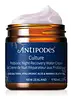
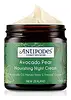
ANTIPODES Culture Probiotic Night Recovery Water Cream Versus ANTIPODES Avocado Pear Nourishing Night Cream
This barrier-repair moisturizer is formulated around Bisabolol and Sodium Hyaluronate to strengthen the skin barrier and hydrate skin.
This barrier-repair night moisturizer is formulated around Butyrospermum Parkii Butter and Persea Gratissima Oil to strengthen the skin barrier and hydrate skin.

What's inside
What's inside
 Key Ingredients
Benefits
Concerns
Ingredients Side-by-side
Water
Skin ConditioningGlycerin
Humectant


Cetearyl Olivate


Sorbitan Olivate
Emulsifying
Sodium Acrylates Copolymer
Simmondsia Chinensis Seed Oil
Emollient
Limnanthes Alba Seed Oil
Skin Conditioning
Dehydroacetic Acid
Preservative
Benzyl Alcohol
Perfuming





Glyceryl Caprylate
EmollientBisabolol
Antioxidant


Sodium Hyaluronate
Humectant

Sclerotium Gum
Emulsion StabilisingAloe Barbadensis Leaf Extract
Emollient
Lactobacillus Ferment
Skin Conditioning
Mannitol
Humectant
Maltodextrin
Absorbent
Sodium Citrate
BufferingCyathea Medullaris Leaf Extract
Skin ConditioningPhormium Tenax Extract
Skin ConditioningHibiscus Sabdariffa Flower Extract
Skin ConditioningMica
Cosmetic ColorantTitanium Dioxide
Cosmetic Colorant

Iron Oxides
CI 77742
Cosmetic ColorantCitronellol
Perfuming
Geraniol
Perfuming
Limonene
Perfuming
Linalool
Perfuming
Water, Glycerin, Cetearyl Olivate, Sorbitan Olivate, Sodium Acrylates Copolymer, Simmondsia Chinensis Seed Oil, Limnanthes Alba Seed Oil, Dehydroacetic Acid, Benzyl Alcohol, Glyceryl Caprylate, Bisabolol, Sodium Hyaluronate, Sclerotium Gum, Aloe Barbadensis Leaf Extract, Lactobacillus Ferment, Mannitol, Maltodextrin, Sodium Citrate, Cyathea Medullaris Leaf Extract, Phormium Tenax Extract, Hibiscus Sabdariffa Flower Extract, Mica, Titanium Dioxide, Iron Oxides, CI 77742, Citronellol, Geraniol, Limonene, Linalool
Water
Skin ConditioningOlivine Extract
Skin ConditioningButyrospermum Parkii Butter
Skin Conditioning

Glycerin
Humectant
Leptospermum Scoparium Mel
Honey
Humectant
Macadamia Ternifolia Seed Oil
Emollient
Persea Gratissima Oil
Skin Conditioning
Cetearyl Alcohol
Emollient

Calendula Officinalis Flower Oil
Masking
Cocos Nucifera Oil
Masking
Lecithin
Emollient
Tocopherol
Antioxidant


Helianthus Annuus Seed Oil
Emollient
Dehydroacetic Acid
Preservative
Benzyl Alcohol
Perfuming
Bisabolol
Antioxidant
Vitis Vinifera Seed Extract
Antimicrobial
Benzyl Benzoate
Antimicrobial
Benzyl Salicylate
Perfuming
Citral
Perfuming
Citronellol
Perfuming
Limonene
Perfuming
Eugenol
Perfuming
Farnesol
Perfuming
Geraniol
Perfuming
Isoeugenol
Perfuming
Linalool
Perfuming
Water, Olivine Extract, Butyrospermum Parkii Butter, Glycerin, Leptospermum Scoparium Mel, Honey, Macadamia Ternifolia Seed Oil, Persea Gratissima Oil, Cetearyl Alcohol, Calendula Officinalis Flower Oil, Cocos Nucifera Oil, Lecithin, Tocopherol, Helianthus Annuus Seed Oil, Dehydroacetic Acid, Benzyl Alcohol, Bisabolol, Vitis Vinifera Seed Extract, Benzyl Benzoate, Benzyl Salicylate, Citral, Citronellol, Limonene, Eugenol, Farnesol, Geraniol, Isoeugenol, Linalool
Reviews
Ingredients Explained
These ingredients are found in both products.
Ingredients higher up in an ingredient list are typically present in a larger amount.
Benzyl Alcohol is an aromatic alcohol with several roles: it's a preservative, solvent, and mild fragrance component with a floral scent.
This ingredient has been deemed safe for use in cosmetic formulations at concentrations up to 5%, and up to 10% in hair dyes. You'll typically see 0.5-2% in most rinse-off or leave-on products.
As a preservative, it works by disrupting the membrane of microbial proteins. This helps keep bacteria and fungi from growing in your products.
The sensitization picture is actually quite assuring as well:of nearly 71,000 patients patch tested with benzyl alcohol, only 0.21% showed a positive reaction with most of them being weakly positive.
This led researchers to conclude that benzyl alcohol cannot be regarded as a significant contact allergen.
It is worth noting this ingredient is classified as one of the EU's regulated fragrance allergens and restricted to 1% in finished products.
Labels must also declare it in concentrations above 0.001% in leave-on products and 0.01% in rinse-off products.
At concentrations around 5%, localized redness and itching can appear as a direct irritant response and not as a true allergic reaction.
Learn more about Benzyl AlcoholBisabolol is a gentle skin conditioner, antioxidant, and soothing ingredient.
It's primary claim to fame is soothing and research shows topically applied bisabolol can quiet the chemical messengers that cause your skin to become inflamed, helping to sooth any irritation.
A clinical study found that applying 0.5% bisabolol daily for 8 weeks produced an average 9% decrease in skin pigmentation. Researchers found it can also suppress the process that leads to excess melanin production in skin.
In vitro studies found that bisabolol combined with propylene glycol significantly increased skin permeability by increasing lipid fluidity in the stratum corneum.
You'll likely see use concentrations quite low, usually 0.1-0.2%.
Overall, this is a well-tolerated ingredient that works well in formulas designed for sensitive, reactive, or post-procedure skin.
Learn more about BisabololCitronellol is used to add fragrance/parfum to a product. It is often derived from plants such as roses. In fact, it can be found in many essential oils including geranium, lavender, neroli, and more. The scent of Citronellol is often described as "fresh, grassy, and citrus-like".
Since the Citronellol molecule is already unstable, Citronellol becomes irritating on the skin when exposed to air.
Citronellol is a modified terpene. Terpenes are unsaturated hydrocarbons found in plants. They make up the primary part of essential oils.
Citronellol is not able to be absorbed into deeper layers of the skin. It has low permeability,
Citronellol is also a natural insect repellent.
Learn more about CitronellolDehydroacetic Acid is a synthetic preservative that keeps your products safe from microbes.
As an organic acid, it penetrates microbial cell walls and disrupts cellular metabolism. This makes it effective against bacteria, yeast, and mold.
It is effective at low concentrations (<0.6%). Clinical studies have found it to be non-irritating, non-sensitizing, and non-photosensitizing.
Learn more about Dehydroacetic AcidGeraniol is used to add fragrance/parfum to a product. It is the main component of citronellol. It is a monoterpenoid and an alcohol.
Monoterpenes are naturally found in many parts of different plants.
Geraniol can be found in many essential oils including Rose Oil and Citronella Oil. The scent of Geraniol is often described as "rose-like". Many foods also contain Geraniol for fruit flavoring.
Geraniol can irritate the skin when exposed to air. However, irritation depends on the ability of geraniol to penetrate into the skin. In general, geraniol is not able to penetrate skin easily.
Geraniol is colorless and has low water-solubility. However, it is soluble in common organic solvents.
Like citronellol, it is a natural insect repellent.
2,6-Octadien-1-ol, 3,7-dimethyl-, (2E)-
Learn more about GeraniolGlycerin (or glycerol) is a compound naturally found in your skin. It's a powerhouse humectant that pulls water into the stratum corneum.
Topically, glycerin does several things at once:
Your skin makes glycerin on its own (mostly from sebaceous oil breakdown) and shuttles it to your outermost layer of skin, or your epidermis, via aquaporin-3.
Aquaporin-3 is a transporter that is essential for normal skin hydration, elasticity, and repair. Interestingly, mice lacking in AQP3 have dry and less elastic skin that can be fully corrected with glycerin.
This ingredient is non-irritating, plays well with almost every ingredient, and works across all skin types. Typical use is anywhere between 3-10% but can go up to 79% in some leave-on products.
Just know very high concentrations (>40%) can feel tacky in low humidity.
Glycerin is the name for this ingredient in American English. British English uses Glycerol/Glycerine.
Learn more about GlycerinLimonene is the compound that gives citrus peel its smell.
In skincare, it shows up as a standalone fragrance ingredient or as a natural compound of citrus and other essential oils.
You'll typically see this ingredient used in very small amounts; anything above 0.001% in a leave-on product or 0.01% in a rinse-off has to be named on the label in the EU. The citrus oils that carry it sit around 0.5-1% in a finished formula.
Fresh limonene is a weak allergen; the real issue is that it slowly reacts with air and then breaks down from oxidation to create hydroperoxides (which are strong sensitizers). This is why suppliers are required to keep the peroxide value below 20 mmol.
Positive reactions in people being investigated for eczema vary:
It's worth skipping if you have a known fragrance allergy or a compromised barrier, but the risk is low for most people.
Older or long-opened products are also more likely to bother you than fresh ones due to oxidation.
Learn more about LimoneneLinalool is a small, naturally occurring scent molecule found in plants like lavender, coriander, bergamot, and more.
It is one of the two most-used fragrance ingredients in cosmetics and added purely for smell. Since it's not used for a skin benefit, there's no "effective dose". Concentration depends on the fragrance load of the product.
The EU requires it to be named on the label above 0.001% in leave-on and 0.01% in rinse-off products.
Fresh linalool is a weak sensitizer but air exposure turns some of it into hydroperoxides, which are strong sensitizers. Those oxidation products are the actual allergy concern.
Patch-test clinics see positive reactions to linalool hydroperoxides in about 4% to 12% of dermatitis patients depending on country and test concentration.
Resassuringly, one analytical study found hydroperoxide levels in real fragranced products to be orders of magnitude below what induced sensitization in animal studies with no evidence of oxidation building up during normal storage.
The practical takeaway is that linalool is fine for most people but worth avoiding if you have a confirmed fragrance contact allergy or a badly compromised barrier.
Products stored a long time after opening are also the high-risk scenario since that is when oxidation happens.
The scent of linalool is described as floral, spicy tropical, and citrus-like.
Learn more about LinaloolWater. It's the most common cosmetic ingredient of all. You'll usually see it at the top of ingredient lists, meaning that it makes up the largest part of the product.
So why is it so popular? Water most often acts as a solvent - this means that it helps dissolve other ingredients into the formulation.
You'll also recognize water as that liquid we all need to stay alive. If you see this, drink a glass of water. Remember to stay hydrated!
Learn more about Water

