Andalou Naturals Goji Peptide Perfecting Cream Versus Andalou Naturals Age Defying Rejuvenating Plant Based Retinol Alternative Cream
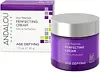
This moisturizer is formulated around Aloe Barbadensis Leaf Juice and Lycium Barbarum Fruit Extract to hydrate skin.
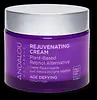
This anti-aging moisturizer is formulated around Bakuchiol to soften the look of wrinkles and refine skin texture.

What's inside
What's inside
 Key Ingredients
Benefits
Concerns
Ingredients Side-by-side
Aloe Barbadensis Leaf Juice
Skin Conditioning


Water
Skin ConditioningHelianthus Annuus Seed Oil
Emollient


Simmondsia Chinensis Seed Oil
Emollient

Glyceryl Stearate
Emollient
Butyrospermum Parkii Butter
Skin Conditioning


Glycerin
Humectant
Malus Domestica Fruit Cell Culture Extract
Skin ConditioningCetyl Alcohol
Emollient

Stearic Acid
Cleansing
Lycium Barbarum Fruit Extract
Astringent
Tocopherol
Antioxidant




Glyceryl Laurate
Emollient
Sodium Hyaluronate
Humectant
Panthenol
Skin Conditioning
Allantoin
Skin Conditioning
Bisabolol
Antioxidant
Resveratrol
Antioxidant
Ubiquinone
Antioxidant
Borago Officinalis Seed Oil
Emollient
Oenothera Biennis Oil
Emollient
Xanthan Gum
EmulsifyingMagnesium Ascorbyl Phosphate
Antioxidant


Riboflavin
Cosmetic ColorantCamellia Sinensis Leaf Extract
Antimicrobial
Hibiscus Sabdariffa Flower Extract
Skin ConditioningPhenethyl Alcohol
MaskingEthylhexylglycerin
Skin ConditioningEthyl Apricot Kernelate
EmollientVanilla Planifolia Fruit Extract
Skin Conditioning
Citrus Aurantium Dulcis Peel Oil
Masking
Aloe Barbadensis Leaf Juice, Water, Helianthus Annuus Seed Oil, Simmondsia Chinensis Seed Oil, Glyceryl Stearate, Butyrospermum Parkii Butter, Glycerin, Malus Domestica Fruit Cell Culture Extract, Cetyl Alcohol, Stearic Acid, Lycium Barbarum Fruit Extract, Tocopherol, Glyceryl Laurate, Sodium Hyaluronate, Panthenol, Allantoin, Bisabolol, Resveratrol, Ubiquinone, Borago Officinalis Seed Oil, Oenothera Biennis Oil, Xanthan Gum, Magnesium Ascorbyl Phosphate, Riboflavin, Camellia Sinensis Leaf Extract, Hibiscus Sabdariffa Flower Extract, Phenethyl Alcohol, Ethylhexylglycerin, Ethyl Apricot Kernelate, Vanilla Planifolia Fruit Extract, Citrus Aurantium Dulcis Peel Oil
Water
Skin ConditioningGlycerin
Humectant
Dicaprylyl Carbonate
EmollientStearyl Alcohol
Emollient
Cetyl Alcohol
Emollient
Malus Domestica Fruit Cell Culture Extract
Skin ConditioningGlyceryl Stearate
Emollient
Caprylic/Capric Triglyceride
Masking
Glyceryl Stearate Citrate
Emollient
Bakuchiol
Antimicrobial
Tapioca Starch
Myristyl Myristate
Emollient
1,2-Hexanediol
Skin Conditioning
Caprylyl Glycol
Emollient
Aloe Barbadensis Leaf Juice
Skin Conditioning
Vitis Vinifera Fruit Cell Extract
Skin ConditioningEuterpe Oleracea Fruit Extract
Aronia Melanocarpa Fruit Extract
Skin ConditioningLycium Barbarum Fruit Extract
Astringent
Xanthan Gum
EmulsifyingLinum Usitatissimum Seed Oil
Perfuming
Allantoin
Skin Conditioning
Helianthus Annuus Seed Oil
Emollient
Panthenol
Skin Conditioning
Simmondsia Chinensis Seed Oil
Emollient
Camellia Sinensis Leaf Extract
Antimicrobial
Squalane
Emollient
Tocopherol
Antioxidant
Sodium Benzoate
Masking
Isomalt
HumectantLecithin
Emollient
Potassium Sorbate
Preservative
Parfum
Masking

Water, Glycerin, Dicaprylyl Carbonate, Stearyl Alcohol, Cetyl Alcohol, Malus Domestica Fruit Cell Culture Extract, Glyceryl Stearate, Caprylic/Capric Triglyceride, Glyceryl Stearate Citrate, Bakuchiol, Tapioca Starch, Myristyl Myristate, 1,2-Hexanediol, Caprylyl Glycol, Aloe Barbadensis Leaf Juice, Vitis Vinifera Fruit Cell Extract, Euterpe Oleracea Fruit Extract, Aronia Melanocarpa Fruit Extract, Lycium Barbarum Fruit Extract, Xanthan Gum, Linum Usitatissimum Seed Oil, Allantoin, Helianthus Annuus Seed Oil, Panthenol, Simmondsia Chinensis Seed Oil, Camellia Sinensis Leaf Extract, Squalane, Tocopherol, Sodium Benzoate, Isomalt, Lecithin, Potassium Sorbate, Parfum
Reviews
Ingredients Explained
These ingredients are found in both products.
Ingredients higher up in an ingredient list are typically present in a larger amount.
Allantoin is a soothing ingredient known for its protective and moisturizing properties; it's basically a quiet workhorse ingredient you can find in a huge range of cosmetics.
Though it can be derived from the comfrey plant, allantoin is produced synthetically for cosmetic products to ensure purity.
Research shows it can encourage your skin cells to turn over and renew by stimulating keratinocyte and fibroblast proliferation.
It also has mild keratolytic properties to help loosen and shed dead skin cells without being harsh.
Studies also suggest allantoin can help calm inflammation by dialing down some of the chemical signals your skin sends out when it is irritated.
This ingredient is typically used in the 0.1-0.5% range, and the FDA recognizes it as a skin protectant in OTC products up to 2%.
Overall, allantoin is a wonderful addition to most routines; it is stable across a wide pH range (~4-8), works well with other ingredients, and is considered non-sensitizing/non-irritating.
Fun fact: Allantoin is naturally occurring in comfrey root, beets, chamomile, and wheat sprouts. Our bodies even produce it as a byproduct of uric acid metabolism.
Learn more about AllantoinAloe Barbadensis Leaf Juice is the filtered, stabilized liquid pressed from the inner gel of the aloe vera leaf.
In cosmetics, it shows up as either soothing active or a water-replacement base. It is roughly 98-99% water and the last 1-2% is an interesting mix of polysaccharides, amino acids, vitamins, minerals, and enzymes.
The polysaccharides do most of the work: they bind water at the skin surface for a light, non-greasy hydration boost. And one of the polysaccharides, glycomannan, is linked to fibroblast stimulation + collagen synthesis. This is also why aloe has such a long track record in wound and burn healing.
This ingredient is also calming with anti-inflammatory and mild antimicrobial activity, making it a great pick for sensitive, irritated, or post-sun skin.
Realistic expectations matter though; the solid evidence is mostly limited to hydration, soothing, and wound support. Deeper claims about anti-aging or sun protection are not well backed, and science reviews note it does not prevent radiation-induced skin injury.
Because it plays well with almost everything, it's commonly used as a base alongside other actives like niacinamide or vitamin C.
Typical usage concentrations range from 0.5% (where hydration benefits already show up) all the way to 90%+ (where it replaces water as the main base).
The safety for this ingredient is well-establish as well. Overall, this is a great supporting ingredient for those who want a boost in hydration.
Learn more about Aloe Barbadensis Leaf JuiceCamellia Sinensis Leaf Extract (tea extract) is one of the most well-researched plant extracts in skincare with an impressive resume.
Black tea, green tea, and oolong tea are all harvested from the Camellia Sinensis plant.
Studies show green tea extract and its catechins (like epigallocatechin gallate (EGCG)) help your skin cells product energy more efficiently and reducing the number of free-radicals that can damage your skin from the inside.
In lab-grown skin models, this translated to younger, healthier, and stronger skin.
There's also good sun protection data; researchers saw less DNA damage and redness on human skin when green tea was applied before UVB exposure. And the more they applied, the better the protection.
Needless to say, this ingredient shouldn't replace your sunscreen. But it is a great supportive ingredient that you can already find in many sunscreens and antioxidant serums.
A 2009 study found a 2% green tea lotion was effective for mild-to-moderate acne thanks to its anti-inflammatory and mild antimicrobial activity.
The quality of the extract matters a lot here:
Good extracts contain 50-90% catechins while lower quality ones are mostly there for marketing. We recommend reaching out to the brand if you have questions about the quality or source of their ingredients.
Human Repeated Insult Patch Testing showed no irritation or sensitization at use concentrations (0.86% in leave-on products and up to 30% as leaf water).
Learn more about Camellia Sinensis Leaf ExtractCetyl Alcohol is a fatty alcohol. Fatty Alcohols are most often used as an emollient or to thicken a product.
Its main roles are:
Though it has "alcohol" in the name, it is not related to denatured alcohol or ethyl alcohol.
The FDA allows products labeled "alcohol-free" to have fatty alcohols.
This ingredient may not be fungal acne safe. It is a primary fatty alcohol with a chain length above 12 carbons. A study from 2019 show Malassezia can feed on fatty alcohols in this range, so it may trigger fungal acne in those prone to it.
Learn more about Cetyl AlcoholGlycerin (or glycerol) is a compound naturally found in your skin. It's a powerhouse humectant that pulls water into the stratum corneum.
Topically, glycerin does several things at once:
Your skin makes glycerin on its own (mostly from sebaceous oil breakdown) and shuttles it to your outermost layer of skin, or your epidermis, via aquaporin-3.
Aquaporin-3 is a transporter that is essential for normal skin hydration, elasticity, and repair. Interestingly, mice lacking in AQP3 have dry and less elastic skin that can be fully corrected with glycerin.
This ingredient is non-irritating, plays well with almost every ingredient, and works across all skin types. Typical use is anywhere between 3-10% but can go up to 79% in some leave-on products.
Just know very high concentrations (>40%) can feel tacky in low humidity.
Glycerin is the name for this ingredient in American English. British English uses Glycerol/Glycerine.
Learn more about GlycerinGlyceryl Stearate is made by reacting glycerin with stearic acid (typically sourced from plant oils like palm or coconut). It's an emulsifier, emollient, and mild occlusive.
Emulsifiers help ingredients like oil and water stay mixed so your formula stays nicely blended and uniform in texture.
This ingredient is typically used in concentrations between 1-10%. Studies have found it to be non-sensitizing, non-phototoxic, and non-photoallergenic.
A close cousin of this ingredient is Glyceryl Stearate SE ("self-emulsifying"). This just has a small amount of sodium or potassium stearate added so it can emulsify without a co-emulsifier.
Since this ingredient is an ester of a C18 fatty acid, it may not be fungal acne safe. The Malassezia yeast can potentially metabolize within the C11-C24 range.
Fun fact: The human body also creates Glyceryl Stearate naturally.
Learn more about Glyceryl StearateHelianthus Annuus Seed Oil is a plant oil derived from the seeds of a sunflower.
It is rich in fatty acids, primarily linoleic acid and oleic acid. This gives it emollient and skin conditioning properties.
The reason this ingredient is so effective is because it forms a thin film on the skin that reduces transepidermal water loss (TEWL) while supplying linoleic acid to the stratum corneum to improve barrier strength.
The high linoleic acid content is particularly noteworthy for acne-prone skin.
Research suggests that acne-prone skin tends to be deficient in linoleic acid in sebum. Topical application may help replenish this to support a healthier follicular environment and less comedone-promoting sebum.
One randomized study found sunflower seed oil preserved skin barrier integrity in adult volunteers with and without atopic dermatitis (outperforming olive oil).
This ingredient is well-studied, gentle, and an effective emollient suitable for most skin types.
On fungal acne: This ingredient may not be Fungal acne (Malassezia folliculitis) safe. This is because it contains fatty acids with carbon chain lengths in the C11-C24 range.
Learn more about Helianthus Annuus Seed OilLycium Barbarum Fruit Extract comes from the Goji Berry. Goji berries are native to China and can be found across Eurasia.
Goji berries contain polysaccharides, carotenoids and flavonoids. Antioxidants help your body fight off free-radical molecules. These molecules are unstable and may damage your skin. By making free-radicals more stable, antioxidants can help with anti-aging.
Polysaccharides help hydrate the top layer of skin due to its ability to mimic natural carbohydrates.
Learn more about Lycium Barbarum Fruit ExtractThis ingredient comes from a rare Swiss apple known as Uttwiler Spätlauber. It is produced from the cell cultures of the apple and not the fruit itself.
According to manufacturer studies, this ingredient has demonstrated the following benefits:
- Visible anti-wrinkle effect around the eye area (in vivo)
- Enhanced colony-forming efficiency of epidermal stem cells (in vitro)
- Improved ability of skin cells to regenerate and build new tissues in a 3D epidermis model (in vitro)
- Increased skin density (in vitro)
- Boosted vitality of epidermal stem cells (in vitro)
- Reversal of cellular aging signs in fibroblasts (in vitro)
Panthenol is a common ingredient that helps hydrate and soothe the skin. It is found naturally in our skin and hair.
There are two forms of panthenol: D and L.
D-panthenol is also known as dexpanthenol. Most cosmetics use dexpanthenol or a mixture of D and L-panthenol.
Panthenol is famous due to its ability to go deeper into the skin's layers. Using this ingredient has numerous pros (and no cons):
Like hyaluronic acid, panthenol is a humectant. Humectants are able to bind and hold large amounts of water to keep skin hydrated.
This ingredient works well for wound healing. It works by increasing tissue in the wound and helps close open wounds.
Once oxidized, panthenol converts to pantothenic acid. Panthothenic acid is found in all living cells.
This ingredient is also referred to as pro-vitamin B5.
Learn more about PanthenolJojoba oil is one of the most well-studied plant-derived ingredients in cosmetics. It is an emollient with a special structure.
Because it is made up of 97-98% wax esters, it closely mirrors the linear monoesters found in human sebum. This makes it skin compatible, non-greasy, and lightweight.
Unlike other plant oils, jojoba wax doesn't easily penetrate skin. It mostly works in the uppermost layers as an emollient. This just means it forms a light barrier on the skin to help retain moisture.
Formulations with jojoba esters up to 90% reduced transepidermal water loss (TEWL) and increased barrier recovery by 81% (outperforming bisabolol at 47%).
Besides barrier support, the science also suggests jojoba to have anti-inflammatory effects and potential applications for skin infections, aging, and wound healing.
Fun fact: Indigenous cultures have used jojoba as a moisturizer and to help treat burns for centuries.
Fungal acne: The Malassezia yeast is known to metabolize fatty acids in the C11-24 range and jojoba's dominant fatty acid components fall into this range. This ingredient may not be fungal acne safe.
Learn more about Simmondsia Chinensis Seed OilTocopherol is a fat-soluble antioxidant known as Vitamin E.
You'll find this ingredient in the vast majority of skincare (for good reason). It works to neutralize free radicals, or unstable molecules generated by UV exposure, pollution, and other environmental stressors, before they can cause oxidative damage to your skin cells.
Topically applied tocopherol has been shown to protect against UV damage by ramping up the skin's own natural defense enzymes.
It also acts as a skin conditioning agent; some studies show that regular topical use can improve the skin's water-binding capacity over 2-4 weeks.
This ingredient is especially loved for being a team player. When combined with Vitamin C, the photoprotective effect of both ingredients roughly doubles and the combo also helps reduce UV-induced DNA damage.
This ingredient has some brightening potential but it's more of a prevention ingredient than spot-fader. Cell studies show it can slow down melanin production but it's worth noting that it's not the most powerful brightener out there.
In formulations, it also serves as a stabilizer that helps protect other oxidation-prone ingredients from degrading.
Concentrations usually range from 0.1-1% in most leave-on products.
Learn more about TocopherolWater. It's the most common cosmetic ingredient of all. You'll usually see it at the top of ingredient lists, meaning that it makes up the largest part of the product.
So why is it so popular? Water most often acts as a solvent - this means that it helps dissolve other ingredients into the formulation.
You'll also recognize water as that liquid we all need to stay alive. If you see this, drink a glass of water. Remember to stay hydrated!
Learn more about WaterXanthan gum is used as a stabilizer and thickener within cosmetic products. It helps give products a sticky, thick feeling - preventing them from being too runny.
On the technical side of things, xanthan gum is a polysaccharide - a combination consisting of multiple sugar molecules bonded together.
Xanthan gum is a pretty common and great ingredient. It is a natural, non-toxic, non-irritating ingredient that is also commonly used in food products.
Learn more about Xanthan Gum

