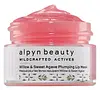
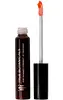
alpyn beauty Willow & Sweet Agave Plumping Lip Mask Versus True Botanicals Pure Radiance Overnight Lip Treatment
This hydrating lip mask is formulated around Ricinus Communis Seed Oil to hydrate lips.
This barrier-repair lip moisturizer is formulated around Ricinus Communis Seed Oil and Butyrospermum Parkii Butter to strengthen the lip barrier and hydrate lips.

What's inside
What's inside
 Key Ingredients
Benefits
Concerns
Ingredients Side-by-side
Hydroxystearic/Linolenic/Oleic Polyglycerides
EmollientRicinus Communis Seed Oil
Masking




Polyhydroxystearic Acid
Emulsifying
Helianthus Annuus Seed Oil
Emollient
Agave Tequilana Leaf Extract
AstringentPrunus Armeniaca Kernel Oil
Masking

Cocos Nucifera Oil
Masking

Helianthus Annuus Seed Wax
Skin Conditioning
Hydrogenated Castor Oil
Emollient
Capryloyl Glycerin/Sebacic Acid Copolymer
Skin ConditioningCopernicia Cerifera Wax
Aloe Barbadensis Leaf Extract
Emollient

Tocopherol
Antioxidant





Sodium Hyaluronate
Humectant
Simmondsia Chinensis Seed Oil
Emollient
Arnica Cordifolia Flower Extract
Borago Officinalis Extract
Emollient
Calendula Officinalis Flower Extract
Masking
Chamomilla Recutita Flower Extract
Masking
Salvia Officinalis Leaf Extract
CleansingSalix Alba Extract
Skin ConditioningVaccinium Uliginosum Berry Extract
Skin ConditioningPrunus Davidiana Extract
Antioxidant
Arctostaphylos Uva Ursi Leaf Extract
Skin Conditioning
Malva Officinalis Flower Extract
Skin ConditioningStevia Rebaudiana Leaf/Stem Extract
MaskingCitrus Limon Peel Oil
Masking



Rosa Damascena Flower Oil
Masking
Menthyl Lactate
Masking
Eclipta Prostrata Extract
Skin Conditioning
Melia Azadirachta Leaf Extract
Skin ConditioningMoringa Oleifera Seed Oil
Emollient
Citral
Perfuming
Limonene
Perfuming
Hydroxystearic/Linolenic/Oleic Polyglycerides, Ricinus Communis Seed Oil, Polyhydroxystearic Acid, Helianthus Annuus Seed Oil, Agave Tequilana Leaf Extract, Prunus Armeniaca Kernel Oil, Cocos Nucifera Oil, Helianthus Annuus Seed Wax, Hydrogenated Castor Oil, Capryloyl Glycerin/Sebacic Acid Copolymer, Copernicia Cerifera Wax, Aloe Barbadensis Leaf Extract, Tocopherol, Sodium Hyaluronate, Simmondsia Chinensis Seed Oil, Arnica Cordifolia Flower Extract, Borago Officinalis Extract, Calendula Officinalis Flower Extract, Chamomilla Recutita Flower Extract, Salvia Officinalis Leaf Extract, Salix Alba Extract, Vaccinium Uliginosum Berry Extract, Prunus Davidiana Extract, Arctostaphylos Uva Ursi Leaf Extract, Malva Officinalis Flower Extract, Stevia Rebaudiana Leaf/Stem Extract, Citrus Limon Peel Oil, Rosa Damascena Flower Oil, Menthyl Lactate, Eclipta Prostrata Extract, Melia Azadirachta Leaf Extract, Moringa Oleifera Seed Oil, Citral, Limonene
Ricinus Communis Seed Oil
Masking
Hydroxystearic/Linolenic/Oleic Polyglycerides
EmollientCocos Nucifera Oil
Masking
Polyhydroxystearic Acid
Emulsifying
Punica Granatum Sterols
Skin Conditioning
Agave Tequilana Leaf Extract
AstringentHydrogenated Jojoba Oil
Abrasive
Butyrospermum Parkii Butter
Skin Conditioning
Eclipta Prostrata Extract
Skin Conditioning
C18-38 Alkyl Hydroxystearoyl Stearate
EmollientCocos Nucifera Fruit Extract
Emollient
Camellia Japonica Seed Oil
Emollient
Limnanthes Alba Seed Oil
Skin Conditioning
Rosa Rubiginosa Seed Oil
Emollient
Rubus Chamaemorus Seed Oil
Skin Conditioning
Rubus Idaeus Seed Oil
Emollient
Vanilla Planifolia Fruit Extract
Skin Conditioning
Melia Azadirachta Leaf Extract
Skin ConditioningEclipta Prostrata Leaf Extract
Skin ConditioningMoringa Oleifera Seed Oil
Emollient
Ricinus Communis Seed Oil, Hydroxystearic/Linolenic/Oleic Polyglycerides, Cocos Nucifera Oil, Polyhydroxystearic Acid, Punica Granatum Sterols, Agave Tequilana Leaf Extract, Hydrogenated Jojoba Oil, Butyrospermum Parkii Butter, Eclipta Prostrata Extract, C18-38 Alkyl Hydroxystearoyl Stearate, Cocos Nucifera Fruit Extract, Camellia Japonica Seed Oil, Limnanthes Alba Seed Oil, Rosa Rubiginosa Seed Oil, Rubus Chamaemorus Seed Oil, Rubus Idaeus Seed Oil, Vanilla Planifolia Fruit Extract, Melia Azadirachta Leaf Extract, Eclipta Prostrata Leaf Extract, Moringa Oleifera Seed Oil
Ingredients Explained
These ingredients are found in both products.
Ingredients higher up in an ingredient list are typically present in a larger amount.
Agave Tequilana comes from the Blue Agave plant native to Mexico, and is a base ingredient in the alcohol Tequila.
It is an astringent, meaning it draws water out of pores to constrict them temporarily.
This ingredient is also known as coconut oil. It is a plant-derived ingredient with skin conditioning properties.
The fatty acid profile of coconut oil is mostly lauric acid (~54%), followed by capric, caprylic, palmitic, and myristic acids. This profile allows it to penetrate easily into skin, moisturize, and improve dry skin.
A double-blind study confirmed that extra virgin coconut oil is as effective as mineral oil for treating very dry skin. Another study found it outperformed mineral oil for mild to moderate atopic dermatitis in children.
Another study from 2018 found that virgin coconut oil can soothe inflammation and boost key skin barrier proteins. Just know this evidence is still only from lab settings and not human trials.
It has also been shown to reduce Staphylococcus aureus, a bacteria that commonly overgrows in people with eczema.
Clinical testing shows very minimal skin irritation and no evidence of sensitization or phototoxicity.
Coconut oil gets flagged as a "fragrance" because it has a natural mild scent (not because it's a synthetic perfume). The European Cosmetic ingredient database also lists "perfuming" as a function of this ingredient.
Just so you know, the term "fragrance" is completely unregulated. Some brands still use botanical extracts or essential oils in their "fragrance-free" formulas, but regulatory databases technically classify these under "fragrance".
Coconut oil has a tiny and useless bit of natural SPF. Early lab studies clocked it around SPF 7-8 but a more recent study found the real number closer to SPF 1.2. It also offers no meaningful UVA protection (SPF only overs UVB rays).
The comedogenic rating of 4/5 means it has a high potential to clog pores; but it's worth noting that comedogenicity is highly individual and ratings cannot predict how an overall formula will behave on skin.
Since lauric acid is the dominant fatty acid, this ingredient may not be fungal acne safe. The Malassezia yeast feeds on fatty acids with carbon chain lengths between 11-24, and lauric acid falls within these lengths (C12).
Learn more about Cocos Nucifera OilThis ingredient is also known as Bhringaraj extract or False Daisy. It is a skin conditioning ingredient that keeps skin soft and hydrated.
Research shows it has antioxidant properties; lab studies have found it can protect skin cells from UV-induced damage and help suppress inflammation.
There's also some interesting research on its potential to support hair growth by promoting the growth phase of the hair cycle.
Those with an allergy to plants in the daisy family may want to patch test this ingredient. This ingredient is generally well-tolerated otherwise.
Learn more about Eclipta Prostrata ExtractWe don't have a description for Hydroxystearic/Linolenic/Oleic Polyglycerides yet.
This ingredient is also known as neem leaf extract. It contains natural compounds like nimbidin, quercetin, and other polyphenols that give it antibacterial, antifungal, and anti-inflammatory activity.
Lab studies have shown neem leaf extract can inhibit acne-related bacteria and help calm skin. Animal studies on wound gels using 1-3% neem leaf extract found it sped up healing without causing irritation.
A wound-healing study testing gels with the extract at 1%, 2%, and 3% concentrations and found none of them irritated the skin.
Most commercial products also use it in a similar low range (typically under 5%).
Allergy-wise, there are some case reports on neem oil causing allergic contact dermatitis so people with plant/botanical sensitivities may want to patch test first.
Learn more about Melia Azadirachta Leaf ExtractMoringa Oleifera Seed Oil is a lightweight oil from the seeds of the Moringa oleifera tree. In cosmetics, it's an emollient that forms a light film to slow water loss and soften skin.
Its fatty acid composition is dominated by oleic acid (70-78%), with smaller amounts of behenic, palmitic, and stearic acids (this profile is actually pretty similar to olive oil).
Notably, this ingredient is oxidatively stable for an oil and resists going rancid as fast as other oils.
A small, in vivo study on 32 participants found a cream with this ingredient increased skin hydration with no reported skin irritation. It also found the tocopherol content gave it some antioxidant activity as well.
Because this oil is so high in oleic acid, Malassezia can use it as a food source and this ingredient may not be fungal acne safe.
For everyone else, this ingredient is well-tolerated and nourishing with a good safety track record.
This ingredient shows up on a lot of "pore-clogging" lists but there's no real evidence behind that. It doesn't even have a comedogenic rating from an actual study; the numbers you'll find online come from blogs citing other blogs.
Ratings for other ingredients mostly come from a 1980s rabbit ear test. This test doesn't translate well to human skin or to real products because the ingredient sits at a much lower percentage.
Some people still find it breaks them out. So if that's you, definitely trust your skin.
Learn more about Moringa Oleifera Seed OilPolyhydroxystearic Acid is a vegetable-derived soft wax made from castor oil. It's an emulsion stabilizer, thickener, and film former.
You'll likely see it in sunscreens because it helps disperse pigments and UV-reflecting minerals like titanium dioxide and zinc oxide evenly.
Depending on the concentration, it can drastically change the texture of a product from pasty solid (like lipstick) to sprayable liquid.
The CIR Expert Panel for Cosmetic Ingredient Safety has concluded this ingredient to be safe in cosmetics. The highest reported use concentration is 14.2% in lipsticks.
Learn more about Polyhydroxystearic AcidThis ingredient is also known as castor oil. It is a skin conditioning ingredient.
The star component of castor oil is ricinoleic acid, an unusual fatty acid that makes up ~80-92% of its composition.
In skincare, it is an emollient that dries down to a solid film with water-binding properties. This helps keep skin hydrated and helps reduce transepidermal water loss (TEWL).
A 2026 dermatology review pulls together its broader uses:
Human clinical testing found this ingredient to be non-irritating and non-sensitizing.
Because castor oil contains fatty acids in the C11-24 range, this ingredient may not be fungal acne safe.
At this time, the literature does not support castor oil in regrowing hair. A 2022 systematic review found no strong evidence that it supports hair growth and only weak evidence that it improves hair shine.
Castor oil itself carries "perfuming" and "masking" function tags according to the official CosIng database. This is because of its mild odor and odor-dampening properties.
Learn more about Ricinus Communis Seed Oil

