Seventeen SOS Lip Repair SPF 15
A lipstick with 31 ingredients, including vitamin C, spf, and exfoliants.
Overview
What it is
Lipstick with 31 ingredients that contains exfoliants, SPF, Vitamin C and Vitamin E
Cool Features
It is vegan and cruelty-free
Suited For
It has ingredients that are good for anti aging, dry skin, brightening skin, oily skin, reducing pores, scar healing and dark spots
Free From
It doesn't contain any harsh alcohols, common allergens, parabens, silicones or sulfates
Fun facts
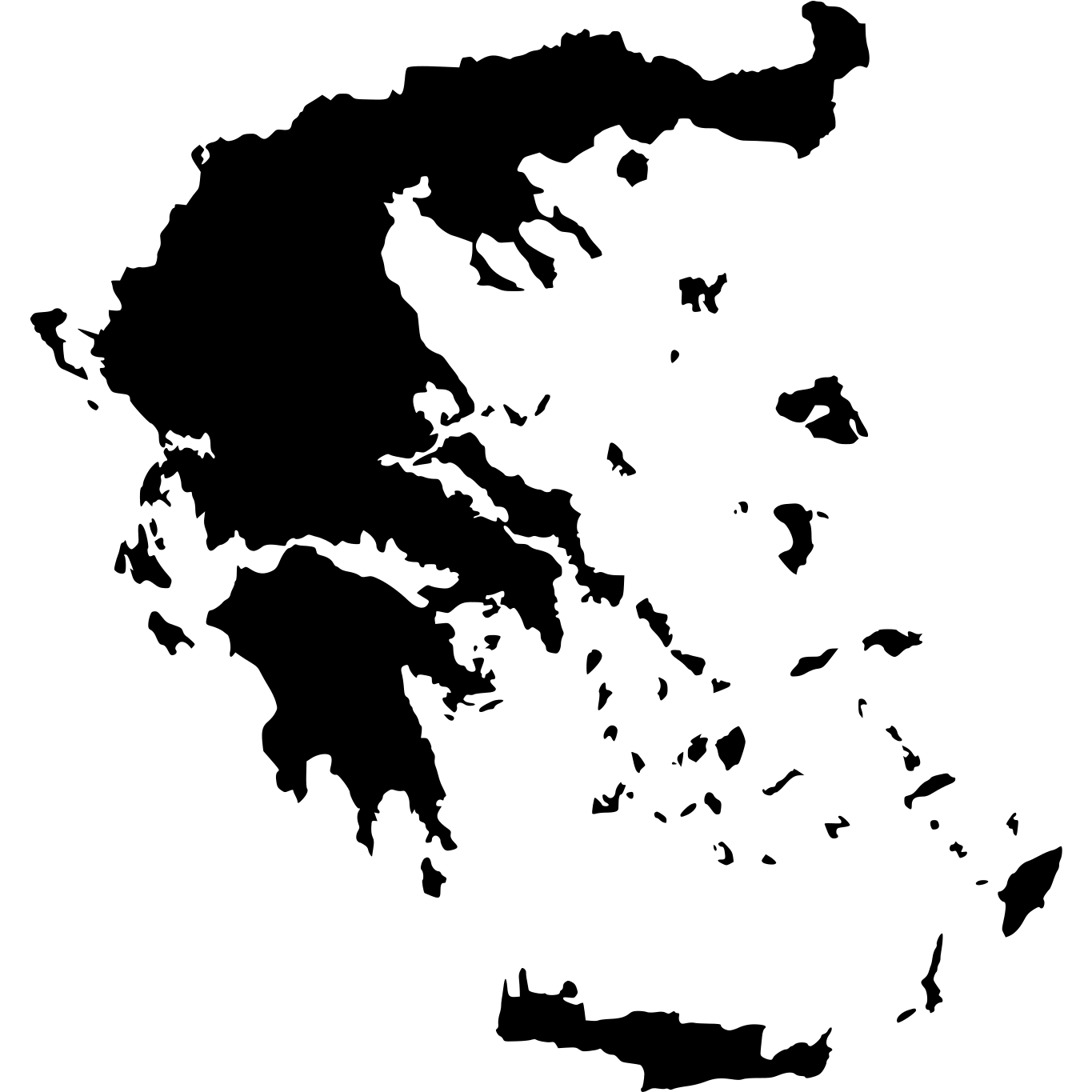
Seventeen is from Greece.
We independently verify ingredients and our claims are backed by peer-reviewed research. Does this product need an update? Let us know.
What's inside
Ingredients List
Tridecyl Trimellitate
EmollientEthylhexyl Methoxycinnamate
UV Absorber


Isononyl Isononanoate
EmollientCera Microcristallina
Emulsion StabilisingSynthetic Beeswax
Emulsion Stabilising
Petrolatum
Emollient


Euphorbia Cerifera Wax
Ozokerite
Emulsion StabilisingSilica
Abrasive


Polyglyceryl-10 Hydroxystearate/Stearate/Eicosadioate
Skin ConditioningButyrospermum Parkii Butter
Skin Conditioning

Ethylhexyl Salicylate
UV Absorber
Mangifera Indica Seed Oil
Emollient
Prunus Persica Kernel Oil
Emollient
Helianthus Annuus Seed Oil
Emollient
Ricinus Communis Seed Oil
Masking
Persea Gratissima Oil
Skin Conditioning
Hydrogenated Vegetable Oil
Emollient
Ascorbyl Palmitate
Antioxidant



Dextrin Palmitate
Emulsifying
Glyceryl Stearate
Emollient
Tocopherol
Antioxidant



Lecithin
Emollient
Parfum
Masking


BHT
Antioxidant
BHA
Antioxidant
CI 73360
Cosmetic ColorantCI 77491
Cosmetic ColorantCI 77891
Cosmetic ColorantMica
Cosmetic ColorantCalcium Sodium Borosilicate
Tridecyl Trimellitate, Ethylhexyl Methoxycinnamate, Isononyl Isononanoate, Cera Microcristallina, Synthetic Beeswax, Petrolatum, Euphorbia Cerifera Wax, Ozokerite, Silica, Polyglyceryl-10 Hydroxystearate/Stearate/Eicosadioate, Butyrospermum Parkii Butter, Ethylhexyl Salicylate, Mangifera Indica Seed Oil, Prunus Persica Kernel Oil, Helianthus Annuus Seed Oil, Ricinus Communis Seed Oil, Persea Gratissima Oil, Hydrogenated Vegetable Oil, Ascorbyl Palmitate, Dextrin Palmitate, Glyceryl Stearate, Tocopherol, Lecithin, Parfum, BHT, BHA, CI 73360, CI 77491, CI 77891, Mica, Calcium Sodium Borosilicate
Key Ingredients
Benefits
Concerns
Ingredients Explained
Tridecyl Trimellitate is a synthetic ingredient with emollient and skin conditioning properties. It also acts as a texture enhancer and helps products spread easily without feeling greasy.
As an emollient, it forms a light layer on the skin that keeps moisture in and improves water resistance. This is why you'll often find this ingredient in eye creams and other rich treatments.
This ingredient is seen as the elegant alternative to mineral oil.
Learn more about Tridecyl TrimellitateEthylhexyl Methoxycinnamate is an organic compound that provides UVB protection. It often goes by the more common name of octinoxate. It is created from methoxycinnamic acid and 2-ethylhexanol.
Ethylhexyl Methoxycinnamate absorbs UVB rays with wavelengths between 280-320 nm. UV absorbers protect your skin by using chemical reactions to convert UV rays into heat and energy.
UVB (290-320 nm) rays emit more energy than UVA rays. They are capable of damaging DNA, causing sunburns and are thought to be linked to skin cancer.
The state of Hawaii has banned sunscreens containing octinoxate due to its potential impact on coral reefs. More research is needed to bridge gaps in this research. The European Union allows higher levels of octinoxate in sunscreens than the US and Australia.
Ethylhexyl Methoxycinnamate is oil soluble. It is not stable and may lose efficacy when exposed to sunlight.
Learn more about Ethylhexyl MethoxycinnamateIsononyl Isononanoate is a synthetic skin-conditioner and texture enhancer. It is created from nonanoic acid, a fatty acid found in cocoa and lavender oil.
As an emollient, Isononyl Isononanoate helps keep your skin soft and smooth. This is because emollients create a barrier on the skin to trap moisture in.
Isononyl Isononanoate helps give products a velvet feel and improves spreadability.
Learn more about Isononyl IsononanoateThis ingredient is a petroleum-derived wax used to thicken formulas, improve texture, and help lock in moisture.
Like other forms of wax, it forms an occlusive layer on the skin to reduce water loss.
While it can be beneficial for very dry or compromised skin, Cera Microcristallina may not be fungal acne safe; waxes and certain hydrocarbons may contribute to Malassezia growth for those prone to fungal acne.
As with many heavy occlusive ingredients, it may feel too rich for oily or acne-prone skin types. Individual tolerance can vary.
Learn more about Cera MicrocristallinaSynthetic beeswax is created to be identical in structure to beeswax. It possesses the same occlusive and emulsion properties.
A blend of fatty acid esters, fatty acids, and alcohols are used to create synthetic beeswax. Whether or not this ingredient is vegan depends on the source. Sometimes, lanolin is used for its creation.
This ingredient may not be Malassezia folliculitis, or fungal-acne safe.
Learn more about Synthetic BeeswaxPetrolatum is more commonly known as petroleum jelly. It is created by mixing waxes and mineral oils.
This ingredient is effective at reducing water loss by 99%. This is because it is an occlusive. Occlusives create a hydrophobic barrier on the skin to prevent evaporation. This property makes it great for hydrating dry skin.
Pro tip: Use occlusives, such as this ingredient, on damp skin for the best results.
The quality or origin of petrolatum is only known when disclosed by the brand. Most cosmetic petrolatum has gone through several purification stages.
Another benefit of occlusives is it protects your skin against infection or allergies.
Petrolatum may not be safe for fungal-acne. Studies show mineral oil / petroleum leads to the growth of M. Furfur, a type of yeast.
However, it’s worth noting that petrolatum has a comedogenic rating of 0. In updated rabbit ear testing (and in human testing), petrolatum was found to be not comedogenic. This means it didn’t promote comedone formation in standard models.
Fungal acne isn’t about comedogenic ratings. It’s more about whether certain ingredients can feed the yeast on your skin, which can trigger those breakouts.
Learn more about PetrolatumEuphorbia Cerifera wax comes from a shrub in Northern Mexico. It is used to stabilize formulations and has emollient properties.
Emollients form a thin layer on top of skin to prevent water from evaporating, keeping skin and lips hydrated.
According to a manufacturer, this wax can range from a yellow/brown color to translucent.
Learn more about Euphorbia Cerifera WaxOzokerite is a naturally occuring mineral wax. In cosmetics, ozokerite is used as a texture enhancer.
Ceresin wax is derived from this ingredient.
The melting point of ozokerite is 58-100 C.
Ozokerite is found all over the world including Scotland, the US, and India.
Learn more about OzokeriteSilica, also known as silicon dioxide, is a naturally occurring mineral. It is used as a fine, spherical, and porous powder in cosmetics.
Though it has exfoliant properties, the function of silica varies depending on the product.
The unique structure of silica enhances the spreadability and adds smoothness, making it a great texture enhancer.
It is also used as an active carrier, emulsifier, and mattifier due to its ability to absorb excess oil.
In some products, tiny microneedles called spicules are made from silica or hydrolyzed sponge. When you rub them in, they lightly polish away dead skin layers and enhance the penetration of active ingredients.
Learn more about SilicaWe don't have a description for Polyglyceryl-10 Hydroxystearate/Stearate/Eicosadioate yet.
This ingredient is also known as shea butter. It is a plant-derived extract from the nuts of the Africa shea tree and one of the most well-studied emollients.
Because it has a high concentration of fatty acids (primarily oleic, stearic, and linoleic) it is able to form a protective barrier on the skin's surface. This helps seal in moisture and prevents transepidermal water loss (TEWL).
In vitro research found an increase in skin hydration by 58% and a decrease in TEWL by 37.8% after 24 hours of applying this ingredient (pretty impressive for a single ingredient!).
Besides hydration, shea butter also contains triterpenes that have anti-inflammatory potential. In particule, lupeol cinnamate has shown the highest anti-inflammatory activity in vivo.
Shea butter also contains vitamins A and E which may contribute to antioxidant activity.
While Shea Butter has an SPF rating of about 3-4, it is not a sunscreen replacement.
This ingredient may not be fungal acne safe because its fatty acids fall within the C11-C24 range that the Malassezia yeast can metabolize.
Learn more about Butyrospermum Parkii ButterEthylhexyl Salicylate is an organic compound used to block UV rays. It primarily absorbs UVB rays but offers a small amount of UVA protection as well.
Commonly found in sunscreens, Ethylhexyl Salicylate is created from salicylic acid and 2-ethylhexanol. You might know salicylic acid as the effective acne fighter ingredient and BHA.
The ethylhexanol in this ingredient is a fatty alcohol and helps hydrate your skin, similar to oils. It is an emollient, which means it traps moisture into the skin.
According to manufacturers, Ethylhexyl Salicylate absorbs UV wavelength of 295-315 nm, with a peak absorption at 307-310 nm. UVA rays are linked to long term skin damage, such as hyperpigmentation. UVB rays emit more energy and are capable of damaging our DNA. UVB rays cause sunburn.
Learn more about Ethylhexyl SalicylateMangifera Indica Seed Oil is an oil and isn't fungal acne safe.
Prunus Persica Kernel Oil is oil expressed from the kernel of the peach. Peach Kernel oil has antioxidant and moisturizing properties.
Peach kernel oil is rich in fatty acids. The main fatty acids include oleic and linoleic acid.
As an emollient, peach kernel oil helps moisturize and soften you skin. Emollients help trap moisture in by creating a film on top of the skin. This keeps your skin hydrated.
Learn more about Prunus Persica Kernel OilHelianthus Annuus Seed Oil is a plant oil derived from the seeds of a sunflower.
It is rich in fatty acids, primarily linoleic acid and oleic acid. This gives it emollient and skin conditioning properties.
The reason this ingredient is so effective is because it forms a thin film on the skin that reduces transepidermal water loss (TEWL) while supplying linoleic acid to the stratum corneum to improve barrier strength.
The high linoleic acid content is particularly noteworthy for acne-prone skin.
Research suggests that acne-prone skin tends to be deficient in linoleic acid in sebum. Topical application may help replenish this to support a healthier follicular environment and less comedone-promoting sebum.
One randomized study found sunflower seed oil preserved skin barrier integrity in adult volunteers with and without atopic dermatitis (outperforming olive oil).
This ingredient is well-studied, gentle, and an effective emollient suitable for most skin types.
On fungal acne: This ingredient may not be Fungal acne (Malassezia folliculitis) safe. This is because it contains fatty acids with carbon chain lengths in the C11-C24 range.
Learn more about Helianthus Annuus Seed OilRicinus Communis Seed Oil is the INCI name for castor oil.
Castor Oil helps moisturize the skin. It is rich in a fatty acid called ricinoleic acid. This fatty acid helps prevent moisture loss on the skin. This helps keep your skin soft and hydrated. Ricinoleic acid also has anti-inflammatory and pain reducing properties.
Besides hydrating the skin, castor oil is also used to hydrate hair. By keeping the hair shaft moisturized, breakage is decreased. More studies are needed to show castor oil's effective on stimulating hair growth.
Castor oil is created by cold-pressing castor seeds and then purifying the oil with heat. It was used in Ancient Egypt as fuel in lamps and to help treat eye irritation.
The term 'fragrance' is not regulated in many countries. In many cases, it is up to the brand to define this term. For instance, many brands choose to label themselves as "fragrance-free" because they are not using synthetic fragrances. However, their products may still contain ingredients such as essential oils that are considered a fragrance.
Learn more about Ricinus Communis Seed OilPersea Gratissima Oil is also known as avocado oil.
Avocado Oil has antioxidant properties. It is mostly made up of the glycerides of fatty acids. About 67% of these fatty acids is made up of oleic acid. Palmitic acid and linoleic acid are also present.
These fatty acids help hydrate and soften the skin. It may increase collagen content in the skin. Collagen helps keep your skin plump and firm. This ingredient helps reduce inflammation and has not shown to clog pores.
This ingredient may not be fungal-acne safe due to its high fatty acid content.
Avocados also have B vitamins, vitamin K, vitamin C, vitamin E, and potassium.
Learn more about Persea Gratissima OilHydrogenated Vegetable Oil is created by adding hydrogen to vegetable oil in order to give it more stability. This process also raises the melting point of vegetable oil. In cosmetics, it is an emollient.
Emollients help soothe and soften the skin. They do this by creating a protective film on your skin. This barrier helps trap moisture and keeps your skin hydrated. Emollients may be effective at treating dry or itchy skin.
The term "Hydrogenated Vegetable Oil" is an umbrella term and can refer to a variety of vegetable oils and blends of: sunflower oil, soybean oil, olive oil, coconut oil, palm oil, and more.
Due to the differences in vegetables, the benefits may vary.
Learn more about Hydrogenated Vegetable OilAscorbyl Palmitate is a fat-soluble form of vitamin C (Ascorbic Acid) made by combining it with palmitic acid.
It is able to blend easily into creams and oil-based formulas because it dissolves in oils rather than water.
As you may know, regular vitamin C is notorious for breaking down when exposed to sunlight and air. Ascorbyl Palmitate is more stable and degrades at a slower rate.
Research on whether it converts efficiently into active vitamin C once it's applied on your skin is still limited. Some in-vitro studies suggest it may support collagen production, but it is not considered one of the stronger vitamin C derivatives, like:
Due to the palmitic acid base, this ingredient may not be fungal acne safe. Comedogenic studies have also shown this ingredient to have a rating of 2.
It's also worth keeping in mind that comedogenic and irritancy ratings are tested on individual ingredients, not finished formulas. The final product's formulation, concentration, and other ingredients all play a role in how something actually behaves on your skin.
Learn more about Ascorbyl PalmitateDextrin Palmitate comes from the palmitic acid ester of Dextrin. It is used as an emulsifier and texture enhancer.
Emulsifiers help keep ingredients together. According to a manufacturer, dextrin palmitate helps create a low-viscosity gel texture.
Due to its fatty acid base, this ingredient is not fungal-acne safe.
Learn more about Dextrin PalmitateGlyceryl Stearate is made by reacting glycerin with stearic acid (typically sourced from plant oils like palm or coconut). It's an emulsifier, emollient, and mild occlusive.
Emulsifiers help ingredients like oil and water stay mixed so your formula stays nicely blended and uniform in texture.
This ingredient is typically used in concentrations between 1-10%. Studies have found it to be non-sensitizing, non-phototoxic, and non-photoallergenic.
A close cousin of this ingredient is Glyceryl Stearate SE ("self-emulsifying"). This just has a small amount of sodium or potassium stearate added so it can emulsify without a co-emulsifier.
Since this ingredient is an ester of a C18 fatty acid, it may not be fungal acne safe. The Malassezia yeast can potentially metabolize within the C11-C24 range.
Fun fact: The human body also creates Glyceryl Stearate naturally.
Learn more about Glyceryl StearateTocopherol (also known as Vitamin E) is a common antioxidant used to help protect the skin from free-radicals and strengthen the skin barrier. It's also fat soluble - this means our skin is great at absorbing it.
Vitamin E also helps keep your natural skin lipids healthy. Your lipid skin barrier naturally consists of lipids, ceramides, and fatty acids. Vitamin E offers extra protection for your skin’s lipid barrier, keeping your skin healthy and nourished.
Another benefit is a bit of UV protection. Vitamin E helps reduce the damage caused by UVB rays. (It should not replace your sunscreen). Combining it with Vitamin C can decrease sunburned cells and hyperpigmentation after UV exposure.
You might have noticed Vitamin E + C often paired together. This is because it is great at stabilizing Vitamin C. Using the two together helps increase the effectiveness of both ingredients.
There are often claims that Vitamin E can reduce/prevent scarring, but these claims haven't been confirmed by scientific research.
Learn more about TocopherolLecithin is a term for a group of substances found in the cell membranes of plants, animals, and humans. They are made up of phospholipids.
Thanks to its amphiphilic structure (water-loving head and oil-loving tail), it is a true multitasker:
It plays well with most ingredients and is typically used at 0.1-1%. However, concentrations up to 50% have been reported in moisturizers.
Depending on the source of this ingredient, lecithin may not be fungal acne safe. This is because some sources of lecithin come from soybean oil, which may feed the malassezia yeast that causes fungal acne.
We recommend reaching out to the brand you are purchasing from to inquire about the source of their lecithin.
Learn more about LecithinParfum is a catch-all term for an ingredient or more that is used to give a scent to products.
Also called "fragrance", this ingredient can be a blend of hundreds of chemicals or plant oils. This means every product with "fragrance" or "parfum" in the ingredients list is a different mixture.
For instance, Habanolide is a proprietary trade name for a specific aroma chemical. When used as a fragrance ingredient in cosmetics, most aroma chemicals fall under the broad labeling category of “FRAGRANCE” or “PARFUM” according to EU and US regulations.
The term 'parfum' or 'fragrance' is not regulated in many countries. In many cases, it is up to the brand to define this term.
For instance, many brands choose to label themselves as "fragrance-free" because they are not using synthetic fragrances. However, their products may still contain ingredients such as essential oils that are considered a fragrance by INCI standards.
One example is Calendula flower extract. Calendula is an essential oil that still imparts a scent or 'fragrance'.
Depending on the blend, the ingredients in the mixture can cause allergies and sensitivities on the skin. Some ingredients that are known EU allergens include linalool and citronellol.
Parfum can also be used to mask or cover an unpleasant scent.
The bottom line is: not all fragrances/parfum/ingredients are created equally. If you are worried about fragrances, we recommend taking a closer look at an ingredient. And of course, we always recommend speaking with a professional.
Learn more about ParfumBHT is a synthetic antioxidant and preservative.
As an antioxidant, it helps your body fight off free-radicals. Free-radicals are molecules that may damage your skin cells.
As a preservative, it is used to stabilize products and prevent them from degrading. Specifically, BHT prevents degradation from oxidation.
The concerns related to BHT come from oral studies; this ingredient is currently allowed for use by both the FDA and EU.
However, it was recently restricted for use in the UK as of April 2024.
Learn more about BHTThe ingredient "BHA" stands for butylated hydroxyanisole. If you are looking for the beta-hydroxy acid, aka as Salicylic Acid, click here.
In cosmetics, butylated hydroxyanisole is used as a perservative. It also has antioxidant properties. The concentrations usually used in skincare are low and do not penetrate through skin.
It is only considered a carcinogen when ingested.
Butylated Hydroxyanisole is a synthetic and waxy petrochemical. It is used as a preservative in foods and cosmetics.
Learn more about BHACi 73360 is a synthetic red-pink dye.
It is soluble in water and remains chemically stable across a range of pH levels typically used in cosmetics. This helps manufacturers maintain uniform color throughout a product’s shelf life.
Because this ingredient is a regulated cosmetic colorant, its purity, manufacturing standards, and allowed uses are defined by cosmetic regulations in major markets.
Learn more about CI 73360Ci 77491 is also hydrated iron III oxide. It's sole purpose is to give a red/pink hue to products.
Iron III oxides are classified as inorganic chemicals for coloring.
Synthetically created Ci 77491 is considered safer than those naturally found. This is because the synthetically created version may contain less impurities. Iron oxides are generally non-toxic and non-allergenic.
Learn more about CI 77491Ci 77891 is a white pigment from Titanium dioxide. It is naturally found in minerals such as rutile and ilmenite.
It's main function is to add a white color to cosmetics. It can also be mixed with other colors to create different shades.
Ci 77891 is commonly found in sunscreens due to its ability to block UV rays.
Learn more about CI 77891Mica is a naturally occurring mineral used to add shimmer and color in cosmetics. It can also help improve the texture of a product or give it an opaque, white/silver color.
Serecite is the name for very fine but ragged grains of mica.
This ingredient is often coated with metal oxides like titanium dioxide. Trace amounts of heavy metals may be found in mica, but these metals are not harmful in our personal products.
Mica has been used since prehistoric times throughout the world. Ancient Egyptian, Indian, Greek, Roman, Aztec, and Chinese civilizations have used mica.
Learn more about MicaCalcium Sodium Borosilicate is a bulking agent. It is considered a borosilicate glass; it is composed of powder or flakes of calcium and sodium borosilicates.
This ingredient is used to add volume, shine, and color to products. You'll most likely find this ingredient in makeup products.
According to in-vivo and ex-vivo studies done by a manufacturer, this ingredient works well with UV filters:
Learn more about Calcium Sodium BorosilicateReviews
No written reviews yet. Be the first to review this product.
Where it's from
Seventeen is a Greek brand
15 SPF Rating
With an SPF rating of 15, this product protects against 93.3% of UVB rays

We're dedicated to providing you with the most up-to-date and science-backed ingredient info out there.
The data we've presented on this page has been verified by a member of the SkinSort Team.
Read more about us· Updated January 16, 2025

