Sweden Eco Shampoo For Hair & Body
A shampoo with 22 ingredients.
Shampoo with 22 ingredients
We independently verify ingredients, backed by peer-reviewed research. Suggest an update.
What's inside
Ingredients List
Camellia Sinensis Leaf Extract
Antimicrobial







Sodium Coco-Sulfate
Cleansing

Cocamidopropyl Betaine
Cleansing


Sodium Chloride
MaskingGlycerin
Humectant

Caprylyl/Capryl Glucoside
CleansingArgania Spinosa Kernel Oil
Emollient


Panthenol
Skin Conditioning
Simmondsia Chinensis Seed Oil
Emollient
Hamamelis Virginiana Water
Astringent
Hydrolyzed Wheat Protein
Skin ConditioningGuar Hydroxypropyltrimonium Chloride
Skin ConditioningLactic Acid
Buffering

Sodium Anisate
AntimicrobialSodium Levulinate
Skin ConditioningSorbitan Caprylate
EmulsifyingSodium Benzoate
Masking
Parfum
Masking

Pantolactone
Humectant
C12-13 Alkyl Lactate
EmollientC12-13 Alcohols
Emollient
Water
Skin ConditioningCamellia Sinensis Leaf Extract, Sodium Coco-Sulfate, Cocamidopropyl Betaine, Sodium Chloride, Glycerin, Caprylyl/Capryl Glucoside, Argania Spinosa Kernel Oil, Panthenol, Simmondsia Chinensis Seed Oil, Hamamelis Virginiana Water, Hydrolyzed Wheat Protein, Guar Hydroxypropyltrimonium Chloride, Lactic Acid, Sodium Anisate, Sodium Levulinate, Sorbitan Caprylate, Sodium Benzoate, Parfum, Pantolactone, C12-13 Alkyl Lactate, C12-13 Alcohols, Water
Key Ingredients
Benefits
Concerns
Ingredients Explained
Camellia Sinensis Leaf Extract (tea extract) is one of the most well-researched plant extracts in skincare with an impressive resume.
Black tea, green tea, and oolong tea are all harvested from the Camellia Sinensis plant.
Studies show green tea extract and its catechins (like epigallocatechin gallate (EGCG)) help your skin cells product energy more efficiently and reducing the number of free-radicals that can damage your skin from the inside.
In lab-grown skin models, this translated to younger, healthier, and stronger skin.
There's also good sun protection data; researchers saw less DNA damage and redness on human skin when green tea was applied before UVB exposure. And the more they applied, the better the protection.
Needless to say, this ingredient shouldn't replace your sunscreen. But it is a great supportive ingredient that you can already find in many sunscreens and antioxidant serums.
A 2009 study found a 2% green tea lotion was effective for mild-to-moderate acne thanks to its anti-inflammatory and mild antimicrobial activity.
The quality of the extract matters a lot here:
Good extracts contain 50-90% catechins while lower quality ones are mostly there for marketing. We recommend reaching out to the brand if you have questions about the quality or source of their ingredients.
Human Repeated Insult Patch Testing showed no irritation or sensitization at use concentrations (0.86% in leave-on products and up to 30% as leaf water).
Learn more about Camellia Sinensis Leaf ExtractSodium Coco-Sulfate (SCS) is an anionic cleanser made by sulfating coconut-derived fatty alcohols and neutralizing them into a sodium salt. It's a strong and bubbly cleanser and closely realted to SLS.
This ingredient works by grabbing onto oil, dirt, and grime so they can be rinsed away. It also helps add foam for a big-lather feel.
Like other members of the alkyl sulfate family, these surfactants can be drying or irritating. This is especially true if your skin barrier is already stressed, the product is very concentrated, or if you leave the ingredient on for too long.
One research paper comparing SCS vs SLS found SCS may score a bit more on the "milder" side for irritation measures, but it still interacts strongly with skin lipids which can cause barrier disruption.
SCS tends to be the best in rinse-off products.
Learn more about Sodium Coco-SulfateCocamidopropyl Betaine is a fatty acid created by mixing similar compounds in coconut oil and dimethylaminopropylamine, a compound with two amino groups.
This ingredient is a surfactant and cleanser. It helps gather the dirt, pollutants, and other impurities in your skin to be washed away. It also helps thicken a product and make the texture more creamy.
Being created from coconut oil means Cocamidopropyl Betaine is hydrating for the skin.
While Cocamidopropyl Betaine was believed to be an allergen, a study from 2012 disproved this. It found two compounds in unpure Cocamidopropyl Betaine to be the irritants: aminoamide and 3-dimethylaminopropylamine. High-grade and pure Cocamidopropyl Betaine did not induce allergic reactions during this study.
Learn more about Cocamidopropyl BetaineChances are, you eat sodium chloride every day. Sodium Chloride is also known as table salt. This ingredient has many purposes in skincare: thickener, emulsifier, and exfoliator.
You'll most likely find this ingredient in cleansers where it is used to create a gel-like texture. As an emulsifier, it also prevents ingredients from separating.
You might see people debate whether Sodium Chloride is comedogenic, but there actually haven't been any comedogenic tests done on it. Either way, the overall formulation of a product matters a lot more than any single ingredient.
You might see this ingredient used in scrubs as a primary exfoliating ingredient.
Learn more about Sodium ChlorideGlycerin (or glycerol) is a compound naturally found in your skin. It's a powerhouse humectant that pulls water into the stratum corneum.
Topically, glycerin does several things at once:
Your skin makes glycerin on its own (mostly from sebaceous oil breakdown) and shuttles it to your outermost layer of skin, or your epidermis, via aquaporin-3.
Aquaporin-3 is a transporter that is essential for normal skin hydration, elasticity, and repair. Interestingly, mice lacking in AQP3 have dry and less elastic skin that can be fully corrected with glycerin.
This ingredient is non-irritating, plays well with almost every ingredient, and works across all skin types. Typical use is anywhere between 3-10% but can go up to 79% in some leave-on products.
Just know very high concentrations (>40%) can feel tacky in low humidity.
Glycerin is the name for this ingredient in American English. British English uses Glycerol/Glycerine.
Learn more about GlycerinThis ingredient is a mild surfactant made by sticking glucose onto a blend of fatty acids.
It does two jobs because it has a sugar head that loves water and a fatty tail that loves oil:
Typical use levels range from 10-20% in cleansers and 15-30% in shower products.
Once on your skin, your skin's glucoside hydrolases breaks it down into glucose and the parent fatty alcohols.
This ingredient is considered fungal acne safe because its fatty alcohol portion sits outside the Malassezia yeast's metabolization range.
Learn more about Caprylyl/Capryl GlucosideYou may know this ingredient as argan oil. It has emollient and skin conditioning properties that help soften skin and reinforce the lipid barrier.
The fatty acid profile of argan oil is roughly 45-55% oleic acid, 28-36% linoleic acid, 10-15% palmitic acid, and 5-7% stearic acid. It also contains vitamin E, sterols, squalene, and polyphenols like ferulic acid.
Two clinical studies in postmenopausal women found that applying argan oil for 60 days significantly improved skin elasticity and moisturization (reduced transepidermal water loss and increased epidermal water content).
Since it is high in oleic and linoleic acid, this ingredient may not be fungal acne safe. Both of these fall in the C11-C24 range that Malassezia yeast can metabolize.
Learn more about Argania Spinosa Kernel OilPanthenol is a common ingredient that helps hydrate and soothe the skin. It is found naturally in our skin and hair.
There are two forms of panthenol: D and L.
D-panthenol is also known as dexpanthenol. Most cosmetics use dexpanthenol or a mixture of D and L-panthenol.
Panthenol is famous due to its ability to go deeper into the skin's layers. Using this ingredient has numerous pros (and no cons):
Like hyaluronic acid, panthenol is a humectant. Humectants are able to bind and hold large amounts of water to keep skin hydrated.
This ingredient works well for wound healing. It works by increasing tissue in the wound and helps close open wounds.
Once oxidized, panthenol converts to pantothenic acid. Panthothenic acid is found in all living cells.
This ingredient is also referred to as pro-vitamin B5.
Learn more about PanthenolJojoba oil is one of the most well-studied plant-derived ingredients in cosmetics. It is an emollient with a special structure.
Because it is made up of 97-98% wax esters, it closely mirrors the linear monoesters found in human sebum. This makes it skin compatible, non-greasy, and lightweight.
Unlike other plant oils, jojoba wax doesn't easily penetrate skin. It mostly works in the uppermost layers as an emollient. This just means it forms a light barrier on the skin to help retain moisture.
Formulations with jojoba esters up to 90% reduced transepidermal water loss (TEWL) and increased barrier recovery by 81% (outperforming bisabolol at 47%).
Besides barrier support, the science also suggests jojoba to have anti-inflammatory effects and potential applications for skin infections, aging, and wound healing.
Fun fact: Indigenous cultures have used jojoba as a moisturizer and to help treat burns for centuries.
Fungal acne: The Malassezia yeast is known to metabolize fatty acids in the C11-24 range and jojoba's dominant fatty acid components fall into this range. This ingredient may not be fungal acne safe.
Learn more about Simmondsia Chinensis Seed OilHamamelis Virginiana Water is made by distilling parts of the witch hazel plant. You can also call this ingredient "witch hazel water".
The name 'Hamamelis Virginiana Water' refers to the distillation product used in cosmetics. On the other hand, 'Witch Hazel' refers to the active drug ingredient.
Unless it is specified to be non-alcohol, many types of witch hazel ingredients are distilled in denatured alcohol.
Witch Hazel water is an astringent, anti-inflammatory antioxidant, and antibacterial ingredient.
It contains tannins. Tannins have a drying effect when used on skin by constricting proteins. The constriction also minimizes the appearance of pores.
Both the tannins and fragrance found in witch hazel may be skin-sensitizing.
Witch hazel water gets anti-inflammatory and antibacterial properties from its catechin and gallic acid content.
Indigenous groups have used witch hazel to help treat inflammation in North America for centuries.
Learn more about Hamamelis Virginiana WaterThis ingredient is a plant-derived protein made by breaking down wheat proteins into smaller amino acids and peptides. It has skin and hair conditioning properties.
People with known wheat allergy or a history of immediate reactions should be cautious with leave-on products containing hydrolyzed wheat proteins.
This ingredient is derived from guar gum. It is a skin conditioning agent that creates a thin, breathable film to reduce water loss during cleansing.
This leaves the skin feeling soft rather than stripped and also contributes to a creamier lather.
Due to the large molecule size, this ingredient is unlikely to penetrate skin.
Learn more about Guar Hydroxypropyltrimonium ChlorideLactic Acid is another well-loved alpha hydroxy acid (AHA). It is gentler than glycolic acid but still highly effective.
Its main role is to exfoliate the surface of the skin by loosening the “glue” that holds dead skin cells together. Shedding those old cells leads to smoother, softer, and more even-toned skin.
Because lactic acid molecules are larger than glycolic acid, they don’t penetrate as deeply. This means they’re less likely to sting or irritate, making it a great choice for beginners or those with sensitive skin.
Like glycolic acid, it can:
Lactic acid also acts as a humectant (like hyaluronic acid). It can draw water into the skin to improve hydration and also plays a role in the skin's natural moisturizing factor (NMF) in the form of sodium lactate.
Studies show it can boost ceramide production to strengthen the skin barrier and even help balance the skin’s microbiome.
To get results, choose products with a pH between 3-4.
Lower strengths (5-12%) focus on surface exfoliation; higher strengths (12% and up) can reach deeper in the dermis (deeper, supportive layer) to improve skin texture and firmness over time.
Though it was originally derived from milk, most modern lactic acid used in skincare is vegan. It is made through non-dairy fermentation to create a bio-identical and stable form suitable for all formulations.
When lactic acid shows up near the end of an ingredient list, it usually means the brand added just a tiny amount to adjust the product’s pH.
Legend has it that Cleopatra used to bathe in sour milk to help reduce wrinkles.
Lactic acid is truly a gentle multitasker: it exfoliates, hydrates, strengthens, and brightens. It's a great ingredient for giving your skin a smooth, glowing, and healthy look without the harshness of stronger acids.
Read more about some other popular AHA's here:
Learn more about Lactic AcidSodium Anisate comes from fennel. It is used as a preservative and to add flavoring.
Sodium Anisate has antimicrobial properties.
Sodium levulinate is the a sodium salt of Levulinic Acid. Oncedissolved in an aqueous solution, the two ingredients become identical. It is usually derived from renewable plant sources like corn starch or sugarcane.
In skincare, it mostly acts as a skin conditioning agent that keeps skin soft and hydrated. It also acts as a preservative booster by inhibiting the growth of mold, yeast, and bacteria.
It's often paired with Sodium Anisate as the two create a broad-spectrum preservative system that is popular in "natural" formulations.
This ingredient is water-soluble.
The CIR Expert Panel for Cosmetic Ingredient Safety has concluded this ingredient to be non-irritated and there are no restrictions for use in EU cosmetics. The FDA also allows this ingredient to be used as a food-grade flavoring agent.
Learn more about Sodium LevulinateWe don't have a description for Sorbitan Caprylate yet.
Sodium Benzoate is a preservative. It's used in both cosmetic and food products to inhibit the growth of mold and bacteria. It is typically produced synthetically.
Both the US FDA and EU Health Committee have approved the use of sodium benzoate. In the US, levels of 0.1% (of the total product) are allowed.
Sodium benzoate works as a preservative by inhibiting the growth of bacteria inside of cells. It prevents the cell from fermenting a type of sugar using an enzyme called phosphofructokinase.
It is the salt of benzoic acid. Foods containing sodium benzoate include soda, salad dressings, condiments, fruit juices, wines, and snack foods.
Studies for using ascorbic acid and sodium benzoate in cosmetics are lacking, especially in skincare routines with multiple steps.
We always recommend speaking with a professional, such as a dermatologist, if you have any concerns.
Learn more about Sodium BenzoateParfum is a catch-all term for an ingredient or more that is used to give a scent to products.
Also called "fragrance", this ingredient can be a blend of hundreds of chemicals or plant oils. This means every product with "fragrance" or "parfum" in the ingredients list is a different mixture.
For instance, Habanolide is a proprietary trade name for a specific aroma chemical. When used as a fragrance ingredient in cosmetics, most aroma chemicals fall under the broad labeling category of “FRAGRANCE” or “PARFUM” according to EU and US regulations.
The term 'parfum' or 'fragrance' is not regulated in many countries. In many cases, it is up to the brand to define this term.
For instance, many brands choose to label themselves as "fragrance-free" because they are not using synthetic fragrances. However, their products may still contain ingredients such as essential oils that are considered a fragrance by INCI standards.
One example is Calendula flower extract. Calendula is an essential oil that still imparts a scent or 'fragrance'.
Depending on the blend, the ingredients in the mixture can cause allergies and sensitivities on the skin. Some ingredients that are known EU allergens include linalool and citronellol.
Parfum can also be used to mask or cover an unpleasant scent.
The bottom line is: not all fragrances/parfum/ingredients are created equally. If you are worried about fragrances, we recommend taking a closer look at an ingredient. And of course, we always recommend speaking with a professional.
Learn more about ParfumPantolactone is a synthetically created humectant.
As a humectant, Pantolactone helps draw moisture to the skin. It can help add hydration to your skin.
We don't have a description for C12-13 Alkyl Lactate yet.
C12-13 Alcohols is a fatty alcohol.
Water. It's the most common cosmetic ingredient of all. You'll usually see it at the top of ingredient lists, meaning that it makes up the largest part of the product.
So why is it so popular? Water most often acts as a solvent - this means that it helps dissolve other ingredients into the formulation.
You'll also recognize water as that liquid we all need to stay alive. If you see this, drink a glass of water. Remember to stay hydrated!
Learn more about WaterReviews
No written reviews yet. Be the first to review this product.
Recent searches
Search reviews by skin type, ingredient, or keyword.
Where it's from
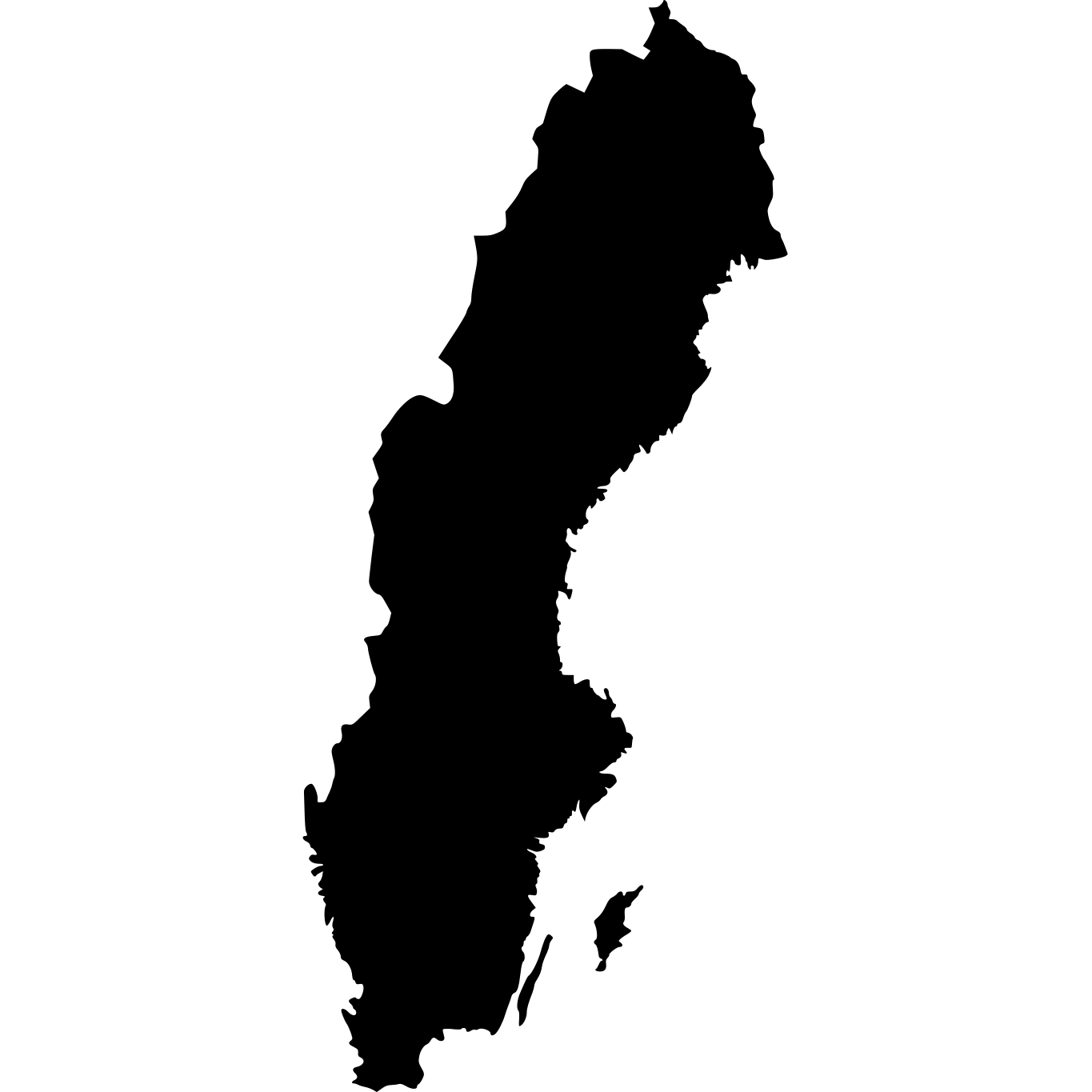
Sweden Eco is a Swedish brand

We're dedicated to providing you with the most up-to-date and science-backed ingredient info out there.
The data we've presented on this page has been verified by a member of the SkinSort Team.
Read more about us· Updated May 3, 2024 • Added by starstellastar_407


