Phlov Rice Cloud Cleanser
A face cleanser with 28 ingredients.
This mild gel cleanser is made to cleanse without leaving your skin tight or dry.
Worth noting
Contains EU-listed fragrance allergens, including Vanillin and Tetramethyl Acetyloctahydronaphthalenes.
We independently verify ingredients, backed by peer-reviewed research. Suggest an update.
What's inside
Ingredients List
Water
Skin ConditioningCaprylyl/Capryl Glucoside
CleansingGlycerin
Humectant


Cocamidopropyl Betaine
Cleansing



Sodium Cocoamphoacetate
CleansingAloe Barbadensis Leaf Juice
Skin Conditioning

Inulin
Skin Conditioning
Glycolipids
Skin ConditioningOryza Sativa Extract
Absorbent

Saccharomyces Ferment Lysate Filtrate
Skin Conditioning
Lactobacillus/Soybean Ferment Extract
Skin ConditioningLactobacillus/Rice Ferment
Skin Conditioning
Lactobacillus/Panax Ginseng Root Extract Ferment Filtrate
Skin ConditioningSaccharomyces/Coix Lacryma-Jobi Ma-Yuen Seed Ferment Filtrate
Skin Conditioning
Saccharomyces/Potato Extract Ferment Filtrate
Humectant
Panthenol
Skin Conditioning
Propanediol
Solvent
Allantoin
Skin Conditioning
Potassium Cocoyl Rice Amino Acids
Emollient
Glyceryl Oleate
Emollient

Lactic Acid
Buffering




Citric Acid
Buffering
Sodium Phytate
ChelatingSodium Benzoate
Masking
Potassium Sorbate
Preservative
Parfum
Masking
Vanillin
Masking
Tetramethyl Acetyloctahydronaphthalenes
Masking
Water, Caprylyl/Capryl Glucoside, Glycerin, Cocamidopropyl Betaine, Sodium Cocoamphoacetate, Aloe Barbadensis Leaf Juice, Inulin, Glycolipids, Oryza Sativa Extract, Saccharomyces Ferment Lysate Filtrate, Lactobacillus/Soybean Ferment Extract, Lactobacillus/Rice Ferment, Lactobacillus/Panax Ginseng Root Extract Ferment Filtrate, Saccharomyces/Coix Lacryma-Jobi Ma-Yuen Seed Ferment Filtrate, Saccharomyces/Potato Extract Ferment Filtrate, Panthenol, Propanediol, Allantoin, Potassium Cocoyl Rice Amino Acids, Glyceryl Oleate, Lactic Acid, Citric Acid, Sodium Phytate, Sodium Benzoate, Potassium Sorbate, Parfum, Vanillin, Tetramethyl Acetyloctahydronaphthalenes
Benefits
Concerns
Ingredients Explained
Water. It's the most common cosmetic ingredient of all. You'll usually see it at the top of ingredient lists, meaning that it makes up the largest part of the product.
So why is it so popular? Water most often acts as a solvent - this means that it helps dissolve other ingredients into the formulation.
You'll also recognize water as that liquid we all need to stay alive. If you see this, drink a glass of water. Remember to stay hydrated!
Learn more about WaterThis ingredient is a mild surfactant made by sticking glucose onto a blend of fatty acids.
It does two jobs because it has a sugar head that loves water and a fatty tail that loves oil:
Typical use levels range from 10-20% in cleansers and 15-30% in shower products.
Once on your skin, your skin's glucoside hydrolases breaks it down into glucose and the parent fatty alcohols.
This ingredient is considered fungal acne safe because its fatty alcohol portion sits outside the Malassezia yeast's metabolization range.
Learn more about Caprylyl/Capryl GlucosideGlycerin (or glycerol) is a compound naturally found in your skin. It's a powerhouse humectant that pulls water into the stratum corneum.
Topically, glycerin does several things at once:
Your skin makes glycerin on its own (mostly from sebaceous oil breakdown) and shuttles it to your outermost layer of skin, or your epidermis, via aquaporin-3.
Aquaporin-3 is a transporter that is essential for normal skin hydration, elasticity, and repair. Interestingly, mice lacking in AQP3 have dry and less elastic skin that can be fully corrected with glycerin.
This ingredient is non-irritating, plays well with almost every ingredient, and works across all skin types. Typical use is anywhere between 3-10% but can go up to 79% in some leave-on products.
Just know very high concentrations (>40%) can feel tacky in low humidity.
Glycerin is the name for this ingredient in American English. British English uses Glycerol/Glycerine.
Learn more about GlycerinCocamidopropyl Betaine is a fatty acid created by mixing similar compounds in coconut oil and dimethylaminopropylamine, a compound with two amino groups.
This ingredient is a surfactant and cleanser. It helps gather the dirt, pollutants, and other impurities in your skin to be washed away. It also helps thicken a product and make the texture more creamy.
Being created from coconut oil means Cocamidopropyl Betaine is hydrating for the skin.
While Cocamidopropyl Betaine was believed to be an allergen, a study from 2012 disproved this. It found two compounds in unpure Cocamidopropyl Betaine to be the irritants: aminoamide and 3-dimethylaminopropylamine. High-grade and pure Cocamidopropyl Betaine did not induce allergic reactions during this study.
Learn more about Cocamidopropyl BetaineWe don't have a description for Sodium Cocoamphoacetate yet.
Aloe Barbadensis Leaf Juice is the filtered, stabilized liquid pressed from the inner gel of the aloe vera leaf.
In cosmetics, it shows up as either soothing active or a water-replacement base. It is roughly 98-99% water and the last 1-2% is an interesting mix of polysaccharides, amino acids, vitamins, minerals, and enzymes.
The polysaccharides do most of the work: they bind water at the skin surface for a light, non-greasy hydration boost. And one of the polysaccharides, glycomannan, is linked to fibroblast stimulation + collagen synthesis. This is also why aloe has such a long track record in wound and burn healing.
This ingredient is also calming with anti-inflammatory and mild antimicrobial activity, making it a great pick for sensitive, irritated, or post-sun skin.
Realistic expectations matter though; the solid evidence is mostly limited to hydration, soothing, and wound support. Deeper claims about anti-aging or sun protection are not well backed, and science reviews note it does not prevent radiation-induced skin injury.
Because it plays well with almost everything, it's commonly used as a base alongside other actives like niacinamide or vitamin C.
Typical usage concentrations range from 0.5% (where hydration benefits already show up) all the way to 90%+ (where it replaces water as the main base).
The safety for this ingredient is well-establish as well. Overall, this is a great supporting ingredient for those who want a boost in hydration.
Learn more about Aloe Barbadensis Leaf JuiceInulin is a polysaccharide (carbohydrate) with prebiotic and antioxidant properties.
The majority of inulin is extracted from chicory, but can also be obtained from other plants such as garlic, onion, asparagus, and sugarcane.
Studies show inulin may help with controlling your skin's natural microbiota when applied topically.
The antioxidant potential of inulin varies depending on the source.
Learn more about InulinGlycolipids are natural, sustainable biosurfactants. They are both surfactants (cleansing agents) and emollients.
Made from lipids and sugars, in-vitro studies show glycolipids are a gentle alternative to conventional surfactants. They also possess foaming properties to give cleaning products a nice texture.
One manufacturer study found their glycolipid also demonstrated sebum reduction and helped reduced oiliness after four weeks. This means it can also be great for scalp care.
Learn more about GlycolipidsOryza Sativa Extract comes from the rice grain, Oryza sativa. Rice extract has wound healing, antioxidant, anti-inflammatory, and hydrating properties.
Rice grains contain numerous antioxidants which may help with anti-aging, such as vitamin E. Antioxidants help stabilize free-radical molecules. Unstable free-radical molecules may damage your skin cells and accelerate signs of aging.
A study from 2002 found rice to help increase the rate of wound healing. The same study found an improvement of skin barrier function in the patients after taking rice baths.
Numerous in-vitro studies have found rice water to help decrease sun damage by increasing collagen production and inhibiting the process of tyrosinase.
Long story short- tyrosinase is an enzyme that controls melanin production. Our bodies start producing melanin (AKA tanning) when exposed to UV radiation to protect against damage. Rice water is found to partially block this process.
Though more research is needed on rice's ability to help with UV protection, recent studies seem promising.
Wondering why rice is hydrating? The protein in rice have emollient properties. Emollients create a barrier on the skin to trap moisture in, keeping your skin moisturized.
Some rice extract may have mildly-exfoliating properties. These are mainly limited to Oryza Sativa (Rice) Bran and Oryza Sativa (Rice) Germ Powder.
This rice was first cultivated in China over 10,000 years ago. Many cultures throughout Asia have used rice water on skin and hair for centuries.
Learn more about Oryza Sativa ExtractSaccharomyces Ferment Lysate Filtrate is created from the fermentation of the yeast known as Saccharomyces.
Lysate is formed from the lysis of cells, and lysis means to disintegrate a cell.
Lactobacillus/Soybean Ferment Extract is the result of fermenting soybeans with the Lactobacillus bacteria. It mainly acts as a skin conditioning agent in a formula, and the interesting part is what fermentation does to the soy.
Fermenting soy:
The isoflavones are the workhorses behind the common claims; lab and animal studies show they mop up free radicals, help protect skin cells from UVB damage, and nudge fibroblasts to make more collagen while slowing the enzymes that break collagen down.
One controlled clinical study using an isoflavone cream reported softer wrinkles and better skin texture over time. A topical fermented soy extract also improved hydration and elasticity in an animal aging model.
The big caveat is that most of this evidence comes from soy isoflavones and related fermented soy extracts rather than this exact INCI. Some of the strongest data also comes from oral studies.
So it's best to think of this ingredient as a gentle, antioxidant-leaning conditioning agent rather than a proven wrinkle eraser.
At this time, there's no published concentration levels for this specific ferment but it usually shows up at modest levels in real products (~1% or less).
One last thing for people with soy allergies: it's always worth patch testing this ingredient despite the lowered allergy risk.
Learn more about Lactobacillus/Soybean Ferment ExtractThis ingredient is created by fermenting the lactobacillus bacteria with rice.
Lactobacillus is a great ingredient at keeping skin barrier healthy and rice ferment has great anti-aging benefits.
We don't have a description for Lactobacillus/Panax Ginseng Root Extract Ferment Filtrate yet.
Saccharomyces/Coix Lacryma-Jobi Ma-Yuen Seed Ferment Filtrate isn't fungal acne safe.
Saccharomyces/Potato Extract Ferment Filtrate isn't fungal acne safe.
Panthenol is a common ingredient that helps hydrate and soothe the skin. It is found naturally in our skin and hair.
There are two forms of panthenol: D and L.
D-panthenol is also known as dexpanthenol. Most cosmetics use dexpanthenol or a mixture of D and L-panthenol.
Panthenol is famous due to its ability to go deeper into the skin's layers. Using this ingredient has numerous pros (and no cons):
Like hyaluronic acid, panthenol is a humectant. Humectants are able to bind and hold large amounts of water to keep skin hydrated.
This ingredient works well for wound healing. It works by increasing tissue in the wound and helps close open wounds.
Once oxidized, panthenol converts to pantothenic acid. Panthothenic acid is found in all living cells.
This ingredient is also referred to as pro-vitamin B5.
Learn more about PanthenolPropanediol is an all-star ingredient. It softens, hydrates, and smooths the skin.
It’s often used to:
Propanediol is not likely to cause sensitivity and considered safe to use. It is derived from corn or petroleum with a clear color and no scent.
Learn more about PropanediolAllantoin is a soothing ingredient known for its protective and moisturizing properties; it's basically a quiet workhorse ingredient you can find in a huge range of cosmetics.
Though it can be derived from the comfrey plant, allantoin is produced synthetically for cosmetic products to ensure purity.
Research shows it can encourage your skin cells to turn over and renew by stimulating keratinocyte and fibroblast proliferation.
It also has mild keratolytic properties to help loosen and shed dead skin cells without being harsh.
Studies also suggest allantoin can help calm inflammation by dialing down some of the chemical signals your skin sends out when it is irritated.
This ingredient is typically used in the 0.1-0.5% range, and the FDA recognizes it as a skin protectant in OTC products up to 2%.
Overall, allantoin is a wonderful addition to most routines; it is stable across a wide pH range (~4-8), works well with other ingredients, and is considered non-sensitizing/non-irritating.
Fun fact: Allantoin is naturally occurring in comfrey root, beets, chamomile, and wheat sprouts. Our bodies even produce it as a byproduct of uric acid metabolism.
Learn more about AllantoinWe don't have a description for Potassium Cocoyl Rice Amino Acids yet.
Glyceryl Oleate is the monoester of glycerin and oleic acid. It is a skin-conditioning emollient that also helps form emulsions.
What makes glyceryl oleate special is its "re-fatting" effect.
When you wash your hair and skin with a surfactant-based cleanser, the surfactants grab onto everything. This includes your skin's natural lipids, or the fats that live in your skin barrier and sebum. Once you rinse these surfactants away, it leaves your skin feeling tight, dry, and clean (in a not-good way).
Re-fatting is essentially putting some of these lipids back. Glyceryl oleate deposits a thin layer of emollient lipids back on the skin or hair surface reduce some of the barrier damage.
Also, glyceryl oleate isn't a foreign molecule to your skin. It's chemically identical to something your skin already produces and manages naturally. This is why it tends to be well-tolerated with low risk of irritation.
Typical use levels range from 0.5-5%.
Glyceryl Oleate has a function of "perfuming" in the CosIng database. This just means that the ingredient has some scent character that can contribute to the product's overall smell.
The scent of this ingredient is described as "waxy".
As an ester of oleic acid, this ingredient may not be fungal acne safe. This is because oleic acid falls into the carbon-chain length that Malassezia can use as a substrate.
Learn more about Glyceryl OleateLactic Acid is another well-loved alpha hydroxy acid (AHA). It is gentler than glycolic acid but still highly effective.
Its main role is to exfoliate the surface of the skin by loosening the “glue” that holds dead skin cells together. Shedding those old cells leads to smoother, softer, and more even-toned skin.
Because lactic acid molecules are larger than glycolic acid, they don’t penetrate as deeply. This means they’re less likely to sting or irritate, making it a great choice for beginners or those with sensitive skin.
Like glycolic acid, it can:
Lactic acid also acts as a humectant (like hyaluronic acid). It can draw water into the skin to improve hydration and also plays a role in the skin's natural moisturizing factor (NMF) in the form of sodium lactate.
Studies show it can boost ceramide production to strengthen the skin barrier and even help balance the skin’s microbiome.
To get results, choose products with a pH between 3-4.
Lower strengths (5-12%) focus on surface exfoliation; higher strengths (12% and up) can reach deeper in the dermis (deeper, supportive layer) to improve skin texture and firmness over time.
Though it was originally derived from milk, most modern lactic acid used in skincare is vegan. It is made through non-dairy fermentation to create a bio-identical and stable form suitable for all formulations.
When lactic acid shows up near the end of an ingredient list, it usually means the brand added just a tiny amount to adjust the product’s pH.
Legend has it that Cleopatra used to bathe in sour milk to help reduce wrinkles.
Lactic acid is truly a gentle multitasker: it exfoliates, hydrates, strengthens, and brightens. It's a great ingredient for giving your skin a smooth, glowing, and healthy look without the harshness of stronger acids.
Read more about some other popular AHA's here:
Learn more about Lactic AcidCitric Acid is an alpha hydroxy acid (AHA) naturally found in citrus fruits like oranges, lemons, and limes.
Like other AHAs, citric acid can exfoliate skin by breaking down the bonds that hold dead skin cells together. This helps reveal smoother and brighter skin underneath.
However, this exfoliating effect only happens at high concentrations (20%) which can be hard to find in cosmetic products.
Due to this, citric acid is usually included in small amounts as a pH adjuster. This helps keep products slightly more acidic and compatible with skin's natural pH.
In skincare formulas, citric acid can:
While it can provide some skin benefits, research shows lactic acid and glycolic acid are generally more effective and less irritating exfoliants.
Most citric acid used in skincare today is made by fermenting sugars (usually from molasses). This synthetic version is identical to the natural citrus form but easier to stabilize and use in formulations.
Rosacea skin has a lower threshold for acids generally, with 62.5% of rosacea subjects in one study reacting to lactic acid in a sting test. This is why we mark citric acid as a potential rosacea trigger.
However, this ingredient shows up as a pH adjuster or chelator at roughly 0.1-1% in many products. These low levels are unlikely to be an issue for rosacea skin and becomes a potential trigger at exfoliating concentrations (20%). Because everybody's skin is unique, we recommend a patch test if you are unsure.
Learn more about Citric AcidSodium Phytate is the sodium salt of Phytic acid, a compound that plants store phosphorus in. It's the plant-derived alternative to ingredients like Disodium EDTA.
In skincare, this ingredient is a chelator that grabs onto trace metal ions like iron and copper that sneak into formulas through water/raw materials.
Those metals speed up oxidation so binding them keeps oils, fragrance, and actives from going off, stops color changes, and helps the preservative system work harder.
Survey data shows usage levels range from 0.0099%-0.5% in leave-on products, 0.025%-0.3% in rinse-off, and up to 0.05% in eye-area products. Suppliers typically recommend a range between 0.05-0.5%.
Learn more about Sodium PhytateSodium Benzoate is a preservative. It's used in both cosmetic and food products to inhibit the growth of mold and bacteria. It is typically produced synthetically.
Both the US FDA and EU Health Committee have approved the use of sodium benzoate. In the US, levels of 0.1% (of the total product) are allowed.
Sodium benzoate works as a preservative by inhibiting the growth of bacteria inside of cells. It prevents the cell from fermenting a type of sugar using an enzyme called phosphofructokinase.
It is the salt of benzoic acid. Foods containing sodium benzoate include soda, salad dressings, condiments, fruit juices, wines, and snack foods.
Studies for using ascorbic acid and sodium benzoate in cosmetics are lacking, especially in skincare routines with multiple steps.
We always recommend speaking with a professional, such as a dermatologist, if you have any concerns.
Learn more about Sodium BenzoatePotassium Sorbate is a preservative used to prevent yeast and mold in products. It is commonly found in both cosmetic and food products.
This ingredient comes from potassium salt derived from sorbic acid. Sorbic acid is a natural antibiotic and effective against fungus.
Both potassium sorbate and sorbic acid can be found in baked goods, cheeses, dried meats, dried fruit, ice cream, pickles, wine, yogurt, and more.
You'll often find this ingredient used with other preservatives.
Learn more about Potassium SorbateParfum is a catch-all term for an ingredient or more that is used to give a scent to products.
Also called "fragrance", this ingredient can be a blend of hundreds of chemicals or plant oils. This means every product with "fragrance" or "parfum" in the ingredients list is a different mixture.
For instance, Habanolide is a proprietary trade name for a specific aroma chemical. When used as a fragrance ingredient in cosmetics, most aroma chemicals fall under the broad labeling category of “FRAGRANCE” or “PARFUM” according to EU and US regulations.
The term 'parfum' or 'fragrance' is not regulated in many countries. In many cases, it is up to the brand to define this term.
For instance, many brands choose to label themselves as "fragrance-free" because they are not using synthetic fragrances. However, their products may still contain ingredients such as essential oils that are considered a fragrance by INCI standards.
One example is Calendula flower extract. Calendula is an essential oil that still imparts a scent or 'fragrance'.
Depending on the blend, the ingredients in the mixture can cause allergies and sensitivities on the skin. Some ingredients that are known EU allergens include linalool and citronellol.
Parfum can also be used to mask or cover an unpleasant scent.
The bottom line is: not all fragrances/parfum/ingredients are created equally. If you are worried about fragrances, we recommend taking a closer look at an ingredient. And of course, we always recommend speaking with a professional.
Learn more about ParfumVanillin is the main compound of the vanilla bean. It is naturally occuring but can also be artificially created.
This ingredient exhibits antioxidant properties but is also a known skin-irritant.
Vanillism is the term of contact-dermatitis associated with the vanilla plant. The sap of the vanilla plant triggers skin irritation, swelling, and redness.
Learn more about VanillinThis ingredient is also known as ISO E Super. It is a synthetic perfuming and masking ingredient.
The manufacturer describes this scnet as amber and woody.
According to the EU, this ingredient is a known allergen and some people may develop skin sensitivity from repeated exposure.
Learn more about Tetramethyl AcetyloctahydronaphthalenesReviews
No written reviews yet. Be the first to review this product.
Recent searches
Search reviews by skin type, ingredient, or keyword.
Where it's from
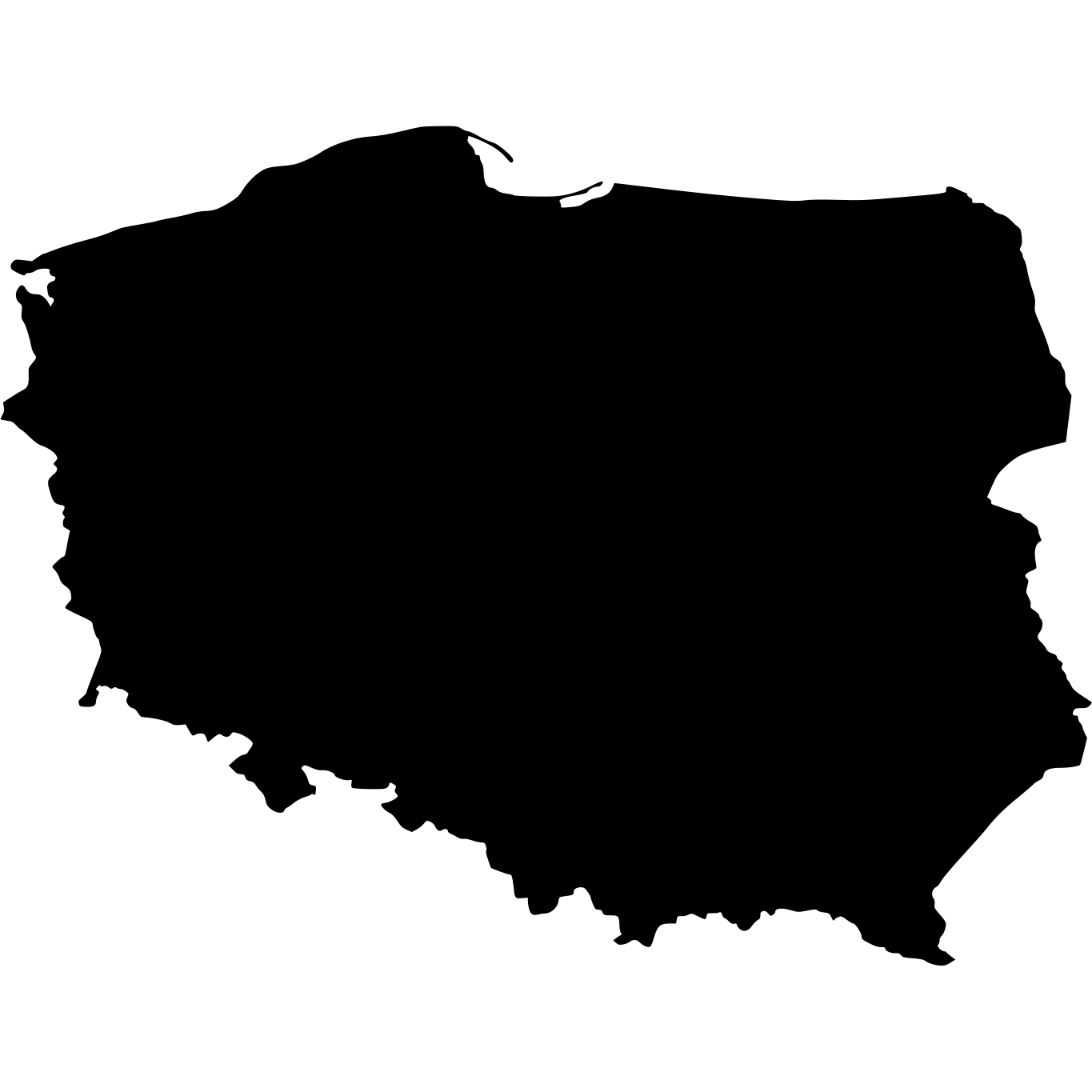
Phlov is a Polish brand

We're dedicated to providing you with the most up-to-date and science-backed ingredient info out there.
The data we've presented on this page has been verified by a member of the SkinSort Team.
Read more about us· Published April 30, 2026 • Added by Rieza


