Novaclear Acne Facial Foam
A face cleanser with 26 ingredients.
Face cleanser with 26 ingredients
Worth noting
Contains EU-listed fragrance allergens, including Mentha Piperita Oil and Benzyl Alcohol.
We independently verify ingredients, backed by peer-reviewed research. Suggest an update.
What's inside
Ingredients List
Water
Skin ConditioningAmmonium Lauryl Sulfate
Cleansing




Cocamidopropyl Betaine
Cleansing
Glycerin
Humectant


Aloe Barbadensis Leaf Juice
Skin Conditioning

Salvia Officinalis Flower/Leaf/Stem Extract
MaskingAllantoin
Skin Conditioning
Cucurbita Pepo Seed Oil
Emollient

Rosmarinus Officinalis Leaf Oil
Masking
Salvia Sclarea Oil
Masking
Chamomilla Recutita Flower Oil
Masking
Panthenol
Skin Conditioning
Mentha Piperita Oil
Masking


Polysorbate 20
Emulsifying
Lauric Acid
Cleansing

Myristic Acid
Cleansing
Oleic Acid
Emollient
Poloxamer 407
EmulsifyingPropylene Glycol
Humectant
Caprylyl Glycol
Emollient
Lactic Acid
Buffering






Disodium EDTA
ChelatingPhenoxyethanol
Preservative
Benzyl Alcohol
Perfuming

Ethylhexylglycerin
Skin ConditioningParfum
Masking
Water, Ammonium Lauryl Sulfate, Cocamidopropyl Betaine, Glycerin, Aloe Barbadensis Leaf Juice, Salvia Officinalis Flower/Leaf/Stem Extract, Allantoin, Cucurbita Pepo Seed Oil, Rosmarinus Officinalis Leaf Oil, Salvia Sclarea Oil, Chamomilla Recutita Flower Oil, Panthenol, Mentha Piperita Oil, Polysorbate 20, Lauric Acid, Myristic Acid, Oleic Acid, Poloxamer 407, Propylene Glycol, Caprylyl Glycol, Lactic Acid, Disodium EDTA, Phenoxyethanol, Benzyl Alcohol, Ethylhexylglycerin, Parfum
Benefits
Concerns
Ingredients Explained
Water. It's the most common cosmetic ingredient of all. You'll usually see it at the top of ingredient lists, meaning that it makes up the largest part of the product.
So why is it so popular? Water most often acts as a solvent - this means that it helps dissolve other ingredients into the formulation.
You'll also recognize water as that liquid we all need to stay alive. If you see this, drink a glass of water. Remember to stay hydrated!
Learn more about WaterAmmonium Lauryl Sulfate is a type of sulfate. It can be bad for dry skin, cause irritation, and worsen rosacea.
Cocamidopropyl Betaine is a fatty acid created by mixing similar compounds in coconut oil and dimethylaminopropylamine, a compound with two amino groups.
This ingredient is a surfactant and cleanser. It helps gather the dirt, pollutants, and other impurities in your skin to be washed away. It also helps thicken a product and make the texture more creamy.
Being created from coconut oil means Cocamidopropyl Betaine is hydrating for the skin.
While Cocamidopropyl Betaine was believed to be an allergen, a study from 2012 disproved this. It found two compounds in unpure Cocamidopropyl Betaine to be the irritants: aminoamide and 3-dimethylaminopropylamine. High-grade and pure Cocamidopropyl Betaine did not induce allergic reactions during this study.
Learn more about Cocamidopropyl BetaineGlycerin (or glycerol) is a compound naturally found in your skin. It's a powerhouse humectant that pulls water into the stratum corneum.
Topically, glycerin does several things at once:
Your skin makes glycerin on its own (mostly from sebaceous oil breakdown) and shuttles it to your outermost layer of skin, or your epidermis, via aquaporin-3.
Aquaporin-3 is a transporter that is essential for normal skin hydration, elasticity, and repair. Interestingly, mice lacking in AQP3 have dry and less elastic skin that can be fully corrected with glycerin.
This ingredient is non-irritating, plays well with almost every ingredient, and works across all skin types. Typical use is anywhere between 3-10% but can go up to 79% in some leave-on products.
Just know very high concentrations (>40%) can feel tacky in low humidity.
Glycerin is the name for this ingredient in American English. British English uses Glycerol/Glycerine.
Learn more about GlycerinAloe Barbadensis Leaf Juice is the filtered, stabilized liquid pressed from the inner gel of the aloe vera leaf.
In cosmetics, it shows up as either soothing active or a water-replacement base. It is roughly 98-99% water and the last 1-2% is an interesting mix of polysaccharides, amino acids, vitamins, minerals, and enzymes.
The polysaccharides do most of the work: they bind water at the skin surface for a light, non-greasy hydration boost. And one of the polysaccharides, glycomannan, is linked to fibroblast stimulation + collagen synthesis. This is also why aloe has such a long track record in wound and burn healing.
This ingredient is also calming with anti-inflammatory and mild antimicrobial activity, making it a great pick for sensitive, irritated, or post-sun skin.
Realistic expectations matter though; the solid evidence is mostly limited to hydration, soothing, and wound support. Deeper claims about anti-aging or sun protection are not well backed, and science reviews note it does not prevent radiation-induced skin injury.
Because it plays well with almost everything, it's commonly used as a base alongside other actives like niacinamide or vitamin C.
Typical usage concentrations range from 0.5% (where hydration benefits already show up) all the way to 90%+ (where it replaces water as the main base).
The safety for this ingredient is well-establish as well. Overall, this is a great supporting ingredient for those who want a boost in hydration.
Learn more about Aloe Barbadensis Leaf JuiceWe don't have a description for Salvia Officinalis Flower/Leaf/Stem Extract yet.
Allantoin is a soothing ingredient known for its protective and moisturizing properties; it's basically a quiet workhorse ingredient you can find in a huge range of cosmetics.
Though it can be derived from the comfrey plant, allantoin is produced synthetically for cosmetic products to ensure purity.
Research shows it can encourage your skin cells to turn over and renew by stimulating keratinocyte and fibroblast proliferation.
It also has mild keratolytic properties to help loosen and shed dead skin cells without being harsh.
Studies also suggest allantoin can help calm inflammation by dialing down some of the chemical signals your skin sends out when it is irritated.
This ingredient is typically used in the 0.1-0.5% range, and the FDA recognizes it as a skin protectant in OTC products up to 2%.
Overall, allantoin is a wonderful addition to most routines; it is stable across a wide pH range (~4-8), works well with other ingredients, and is considered non-sensitizing/non-irritating.
Fun fact: Allantoin is naturally occurring in comfrey root, beets, chamomile, and wheat sprouts. Our bodies even produce it as a byproduct of uric acid metabolism.
Learn more about AllantoinCucurbita Pepo Seed oil comes from the field pumpkin, including winter squash and the traditional orange pumpkin we see in Autumn.
Pumpkin seed oil is rich in vitamin E and plenty of fatty acids such as linoleic acids. Pumpkin seeds also have zinc and cartenoids.
Linoleic acid helps moisturize your skin as an emollient. Emollients act as a thin film to prevent moisture from escaping.
Cartenoids are an antioxidant. Antioxidants protect your skin against external damage. They also give pumpkins their classic orange color.
Fun fact: Pumpkins were first domesticated in Southern Mexico about 10,000 years ago.
Learn more about Cucurbita Pepo Seed OilRosmarinus Officinalis Leaf Oil is an essential oil also known as rosemary essential oil. In skincare, it is a skin conditioning agent and also acts as a natural fragrance that gives products a fresh/herby smell.
The oil is a mix of over 100 volatile compounds with 1,8-cineole, α-pinene, camphor, and verbenone usually leading the pack.
Lab studies credit this oil with antioxidant, anti-inflammatory, and antimicrobial activity. Some research even show rosemary compounds calming acne-related inflammation.
The Cosmetic Ingredient Review (CIR) has concluded rosemary-derived ingredients to be safe when formulated to be nonsensitizing.
Since this is a fragrant essential oil, the main concern is for fragrance-sensitive folks.
Learn more about Rosmarinus Officinalis Leaf OilThis ingredient is more commonly known as clary sage essential oil.
The two main active components in clary sage essential oil are linalool and linalyl acetate.
A patch test is recommended before use, especially for sensitive skin. This ingredient should be diluted as part of a formulation and not applied directly.
Learn more about Salvia Sclarea OilChamomilla Recutita Flower Oil comes from the chamomile flower (like the tea you drink).
Essential oils from chamomile have been found to improve wound healing due to its antimicrobial properties.
Chamomile oil can help soothe and hydrate your skin.
Learn more about Chamomilla Recutita Flower OilPanthenol is a common ingredient that helps hydrate and soothe the skin. It is found naturally in our skin and hair.
There are two forms of panthenol: D and L.
D-panthenol is also known as dexpanthenol. Most cosmetics use dexpanthenol or a mixture of D and L-panthenol.
Panthenol is famous due to its ability to go deeper into the skin's layers. Using this ingredient has numerous pros (and no cons):
Like hyaluronic acid, panthenol is a humectant. Humectants are able to bind and hold large amounts of water to keep skin hydrated.
This ingredient works well for wound healing. It works by increasing tissue in the wound and helps close open wounds.
Once oxidized, panthenol converts to pantothenic acid. Panthothenic acid is found in all living cells.
This ingredient is also referred to as pro-vitamin B5.
Learn more about PanthenolThis essential oil is steam-distilled from peppermint leaves, also known as peppermint oil. It's mainly used for scent in skincare but also provides that signature "cooling" sensation.
Peppermint oil is a "feels amazing" ingredient until it doesn't.
At higher doses or for those with sensitive skin, methol-type cooling can quickly turn into burning/irritation. It can also trigger irritant dermatitis or even allergic contact dermatitis. In a large patch-test dataset, peppermint oil had a low but positive rate for this.
In cosmetics, Cosmetic Safety Reviews (CIR) concludes that peppermint oil is safe to use when formulated to be non-sensitizing with some restrictions; for instance, pulegone, a naturally occurring component of peppermint oil, should not exceed 1%.
Since peppermint oil contains fragrance allergens such as limonene, linalool, and menthol, it can be sensitizing for those with rosacea, eczema, a broken skin barrier, or just sensitive skin in general.
In Japan, this ingredient is known as Hakka Yu.
Learn more about Mentha Piperita OilPolysorbate 20 is a gentle, water-soluble emulsifier and mild surfactant. It stops oil and water from separating to keep your formulas blended and stable.
It also acts as a mild penetration enhancer by helping active ingredients absorb slightly better.
The common safety discussion around this ingredient involves a manufacturing byproduct called 1,4-dioxane.
Trace amounts can form during production but the EU's Scientific Committee on Consumer Safety has concluded that levels at/below 10 ppm in finished products are safe (commercial products consistently fall within acceptable margins).
True allergic reactions are uncommon and the CIR Expert Panel has confirmed this ingredient to be safe as used in cosmetics.
Because it is derived from lauric acid, it may not be fungal acne safe.
Learn more about Polysorbate 20Lauric Acid is a saturated fatty acid naturally found in coconut oil, palm kernel oil, and even breast milk.
In cosmetics, it is an:
Lab studies have found that lauric acid is surprisingly good at killing acne-causing bacteria. However, these tests were done on bacteria in a petri dish and not on real skin, so we can't say for certain it works the same in a formulation on a real face.
The comedogenic rating of 4 comes from the 1972 rabbit ear model using undiluted ingredients. Comedogenicity is highly individual and one comedogenic ingredient cannot predict how a formula will behave on skin.
This ingredient is not fungal acne safe and research has confirmed Malassezia can use it as a food source. Even though "fungal acne" has the word "acne" in it, they are completely different. Regular acne is driven by a bacteria called Cutibacterium acnes, clogged pores, and excess oil. Fungal acne isn't really acne; it's caused by an overgrowth of a yeast called Malassezia that already lives on everyone's skin. Because one is bacterial and the other is fungal, they respond to different ingredients.
Learn more about Lauric AcidMyristic Acid, aka tetradecanoic acid, is a naturally occurring fatty acid found in coconut oil, milk fat, and palm oil.
In skincare, it is an:
Research indicates that this ingredient posts a low risk of irritation and sensitization.
Industry survey data collected for this ingredient puts real-world usage concentrations anywhere from 0.00002% to 20% (most of the high end sits in rinse-off products).
Myristic Acid is not a recognized contact allergen and there are no published case reports of allergic contact dermatitis to it. Human testing found it to be non-irritating at 100% and at 40-50% in mineral oil. There are complaints about high-Myristic-acid cleansers leaving a tight feeling behind, but that has more to do with soap chemistry and pH than an allergy.
This ingredient does have a comedogenic rating of 3, but this doesn't mean a formula with this ingredient will clog pores.
Human testing has proved that any finished product with this ingredient won't automatically make you break out; it really comes down to concentration, formula, and your skin. Some people still find it breaks them out. So if that's you, definitely trust your skin.
Since myristic acid is a C14 fatty acid, it falls within the range that Malassezia can metabolize (C11-24), and therefore may not be fungal acne safe.
Learn more about Myristic AcidOleic Acid is an Omega-9 fatty acid that can be found naturally in your skin's sebum and in many plant oils such as avocado and olive oil.
It is an emollient that helps soften skin and prevent moisture loss.
Research shows:
A 1998 study did find that applying oleic acid at higher concentrations may cause irritation and disrupt the skin barrier. Modern formulations typically use low levels that is well-tolerated.
The culprit behind fungal acne, the Malassezia yeast, feeds on fatty acids with carbon chain lengths between C11-C24. Oleic Acid, at C18, falls right into that sweet spot.
In vitro studies have shown that Oleic Acid is one of the fatty acids that induce rapid Malassezia growth in lab settings.
Oleic Acid is widely listed with a comedogenic rating but no published study has ever actually assigned it one.
The 0 to 5 scale everyone quotes comes from Fulton's 1989 survey in the Journal of the Society of Cosmetic Chemists and Oleic Acid does not appear in his fatty acid tables at all; what he did test were related ingredients built from it, like Decyl Oleate and Oleyl Alcohol (which did get ratings).
Somewhere along the way people seem to have borrowed those numbers for Oleic Acid itself.
So why is it considered comedogenic? Oleic Acid has been studied. Researchers in 1971 and 1983 applied it to rabbit ears (the standard test back then) and it did clog pores. The 1983 study also found something useful: oxidized Oleic Acid, meaning the kind that's gone rancid, clogged pores noticeably more than fresh Oleic Acid did.
It's just worth keeping in mind that these tests used rabbit skin which reacts more easily than ours. They also used much higher concentrations than you'd ever find in a real product.
A 2006 study on actual people found finished products made with comedogenic ingredients often turn out not to be comedogenic at all. As always, listen to your skin.
Learn more about Oleic AcidWe don't have a description for Poloxamer 407 yet.
Propylene Glycol is a synthetic, colorless, odorless liquid that has been a staple in cosmetics for decades. It is a skin conditioning agent, humectant, and solvent.
As a humectant, it draw water to the skin to reduce flaking and restore suppleness. It's also a solvent that helps dissolve other actives and keeps formulas stable across temperature changes.
The CIR Expert Panel has confirmed this ingredient to be nontoxic and clinical studies show no sensitization at cosmetic use concentrations.
True allergic reactions are quite rare: a 15-year retrospective study of 6,751 patients found only 0.31% had a positive reaction (and less than half were considered clinically relevant).
It seemed that when sensitization does occur, it's most commonly linked to topical medication (like corticosteroids) and not cosmetics. Allergic contact dermatitis also appears largely limited to individuals with underlying skin conditions.
Overall, propylene glycol is a well-studied ingredient that most people can tolerate without issue.
Learn more about Propylene GlycolCaprylyl Glycol is a humectant, skin conditioner, emollient, and preservative booster derived from either caprylic acid or synthetically created.
Typical use levels vary from 0.3-1% as a preservative booster and go up to 2% to condition skin.
Because it is not a free-fatty acid, this ingredient is fungal acne safe (there's nothing for Malassezia to feed on).
Learn more about Caprylyl GlycolLactic Acid is another well-loved alpha hydroxy acid (AHA). It is gentler than glycolic acid but still highly effective.
Its main role is to exfoliate the surface of the skin by loosening the “glue” that holds dead skin cells together. Shedding those old cells leads to smoother, softer, and more even-toned skin.
Because lactic acid molecules are larger than glycolic acid, they don’t penetrate as deeply. This means they’re less likely to sting or irritate, making it a great choice for beginners or those with sensitive skin.
Like glycolic acid, it can:
Lactic acid also acts as a humectant (like hyaluronic acid). It can draw water into the skin to improve hydration and also plays a role in the skin's natural moisturizing factor (NMF) in the form of sodium lactate.
Studies show it can boost ceramide production to strengthen the skin barrier and even help balance the skin’s microbiome.
To get results, choose products with a pH between 3-4.
Lower strengths (5-12%) focus on surface exfoliation; higher strengths (12% and up) can reach deeper in the dermis (deeper, supportive layer) to improve skin texture and firmness over time.
Though it was originally derived from milk, most modern lactic acid used in skincare is vegan. It is made through non-dairy fermentation to create a bio-identical and stable form suitable for all formulations.
When lactic acid shows up near the end of an ingredient list, it usually means the brand added just a tiny amount to adjust the product’s pH.
Legend has it that Cleopatra used to bathe in sour milk to help reduce wrinkles.
Lactic acid is truly a gentle multitasker: it exfoliates, hydrates, strengthens, and brightens. It's a great ingredient for giving your skin a smooth, glowing, and healthy look without the harshness of stronger acids.
Read more about some other popular AHA's here:
Learn more about Lactic AcidDisodium EDTA is a chelating agent. It grabs onto and deactivates metal ions that sneak into your products from water, packaging, or air.
This ingredient mainly works behind the scenes and helps with:
On top of that, this ingredient can counteract the effects of hard water by binding to the minerals in it.
One thing worth knowing is that Disodium EDTA has been shown to be a mild penetration enhancer. It can help other ingredients absorb into skin more effectively which can be a double-edged sword (great for actives, but can also make the active too strong if you have sensitive skin).
Clinical patch testing showed no significant skin irritation at typical use concentrations and minimal dermal absorption.
You'll most likely see this ingredient near the end of an ingredient list. It's typically found in concentrations less than 1%.
Learn more about Disodium EDTAPhenoxyethanol is one of the most widely used preservatives in skincare (and for good reason!).
It has a large spectrum of antimicrobial activity and especially effective bacteria, yeast, and mold while only having a weak effect on your skin's natural microbiome.
On a cellular level, it disrupts the cell membranes of microbes by poking holes that make the cell leak. This shuts down the chemical reactions the microbe needs to make energy so it can no longer survive.
Another perk of this ingredient is that it stays functional across a wide pH range (3-10).
You'll often see it paired with boosters like Ethylhexylglycerin; one study showed that a 1:9 ratio of Ethylhexylglycerin to Phenoxyethanol damages bacterial membranes as effectively as doubling the Phenoxyethanol concentration on its own.
Typical use concentrations range from 0.3-1% depending on the formula, and this ingredient is capped at 1% int the EU.
Safety-wise, the fear mongering does not hold up to the evidence. The EU's Scientific Committee on Consumer Safety and FDA consider it safe as a preservative at up to 1%, including for children of all ages.
Adverse systemic effects only showed up in animal studies at exposures roughly 200x higher than what people get from cosmetics. And despite its very widespread use, this ingredient is a rare sensitizer and allergic reactions are uncommon.
Learn more about PhenoxyethanolBenzyl Alcohol is an aromatic alcohol with several roles: it's a preservative, solvent, and mild fragrance component with a floral scent.
This ingredient has been deemed safe for use in cosmetic formulations at concentrations up to 5%, and up to 10% in hair dyes. You'll typically see 0.5-2% in most rinse-off or leave-on products.
As a preservative, it works by disrupting the membrane of microbial proteins. This helps keep bacteria and fungi from growing in your products.
The sensitization picture is actually quite assuring as well:of nearly 71,000 patients patch tested with benzyl alcohol, only 0.21% showed a positive reaction with most of them being weakly positive.
This led researchers to conclude that benzyl alcohol cannot be regarded as a significant contact allergen.
It is worth noting this ingredient is classified as one of the EU's regulated fragrance allergens and restricted to 1% in finished products.
Labels must also declare it in concentrations above 0.001% in leave-on products and 0.01% in rinse-off products.
At concentrations around 5%, localized redness and itching can appear as a direct irritant response and not as a true allergic reaction.
Learn more about Benzyl AlcoholEthylhexylglycerin is created from glycerin. It is a multitasker ingredient that:
The CIR Expert Panel found minimal skin absorption or sensitization of any kind in a safety assessment. Though this ingredient is considered well-tolerated, a small number of cases of allergic dermatitis have been published since 2002. Just be sure to patch test if you are unsure.
Industry-reported use ranges from 8% in rinse-off products and 2% in leave-on formulations.
Learn more about EthylhexylglycerinParfum is a catch-all term for an ingredient or more that is used to give a scent to products.
Also called "fragrance", this ingredient can be a blend of hundreds of chemicals or plant oils. This means every product with "fragrance" or "parfum" in the ingredients list is a different mixture.
For instance, Habanolide is a proprietary trade name for a specific aroma chemical. When used as a fragrance ingredient in cosmetics, most aroma chemicals fall under the broad labeling category of “FRAGRANCE” or “PARFUM” according to EU and US regulations.
The term 'parfum' or 'fragrance' is not regulated in many countries. In many cases, it is up to the brand to define this term.
For instance, many brands choose to label themselves as "fragrance-free" because they are not using synthetic fragrances. However, their products may still contain ingredients such as essential oils that are considered a fragrance by INCI standards.
One example is Calendula flower extract. Calendula is an essential oil that still imparts a scent or 'fragrance'.
Depending on the blend, the ingredients in the mixture can cause allergies and sensitivities on the skin. Some ingredients that are known EU allergens include linalool and citronellol.
Parfum can also be used to mask or cover an unpleasant scent.
The bottom line is: not all fragrances/parfum/ingredients are created equally. If you are worried about fragrances, we recommend taking a closer look at an ingredient. And of course, we always recommend speaking with a professional.
Learn more about ParfumReviews
No written reviews yet. Be the first to review this product.
Recent searches
Search reviews by skin type, ingredient, or keyword.
Where it's from
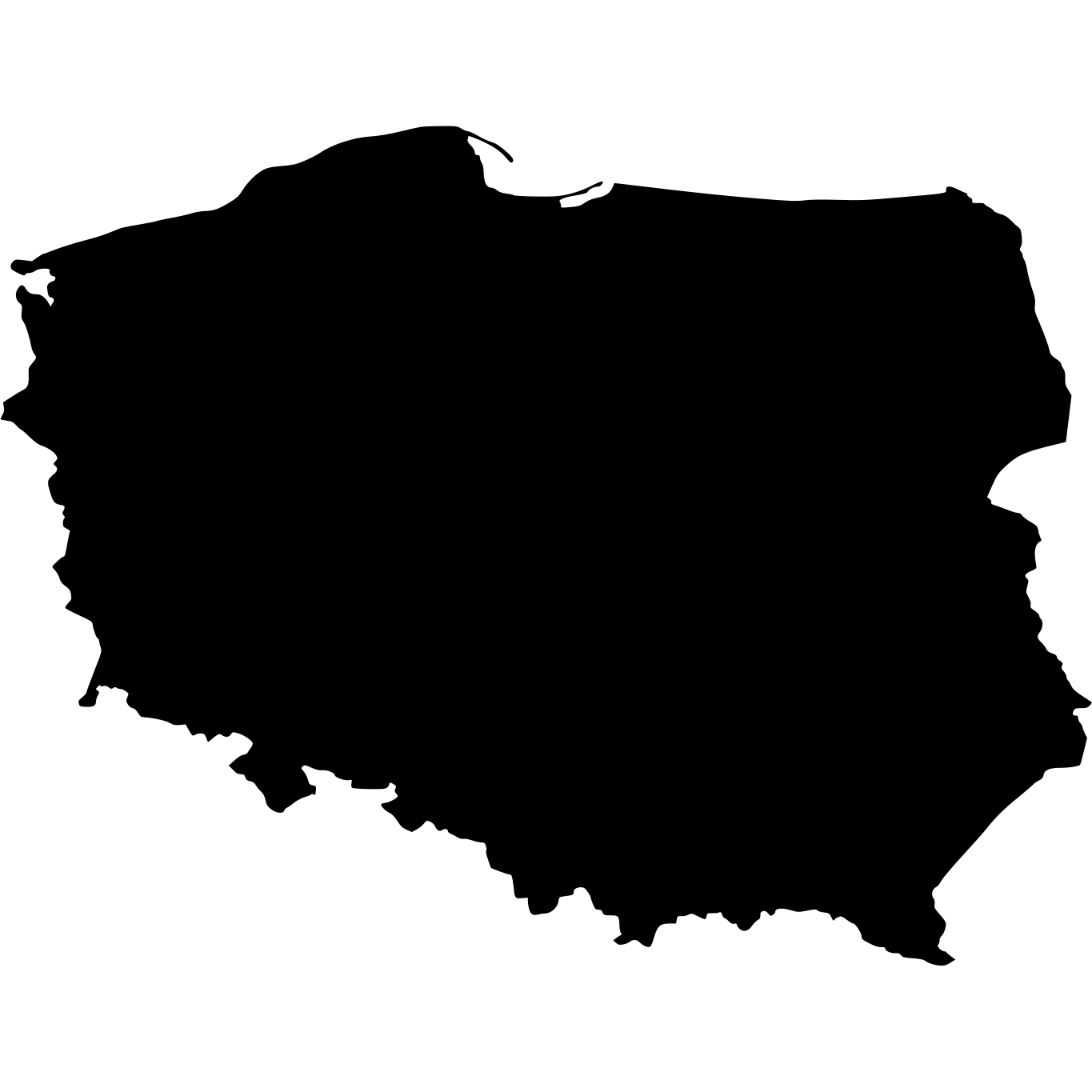
Novaclear is a Polish brand
Often compared with

We're dedicated to providing you with the most up-to-date and science-backed ingredient info out there.
The data we've presented on this page has been verified by a member of the SkinSort Team.
Read more about us· Published January 22, 2026 • Added by irinasam


