Ekopharma Sea Buckthorn Re-Vital Eye Cream
A eye moisturizer with 26 ingredients, including vitamin C, vitamin E, and hyaluronic acid.
This anti-aging eye moisturizer is formulated around Hexapeptide-11 to soften the look of wrinkles.
We independently verify ingredients, backed by peer-reviewed research. Suggest an update.
What's inside
Ingredients List
Betula Pendula Sap
Skin ConditioningCaprylic/Capric Triglyceride
Masking


Glycerin
Humectant
Cetyl Alcohol
Emollient


Stearic Acid
Cleansing
Water
Skin ConditioningArachidyl Alcohol
Emollient
Sorbitan Olivate
Emulsifying
Hippophae Rhamnoides Seed Oil
Skin Protecting
Hexapeptide-11
Skin Conditioning

Rosa Rubiginosa Fruit Extract
EmollientHippophae Rhamnoides Fruit Extract
Skin Conditioning

Sodium Hyaluronate
Humectant
Tocopherol
Antioxidant



Daucus Carota Sativa Root Extract
Skin Conditioning
Ascorbyl Glucoside
Antioxidant
Arachidyl Glucoside
EmulsifyingBehenyl Alcohol
Emollient
Myristyl Myristate
Emollient

Cetearyl Olivate
Rosmarinus Officinalis Leaf Extract
AntimicrobialHelianthus Annuus Seed Oil
Emollient
Phenethyl Alcohol
MaskingLevulinic Acid
Perfuming

Leuconostoc/Radish Root Ferment Filtrate
Antimicrobial
Potassium Hydroxide
BufferingBetula Pendula Sap, Caprylic/Capric Triglyceride, Glycerin, Cetyl Alcohol, Stearic Acid, Water, Arachidyl Alcohol, Sorbitan Olivate, Hippophae Rhamnoides Seed Oil, Hexapeptide-11, Rosa Rubiginosa Fruit Extract, Hippophae Rhamnoides Fruit Extract, Sodium Hyaluronate, Tocopherol, Daucus Carota Sativa Root Extract, Ascorbyl Glucoside, Arachidyl Glucoside, Behenyl Alcohol, Myristyl Myristate, Cetearyl Olivate, Rosmarinus Officinalis Leaf Extract, Helianthus Annuus Seed Oil, Phenethyl Alcohol, Levulinic Acid, Leuconostoc/Radish Root Ferment Filtrate, Potassium Hydroxide
Key Ingredients
Benefits
Concerns
Ingredients Explained
We don't have a description for Betula Pendula Sap yet.
Caprylic/Capric Triglyceride (aka MCT Oil) is a lightweight emollient, solvent, and texture enhancer. It is considered a skin-softener by helping to prevent moisture loss.
Though it behaves like an oil, it is not technically one due to its chemical composition. One perk of this ingredient is that it is very stable, resistant to oxidation, and unlikely to go rancid.
In practice, that translates to a long shelf life and a consistently elegant skin feel.
While there is an assumption Caprylic Triglyceride can clog pores due to it being derived from coconut oil, there is no research supporting this. Just patch test if you have concerns.
Fractionated coconut oil and MCT Oil are both listed as Caprylic/Capric Triglyceride according to INCI. This is because INCI names are based on the ingredient’s final chemical composition and not its marketing name or source.
This ingredient is treated as the gold standard fungal acne safe oil. Even though it is coconut derived, the problematic lauric acid is stripped out.
This leaves just caprylic (C8) and capric (C10) acid. These chain lengths actually trend antifungal; a 2020 study found caprylic acid was enough to disrupt Malassezia furfur cell membrane, with a caprylic acid derivative damaging membrane structures at concentrations as low as 0.2%.
Learn more about Caprylic/Capric TriglycerideGlycerin (or glycerol) is a compound naturally found in your skin. It's a powerhouse humectant that pulls water into the stratum corneum.
Topically, glycerin does several things at once:
Your skin makes glycerin on its own (mostly from sebaceous oil breakdown) and shuttles it to your outermost layer of skin, or your epidermis, via aquaporin-3.
Aquaporin-3 is a transporter that is essential for normal skin hydration, elasticity, and repair. Interestingly, mice lacking in AQP3 have dry and less elastic skin that can be fully corrected with glycerin.
This ingredient is non-irritating, plays well with almost every ingredient, and works across all skin types. Typical use is anywhere between 3-10% but can go up to 79% in some leave-on products.
Just know very high concentrations (>40%) can feel tacky in low humidity.
Glycerin is the name for this ingredient in American English. British English uses Glycerol/Glycerine.
Learn more about GlycerinCetyl Alcohol is a fatty alcohol. Fatty Alcohols are most often used as an emollient or to thicken a product.
Its main roles are:
Though it has "alcohol" in the name, it is not related to denatured alcohol or ethyl alcohol.
The FDA allows products labeled "alcohol-free" to have fatty alcohols.
This ingredient may not be fungal acne safe. It is a primary fatty alcohol with a chain length above 12 carbons. A study from 2019 show Malassezia can feed on fatty alcohols in this range, so it may trigger fungal acne in those prone to it.
Learn more about Cetyl AlcoholStearic Acid is a fatty acid that is already found in your skin. It's one of the free fatty acids that works alongside ceramides and cholesterols to maintain your barrier.
In cosmetics, it is a multitasker:
Safety-wise, the CIR Expert Panel has concluded it to be safe in cosmetics when formulated to be non-irritating and non-sensitizing.
Free stearic acid is a C18 fatty acid that the Malassezia yeast can substrate, so this ingredient may not be fungal acne safe.
This ingredient does have a comedogenic rating of 2-3, but this doesn't mean a formula with this ingredient will clog pores.
Human testing has proved that any finished product with this ingredient won't automatically make you break out; it really comes down to concentration, formula, and your skin.
Learn more about Stearic AcidWater. It's the most common cosmetic ingredient of all. You'll usually see it at the top of ingredient lists, meaning that it makes up the largest part of the product.
So why is it so popular? Water most often acts as a solvent - this means that it helps dissolve other ingredients into the formulation.
You'll also recognize water as that liquid we all need to stay alive. If you see this, drink a glass of water. Remember to stay hydrated!
Learn more about WaterArachidyl Alcohol is a fatty alcohol made from the the arachidic acid found in peanut oil.
Despite having "alcohol" in the name, it is not related to denatured alcohol or ethanol.
This ingredient is a multitasker:
Just be sure to patch this ingredient if you have a peanut allergy (though this ingredient is highly processed and the allergenic proteins are typically removed).
Learn more about Arachidyl AlcoholSorbitan Olivate is created from the fatty acids in olive oil and sorbitol.
This ingredient is an oil in water emulsifier. It helps stabilize a product by preventing oils and waters from separating. Sorbitan Olivate also helps hydrate the skin.
This ingredient is also known as part of Olivem 1000, with Cetearyl Olivate being the other part.
According to a manufacturer, this ingredient helps preserve the natural microbiome of skin. Having a healthy microbiome helps keep our skin healthy and protects against harmful bacteria.
Please note, having a healthy microbiome is different from fungal acne; a healthy microbiome includes small amounts of yeast that normally live on your skin without causing problems.
Fungal acne happens when one type of yeast (Malassezia) grows out of control. This is usually because it's feeding on certain oils or fatty acids. Due to the olive oil base, this ingredient may not be fungal acne safe.
Learn more about Sorbitan OlivateHippophae Rhamnoides Seed Oil comes from the seeds of the seabuckthorn plant.
Seabuckthorn is rich in phytosterols, carotenoids, Vitamins A, C, and E. This gives it strong antioxidant properties that can help soothe and protect your skin from oxidative damage.
The seeds of seabuckthorn are rich in fatty acids. These include linoleic acid (~30-34%), oleic acid (17%), and palmiteic acid (35%).
Palmitoleic acid has been shown to help soothe inflammation and promote wound healing. It is also naturally found in the fat of our skin.
Learn more about Hippophae Rhamnoides Seed OilThis synthetic peptide is known as a signal peptide. Signal peptides tell your skin to create more collagen, elastin and protein.
Hexapeptide-11 is composed of several amino acids, including alanine.
We don't have a description for Rosa Rubiginosa Fruit Extract yet.
Hippophae Rhamnoides Fruit Extract comes from the seabuckthorn berry. This berry is native to Asia and has been used in traditional medicine for centuries.
The seabuckthorn fruit contains carotenoids, palmitic acid, palmitoleic acid, Vitamin C, linoleic acid, and vitamin E.
The nutritious content of seabuckthorn fruit helps hydrate and nourish the skin. A study from 2018 found seabuckthorn may help with alleviating UV damage due to its anti-inflammatory property. However, it should not replace your sunscreen.
Due to its antioxidant properties, seabuckthorn fruit may help reduce the signs of aging. Antioxidants help fight unstable free-radical molecules, or molecules that may damage your skin cells.
Learn more about Hippophae Rhamnoides Fruit ExtractSodium Hyaluronate is the salt form of hyaluronic acid. It is a long sugar chain that is naturally found in your skin, joints, and connective tissue that maintains hydration and elasticity.
In skincare, it works as a humectant. It pulls water from the environment and deeper layers of skin and binds it to the surface.
Interestingly, the size of the molecule affects its behavior:
Some clinical evidence links low molecular weight versions to improved wrinkle depth, elasticity, anti-inflammatory effects, and barrier repair.
Many serums use a blend of both weights so you can get surface hydration plus longer-lasting and deeper effects.
You'll typically see concentrations between 0.1-2% for this ingredient.
Learn more about Sodium HyaluronateTocopherol is a fat-soluble antioxidant known as Vitamin E.
You'll find this ingredient in the vast majority of skincare (for good reason). It works to neutralize free radicals, or unstable molecules generated by UV exposure, pollution, and other environmental stressors, before they can cause oxidative damage to your skin cells.
Topically applied tocopherol has been shown to protect against UV damage by ramping up the skin's own natural defense enzymes.
It also acts as a skin conditioning agent; some studies show that regular topical use can improve the skin's water-binding capacity over 2-4 weeks.
This ingredient is especially loved for being a team player. When combined with Vitamin C, the photoprotective effect of both ingredients roughly doubles and the combo also helps reduce UV-induced DNA damage.
This ingredient has some brightening potential but it's more of a prevention ingredient than spot-fader. Cell studies show it can slow down melanin production but it's worth noting that it's not the most powerful brightener out there.
In formulations, it also serves as a stabilizer that helps protect other oxidation-prone ingredients from degrading.
Concentrations usually range from 0.1-1% in most leave-on products.
Learn more about TocopherolDaucus Carota Sativa Root Extract comes from the root commonly known as carrot (the orange kind we eat!).
This extract contains beta-carotene, a pigment responsible for giving plants the orange color. Beta-carotene is a potent antioxidant. Antioxidants may help reduce the signs of aging.
Beta-carotene is the reason we turn orange if we eat too many carrots.
It should be noted coming into contact with the leaves of wild carrots can cause skin irritation. The sap causes phytophotodermatitis, or sensitivity exposed to sunlight.
This ingredient is created using the edible parts of the carrot.
Learn more about Daucus Carota Sativa Root ExtractAscorbyl Glucoside (AA-2G) is one of the most stable vitamin C derivatives out there.
It's made by attaching a glucose molecule to ascorbic acid; this glucose "cap" shields the vitamin C from air, light, heat, and metal ions that normally cause pure ascorbic acid to oxidize.
Once on your skin, the enzyme alpha-glucosidase snips off the glucose and gradually releases active ascorbic acid right where it's needed. Basically, it behaves like a slow-release pro-vitamin C with less of a stinging that high-strength ascorbic acid can cause.
The research supports the classic vitamin C benefits as well. In lab and human studies, AA-2G slowed down the skin's production of melanin (the pigment behind dark spots) and helped shield skin cells against sun damage better than ascorbyl phosphate.
These studies also showed AA-2G released vitamin C over a longer period.
A frequently cited manufacturer trial found that a 2% AA-2G face cream significantly improved wrinkle depth and skin roughness after 45 days.
And in 2009, a clinical trial showed it meaningfully lightened dark patches on the gums compared to a placebo.
There's also collagen-synthesis support (since vitamin C is a required cofactor for that) and an antioxidant effect too.
Typical usage is usually between 0.5-5% and most studies/products land around 2%.
AA-2G performs best when formulated at a mildly acidic pH (~5-7) which is much gentler than the pH that pure vitamin C demands (~2.5-3.5).
Just one thing worth knowing: the in-skin conversation rate is only about 55-60% by weight. So a 5% AA-2G product delivers roughly 2.75-3% of actual active vitamin C. On top of that, skin absorption is relatively low because the ingredient is water-soluble.
Learn more about Ascorbyl GlucosideThis ingredient is a plant-based surfactant and emulsifier. It helps oil and water based ingredients mix evenly to improve formula stability without adding a "greasy" feel.
Behenyl Alcohol is a type of fatty alcohol (these are different from the drying, solvent alcohols).
Fatty Alcohols have hydrating properties and are most often used as an emollient or to thicken a product. They are usually derived from natural fats and oils; behenyl alcohol is derived from the fats of vegetable oils.
Emollients help keep your skin soft and hydrated by creating a film that traps moisture in.
In 2000, Behenyl Alcohol was approved by the US as medicine to reduce the duration of cold sores.
Learn more about Behenyl AlcoholMyristyl Myristate is a waxy ester made by combining myristyl alcohol and myristic acid (both from plant oils from coconut or palm).
It's a non-greasy emollient that melts right around skin temperature. It gives products a soft and velvet feel and helps improve how a cream spreads.
Safety-wise, it's deemed safe to use in cosmetics by the Cosmetic Ingredient Review Expert Panel. Dermal animal testing found it to be non-toxic and non-irritating.
This ingredient has a comedogenic reputation; it's important to know comedogenic ratings come from outdated rabbit ear tests. Rabbit ears are way more sensitive than human skin and prone to clogging. How likely a formula will clog pores depends on the overall formulation rather than a few comedogenic ingredients.
Because this ingredient is an ester of Myristic acid, it may not be fungal acne safe. Myristic acid is a C14 fatty acid that sits in the C11-24 range that feeds the Malassezia yeast.
Learn more about Myristyl MyristateCetearyl Olivate is a plant-derived emulsifier and texture enhancer. It helps keep the oil and water phases from separating so your formulas stay stable.
You'll likely see it combined with Sorbitan Olivate (together sold as the trade name Olivem 1000). This combination generates a liquid crystal structure that closely resemble the lipid organization of the stratum corneum.
These "skin-like" liquid crystals improve skin barrier integrity and promote the delivery of actives into the skin.
This ingredient is well-tolerated and has no significant sensitization data.
Because it is derived from the fatty acids in olive oil, this ingredient may not be fungal acne safe.
Learn more about Cetearyl OlivateThis is a botanical extract from the rosemary plant (the same one you cook with). In skincare, it mostly works as a skin conditioning agent.
Its activity comes from a handful of polyphenols, carnosic acid, carnosol, and rosmarinic acid. Almost 90% of the antioxidant activity of this ingredient can be attributed to canosol and carnosic acid.
These compounds protect your skin two ways:
1) They fight off free radicals, or the unstable molecules from things like sun and pollution that age and damage skin.
2) They help calm inflammation by switching off the chemical signals that tell skin to get red and irritated.
Lab studies also suggest that rosmarinic acid may help protect collagen and slow sugar-related damage to it.
The Cosmetic Ingredient Review has concluded rosemary-derived ingredients to be safe when formulated to be non-sensitizing.
Rosemary can occasionally cause allergic contact dermatitis (due to carnosol), so be sure to patch test if you have reactive or fragrance-sensitive skin.
Learn more about Rosmarinus Officinalis Leaf ExtractHelianthus Annuus Seed Oil is a plant oil derived from the seeds of a sunflower.
It is rich in fatty acids, primarily linoleic acid and oleic acid. This gives it emollient and skin conditioning properties.
The reason this ingredient is so effective is because it forms a thin film on the skin that reduces transepidermal water loss (TEWL) while supplying linoleic acid to the stratum corneum to improve barrier strength.
The high linoleic acid content is particularly noteworthy for acne-prone skin.
Research suggests that acne-prone skin tends to be deficient in linoleic acid in sebum. Topical application may help replenish this to support a healthier follicular environment and less comedone-promoting sebum.
One randomized study found sunflower seed oil preserved skin barrier integrity in adult volunteers with and without atopic dermatitis (outperforming olive oil).
This ingredient is well-studied, gentle, and an effective emollient suitable for most skin types.
On fungal acne: This ingredient may not be Fungal acne (Malassezia folliculitis) safe. This is because it contains fatty acids with carbon chain lengths in the C11-C24 range.
Learn more about Helianthus Annuus Seed OilPhenethyl Alcohol is a colorless and aromatic alohol. It is naturally occuring in essential oils.
The scent of this ingredient is floral and often compared to rose.
Like other alcohols, this ingredient helps prevent the growth of bacteria. However, its main purpose is to impact a fragrance.
Learn more about Phenethyl AlcoholLevulinic Acid is a fragrance that comes from the degradation of cellulose. It is a saturated fatty acid.
This ingredient is often used a building block for other compounds, such as in pharmaceuticals.
According to a manufacturer, this ingredient smells like caramel.
Learn more about Levulinic AcidLeuconostoc/Radish Root Ferment Filtrate is a natural preservative. It comes from fermenting radish roots with a bacteria called leuconostoc. The trade name for this ingredient is Leucidal.
Leuconostoc comes from lactic acid.
This ingredient has antimicrobial properties and helps prevent the growth of bacteria in a product.
Leuconostoc is used to make the traditional Korean side-dish, kimchi. It is also used to make sourdough bread (both incredibly yummy foods).
Learn more about Leuconostoc/Radish Root Ferment FiltratePotassium Hydroxide (also known as potash) is a strong alkaline ingredient that does one job: it nudges a product's pH up so the whole formula lands in a skin-friendly range.
It's also the base that turns oils into liquid soap during the soap making process.
An expert safety panel reviewed it and found it safe when formulations are made to be non-irritating.
As a pH adjuster, it's typically used well under 1% though regulatory caps go much higher: 5% in nail cuticle removers and 2-4.5% in hair straighteners.
Though there is some concern for irritation from raw or high pH material, a well-balanced formula will be a non-issue for the vast majority of people.
Learn more about Potassium HydroxideReviews
No written reviews yet. Be the first to review this product.
Recent searches
Search reviews by skin type, ingredient, or keyword.
Where it's from
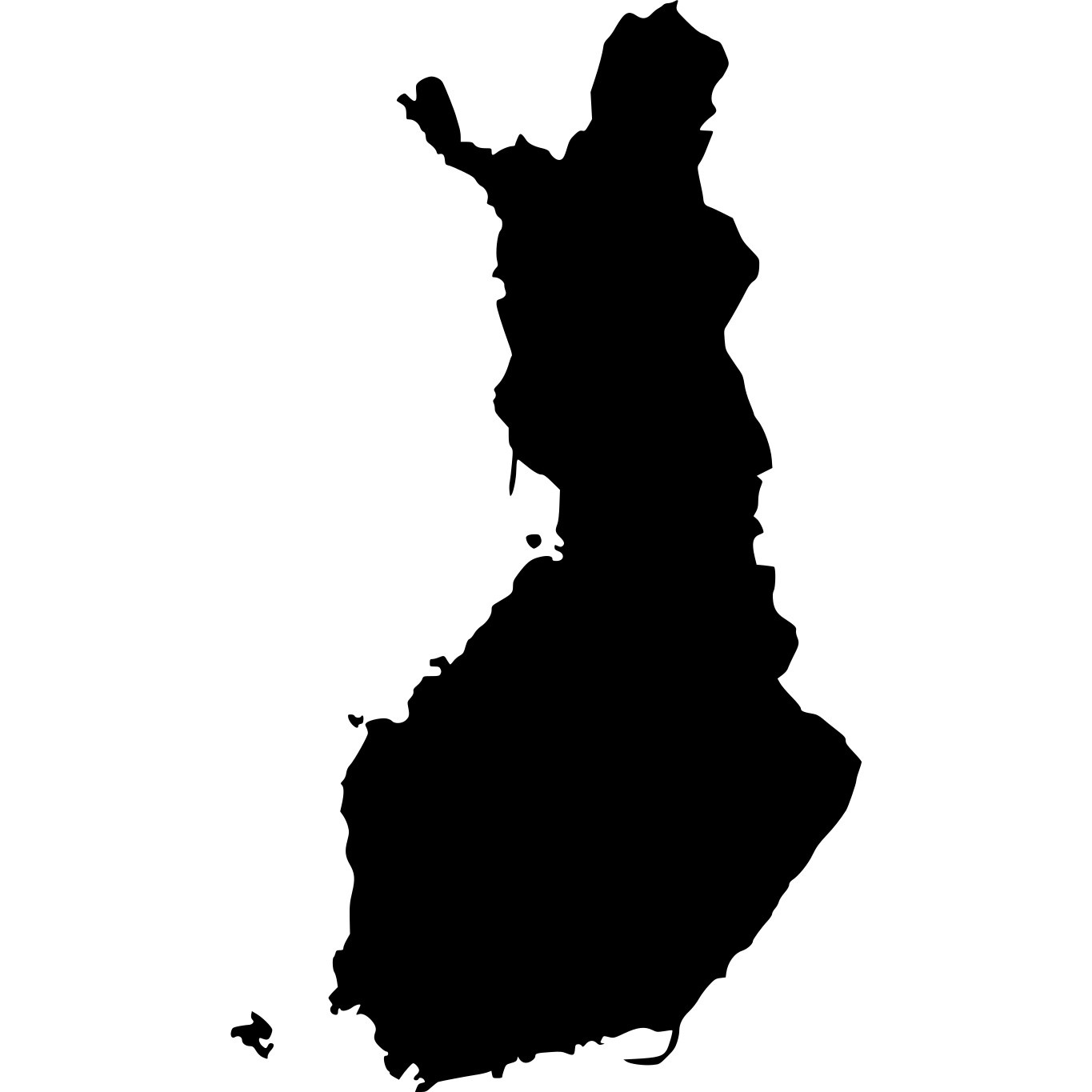
Ekopharma is a Finnish brand

We're dedicated to providing you with the most up-to-date and science-backed ingredient info out there.
The data we've presented on this page has been verified by a member of the SkinSort Team.
Read more about us· Updated May 30, 2026 • Added by noorawulff


