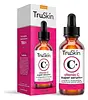
This anti-aging serum is formulated around Ascorbic Acid and Retinol to soften the look of wrinkles and brighten dull-looking skin.
This brightening serum is formulated around Sodium Ascorbyl Phosphate and Ascorbic Acid to brighten dull-looking skin and fade the look of dark spots.

What's inside
What's inside
 Key Ingredients
Benefits
Concerns
Ingredients Side-by-side
Herbal Infusion
Ascorbic Acid
Antioxidant






Cassia Angustifolia Seed Polysaccharide
Skin ConditioningRosa Canina Fruit Oil
Emollient




Dimethyl Sulfone
SolventRetinol
Skin Conditioning




Squalane
Emollient
Niacinamide
Smoothing


Arginine
Masking
Salicylic Acid
Masking



Essential Oils
Aloe Barbadensis Leaf
Masking
Centella Asiatica Extract
Cleansing
Equisetum Arvense Extract
AstringentGeranium Maculatum Extract
TonicCarbomer
Emulsion StabilisingPhenoxyethanol
Preservative
Ethylhexylglycerin
Skin ConditioningHerbal Infusion, Ascorbic Acid, Cassia Angustifolia Seed Polysaccharide, Rosa Canina Fruit Oil, Dimethyl Sulfone, Retinol, Squalane, Niacinamide, Arginine, Salicylic Acid, Essential Oils, Aloe Barbadensis Leaf, Centella Asiatica Extract, Equisetum Arvense Extract, Geranium Maculatum Extract, Carbomer, Phenoxyethanol, Ethylhexylglycerin
Water
Skin ConditioningGlycerin
Humectant
Propanediol
Solvent
Sodium Ascorbyl Phosphate
Antioxidant
Ascorbic Acid
Antioxidant
Glutathione
Ananas Sativus Fruit Extract
Skin ConditioningCarica Papaya Fruit Extract
Skin ConditioningMangifera Indica Fruit Extract
Skin ConditioningTerminalia Ferdinandiana Fruit Extract
Antioxidant
Pleiogynium Timoriense Fruit Extract
Skin ConditioningPodocarpus Elatus Fruit Extract
Skin ConditioningAloe Barbadensis Leaf Juice
Skin Conditioning
Sodium Hyaluronate
Humectant
Carbomer
Emulsion StabilisingTocopheryl Acetate
Antioxidant
Phenoxyethanol
Preservative
Caprylyl Glycol
Emollient
Citric Acid
Buffering
Hydroxyethylcellulose
Emulsion StabilisingSodium Hydroxide
BufferingBeta-Glucan
Skin Conditioning
Potassium Sorbate
Preservative
Hexylene Glycol
EmulsifyingSorbitol
Humectant
Xanthan Gum
EmulsifyingAlgin
MaskingBenzoic Acid
Masking
Sorbic Acid
Preservative
1,2-Hexanediol
Skin Conditioning
Sodium Benzoate
Masking
Disodium Phosphate
BufferingGold
Cosmetic ColorantPolysorbate 60
Emulsifying
Sodium Phosphate
BufferingWater, Glycerin, Propanediol, Sodium Ascorbyl Phosphate, Ascorbic Acid, Glutathione, Ananas Sativus Fruit Extract, Carica Papaya Fruit Extract, Mangifera Indica Fruit Extract, Terminalia Ferdinandiana Fruit Extract, Pleiogynium Timoriense Fruit Extract, Podocarpus Elatus Fruit Extract, Aloe Barbadensis Leaf Juice, Sodium Hyaluronate, Carbomer, Tocopheryl Acetate, Phenoxyethanol, Caprylyl Glycol, Citric Acid, Hydroxyethylcellulose, Sodium Hydroxide, Beta-Glucan, Potassium Sorbate, Hexylene Glycol, Sorbitol, Xanthan Gum, Algin, Benzoic Acid, Sorbic Acid, 1,2-Hexanediol, Sodium Benzoate, Disodium Phosphate, Gold, Polysorbate 60, Sodium Phosphate
Reviews
Ingredients Explained
These ingredients are found in both products.
Ingredients higher up in an ingredient list are typically present in a larger amount.
Ascorbic Acid is is pure Vitamin C and is the biologically active form used directly by skin.
Not only is vitamin C great for your overall health and immune system, but it also has plenty of benefits for your skin. It is best supported by academic literature for:
Topical vitamin C has been shown to help neutralize oxidative stress from UV and pollution, helping to improve photoaging and hyperpigmentation when used consistently.
One clinical study found that using 5% topical vitamin C for six months improved signs of photodamaged skin, both on the surface and in the deeper structural layers of the skin.
While vitamin C doesn’t replace sunscreen, studies show it can boost photoprotection when combined with Vitamin E and ferulic acid. These two ingredients help improve stability and protective effects.
The big downside of this ingredient is formulation difficulty. Vitamin C is prone to oxidation and doesn't penetrate the skin unless formulated correctly. Research found that vitamin C absorbs into the skin best at a low pH (< 3.5) with about 20% being the upper limit for effective absorption.
Skin levels can saturate after repeated application; this means your skin won’t keep absorbing more once it’s full of vitamin C. This is why more isn’t always better with vitamin C and why very high concentrations don’t necessarily give extra benefits.
Ascorbic acid generally works well with many skincare ingredients but can be irritating when combined with other active ingredients. Strong oxidizing acne treatments like benzoyl peroxide can reduce the effectiveness of vitamin C if they are used at the same time; they are often recommended for use at different times of day.
Read more about other types of Vitamin C:
Foods rich with vitamin C include oranges, strawberries, broccoli, bell peppers, and more. When consuming Vitamin C, your skin receives a portion of the nutrients.
Learn more about Ascorbic AcidCarbomer is a synthetic thickening and gelling agent. It's basically the ingredient that gives a lot of serums, gels, creams, and sunscreens their smooth, non-sticky texture.
Although legally permitted at very high levels, carbomers are normally used at concentrations below 1%.
It also needs to be neutralized to actually thicken, and because it is a large molecule, it doesn't really penetrate the skin barrier.
Allergy-wise, the risk is very low. Clinical studies show carbomers have low potential for skin irritation/sensitization even at concentrations up to 100%.
A 2024 UK study patch-tested 1,302 patients and found true allergy to the parent group of carbomer to be rare with no confirmed relevant reactions.
Learn more about CarbomerPhenoxyethanol is one of the most widely used preservatives in skincare (and for good reason!).
It has a large spectrum of antimicrobial activity and especially effective bacteria, yeast, and mold while only having a weak effect on your skin's natural microbiome.
On a cellular level, it disrupts the cell membranes of microbes by poking holes that make the cell leak. This shuts down the chemical reactions the microbe needs to make energy so it can no longer survive.
Another perk of this ingredient is that it stays functional across a wide pH range (3-10).
You'll often see it paired with boosters like Ethylhexylglycerin; one study showed that a 1:9 ratio of Ethylhexylglycerin to Phenoxyethanol damages bacterial membranes as effectively as doubling the Phenoxyethanol concentration on its own.
Typical use concentrations range from 0.3-1% depending on the formula, and this ingredient is capped at 1% int the EU.
Safety-wise, the fear mongering does not hold up to the evidence. The EU's Scientific Committee on Consumer Safety and FDA consider it safe as a preservative at up to 1%, including for children of all ages.
Adverse systemic effects only showed up in animal studies at exposures roughly 200x higher than what people get from cosmetics. And despite its very widespread use, this ingredient is a rare sensitizer and allergic reactions are uncommon.
Learn more about Phenoxyethanol

