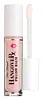
This barrier-repair lip moisturizer is formulated around Petrolatum and Sodium Hyaluronate to strengthen the lip barrier and hydrate lips.


What's inside
What's inside
 Key Ingredients
Benefits
Concerns
Ingredients Side-by-side
Petrolatum
Emollient



Hydrogenated Polyisobutene
EmollientOctyldodecanol
Emollient
Bis-Diglyceryl Polyacyladipate-2
Emollient

Ethylene/Propylene/Styrene Copolymer
Polyethylene
Abrasive

Vp/Hexadecene Copolymer
Tocopheryl Acetate
Antioxidant


Sodium Hyaluronate
Humectant



Butyrospermum Parkii Butter
Skin Conditioning
Cocos Nucifera Fruit Juice
Emollient
Cocos Nucifera Liquid Endosperm
Cucumis Sativus Fruit Extract
Emollient
Helianthus Annuus Seedcake
Abrasive
Hordeum Vulgare Extract
EmollientMangifera Indica Seed Butter
Skin Conditioning
Olea Europaea Fruit Oil
Masking
Persea Gratissima Oil
Skin Conditioning
Ricinus Communis Seed Oil
Masking
Yogurt Powder
Lactobacillus Ferment
Skin Conditioning
Glycerin
Humectant
Phytosterols
Skin Conditioning
Menthol
Masking

Polydecene
Skin ConditioningPropylene Glycol Dicaprate
EmollientC12-15 Alkyl Benzoate
AntimicrobialWater
Skin ConditioningSorbitan Oleate
Emulsifying
Meteorite Powder
Skin ConditioningCholesterol
Emollient
Butylene/Ethylene/Styrene Copolymer
Silica
Abrasive

Polyglyceryl-10 Heptahydroxystearate
Skin ConditioningHydrogenated Castor Oil
Emollient
Aroma

Saccharin
MaskingBHT
Antioxidant
Tetrahexyldecyl Ascorbate
Antioxidant

Phenoxyethanol
Preservative
Mica
Cosmetic ColorantCI 77891
Cosmetic ColorantCI 77491
Cosmetic ColorantCI 77492
Cosmetic ColorantCI 77499
Cosmetic ColorantCI 77163
Cosmetic Colorant
CI 42090
Cosmetic ColorantCI 77400
Cosmetic ColorantCI 75470
Cosmetic ColorantCI 15850
Cosmetic ColorantCI 45380
Cosmetic ColorantCI 45410
Cosmetic ColorantCI 73360
Cosmetic ColorantCI 17200
Cosmetic ColorantCI 19140
Cosmetic ColorantCI 15985
Cosmetic ColorantPetrolatum, Hydrogenated Polyisobutene, Octyldodecanol, Bis-Diglyceryl Polyacyladipate-2, Ethylene/Propylene/Styrene Copolymer, Polyethylene, Vp/Hexadecene Copolymer, Tocopheryl Acetate, Sodium Hyaluronate, Butyrospermum Parkii Butter, Cocos Nucifera Fruit Juice, Cocos Nucifera Liquid Endosperm, Cucumis Sativus Fruit Extract, Helianthus Annuus Seedcake, Hordeum Vulgare Extract, Mangifera Indica Seed Butter, Olea Europaea Fruit Oil, Persea Gratissima Oil, Ricinus Communis Seed Oil, Yogurt Powder, Lactobacillus Ferment, Glycerin, Phytosterols, Menthol, Polydecene, Propylene Glycol Dicaprate, C12-15 Alkyl Benzoate, Water, Sorbitan Oleate, Meteorite Powder, Cholesterol, Butylene/Ethylene/Styrene Copolymer, Silica, Polyglyceryl-10 Heptahydroxystearate, Hydrogenated Castor Oil, Aroma, Saccharin, BHT, Tetrahexyldecyl Ascorbate, Phenoxyethanol, Mica, CI 77891, CI 77491, CI 77492, CI 77499, CI 77163, CI 42090, CI 77400, CI 75470, CI 15850, CI 45380, CI 45410, CI 73360, CI 17200, CI 19140, CI 15985
Polyglyceryl-2 Isostearate/Dimer Dilinoleate Copolymer
EmollientSimmondsia Chinensis Seed Oil
Emollient
Dilinoleic Acid/Butanediol Copolymer
Rosa Rubiginosa Seed Oil
Emollient
Caprylic/Capric Triglyceride
Masking
Polyglyceryl-2 Isostearate/Dimer Dilinoleate Copolymer, Simmondsia Chinensis Seed Oil, Dilinoleic Acid/Butanediol Copolymer, Rosa Rubiginosa Seed Oil, Caprylic/Capric Triglyceride, Corylus Avellana Seed Oil, Diisostearyl Malate, Castor Oil/Ipdi Copolymer, Tocopheryl Acetate, Parfum, Vanillin, CI 15985, CI 17200, CI 15850, CI 45410
Reviews
Ingredients Explained
These ingredients are found in both products.
Ingredients higher up in an ingredient list are typically present in a larger amount.
Ci 15850 is the pigment color red. It is an azo dye and created synthetically.
Azo dyes need to be thoroughly purified before use. This allows them to be more stable and longer-lasting.
This ingredient is common in foundations, lipsticks, and blushes. This color is described as brown/orangey red.
It has many secondary names such as Red 6 and Red 7. According to a manufacturer, Red 6 usually contains aluminum.
Learn more about CI 15850Ci 15985 is a dye made from petroleum. It is synthetically created and approved by the FDA for use in foods and cosmetics.
The color of this dye is orange/yellow.
This ingredient can be found in makeup, sun care, and skincare.
Learn more about CI 15985CI 17200 is a synthetic, water-soluble, reddish-pink dye. It is used purely as a cosmetic colorant.
In the US, the FDA permits this ingredient in cosmetics but it is not approved for use around the eyes while the EU allows this to be used in all cosmetic products.
The FDA requires batch-to-batch certification for this ingredient that is held to a pretty rigorous standard. That means the CI 17200 in your cosmetics has been tested and approved before it ever reaches you.
Contact allergy to cosmetic-grade dyes used at low concentrations are uncommon but has been documented before.
This ingredient also goes by the name D&C RED NO. 33.
CI 17200 has a comedogenic rating of 1 and an irritancy rating of 2 on a scale of 0-5. This is based on peer-reviewed research from the man who invented the comedogenic scale.
A 1 on the comedogenic scale is about as low as it gets without being a flat zero, and makes sense for CI 17200.
It's a water-soluble dye used at very small concentrations (typically 0.001-0.1%), so it dissolves into the water phase of a formula rather than sitting on your skin the way an oil or wax would.
The irritancy rating of 2 reflects that, like most synthetic dyes, there's a small possibility of mild irritation ( particularly for people with existing dye sensitivities).
For the vast majority of people, it's a non-issue at typical use levels.
It's also worth keeping in mind that comedogenic and irritancy ratings are tested on individual ingredients, not finished formulas. The final product's formulation, concentration, and other ingredients all play a role in how something actually behaves on your skin.
Just so you know, the FDA ban on Red Dye No. 3 refers to CI 45430, not this ingredient. CI 45430 and CI 17200 are different chemical compounds with distinct safety and regulatory histories.
It's also worth noting that Red No. 3 (CI 45430) was already banned from cosmetics back in 1990, so the 2025 action just extended the ban to food and oral drugs. CI 17200 was never part of any of this.
Learn more about CI 17200CI 45410 is a synthetic red-pigment and dye.
It often goes by both Red 28 or Red 27; manufacturers label both ingredients as CI 45410.
This dye is commonly found in makeup because it imparts a vivid color. Some types of this dye change color based on pH level and interaction with moisture:
Your skin has a natural pH of around 4.5 - 5.5.
According to the FDA, CI 45410 is not permitted for use in eye products.
Red 27 is a flourescein dye and commonly used as a fluorescent tracer in medicine.
Learn more about CI 45410Tocopheryl Acetate is a stable, shelf-friendly form of vitamin E.
Formulators love it because plain vitamin E oxidizes quickly once it hits air. This acetate version stays stable and resists going off, helping to extend a product's shelf life.
It's actually inactive on its own and works like a slow-release "storage" form; the enzymes in your skin called esterases gradually convert it into active vitamin E over time.
One in vivo study showed 5% of the acetate in the living layer of the epidermis converted to vitamin E after 5 days of application. This study also found the skin gained protection against UV damage even though the conversion was slow and small.
Once converted, vitamin E acts as a skin's main fat-soluble antioxidant that fights free radicals to protect skin from damage.
Topical vitamin E generally boosts the skin's photoprotection, and it reduced UV-damage in animal models.
This ingredient has some brightening potential but it's more of a prevention ingredient than spot-fader. Cell studies show it can slow down melanin production but it's worth noting that it's not the most powerful brightener out there.
Overall, it has a pretty solid safety profile and has been found to be non-irritating and non-comedogenic. Allergic reactions may happen but stay rare due to how widely the ingredient gets used.
The concentration will vary depending on the formula; industry data shows 0.1% in baby lotions, 3% in lipsticks, and 5% in foot powders. You can also find this ingredient at 100% in a pure vitamin E oil.
Most leave-on skincare keeps it at the lower end, often between 0.5-1%.
Learn more about Tocopheryl Acetate

