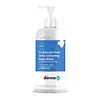
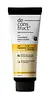
The Derma Co 1% Salicylic Acid Daily Exfoliating Body Wash Versus Deconstruct Detan Sunscreen Body Lotion SPF 50+
This chemical sunscreen covers most of the UV range, lighter on the deep UVA that drives aging.

What's inside
What's inside
 Key Ingredients
Benefits
Concerns
Ingredients Side-by-side
Water
Skin ConditioningDisodium Laureth Sulfosuccinate
CleansingCocamidopropyl Betaine
Cleansing



Glycerin
Humectant


Caprylyl/Capryl Glucoside
CleansingSodium Methyl Cocoyl Taurate
Cleansing
Coco-Glucoside
Cleansing
Lauryl Glucoside
CleansingCocamide DEA
Emulsifying
Salicylic Acid
Masking







Glycolic Acid
Buffering



Sodium Lauroyl Oat Amino Acids
CleansingZinc
Antioxidant



PCA
Humectant
Saccharide Isomerate
Humectant
Olive Oil PEG-7 Esters
Emollient


Betaine
Humectant
Imidazolidinyl Urea
Preservative
Menthol
Masking
Melaleuca Alternifolia Leaf Oil
Antioxidant

Polyquaternium-7
Propylene Glycol
Humectant
PEG-150 Distearate
Emulsifying
Disodium EDTA
ChelatingMethylchloroisothiazolinone
Preservative
Methylisothiazolinone
Preservative
Water, Disodium Laureth Sulfosuccinate, Cocamidopropyl Betaine, Glycerin, Caprylyl/Capryl Glucoside, Sodium Methyl Cocoyl Taurate, Coco-Glucoside, Lauryl Glucoside, Cocamide DEA, Salicylic Acid, Glycolic Acid, Sodium Lauroyl Oat Amino Acids, Zinc, PCA, Saccharide Isomerate, Olive Oil PEG-7 Esters, Betaine, Imidazolidinyl Urea, Menthol, Melaleuca Alternifolia Leaf Oil, Polyquaternium-7, Propylene Glycol, PEG-150 Distearate, Disodium EDTA, Methylchloroisothiazolinone, Methylisothiazolinone
Water
Skin ConditioningEthylhexyl Methoxycinnamate
UV Absorber

Butyl Methoxydibenzoylmethane
UV Absorber
Benzophenone-3
UV Absorber
Phospholipids
Skin Conditioning
Butylene Glycol
Humectant
Phenoxyethanol
Preservative
Niacinamide
Smoothing
Glycerin
Humectant
Betaine
Humectant
Amps/Hema Crosspolymer
C13-15 Alkane
SolventCoco-Glucoside
Cleansing
Kojic Dipalmitate
Emollient
Dipotassium Glycyrrhizate
Humectant
Panthenol
Skin Conditioning
Petrolatum
Emollient
Cetearyl Olivate
Sorbitan Olivate
Emulsifying
Tocopherol
Antioxidant
Helianthus Annuus Seed Oil
Emollient
Menthol
Masking
Water, Ethylhexyl Methoxycinnamate, Butyl Methoxydibenzoylmethane, Benzophenone-3, Phospholipids, Butylene Glycol, Phenoxyethanol, Niacinamide, Glycerin, Betaine, Amps/Hema Crosspolymer, C13-15 Alkane, Coco-Glucoside, Kojic Dipalmitate, Dipotassium Glycyrrhizate, Panthenol, Petrolatum, Cetearyl Olivate, Sorbitan Olivate, Tocopherol, Helianthus Annuus Seed Oil, Menthol
Ingredients Explained
These ingredients are found in both products.
Ingredients higher up in an ingredient list are typically present in a larger amount.
Betaine is a humectant. Like hyaluronic acid, it helps attract and retain moisture in the skin. It’s known for being gentle and for helping the skin maintain balanced hydration.
Betaine is mainly used to improve hydration and support calmer skin. It helps skin cells regulate water balance because it functions as an osmolyte.
Some studies suggest betaine may support making skin tone more even.
Fun fact: Betaine naturally exists in the skin and the body. In cosmetic products, it can be either plant-derived (most commonly from sugar beets) or synthetically produced for consistency and stability.
Betaine is also known as trimethylglycine.
Learn more about BetaineCoco-Glucoside is a surfactant, or a cleansing ingredient. It is made from glucose and coconut oil.
Surfactants help gather dirt, oil, and other pollutants from your skin to be rinsed away.
This ingredient is considered gentle and non-comedogenic. However, it may still be irritating for some.
Learn more about Coco-GlucosideGlycerin (or glycerol) is a compound naturally found in your skin. It's a powerhouse humectant that pulls water into the stratum corneum.
Topically, glycerin does several things at once:
Your skin makes glycerin on its own (mostly from sebaceous oil breakdown) and shuttles it to your outermost layer of skin, or your epidermis, via aquaporin-3.
Aquaporin-3 is a transporter that is essential for normal skin hydration, elasticity, and repair. Interestingly, mice lacking in AQP3 have dry and less elastic skin that can be fully corrected with glycerin.
This ingredient is non-irritating, plays well with almost every ingredient, and works across all skin types. Typical use is anywhere between 3-10% but can go up to 79% in some leave-on products.
Just know very high concentrations (>40%) can feel tacky in low humidity.
Glycerin is the name for this ingredient in American English. British English uses Glycerol/Glycerine.
Learn more about GlycerinMenthol is a compound found in mint plants, such as peppermint. In its pure form, it is a clear crystalline substance.
Menthol is known for its cooling sensation; however, the cooling is actually from your skin being sensitized. Menthol can worsen rosacea. We recommend speaking with a professional if you have concerns.
Menthol also has antimicrobial properties.
Learn more about MentholWater. It's the most common cosmetic ingredient of all. You'll usually see it at the top of ingredient lists, meaning that it makes up the largest part of the product.
So why is it so popular? Water most often acts as a solvent - this means that it helps dissolve other ingredients into the formulation.
You'll also recognize water as that liquid we all need to stay alive. If you see this, drink a glass of water. Remember to stay hydrated!
Learn more about Water

