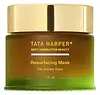
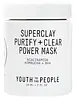
Tata Harper Resurfacing BHA Glow Mask Versus Youth To The People Superclay Purify + Clear Power Mask
This wash off mask is formulated around Salicylic Acid to clear breakouts and unclog pores.

What's inside
What's inside
 Key Ingredients
Benefits
Concerns
Ingredients Side-by-side
Aloe Barbadensis Leaf Juice
Skin Conditioning


Salix Alba Bark Extract
Astringent

Sclerotium Gum
Emulsion StabilisingWater
Skin ConditioningLactobacillus Ferment
Skin Conditioning
Maltooligosyl Glucoside
Skin ConditioningLactobacillus/Punica Granatum Fruit Ferment Extract
Antioxidant
Leuconostoc Ferment Filtrate
AntimicrobialBeta Vulgaris
Cosmetic ColorantKaolin
Abrasive


Hydrogenated Starch Hydrolysate
HumectantHydrolyzed Corn Starch
HumectantAroma


CI 77491
Cosmetic ColorantSodium Phytate
ChelatingBenzyl Alcohol
Perfuming




Citral
Perfuming
Citronellol
Perfuming
Eugenol
Perfuming
Geraniol
Perfuming
Limonene
Perfuming
Linalool
Perfuming
Aloe Barbadensis Leaf Juice, Salix Alba Bark Extract, Sclerotium Gum, Water, Lactobacillus Ferment, Maltooligosyl Glucoside, Lactobacillus/Punica Granatum Fruit Ferment Extract, Leuconostoc Ferment Filtrate, Beta Vulgaris, Kaolin, Hydrogenated Starch Hydrolysate, Hydrolyzed Corn Starch, Aroma, CI 77491, Sodium Phytate, Benzyl Alcohol, Citral, Citronellol, Eugenol, Geraniol, Limonene, Linalool
Water
Skin ConditioningKaolin
Abrasive
Stearyl Alcohol
Emollient

Propanediol
Solvent
Glycerin
Humectant
Glyceryl Stearate
Emollient
Niacinamide
Smoothing



Oryza Sativa Starch
AbsorbentBentonite
Absorbent
Cetyl Alcohol
Emollient
Magnesium Aluminum Silicate
Absorbent
Montmorillonite
AbsorbentIllite
Abrasive
Calcite
Skin ConditioningSalicylic Acid
Masking

Salix Purpurea Bark Extract
Skin ConditioningSaccharomyces/Xylinum/Black Tea Ferment
Skin Conditioning
Allantoin
Skin Conditioning
Carthamus Tinctorius Seed Oil
Masking
Indocyanine Green
UV AbsorberAloe Barbadensis Leaf Juice
Skin Conditioning
Glyceryl Acrylate/Acrylic Acid Copolymer
HumectantCetearyl Olivate
Sorbitan Olivate
Emulsifying
Triticum Aestivum Leaf Extract
Antioxidant
Lactic Acid
Buffering
Sorbitan Stearate
Emulsifying
Caprylhydroxamic Acid
ChelatingCharcoal Powder
Abrasive
Sodium Citrate
Buffering1,2-Hexanediol
Skin Conditioning
Phenoxyethanol
Preservative
Quartz
Abrasive
Silica
Abrasive
Sodium Benzoate
Masking
Potassium Sorbate
Preservative
Maltodextrin
Absorbent
Gardenia Florida Fruit Extract
Skin ConditioningWater, Kaolin, Stearyl Alcohol, Propanediol, Glycerin, Glyceryl Stearate, Niacinamide, Oryza Sativa Starch, Bentonite, Cetyl Alcohol, Magnesium Aluminum Silicate, Montmorillonite, Illite, Calcite, Salicylic Acid, Salix Purpurea Bark Extract, Saccharomyces/Xylinum/Black Tea Ferment, Allantoin, Carthamus Tinctorius Seed Oil, Indocyanine Green, Aloe Barbadensis Leaf Juice, Glyceryl Acrylate/Acrylic Acid Copolymer, Cetearyl Olivate, Sorbitan Olivate, Triticum Aestivum Leaf Extract, Lactic Acid, Sorbitan Stearate, Caprylhydroxamic Acid, Charcoal Powder, Sodium Citrate, 1,2-Hexanediol, Phenoxyethanol, Quartz, Silica, Sodium Benzoate, Potassium Sorbate, Maltodextrin, Gardenia Florida Fruit Extract
Reviews
Alternatives
Ingredients Explained
These ingredients are found in both products.
Ingredients higher up in an ingredient list are typically present in a larger amount.
Aloe Barbadensis Leaf Juice is the filtered, stabilized liquid pressed from the inner gel of the aloe vera leaf.
In cosmetics, it shows up as either soothing active or a water-replacement base. It is roughly 98-99% water and the last 1-2% is an interesting mix of polysaccharides, amino acids, vitamins, minerals, and enzymes.
The polysaccharides do most of the work: they bind water at the skin surface for a light, non-greasy hydration boost. And one of the polysaccharides, glycomannan, is linked to fibroblast stimulation + collagen synthesis. This is also why aloe has such a long track record in wound and burn healing.
This ingredient is also calming with anti-inflammatory and mild antimicrobial activity, making it a great pick for sensitive, irritated, or post-sun skin.
Realistic expectations matter though; the solid evidence is mostly limited to hydration, soothing, and wound support. Deeper claims about anti-aging or sun protection are not well backed, and science reviews note it does not prevent radiation-induced skin injury.
Because it plays well with almost everything, it's commonly used as a base alongside other actives like niacinamide or vitamin C.
Typical usage concentrations range from 0.5% (where hydration benefits already show up) all the way to 90%+ (where it replaces water as the main base).
The safety for this ingredient is well-establish as well. Overall, this is a great supporting ingredient for those who want a boost in hydration.
Learn more about Aloe Barbadensis Leaf JuiceKaolin is a clay. It is used for oil control and to help minimize pores. Like other clays, kaolin has the ability to absorb excess sebum or oil. This can help clean out pores and mattify the skin.
Some types of kaolin may have exfoliating properties. When water is added to kaolin, it becomes a paste with small abrasive particles.
Most kaolin is a white color, but may be pink/orange/red depending on where it comes from.
The name 'kaolin' comes from a Chinese village named 'Gaoling'. Kaolin clay comes from rocks rich in kaolinite. Kaolinite, the mineral, has a silicate layered structure. Kaolinite is formed from chemical weathering of aluminum siilicate minerals.
Besides skincare, kaolin is commonly used to make glossy paper, in ceramics, toothpaste, and as medicine to soothe stomach issues.
Learn more about KaolinWater. It's the most common cosmetic ingredient of all. You'll usually see it at the top of ingredient lists, meaning that it makes up the largest part of the product.
So why is it so popular? Water most often acts as a solvent - this means that it helps dissolve other ingredients into the formulation.
You'll also recognize water as that liquid we all need to stay alive. If you see this, drink a glass of water. Remember to stay hydrated!
Learn more about Water

