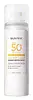
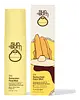
Skintific All Day Light Sunscreen Mist SPF 50 PA++++ Versus Sun Bum Daily Sunscreen Face Mist SPF 30
This chemical sunscreen covers most of the UV range, lighter on the deep UVA that drives aging.
This chemical sunscreen covers most of the UV range, lighter on the deep UVA that drives aging.


What's inside
What's inside
 Key Ingredients
Benefits
Concerns
Ingredients Side-by-side
Butane
Propane
Isobutane
Isododecane
EmollientWater
Skin ConditioningDisiloxane
Skin Conditioning
Dimethicone
Emollient
Ethylhexyl Methoxycinnamate
UV Absorber


Ethylhexyl Salicylate
UV Absorber
Diethylamino Hydroxybenzoyl Hexyl Benzoate
UV Filter
Menthyl Lactate
Masking
Ethylhexyl Triazone
UV Absorber
Silica
Abrasive


Methyl Methacrylate Crosspolymer
Silica Dimethyl Silylate
EmollientMethicone
Emollient
Hamamelis Virginiana Water
Astringent

Methylparaben
Preservative

Aroma


Ethylhexylglycerin
Skin ConditioningPropanediol
Solvent

Piper Methysticum Leaf/Root/Stem Extract
Skin ConditioningCentella Asiatica Extract
Cleansing



Scutellaria Baicalensis Root Extract
Astringent
Portulaca Oleracea Extract
Skin Conditioning
Phenoxyethanol
Preservative
Ceramide EOP
Skin Conditioning
Ceramide Ns
Skin Conditioning
Ceramide NP
Skin Conditioning
Ceramide As
Skin Conditioning
Ceramide AP
Skin Conditioning
Bifida Ferment Lysate
Skin Conditioning
Pentylene Glycol
Skin Conditioning
Diethoxydiglycol
Solvent1,2-Hexanediol
Skin Conditioning
Pvp
Emulsion StabilisingChlorphenesin
Antimicrobial
Disodium EDTA
ChelatingBHT
Antioxidant
Butane, Propane, Isobutane, Isododecane, Water, Disiloxane, Dimethicone, Ethylhexyl Methoxycinnamate, Ethylhexyl Salicylate, Diethylamino Hydroxybenzoyl Hexyl Benzoate, Menthyl Lactate, Ethylhexyl Triazone, Silica, Methyl Methacrylate Crosspolymer, Silica Dimethyl Silylate, Methicone, Hamamelis Virginiana Water, Methylparaben, Aroma, Ethylhexylglycerin, Propanediol, Piper Methysticum Leaf/Root/Stem Extract, Centella Asiatica Extract, Scutellaria Baicalensis Root Extract, Portulaca Oleracea Extract, Phenoxyethanol, Ceramide EOP, Ceramide Ns, Ceramide NP, Ceramide As, Ceramide AP, Bifida Ferment Lysate, Pentylene Glycol, Diethoxydiglycol, 1,2-Hexanediol, Pvp, Chlorphenesin, Disodium EDTA, BHT
Homosalate 10%
Skin Conditioning
Octocrylene 6%
UV Absorber
Ethylhexyl Salicylate 5%
UV Absorber
Butyl Methoxydibenzoylmethane 3%
UV Absorber
Alcohol Denat.
Antimicrobial
Trimethylpentanediol/Adipic Acid/Glycerin Crosspolymer
Skin ConditioningIsoamyl Cocoate


Musa Sapientum Pulp Extract
Skin ConditioningMusa Sapientum Peel Extract
Skin ConditioningMusa Sapientum Leaf Extract
Skin ConditioningMusa Sapientum Flower Extract
Skin ConditioningMusa Sapientum Fruit Extract
Skin ConditioningTocopherol
Antioxidant


Niacinamide
Smoothing

Cocos Nucifera Fruit Extract
Emollient
Glycerin
Humectant
Helianthus Annuus Extract
Emollient
Lactobacillus
Skin ConditioningLactobacillus Ferment
Skin Conditioning
Pelvetia Canaliculata Extract
Skin Protecting
Parfum
Masking
Water
Skin ConditioningHomosalate 10%, Octocrylene 6%, Ethylhexyl Salicylate 5%, Butyl Methoxydibenzoylmethane 3%, Alcohol Denat., Trimethylpentanediol/Adipic Acid/Glycerin Crosspolymer, Isoamyl Cocoate, Musa Sapientum Pulp Extract, Musa Sapientum Peel Extract, Musa Sapientum Leaf Extract, Musa Sapientum Flower Extract, Musa Sapientum Fruit Extract, Tocopherol, Niacinamide, Cocos Nucifera Fruit Extract, Glycerin, Helianthus Annuus Extract, Lactobacillus, Lactobacillus Ferment, Pelvetia Canaliculata Extract, Parfum, Water
Reviews
Ingredients Explained
These ingredients are found in both products.
Ingredients higher up in an ingredient list are typically present in a larger amount.
Ethylhexyl Salicylate (also called Octisalate or Octyl Salicylate) is an oil-soluble organic UV filter that's been used in sunscreen since the 1950's.
It absorbs UVB light in the 280-320 nm range with a peak absorbance around 306 nm.
You'll often see it paired with other UV filters to boost overall SPF because octisalate is a fairly week filter on its own.
The reason you'll see it so often is because it can help solubilize and stabilize the trickier filters like oxybenzone and avobenzone.
Unlike these filters, octisalate has pretty good photostability and doesn't create skin-damaging free radicals when exposed to sunlight.
The fatty-alcohol part of the molecule also gives it a light, emollient feel so it doubles as a nice texture enhancer.
Usage levels vary around the world:
Safety-wise, this ingredient has a pretty reassuring track record. The EU's Scientific Committee on Consumer Products (SCCP) found very low skin penetration in human skin tests and negative results for irritation, phototoxicity, and photoallergy.
The real-world allergy risk is pretty low too; a 2012 European study of 1,031 people recorded only 2 reactions to it (a rate of 0.19%).
You might have seen scary headlines about sunscreen getting into your blood.
In 2019, the FDA found that several chemical filters can absorb through the skin and show up in the bloodstream at small but measurable levels.
Here's the important part: these tiny levels are just a cutoff the FDA uses to decide which ingredients need more testing and doesn't mean anything harmful was found.
The researchers were clear that the results are no reason to stop wearing sunscreen.
Learn more about Ethylhexyl SalicylateWater. It's the most common cosmetic ingredient of all. You'll usually see it at the top of ingredient lists, meaning that it makes up the largest part of the product.
So why is it so popular? Water most often acts as a solvent - this means that it helps dissolve other ingredients into the formulation.
You'll also recognize water as that liquid we all need to stay alive. If you see this, drink a glass of water. Remember to stay hydrated!
Learn more about Water

