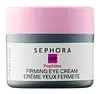
This anti-aging eye moisturizer is formulated around Squalane to soften the look of wrinkles and hydrate skin.


What's inside
What's inside
 Key Ingredients
Benefits
Concerns
Ingredients Side-by-side
Water
Skin ConditioningC10-18 Triglycerides
Emollient

Butylene Glycol
Humectant

Tribehenin
Emollient
Heptyl Undecylenate
EmollientGlycerin
Humectant
Glyceryl Stearate
Emollient
Squalane
Emollient
CI 77891
Cosmetic ColorantHydroxyethyl Acrylate/Sodium Acryloyldimethyl Taurate Copolymer
Emulsion StabilisingSodium PCA
Humectant
Synthetic Fluorphlogopite
Hydroxyacetophenone
Antioxidant
Tocopheryl Acetate
Antioxidant

Caprylyl Glycol
Emollient
Potassium Cetyl Phosphate
EmulsifyingXanthan Gum
EmulsifyingEthylhexylglycerin
Skin ConditioningSodium Polyacrylate Starch
AbsorbentLepidium Meyenii Root Extract
Skin ConditioningMaltodextrin
Absorbent
Polysorbate 60
Emulsifying
Sorbitan Isostearate
Emulsifying
Sodium Phytate
ChelatingTin Oxide
Abrasive
Tocopherol
Antioxidant

Water, C10-18 Triglycerides, Butylene Glycol, Tribehenin, Heptyl Undecylenate, Glycerin, Glyceryl Stearate, Squalane, CI 77891, Hydroxyethyl Acrylate/Sodium Acryloyldimethyl Taurate Copolymer, Sodium PCA, Synthetic Fluorphlogopite, Hydroxyacetophenone, Tocopheryl Acetate, Caprylyl Glycol, Potassium Cetyl Phosphate, Xanthan Gum, Ethylhexylglycerin, Sodium Polyacrylate Starch, Lepidium Meyenii Root Extract, Maltodextrin, Polysorbate 60, Sorbitan Isostearate, Sodium Phytate, Tin Oxide, Tocopherol
Water
Skin ConditioningCaprylic/Capric Triglyceride
Masking
Glycerin
Humectant
C12-15 Alkyl Benzoate
AntimicrobialCetearyl Alcohol
Emollient


Glyceryl Stearate Se
Emulsifying
Betaine
Humectant
Butylene Glycol
Humectant
Phenoxyethanol
Preservative
Benzyl Alcohol
Perfuming




Carbomer
Emulsion StabilisingButyrospermum Parkii Butter
Skin Conditioning
Sodium Stearoyl Glutamate
CleansingSodium Hydroxide
BufferingEthylhexylglycerin
Skin ConditioningSodium Gluconate
ChelatingTocopheryl Acetate
Antioxidant
Dehydroacetic Acid
Preservative
Hydrogenated Lecithin
Emulsifying
Phenethyl Alcohol
MaskingAcetyl Hexapeptide-37
Skin Conditioning
Maltodextrin
Absorbent
Pentapeptide-48
Skin Conditioning
Water, Caprylic/Capric Triglyceride, Glycerin, C12-15 Alkyl Benzoate, Cetearyl Alcohol, Glyceryl Stearate Se, Betaine, Butylene Glycol, Phenoxyethanol, Benzyl Alcohol, Carbomer, Butyrospermum Parkii Butter, Sodium Stearoyl Glutamate, Sodium Hydroxide, Ethylhexylglycerin, Sodium Gluconate, Tocopheryl Acetate, Dehydroacetic Acid, Hydrogenated Lecithin, Phenethyl Alcohol, Acetyl Hexapeptide-37, Maltodextrin, Pentapeptide-48
Reviews
Ingredients Explained
These ingredients are found in both products.
Ingredients higher up in an ingredient list are typically present in a larger amount.
Butylene Glycol (or BG) is used within cosmetic products for a few different reasons:
Overall, Butylene Glycol is a safe and well-rounded ingredient that works well with other ingredients.
Though this ingredient works well with most skin types, some people with sensitive skin may experience a reaction such as allergic rashes, closed comedones, or itchiness.
Learn more about Butylene GlycolEthylhexylglycerin is created from glycerin. It is a multitasker ingredient that:
The CIR Expert Panel found minimal skin absorption or sensitization of any kind in a safety assessment. Though this ingredient is considered well-tolerated, a small number of cases of allergic dermatitis have been published since 2002. Just be sure to patch test if you are unsure.
Industry-reported use ranges from 8% in rinse-off products and 2% in leave-on formulations.
Learn more about EthylhexylglycerinGlycerin (or glycerol) is a compound naturally found in your skin. It's a powerhouse humectant that pulls water into the stratum corneum.
Topically, glycerin does several things at once:
Your skin makes glycerin on its own (mostly from sebaceous oil breakdown) and shuttles it to your outermost layer of skin, or your epidermis, via aquaporin-3.
Aquaporin-3 is a transporter that is essential for normal skin hydration, elasticity, and repair. Interestingly, mice lacking in AQP3 have dry and less elastic skin that can be fully corrected with glycerin.
This ingredient is non-irritating, plays well with almost every ingredient, and works across all skin types. Typical use is anywhere between 3-10% but can go up to 79% in some leave-on products.
Just know very high concentrations (>40%) can feel tacky in low humidity.
Glycerin is the name for this ingredient in American English. British English uses Glycerol/Glycerine.
Learn more about GlycerinMaltodextrin is a plant-derived carbohydrate made by breaking down starch (usually from corn, potato, or rice). In cosmetic formulas, it's a multitasking absorbent, emulsion stabilizer, and skin conditioner.
This ingredient is mostly used to stabilize emulsions and improve the powdery, non-greasy feel of products (like dry shampoos).
Safety-wise, this ingredient is pretty solid; it's even recognized as a food additive. Both animal and clinical studies found no adverse effects at the levels used in cosmetics.
Industry data shows this ingredient is used up to 45.7% in spray products and up to 33% in powder products.
Learn more about MaltodextrinTocopheryl Acetate is a stable, shelf-friendly form of vitamin E.
Formulators love it because plain vitamin E oxidizes quickly once it hits air. This acetate version stays stable and resists going off, helping to extend a product's shelf life.
It's actually inactive on its own and works like a slow-release "storage" form; the enzymes in your skin called esterases gradually convert it into active vitamin E over time.
One in vivo study showed 5% of the acetate in the living layer of the epidermis converted to vitamin E after 5 days of application. This study also found the skin gained protection against UV damage even though the conversion was slow and small.
Once converted, vitamin E acts as a skin's main fat-soluble antioxidant that fights free radicals to protect skin from damage.
Topical vitamin E generally boosts the skin's photoprotection, and it reduced UV-damage in animal models.
This ingredient has some brightening potential but it's more of a prevention ingredient than spot-fader. Cell studies show it can slow down melanin production but it's worth noting that it's not the most powerful brightener out there.
Overall, it has a pretty solid safety profile and has been found to be non-irritating and non-comedogenic. Allergic reactions may happen but stay rare due to how widely the ingredient gets used.
The concentration will vary depending on the formula; industry data shows 0.1% in baby lotions, 3% in lipsticks, and 5% in foot powders. You can also find this ingredient at 100% in a pure vitamin E oil.
Most leave-on skincare keeps it at the lower end, often between 0.5-1%.
Learn more about Tocopheryl AcetateWater. It's the most common cosmetic ingredient of all. You'll usually see it at the top of ingredient lists, meaning that it makes up the largest part of the product.
So why is it so popular? Water most often acts as a solvent - this means that it helps dissolve other ingredients into the formulation.
You'll also recognize water as that liquid we all need to stay alive. If you see this, drink a glass of water. Remember to stay hydrated!
Learn more about Water

