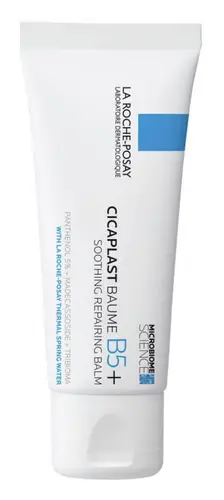
This oil-control moisturizer is formulated around Niacinamide and Methyl Methacrylate Crosspolymer to balance excess oil and refine the look of pores.
This calming moisturizer is formulated around 4-T-Butylcyclohexanol and Bisabolol to calm redness and strengthen the skin barrier.

What's inside
What's inside
 Key Ingredients
Benefits
Concerns
Ingredients Side-by-side
Water
Skin ConditioningNiacinamide
Smoothing











Polysilicone-11

Methyl Methacrylate Crosspolymer
Polymethylsilsesquioxane
Glycerin
Humectant
C13-15 Alkane
SolventLactobionic Acid
Buffering
Silica
Abrasive
Polyacrylate Crosspolymer-6
Emulsion StabilisingTriheptanoin
Skin ConditioningAlpha-Glucan Oligosaccharide
Cleansing
Phenoxyethanol
Preservative
Ethylhexylglycerin
Skin ConditioningSodium Gluconate
Skin ConditioningLaureth-12
EmulsifyingPropanediol
Solvent
Hyaluronic Acid
Humectant
Sodium Hydroxide
BufferingCitric Acid
Buffering

Nymphaea Caerulea Flower Extract
Skin ConditioningNelumbo Nucifera Flower Cera
Skin ConditioningWater, Niacinamide, Polysilicone-11, Methyl Methacrylate Crosspolymer, Polymethylsilsesquioxane, Glycerin, C13-15 Alkane, Lactobionic Acid, Silica, Polyacrylate Crosspolymer-6, Triheptanoin, Alpha-Glucan Oligosaccharide, Phenoxyethanol, Ethylhexylglycerin, Sodium Gluconate, Laureth-12, Propanediol, Hyaluronic Acid, Sodium Hydroxide, Citric Acid, Nymphaea Caerulea Flower Extract, Nelumbo Nucifera Flower Cera
Water
Skin ConditioningCyclopentasiloxane
Emollient
Cetearyl Olivate

Sorbitan Olivate
Emulsifying
Ethyl Olivate
Emollient
Pentylene Glycol
Skin Conditioning
Coco-Caprylate/Caprate
Emollient
Propanediol
Solvent
Glyceryl Caprylate
EmollientSodium Acrylates Copolymer
4-T-Butylcyclohexanol
Masking

Bisabolol
Antioxidant
Tocopheryl Acetate
Antioxidant
Helianthus Annuus Seed Oil
Emollient
Sargassum Filipendula Extract
Skin ProtectingLecithin
Emollient
Hypnea Musciformis Extract
Skin ProtectingDimethicone/Vinyl Dimethicone Crosspolymer
Skin Conditioning
Centella Asiatica Extract
Cleansing
Sodium Gluconate
Skin ConditioningCaprylic/Capric Triglyceride
Masking
Glyceryl Undecylenate
Emollient
Glycerin
Humectant
Olea Europaea Leaf Extract
Perfuming
Tocopherol
Antioxidant
Hydroxymethoxyphenyl Decanone
Skin ConditioningSodium Benzoate
Masking
Potassium Sorbate
Preservative
Water, Cyclopentasiloxane, Cetearyl Olivate, Sorbitan Olivate, Ethyl Olivate, Pentylene Glycol, Coco-Caprylate/Caprate, Propanediol, Glyceryl Caprylate, Sodium Acrylates Copolymer, 4-T-Butylcyclohexanol, Bisabolol, Tocopheryl Acetate, Helianthus Annuus Seed Oil, Sargassum Filipendula Extract, Lecithin, Hypnea Musciformis Extract, Dimethicone/Vinyl Dimethicone Crosspolymer, Centella Asiatica Extract, Sodium Gluconate, Caprylic/Capric Triglyceride, Glyceryl Undecylenate, Glycerin, Olea Europaea Leaf Extract, Tocopherol, Hydroxymethoxyphenyl Decanone, Sodium Benzoate, Potassium Sorbate
Reviews
Ingredients Explained
These ingredients are found in both products.
Ingredients higher up in an ingredient list are typically present in a larger amount.
Glycerin (or glycerol) is a compound naturally found in your skin. It's a powerhouse humectant that pulls water into the stratum corneum.
Topically, glycerin does several things at once:
Your skin makes glycerin on its own (mostly from sebaceous oil breakdown) and shuttles it to your outermost layer of skin, or your epidermis, via aquaporin-3.
Aquaporin-3 is a transporter that is essential for normal skin hydration, elasticity, and repair. Interestingly, mice lacking in AQP3 have dry and less elastic skin that can be fully corrected with glycerin.
This ingredient is non-irritating, plays well with almost every ingredient, and works across all skin types. Typical use is anywhere between 3-10% but can go up to 79% in some leave-on products.
Just know very high concentrations (>40%) can feel tacky in low humidity.
Glycerin is the name for this ingredient in American English. British English uses Glycerol/Glycerine.
Learn more about GlycerinPropanediol is an all-star ingredient. It softens, hydrates, and smooths the skin.
It’s often used to:
Propanediol is not likely to cause sensitivity and considered safe to use. It is derived from corn or petroleum with a clear color and no scent.
Learn more about PropanediolThis is the synthetic salt of gluconic acid, a form of PHA and mild exfoliant.
It is mainly used to stabilize oil and butter formulations from going bad. Sodium gluconate is a humectant, pH regulator, and chelating agent.
Chelating agents help neutralize unwanted metals from affecting the formulation.
Sodium gluconate is water-soluble.
Learn more about Sodium GluconateWater. It's the most common cosmetic ingredient of all. You'll usually see it at the top of ingredient lists, meaning that it makes up the largest part of the product.
So why is it so popular? Water most often acts as a solvent - this means that it helps dissolve other ingredients into the formulation.
You'll also recognize water as that liquid we all need to stay alive. If you see this, drink a glass of water. Remember to stay hydrated!
Learn more about Water