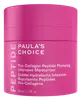
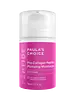
Paula's Choice Pro-Collagen Peptide Plumping Intensive Moisturizer Versus Paula's Choice Pro-Collagen Peptide Plumping Moisturizer
This anti-aging moisturizer is formulated around Acetyl Sh-Hexapeptide-5 Amide Acetate and Oligopeptide-1 to soften the look of wrinkles and hydrate skin.
This anti-aging moisturizer is formulated around Squalane to soften the look of wrinkles and hydrate skin.

What's inside
What's inside
 Key Ingredients
Benefits
Concerns
Ingredients Side-by-side
Water
Skin ConditioningPropanediol
Solvent

Behenyl Alcohol
Emollient
Betaine
Humectant
Dimethicone
Emollient

Caprylic/Capric Triglyceride
Masking
Glycerin
Humectant
Myristyl Myristate
Emollient




Pyrus Malus Fruit Extract
Skin Conditioning
Beheneth-20
EmulsifyingOleyl Erucate
Emollient
Tridecyl Trimellitate
EmollientHydroxyethyl Acrylate/Sodium Acryloyldimethyl Taurate Copolymer
Emulsion StabilisingDiisostearyl Malate
Emollient1,2-Hexanediol
Skin Conditioning
Bis-Diglyceryl Polyacyladipate-2
Emollient
Squalane
Emollient
Adenosine
Skin Conditioning
Butylene Glycol
Humectant
Ophiopogon Japonicus Root Extract
Skin ConditioningPentylene Glycol
Skin Conditioning
Chondrus Crispus
Masking
Sorbitan Isostearate
Emulsifying
Citric Acid
Buffering

Gigartina Stellata Extract
Skin Protecting
Gluconolactone
Chelating




Caprylyl Glycol
Emollient
Sodium Hyaluronate
Humectant

Tocopherol
Antioxidant


Acetyl Sh-Hexapeptide-5 Amide Acetate
Skin Conditioning
Helianthus Annuus Seed Oil
Emollient
Tridecapeptide-1
Skin Conditioning
Oligopeptide-1
Skin Conditioning
Sodium Phytate
ChelatingHydroxyacetophenone
Antioxidant
Cyanocobalamin
Skin ConditioningSodium Benzoate
Masking
Phenoxyethanol
Preservative
Water, Propanediol, Behenyl Alcohol, Betaine, Dimethicone, Caprylic/Capric Triglyceride, Glycerin, Myristyl Myristate, Pyrus Malus Fruit Extract, Beheneth-20, Oleyl Erucate, Tridecyl Trimellitate, Hydroxyethyl Acrylate/Sodium Acryloyldimethyl Taurate Copolymer, Diisostearyl Malate, 1,2-Hexanediol, Bis-Diglyceryl Polyacyladipate-2, Squalane, Adenosine, Butylene Glycol, Ophiopogon Japonicus Root Extract, Pentylene Glycol, Chondrus Crispus, Sorbitan Isostearate, Citric Acid, Gigartina Stellata Extract, Gluconolactone, Caprylyl Glycol, Sodium Hyaluronate, Tocopherol, Acetyl Sh-Hexapeptide-5 Amide Acetate, Helianthus Annuus Seed Oil, Tridecapeptide-1, Oligopeptide-1, Sodium Phytate, Hydroxyacetophenone, Cyanocobalamin, Sodium Benzoate, Phenoxyethanol
Water
Skin ConditioningDimethicone
Emollient
Squalane
Emollient
Glycerin
Humectant
Pyrus Malus Fruit Extract
Skin Conditioning
Pentylene Glycol
Skin Conditioning
1,2-Hexanediol
Skin Conditioning
Ammonium Acryloyldimethyltaurate/Vp Copolymer
Butylene Glycol
Humectant
Hydroxyacetophenone
Antioxidant
Sodium Acrylates Copolymer
Acrylates/C10-30 Alkyl Acrylate Crosspolymer
Emulsion StabilisingGigartina Stellata Extract
Skin Protecting
Acetyl Sh-Hexapeptide-5 Amide Acetate
Skin Conditioning
Tridecapeptide-1
Skin Conditioning
Oligopeptide-1
Skin Conditioning
Sodium Phytate
ChelatingPropanediol
Solvent
Lecithin
Emollient
Hydroxypropyltrimonium Hyaluronate
Cyanocobalamin
Skin ConditioningPhenoxyethanol
Preservative
Water, Dimethicone, Squalane, Glycerin, Pyrus Malus Fruit Extract, Pentylene Glycol, 1,2-Hexanediol, Ammonium Acryloyldimethyltaurate/Vp Copolymer, Butylene Glycol, Hydroxyacetophenone, Sodium Acrylates Copolymer, Acrylates/C10-30 Alkyl Acrylate Crosspolymer, Gigartina Stellata Extract, Acetyl Sh-Hexapeptide-5 Amide Acetate, Tridecapeptide-1, Oligopeptide-1, Sodium Phytate, Propanediol, Lecithin, Hydroxypropyltrimonium Hyaluronate, Cyanocobalamin, Phenoxyethanol
Reviews
Ingredients Explained
These ingredients are found in both products.
Ingredients higher up in an ingredient list are typically present in a larger amount.
1,2-Hexanediol is a synthetic liquid and another multi-functional powerhouse.
It is a:
- Humectant, drawing moisture into the skin
- Emollient, helping to soften skin
- Solvent, dispersing and stabilizing formulas
- Preservative booster, enhancing the antimicrobial activity of other preservatives
Acetyl Sh-Hexapeptide-5 Amide Acetate (aka Versillin or Acetyl Hexapeptide-70) is a synthetic peptide designed to mimic Versican.
Versican is a large structural protein found in the skin's extracellular matrix that helps bind water and organize collagen + elastin fibers.
According to the formulation data published by its manufacturer, the peptide works by inhibiting elastase and certain matrix metalloproteinases (the enzymes that break down elastin).
It also encourages the production of tropoelastin and hyaluronic acid.
The caveat to this ingredient: like many newer specialty peptides, the supporting evidence is primarily in vitro and manufacturer sponsored rather than independent, peer-reviewed clinical trials.
Exact concentrations are not usually disclosed by the supplier either but peptides of this type are generally formulated in the 0.5-5% range.
Learn more about Acetyl Sh-Hexapeptide-5 Amide AcetateButylene Glycol (or BG) is used within cosmetic products for a few different reasons:
Overall, Butylene Glycol is a safe and well-rounded ingredient that works well with other ingredients.
Though this ingredient works well with most skin types, some people with sensitive skin may experience a reaction such as allergic rashes, closed comedones, or itchiness.
Learn more about Butylene GlycolCyanocobalamin is the manufactured version of vitamin B12. It has skin soothing, antioxidant, and barrier protecting properties. Topical cyanocobalamin is used to treat skin irritation and atopic dermatitis.
Dimethicone is a type of synthetic silicone created from natural materials such as quartz. It is also known as polydimethylsiloxane.
What it does:
Dimethicone comes in different viscosities:
Depending on the viscosity, dimethicone has different properties.
Ingredients lists don't always show which type is used, so we recommend reaching out to the brand if you have questions about the viscosity.
This ingredient is unlikely to cause irritation because it does not get absorbed into skin. However, people with silicone allergies should be careful about using this ingredient.
Note: Dimethicone may contribute to pilling. This is because it is not oil or water soluble, so pilling may occur when layered with products. When mixed with heavy oils in a formula, the outcome is also quite greasy.
Learn more about DimethiconeGigartina Stellata Extract can be bad for acne prone skin.
Glycerin (or glycerol) is a compound naturally found in your skin. It's a powerhouse humectant that pulls water into the stratum corneum.
Topically, glycerin does several things at once:
Your skin makes glycerin on its own (mostly from sebaceous oil breakdown) and shuttles it to your outermost layer of skin, or your epidermis, via aquaporin-3.
Aquaporin-3 is a transporter that is essential for normal skin hydration, elasticity, and repair. Interestingly, mice lacking in AQP3 have dry and less elastic skin that can be fully corrected with glycerin.
This ingredient is non-irritating, plays well with almost every ingredient, and works across all skin types. Typical use is anywhere between 3-10% but can go up to 79% in some leave-on products.
Just know very high concentrations (>40%) can feel tacky in low humidity.
Glycerin is the name for this ingredient in American English. British English uses Glycerol/Glycerine.
Learn more about GlycerinHydroxyacetophenone is a small phenolic molecule that earns its place in a formulas as an antioxidant and preservative booster.
As a phenol, it is able to neutralize free radicals to protect both the product and the skin from oxidative stress.
Though it can't kill microbes on its own, it works as a good supporting agent when combined with other preservatives like Phenoxyethanol or 1,2-Hexanediol.
This ingredient naturally occurs as piceol in Norwegian spruce needles (~0.4-1.1% dry weight and in cloudberries). Though the cosmetic-grade material is synthesized for purity and consistency.
You'll usually see it used at low levels and suppliers recommend up to 1% added to a water phase.
Safety testing was done at concentrations like 0.05% in SPF products and 0.5% in a Human Repeated Insult Patch Test. The safety evidence is assuring; this ingredient is safe for cosmetics in current use and also holds safety status as a food flavoring as well.
An honest caveat: the "soothing" and "anti-inflammatory" claims come mostly from supplier marketing rather than published clinical trials. The Cosmetic Ingredient Review's own literature search found no useful efficacy studies on this ingredient.
So the antioxidant and preservative-boosting roles are the well supported ones while the calming benefit is plausible but thinly evidenced.
Overall, this is a well-tolerated, low-irritation multitasker that quietly helps a formula stay fresh and stable.
Learn more about HydroxyacetophenoneOligopeptide-1 is another name for Epidermal Growth Factor (EGF). In a formula, EGF works as a signaling ingredient.
EGF binds to receptors on your skin cells and tells keratinocytes/fibroblasts to divide, move, and rebuild the skin's support structure.
A 2012 open-label study on a barley-derived EGF serum reported statistically significant improvements in fine-lines, skin texture, pore size, and uneven skin tone, with changes showing up within the first month of 2x/daily use.
And a 2023 review found generally positive but modest results for growth factor products while pointing out that most trials are small, often industry-funded, and rarely test EGF on its own.
So, a fair summary of this ingredient would be "promising with real mechanistic backing, but not yet large-scale proof".
Concentration-wise, EGF is biologically active at very tiny amounts so finished products use it at low levels (think parts per million).
Raw material supplies usually sell a pre-diluted EGF solution and recommend adding roughly 1-5% of that solution to a formula.
Another practical catch: EGF is a fragile protein so it reacts badly to heat and the wrong pH. This just means it relies heavily on good packaging and a solid delivery system to stay active in a bottle.
Oligopeptide-1 and Sh-Oligopeptide-1. The "sh-" prefix just means "synthetic human" and it tells you that it's the lab grown version.
Learn more about Oligopeptide-1Pentylene Glycol (1,2-pentanediol) is a multitasking little diol with three main roles in a formula:
Research on alkanediols (the family pentylene glycol belongs to) show they work by disrupting microbial cell membranes. This disruption helps the primary preservative system in a product work more effectively at lower doses.
On the safety side, the Cosmetic Ingredient Review Expert Panel has concluded this ingredient to be safe as used in current cosmetic practices + concentrations.
Typical use levels in a formula run about 1-5%.
Learn more about Pentylene GlycolPhenoxyethanol is one of the most widely used preservatives in skincare (and for good reason!).
It has a large spectrum of antimicrobial activity and especially effective bacteria, yeast, and mold while only having a weak effect on your skin's natural microbiome.
On a cellular level, it disrupts the cell membranes of microbes by poking holes that make the cell leak. This shuts down the chemical reactions the microbe needs to make energy so it can no longer survive.
Another perk of this ingredient is that it stays functional across a wide pH range (3-10).
You'll often see it paired with boosters like Ethylhexylglycerin; one study showed that a 1:9 ratio of Ethylhexylglycerin to Phenoxyethanol damages bacterial membranes as effectively as doubling the Phenoxyethanol concentration on its own.
Typical use concentrations range from 0.3-1% depending on the formula, and this ingredient is capped at 1% int the EU.
Safety-wise, the fear mongering does not hold up to the evidence. The EU's Scientific Committee on Consumer Safety and FDA consider it safe as a preservative at up to 1%, including for children of all ages.
Adverse systemic effects only showed up in animal studies at exposures roughly 200x higher than what people get from cosmetics. And despite its very widespread use, this ingredient is a rare sensitizer and allergic reactions are uncommon.
Learn more about PhenoxyethanolPropanediol is an all-star ingredient. It softens, hydrates, and smooths the skin.
It’s often used to:
Propanediol is not likely to cause sensitivity and considered safe to use. It is derived from corn or petroleum with a clear color and no scent.
Learn more about PropanediolPyrus Malus Fruit Extract is extract from Apples. Apples are rich in Vitamin C, sugars, and antioxidants.
The sugar in Apples are humectants and help hydrate the skin. On top of that, apples also contain some acids, such as malic acid. These acids may have a mild exfoliating effect.
Last, the phytochemicals found in apples are strong antioxidants. These antioxidants help with anti-aging as they protect your skin cells against oxidative damage.
Learn more about Pyrus Malus Fruit ExtractSodium Phytate is the sodium salt of Phytic acid, a compound that plants store phosphorus in. It's the plant-derived alternative to ingredients like Disodium EDTA.
In skincare, this ingredient is a chelator that grabs onto trace metal ions like iron and copper that sneak into formulas through water/raw materials.
Those metals speed up oxidation so binding them keeps oils, fragrance, and actives from going off, stops color changes, and helps the preservative system work harder.
Survey data shows usage levels range from 0.0099%-0.5% in leave-on products, 0.025%-0.3% in rinse-off, and up to 0.05% in eye-area products. Suppliers typically recommend a range between 0.05-0.5%.
Learn more about Sodium PhytateSqualane is the hydrogenated and shelf-stable form of squalene (a lipid that naturally occurs in human sebum).
It is an emollient and skin conditioning agent that is able to integrate seamlessly into the skin's lipid barrier without clogging pores.
This is due to how structurally similar it is to what your skin already produces.
Though it is mostly an emollient that helps soften and hydrate skin, it also has some humectant and occlusive action. Humectants help the skin retain moisture while occlusives seal it in, making squalane a triple-threat moisturizer.
Research shows it has antioxidant capabilities that help protect against stressors like UV exposure, specifically UVA induced oxidative stress. This study also found that it supports collagen biosynthesis in human dermal fibroblasts.
No clinical study has reported significant adverse effects and irritation reactions are very rare from this ingredient (even at 100% concentration).
Overall, it's a fantastic ingredient for hydration and is suitable for all skin types.
This depends on the source. Squalane can be derived from both plants and animals. Most squalane used in skincare comes from plants.
Please note: the source of squalane is only known if disclosed by the brand. We recommend reaching out to the brand if you have any questions about their squalane.
Read more about squalene with an "e".
Though squalane is often called an oil, it’s technically not one. It is a hydrocarbon, meaning it is only made of carbon and hydrogen. True oils are triglycerides and made of fatty acids and glycerol.
The term “oil-free” isn’t regulated so companies can define it however they want. Some exclude all oils, while others just avoid mineral oil or comedogenic oils.
Squalane has a comedogenic rating of 1 from the original 1972 study that tested raw ingredients under occlusion on rabbit ears. This system is not standardized or peer-reviewed, and using the raw ingredients is very different from how diluted cosmetic formulations are used on human skin.
A comedogenic rating of 1 means it is "unlikely to clog pores" according to the original rating system.
The overall formula of a product matters more than the individual ingredients on whether or not it will cause clogged pores.
Learn more about SqualaneTridecapeptide-1 is a synthetic peptide that gets marketed as a "Botox-like" because it is a neutrotransmitter peptide.
Your skin uses a chemical called acetylcholine to tell tiny facial muscles to move and Tridecapeptide-1 tries to take that chemical's spot. This makes muscles stay a little more relaxed and helps lines like crow's feet look softer.
Concentration-wise, the numbers come mostly from suppliers and brands; typical leave-on use lands between 1-10%.
The supplier does report that 1-3% gives a subtle short-term smoothing effect within 15 minutes to an hour for some users. Higher levels (3-10%) showed stronger results after four week of twice-daily use.
You might also see this ingredient paired with glycols at 2-5% to help performance.
At this time, all the efficacy data traces back to the supplier's in-house testing and not third-party trials. Though the bigger category this ingredient belongs to ("neuro" peptides) do have some published research suggesting topical peptides can give mild cosmetic smoothing.
Learn more about Tridecapeptide-1Water. It's the most common cosmetic ingredient of all. You'll usually see it at the top of ingredient lists, meaning that it makes up the largest part of the product.
So why is it so popular? Water most often acts as a solvent - this means that it helps dissolve other ingredients into the formulation.
You'll also recognize water as that liquid we all need to stay alive. If you see this, drink a glass of water. Remember to stay hydrated!
Learn more about Water

