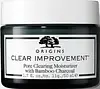
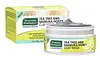
Origins Clear Improvement™ Pore Clearing Moisturizer With Bamboo Charcoal Versus Thursday Plantation Tea Tree and Manuka Honey Clay Mask
This pore-care moisturizer is formulated around Salicylic Acid and Charcoal Powder to refine the look of pores and clear breakouts.
This wash off mask is formulated around Betaine Salicylate to clear breakouts and unclog pores.


What's inside
What's inside
 Key Ingredients
Benefits
Concerns
Ingredients Side-by-side
Salicylic Acid 1%
Masking










Ethylhexyl Palmitate
Emollient


PPG-14 Butyl Ether
Skin ConditioningHamamelis Virginiana Water
Astringent
Dimethicone
Emollient

Ammonium Acryloyldimethyltaurate/Vp Copolymer
PEG-7 Glyceryl Cocoate
Emulsifying
Silica
Abrasive
Steareth-21
CleansingLavandula Angustifolia Oil
Masking



Citrus Limon Peel Oil
Masking
Mentha Viridis Leaf Oil
Astringent
Gaultheria Procumbens Leaf Oil
Masking
Cananga Odorata Flower Oil
Masking
Eugenia Caryophyllus Bud Oil
Masking
Rosmarinus Officinalis Leaf Oil
Masking
Citral
Perfuming
Geraniol
Perfuming
Eugenol
Perfuming
Linalool
Perfuming
Limonene
Perfuming
Benzyl Benzoate
Antimicrobial
Eugenia Caryophyllus Flower Extract
AstringentCharcoal Powder
Abrasive
Porphyra Yezoensis Extract
Skin ConditioningSucrose
Humectant
Glycine
Buffering
Algae Extract
Emollient
Avena Sativa Kernel Extract
Abrasive



Caffeine
Skin Conditioning
Glucosamine Hcl
Sodium Hyaluronate
Humectant
Laminaria Saccharina Extract
Skin Protecting
Glycine Soja Seed
Skin ConditioningButylene Glycol
Humectant
Steareth-2
EmulsifyingZinc PCA
Humectant
Quaternium-22
Menthol
Masking
Alcohol
Antimicrobial
Disodium EDTA
ChelatingPhenoxyethanol
Preservative
Salicylic Acid 1%, Ethylhexyl Palmitate, PPG-14 Butyl Ether, Hamamelis Virginiana Water, Dimethicone, Ammonium Acryloyldimethyltaurate/Vp Copolymer, PEG-7 Glyceryl Cocoate, Silica, Steareth-21, Lavandula Angustifolia Oil, Citrus Limon Peel Oil, Mentha Viridis Leaf Oil, Gaultheria Procumbens Leaf Oil, Cananga Odorata Flower Oil, Eugenia Caryophyllus Bud Oil, Rosmarinus Officinalis Leaf Oil, Citral, Geraniol, Eugenol, Linalool, Limonene, Benzyl Benzoate, Eugenia Caryophyllus Flower Extract, Charcoal Powder, Porphyra Yezoensis Extract, Sucrose, Glycine, Algae Extract, Avena Sativa Kernel Extract, Caffeine, Glucosamine Hcl, Sodium Hyaluronate, Laminaria Saccharina Extract, Glycine Soja Seed, Butylene Glycol, Steareth-2, Zinc PCA, Quaternium-22, Menthol, Alcohol, Disodium EDTA, Phenoxyethanol
Water
Skin ConditioningKaolin
Abrasive
Tapioca Starch
Glycerin
Humectant
Bentonite
Absorbent
Charcoal Powder
Abrasive
Phenoxyethanol
Preservative
Mel
EmollientChondrus Crispus Extract
Skin Conditioning
Xanthan Gum
EmulsifyingBackhousia Citriodora Leaf Extract
AstringentMelaleuca Alternifolia Leaf Oil
Antioxidant
Betaine Salicylate
Antimicrobial
Colloidal Oatmeal
Absorbent
Lonicera Japonica Flower Extract
Skin ConditioningAllantoin
Skin Conditioning
Carica Papaya Fruit Extract
Skin ConditioningMyroxylon Pereirae Oil
Masking
Ethylhexylglycerin
Skin ConditioningSodium Lactate
Buffering
Glycyrrhiza Uralensis Root Extract
Skin Conditioning
Chamomilla Recutita Flower Extract
Masking
Undaria Pinnatifida Extract
Skin ConditioningCitric Acid
Buffering
Lactic Acid
Buffering
Water, Kaolin, Tapioca Starch, Glycerin, Bentonite, Charcoal Powder, Phenoxyethanol, Mel, Chondrus Crispus Extract, Xanthan Gum, Backhousia Citriodora Leaf Extract, Melaleuca Alternifolia Leaf Oil, Betaine Salicylate, Colloidal Oatmeal, Lonicera Japonica Flower Extract, Allantoin, Carica Papaya Fruit Extract, Myroxylon Pereirae Oil, Ethylhexylglycerin, Sodium Lactate, Glycyrrhiza Uralensis Root Extract, Chamomilla Recutita Flower Extract, Undaria Pinnatifida Extract, Citric Acid, Lactic Acid
Alternatives
Ingredients Explained
These ingredients are found in both products.
Ingredients higher up in an ingredient list are typically present in a larger amount.
Charcoal powder comes from grounded charcoal. Charcoal can originate from peat, bamboo, coal, wood, coconut shell, or petroleum.
This ingredient has absorbent properties, making it great at absorbing oil.
Phenoxyethanol is one of the most widely used preservatives in skincare (and for good reason!).
It has a large spectrum of antimicrobial activity and especially effective bacteria, yeast, and mold while only having a weak effect on your skin's natural microbiome.
On a cellular level, it disrupts the cell membranes of microbes by poking holes that make the cell leak. This shuts down the chemical reactions the microbe needs to make energy so it can no longer survive.
Another perk of this ingredient is that it stays functional across a wide pH range (3-10).
You'll often see it paired with boosters like Ethylhexylglycerin; one study showed that a 1:9 ratio of Ethylhexylglycerin to Phenoxyethanol damages bacterial membranes as effectively as doubling the Phenoxyethanol concentration on its own.
Typical use concentrations range from 0.3-1% depending on the formula, and this ingredient is capped at 1% int the EU.
Safety-wise, the fear mongering does not hold up to the evidence. The EU's Scientific Committee on Consumer Safety and FDA consider it safe as a preservative at up to 1%, including for children of all ages.
Adverse systemic effects only showed up in animal studies at exposures roughly 200x higher than what people get from cosmetics. And despite its very widespread use, this ingredient is a rare sensitizer and allergic reactions are uncommon.
Learn more about Phenoxyethanol

