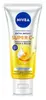
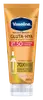
Nivea Extra Bright Super C+ Vitamin Body Serum SPF 50 Versus Vaseline Gluta-Hya Serum Burst Luminous Defense Sunscreen SPF 50
This sunscreen offers SPF 50 protection with a lightweight finish.
This chemical sunscreen covers burning UVB and near UVA but not the deep UVA that drives aging.


What's inside
What's inside
 Key Ingredients
Benefits
Concerns
Ingredients Side-by-side
Myrciaria Dubia Fruit Juice
Antioxidant
Malpighia Glabra Fruit Juice
Skin ConditioningSodium Ascorbyl Phosphate
Antioxidant






Glutathione

Pentylene Glycol
Skin Conditioning
Bisabolol
Antioxidant

Propylene Glycol
Humectant

Sodium Hydroxide
BufferingCitric Acid
Buffering
Carbomer
Emulsion StabilisingHydroxyethylcellulose
Emulsion StabilisingDisodium Phosphate
BufferingSodium Phosphate
BufferingTrisodium EDTA
ChelatingPhenoxyethanol
Preservative
Methylparaben
Preservative

Ethylparaben
Preservative
Sodium Benzoate
Masking
Potassium Sorbate
Preservative
Sodium Polyacrylate
Absorbent
Trideceth-9
EmulsifyingParfum
Masking


Dimethyl Phenylethyl Carbinyl Acetate
Perfuming
Terpineol
Masking
3-Methyl-5-(2,2,3-Trimethyl-3-Cyclopentenyl)Pent-4-En-2-Ol
Perfuming
Myrciaria Dubia Fruit Juice, Malpighia Glabra Fruit Juice, Sodium Ascorbyl Phosphate, Glutathione, Pentylene Glycol, Bisabolol, Propylene Glycol, Sodium Hydroxide, Citric Acid, Carbomer, Hydroxyethylcellulose, Disodium Phosphate, Sodium Phosphate, Trisodium EDTA, Phenoxyethanol, Methylparaben, Ethylparaben, Sodium Benzoate, Potassium Sorbate, Sodium Polyacrylate, Trideceth-9, Parfum, Dimethyl Phenylethyl Carbinyl Acetate, Terpineol, 3-Methyl-5-(2,2,3-Trimethyl-3-Cyclopentenyl)Pent-4-En-2-Ol
Water
Skin ConditioningPhenylbenzimidazole Sulfonic Acid
UV Absorber
Ethylhexyl Methoxycinnamate
UV Absorber
Triethanolamine
BufferingDisodium Phenyl Dibenzimidazole Tetrasulfonate
UV Absorber
Ethylenediamine
Glycerin
Humectant
Acrylates/C10-30 Alkyl Acrylate Crosspolymer
Emulsion StabilisingNiacinamide
Smoothing


Cystine
MaskingGlycine
Buffering
Tetrahydroxypropyl Ethylenediamine
ChelatingSodium Acetylated Hyaluronate
Humectant
Sodium Hyaluronate
Humectant
Sodium Hyaluronate Crosspolymer
Humectant
Hydrolyzed Sodium Hyaluronate
Skin Conditioning
Glutathione
Cyclopentasiloxane
Emollient
Xanthan Gum
EmulsifyingPhenoxyethanol
Preservative
Caprylyl Glycol
Emollient
Polysorbate 20
Emulsifying
Parfum
Masking
Sodium Hydroxide
Buffering1,2-Hexanediol
Skin Conditioning
Dimethicone Crosspolymer
Emulsion Stabilising
Disodium EDTA
ChelatingCyclomethicone
Emollient
Petrolatum
Emollient

BHT
Antioxidant
Pentylene Glycol
Skin Conditioning
Ethylhexylglycerin
Skin ConditioningTocopherol
Antioxidant
Water, Phenylbenzimidazole Sulfonic Acid, Ethylhexyl Methoxycinnamate, Triethanolamine, Disodium Phenyl Dibenzimidazole Tetrasulfonate, Ethylenediamine, Glycerin, Acrylates/C10-30 Alkyl Acrylate Crosspolymer, Niacinamide, Cystine, Glycine, Tetrahydroxypropyl Ethylenediamine, Sodium Acetylated Hyaluronate, Sodium Hyaluronate, Sodium Hyaluronate Crosspolymer, Hydrolyzed Sodium Hyaluronate, Glutathione, Cyclopentasiloxane, Xanthan Gum, Phenoxyethanol, Caprylyl Glycol, Polysorbate 20, Parfum, Sodium Hydroxide, 1,2-Hexanediol, Dimethicone Crosspolymer, Disodium EDTA, Cyclomethicone, Petrolatum, BHT, Pentylene Glycol, Ethylhexylglycerin, Tocopherol
Alternatives
Ingredients Explained
These ingredients are found in both products.
Ingredients higher up in an ingredient list are typically present in a larger amount.
Glutathione is a tiny protein-like molecule (a "tripeptide" build from 3 amino acids: glycine, cysteine, and glutamic acid) that your body already makes on its own.
Inside your body, it acts as one of the skin's main antioxidants that help fight against free radicals.
In skincare, it's best known as a brightening ingredient that slows down tyrosinase, the key enzyme that makes skin pigment. It also nudges the skin toward making a lighter type of pigment instead of a darker one.
This is why you'll see it in products aimed at dark spots and uneven tone.
A small number of real human trials have found a topical glutathione lotion:
The honest caveat is that the current evidence is still thin (few studies, small groups, short timelines). Glutathione also doesn't absorb into skin very easily so results tend to be modest and fade if you stop using it.
One thing worth clearing up:
The scary side effects you may have heard about come from glutathione injected intravenously, which has real safety concerns. Applying it topically is a completely different thing and has a clean track record.
Most human studies used it around 2% (as Glutathione or Glutathione Disulfide) and a 2% oxidized glutathione lotion and a 2% S-acyl glutathione cream are the concentrations with actual clinical data behind them.
There's no established "ideal" percentage yet but 1-2% is the evidence-backed range.
Allergy-wise, there is very low risk for this ingredient; it was well-tolerated across the topical trials. Only one participant had mild temporary redness that cleared up on its own and another study reported no adverse reactions at all.
One trial had ~10% of users drop out for irritation was using a combination cream that also had 10% azelaic acid so the irritation likely wasn't from the glutathione. There's no notable contact-allergy signal for topical glutathione in the literature but patch-testing before first use is still sensible for those with sensitive skin.
Learn more about GlutathioneParfum is a catch-all term for an ingredient or more that is used to give a scent to products.
Also called "fragrance", this ingredient can be a blend of hundreds of chemicals or plant oils. This means every product with "fragrance" or "parfum" in the ingredients list is a different mixture.
For instance, Habanolide is a proprietary trade name for a specific aroma chemical. When used as a fragrance ingredient in cosmetics, most aroma chemicals fall under the broad labeling category of “FRAGRANCE” or “PARFUM” according to EU and US regulations.
The term 'parfum' or 'fragrance' is not regulated in many countries. In many cases, it is up to the brand to define this term.
For instance, many brands choose to label themselves as "fragrance-free" because they are not using synthetic fragrances. However, their products may still contain ingredients such as essential oils that are considered a fragrance by INCI standards.
One example is Calendula flower extract. Calendula is an essential oil that still imparts a scent or 'fragrance'.
Depending on the blend, the ingredients in the mixture can cause allergies and sensitivities on the skin. Some ingredients that are known EU allergens include linalool and citronellol.
Parfum can also be used to mask or cover an unpleasant scent.
The bottom line is: not all fragrances/parfum/ingredients are created equally. If you are worried about fragrances, we recommend taking a closer look at an ingredient. And of course, we always recommend speaking with a professional.
Learn more about ParfumPentylene Glycol (1,2-pentanediol) is a multitasking little diol with three main roles in a formula:
Research on alkanediols (the family pentylene glycol belongs to) show they work by disrupting microbial cell membranes. This disruption helps the primary preservative system in a product work more effectively at lower doses.
On the safety side, the Cosmetic Ingredient Review Expert Panel has concluded this ingredient to be safe as used in current cosmetic practices + concentrations.
Typical use levels in a formula run about 1-5%.
Learn more about Pentylene GlycolPhenoxyethanol is one of the most widely used preservatives in skincare (and for good reason!).
It has a large spectrum of antimicrobial activity and especially effective bacteria, yeast, and mold while only having a weak effect on your skin's natural microbiome.
On a cellular level, it disrupts the cell membranes of microbes by poking holes that make the cell leak. This shuts down the chemical reactions the microbe needs to make energy so it can no longer survive.
Another perk of this ingredient is that it stays functional across a wide pH range (3-10).
You'll often see it paired with boosters like Ethylhexylglycerin; one study showed that a 1:9 ratio of Ethylhexylglycerin to Phenoxyethanol damages bacterial membranes as effectively as doubling the Phenoxyethanol concentration on its own.
Typical use concentrations range from 0.3-1% depending on the formula, and this ingredient is capped at 1% int the EU.
Safety-wise, the fear mongering does not hold up to the evidence. The EU's Scientific Committee on Consumer Safety and FDA consider it safe as a preservative at up to 1%, including for children of all ages.
Adverse systemic effects only showed up in animal studies at exposures roughly 200x higher than what people get from cosmetics. And despite its very widespread use, this ingredient is a rare sensitizer and allergic reactions are uncommon.
Learn more about PhenoxyethanolSodium Hydroxide is also known as lye or caustic soda. It is used to adjust the pH of products; many ingredients require a specific pH to be effective.
In small amounts, sodium hydroxide is considered safe to use. However, large amounts may cause chemical burns due to its high alkaline.
Your skin has a natural pH and acid mantle. This acid mantle helps prevent harmful bacteria from breaking through. The acid mantle also helps keep your skin hydrated.
"Alkaline" refers to a high pH level. A low pH level would be considered acidic.
Learn more about Sodium Hydroxide

