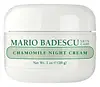
This calming night moisturizer is formulated around Chamomilla Recutita Flower Extract and Retinyl Palmitate to calm redness.
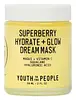
This hydrating overnight mask is formulated around Tetrahexyldecyl Ascorbate and Squalane to hydrate skin and brighten dull-looking skin.

What's inside
What's inside
 Key Ingredients
Benefits
Concerns
Ingredients Side-by-side
Water
Skin ConditioningIsopropyl Myristate
Emollient





Stearic Acid
Cleansing
Glycerin
Humectant

Dimethicone
Emollient
Propylene Glycol
Humectant
Cetearyl Alcohol
Emollient

Cetyl Alcohol
Emollient
Zea Mays Oil
Emulsifying

Ceteareth-20
Cleansing
Chamomilla Recutita Flower Extract
Masking

Retinyl Palmitate
Skin Conditioning


Triethanolamine
BufferingParfum
Masking
Propylparaben
Preservative


Sodium Benzoate
Masking
Methylparaben
Preservative
Glyceryl Acrylate/Acrylic Acid Copolymer
HumectantPvm/Ma Copolymer
Emulsion StabilisingDiazolidinyl Urea
Preservative
Benzyl Salicylate
Perfuming
Benzyl Benzoate
Antimicrobial
Linalool
Perfuming
Water, Isopropyl Myristate, Stearic Acid, Glycerin, Dimethicone, Propylene Glycol, Cetearyl Alcohol, Cetyl Alcohol, Zea Mays Oil, Ceteareth-20, Chamomilla Recutita Flower Extract, Retinyl Palmitate, Triethanolamine, Parfum, Propylparaben, Sodium Benzoate, Methylparaben, Glyceryl Acrylate/Acrylic Acid Copolymer, Pvm/Ma Copolymer, Diazolidinyl Urea, Benzyl Salicylate, Benzyl Benzoate, Linalool
Water
Skin ConditioningGlycerin
Humectant
Helianthus Annuus Seed Oil
Emollient
Isopropyl Myristate
Emollient
Glyceryl Stearate
Emollient
Betaine
Humectant
Cetyl Alcohol
Emollient
Stearic Acid
Cleansing
Tetrahexyldecyl Ascorbate
Antioxidant



Opuntia Tuna Flower/Stem Extract
Skin ConditioningEuterpe Oleracea Fruit Extract
Lycium Barbarum Fruit Extract
Astringent
Aristotelia Chilensis Fruit Extract
Skin ConditioningMoringa Oleifera Leaf Extract
Skin ConditioningGlyceryl Stearate Citrate
Emollient
Tocopheryl Acetate
Antioxidant
Glyceryl Laurate
Emollient
Squalane
Emollient
Carbomer
Emulsion StabilisingHyaluronic Acid
Humectant
Allantoin
Skin Conditioning
Panthenol
Skin Conditioning
Ethylhexylglycerin
Skin ConditioningXanthan Gum
EmulsifyingPhenoxyethanol
Preservative
Riboflavin
Cosmetic ColorantTriethyl Citrate
Masking
Citrus Aurantium Dulcis Peel Oil
Masking
Gamma-Undecalactone
Perfuming
Gamma-Decalactone
Perfuming
Tocopherol
Antioxidant
Limonene
Perfuming
Water, Glycerin, Helianthus Annuus Seed Oil, Isopropyl Myristate, Glyceryl Stearate, Betaine, Cetyl Alcohol, Stearic Acid, Tetrahexyldecyl Ascorbate, Opuntia Tuna Flower/Stem Extract, Euterpe Oleracea Fruit Extract, Lycium Barbarum Fruit Extract, Aristotelia Chilensis Fruit Extract, Moringa Oleifera Leaf Extract, Glyceryl Stearate Citrate, Tocopheryl Acetate, Glyceryl Laurate, Squalane, Carbomer, Hyaluronic Acid, Allantoin, Panthenol, Ethylhexylglycerin, Xanthan Gum, Phenoxyethanol, Riboflavin, Triethyl Citrate, Citrus Aurantium Dulcis Peel Oil, Gamma-Undecalactone, Gamma-Decalactone, Tocopherol, Limonene
Reviews
Ingredients Explained
These ingredients are found in both products.
Ingredients higher up in an ingredient list are typically present in a larger amount.
Cetyl Alcohol is a fatty alcohol. Fatty Alcohols are most often used as an emollient or to thicken a product.
Its main roles are:
Though it has "alcohol" in the name, it is not related to denatured alcohol or ethyl alcohol.
The FDA allows products labeled "alcohol-free" to have fatty alcohols.
This ingredient may not be fungal acne safe. It is a primary fatty alcohol with a chain length above 12 carbons. A study from 2019 show Malassezia can feed on fatty alcohols in this range, so it may trigger fungal acne in those prone to it.
Learn more about Cetyl AlcoholGlycerin (or glycerol) is a compound naturally found in your skin. It's a powerhouse humectant that pulls water into the stratum corneum.
Topically, glycerin does several things at once:
Your skin makes glycerin on its own (mostly from sebaceous oil breakdown) and shuttles it to your outermost layer of skin, or your epidermis, via aquaporin-3.
Aquaporin-3 is a transporter that is essential for normal skin hydration, elasticity, and repair. Interestingly, mice lacking in AQP3 have dry and less elastic skin that can be fully corrected with glycerin.
This ingredient is non-irritating, plays well with almost every ingredient, and works across all skin types. Typical use is anywhere between 3-10% but can go up to 79% in some leave-on products.
Just know very high concentrations (>40%) can feel tacky in low humidity.
Glycerin is the name for this ingredient in American English. British English uses Glycerol/Glycerine.
Learn more about GlycerinIsopropyl Myristate is an ester made by combining isopropyl alcohol with myristic acid.
It is primarily an emollient and penetration enhancer that gives products a lightweight, silky feel without the heaviness of oils.
This ingredient is generally considered non-toxic, non-irritating, and has low absorption potential.
This ingredient does have a comedogenic rating of 3-5, but this doesn't mean a formula with this ingredient will clog pores.
Dermatologist Dr. Zoe Draelos has also confirmed in a peer-reviewed paper that products containing comedogenic ingredients are not necessarily comedogenic themselves.
A small subset of people (~2%) may experience contact sensitivity so patch testing is a reasonable idea if you have reactive skin.
Since this ingredient is an ester of myristic acid (a C14 fatty acid), it falls within the carbon chain range that is known to feed Malassezia. This ingredient may not be fungal acne safe.
Learn more about Isopropyl MyristateStearic Acid is a fatty acid that is already found in your skin. It's one of the free fatty acids that works alongside ceramides and cholesterols to maintain your barrier.
In cosmetics, it is a multitasker:
Safety-wise, the CIR Expert Panel has concluded it to be safe in cosmetics when formulated to be non-irritating and non-sensitizing.
Free stearic acid is a C18 fatty acid that the Malassezia yeast can substrate, so this ingredient may not be fungal acne safe.
This ingredient does have a comedogenic rating of 2-3, but this doesn't mean a formula with this ingredient will clog pores.
Human testing has proved that any finished product with this ingredient won't automatically make you break out; it really comes down to concentration, formula, and your skin.
Learn more about Stearic AcidWater. It's the most common cosmetic ingredient of all. You'll usually see it at the top of ingredient lists, meaning that it makes up the largest part of the product.
So why is it so popular? Water most often acts as a solvent - this means that it helps dissolve other ingredients into the formulation.
You'll also recognize water as that liquid we all need to stay alive. If you see this, drink a glass of water. Remember to stay hydrated!
Learn more about Water

