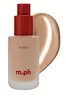
m.ph Le Skin Weightless Serum Foundation Versus Rare Beauty True To Myself Natural Matte Longwear Foundation

What's inside
What's inside
 Key Ingredients
Benefits
Concerns
No concerns
Ingredients Side-by-side
Niacinamide 2%
Smoothing











Water
Skin ConditioningHydrogenated Didecene
Skin ConditioningTriethylhexanoin
MaskingDiphenyl Dimethicone
Emollient
Synthetic Fluorphlogopite
Methyl Trimethicone
Skin Conditioning
Hydrogenated Ethylhexyl Olivate
EmollientCaprylyl Methicone
Skin Conditioning
Cetyl PEG/PPG-10/1 Dimethicone
Emulsifying
Butylene Glycol
Humectant
Propanediol
Solvent
Alcohol
Antimicrobial




Polyglyceryl-4 Isostearate
Emulsifying
C9-12 Alkane
SolventDisteardimonium Hectorite
StabilisingMagnesium Sulfate
Panthenol
Skin Conditioning
Tocopheryl Acetate
Antioxidant

Sodium Hyaluronate
Humectant
Glycerin
Humectant
Caprylyl Glycol
Emollient
Hydrogenated Olive Oil Unsaponifiables
Emollient
Mica
Cosmetic ColorantAluminum Hydroxide
EmollientTriethoxycaprylylsilane
1,2-Hexanediol
Skin Conditioning
Dimethiconol
Emollient
Sodium Phytate
Sodium Dehydroacetate
Preservative
CI 77891
Cosmetic ColorantIron Oxides
Niacinamide 2%, Water, Hydrogenated Didecene, Triethylhexanoin, Diphenyl Dimethicone, Synthetic Fluorphlogopite, Methyl Trimethicone, Hydrogenated Ethylhexyl Olivate, Caprylyl Methicone, Cetyl PEG/PPG-10/1 Dimethicone, Butylene Glycol, Propanediol, Alcohol, Polyglyceryl-4 Isostearate, C9-12 Alkane, Disteardimonium Hectorite, Magnesium Sulfate, Panthenol, Tocopheryl Acetate, Sodium Hyaluronate, Glycerin, Caprylyl Glycol, Hydrogenated Olive Oil Unsaponifiables, Mica, Aluminum Hydroxide, Triethoxycaprylylsilane, 1,2-Hexanediol, Dimethiconol, Sodium Phytate, Sodium Dehydroacetate, CI 77891, Iron Oxides
Dimethicone
Emollient
Water
Skin ConditioningIsododecane
EmollientTrimethylsiloxysilicate
Emollient
Propanediol
Solvent
Glycerin
Humectant
PEG-10 Dimethicone
Skin Conditioning
Silica
Abrasive
Dimethicone/Vinyl Dimethicone Crosspolymer
Skin Conditioning
PEG/PPG-18/18 Dimethicone
Emulsifying
Disteardimonium Hectorite
StabilisingSodium Chloride
MaskingPhenoxyethanol
Preservative
Propylene Carbonate
SolventCaprylyl Glycol
Emollient
Aluminum Hydroxide
EmollientMagnesium Aluminum Silicate
Absorbent
Triethoxycaprylylsilane
Cellulose
Absorbent
Sodium Hyaluronate
Humectant
Bisabolol
Antioxidant
Caprylic/Capric Triglyceride
Masking
Undaria Pinnatifida Extract
Skin ConditioningZingiber Officinale Root Extract
Masking
Titanium Dioxide
Cosmetic Colorant

CI 77492
Cosmetic ColorantCI 77491
Cosmetic ColorantCI 77499
Cosmetic ColorantDimethicone, Water, Isododecane, Trimethylsiloxysilicate, Propanediol, Glycerin, PEG-10 Dimethicone, Silica, Dimethicone/Vinyl Dimethicone Crosspolymer, PEG/PPG-18/18 Dimethicone, Disteardimonium Hectorite, Sodium Chloride, Phenoxyethanol, Propylene Carbonate, Caprylyl Glycol, Aluminum Hydroxide, Magnesium Aluminum Silicate, Triethoxycaprylylsilane, Cellulose, Sodium Hyaluronate, Bisabolol, Caprylic/Capric Triglyceride, Undaria Pinnatifida Extract, Zingiber Officinale Root Extract, Titanium Dioxide, CI 77492, CI 77491, CI 77499
Reviews
Ingredients Explained
These ingredients are found in both products.
Ingredients higher up in an ingredient list are typically present in a larger amount.
Aluminum Hydroxide is a form of aluminum. It can be naturally found in nature as the mineral gibbsite. In cosmetics, Aluminum Hydroxide is used as a colorant, pH adjuster, and absorbent.
As a colorant, Aluminum Hydroxide may add opacity, or reduce the transparency. Aluminum hydroxide is contains both basic and acidic properties.
According to manufacturers, this ingredient is an emollient and humectant. This means it helps hydrate the skin.
In medicine, this ingredient is used to help relieve heartburn and help heal ulcers.
There is currently no credible scientific evidence linking aluminum hydroxide in cosmetics to increased cancer risk.
Major health organizations allow the use of aluminum hydroxide in personal care products and have not flagged it as a carcinogenic risk at typical usage levels.
Learn more about Aluminum HydroxideCaprylyl Glycol is a humectant, skin conditioner, emollient, and preservative booster derived from either caprylic acid or synthetically created.
Typical use levels vary from 0.3-1% as a preservative booster and go up to 2% to condition skin.
Because it is not a free-fatty acid, this ingredient is fungal acne safe (there's nothing for Malassezia to feed on).
Learn more about Caprylyl GlycolDisteardimonium Hectorite comes from the clay mineral named hectorite. It is used to add thickness to a product.
It can also help stabilize a product by helping to disperse other ingredients.
Hectorite is a rare, white clay mineral.
Learn more about Disteardimonium HectoriteGlycerin (or glycerol) is a compound naturally found in your skin. It's a powerhouse humectant that pulls water into the stratum corneum.
Topically, glycerin does several things at once:
Your skin makes glycerin on its own (mostly from sebaceous oil breakdown) and shuttles it to your outermost layer of skin, or your epidermis, via aquaporin-3.
Aquaporin-3 is a transporter that is essential for normal skin hydration, elasticity, and repair. Interestingly, mice lacking in AQP3 have dry and less elastic skin that can be fully corrected with glycerin.
This ingredient is non-irritating, plays well with almost every ingredient, and works across all skin types. Typical use is anywhere between 3-10% but can go up to 79% in some leave-on products.
Just know very high concentrations (>40%) can feel tacky in low humidity.
Glycerin is the name for this ingredient in American English. British English uses Glycerol/Glycerine.
Learn more about GlycerinPropanediol is an all-star ingredient. It softens, hydrates, and smooths the skin.
It’s often used to:
Propanediol is not likely to cause sensitivity and considered safe to use. It is derived from corn or petroleum with a clear color and no scent.
Learn more about PropanediolSodium Hyaluronate is the salt form of hyaluronic acid. It is a long sugar chain that is naturally found in your skin, joints, and connective tissue that maintains hydration and elasticity.
In skincare, it works as a humectant. It pulls water from the environment and deeper layers of skin and binds it to the surface.
Interestingly, the size of the molecule affects its behavior:
Some clinical evidence links low molecular weight versions to improved wrinkle depth, elasticity, anti-inflammatory effects, and barrier repair.
Many serums use a blend of both weights so you can get surface hydration plus longer-lasting and deeper effects.
You'll typically see concentrations between 0.1-2% for this ingredient.
Learn more about Sodium HyaluronateTriethoxycaprylylsilane is a silicon-based surface modifier that makes sunscreens feel silky and makeup stay put.
Its main job is to coat mineral particles like titanium dioxide, zinc oxide, and color pigments in a thin, oily layer so they spread smoothly, don't clump, and stick to skin better.
This ingredient is typically used at low levels (up to 2.5% in eyeshadow and 1% in lipstick).
Learn more about TriethoxycaprylylsilaneWater. It's the most common cosmetic ingredient of all. You'll usually see it at the top of ingredient lists, meaning that it makes up the largest part of the product.
So why is it so popular? Water most often acts as a solvent - this means that it helps dissolve other ingredients into the formulation.
You'll also recognize water as that liquid we all need to stay alive. If you see this, drink a glass of water. Remember to stay hydrated!
Learn more about Water
