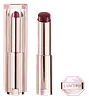
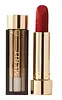
Lancôme Lip Idôle Squalane-12 Butterglow Hydrating Lip Balm Versus Merit Beauty Signature Lip Lightweight Matte Lipstick
This barrier-repair lip moisturizer is formulated around Squalane and Butyrospermum Parkii Butter to strengthen the lip barrier and hydrate lips.


What's inside
What's inside
 Key Ingredients
Benefits
Concerns
Ingredients Side-by-side
Polyglyceryl-2 Triisostearate
Emulsifying

Squalane
Emollient


Bis-Behenyl/Isostearyl/Phytosteryl Dimer Dilinoleyl Dimer Dilinoleate
EmollientButyrospermum Parkii Butter
Skin Conditioning


Cellulose
Absorbent
Dimer Dilinoleyl Dimer Dilinoleate
EmollientPolyglyceryl-3 Beeswax
Emulsifying
Helianthus Annuus Seed Wax
Skin Conditioning
Hydrogenated Castor Oil Dimer Dilinoleate
Skin Conditioning
Simmondsia Chinensis Butter
Skin Conditioning
Hydrogenated Jojoba Oil
Abrasive
Euphorbia Cerifera Cera
Astringent
Rosa Centifolia Extract
Skin ConditioningRosa Centifolia Flower Extract
Astringent
Camelina Sativa Seed Oil
Skin Conditioning
Canola Oil
Emollient
Mentha Piperita Oil
Masking



Ceramide NP
Skin Conditioning


Saccharomyces Ferment Filtrate
Humectant
Silica
Abrasive
Aluminum Hydroxide
EmollientPropylene Glycol
Humectant
Citric Acid
Buffering

Tocopherol
Antioxidant


Pentaerythrityl Tetra-Di-T-Butyl Hydroxyhydrocinnamate
Antioxidant
CI 45380
Cosmetic ColorantCI 45410
Cosmetic ColorantCI 15850
Cosmetic ColorantCI 77891
Cosmetic ColorantCI 19140
Cosmetic ColorantLimonene
Perfuming
Benzyl Benzoate
Antimicrobial
Parfum
Masking
Polyglyceryl-2 Triisostearate, Squalane, Bis-Behenyl/Isostearyl/Phytosteryl Dimer Dilinoleyl Dimer Dilinoleate, Butyrospermum Parkii Butter, Cellulose, Dimer Dilinoleyl Dimer Dilinoleate, Polyglyceryl-3 Beeswax, Helianthus Annuus Seed Wax, Hydrogenated Castor Oil Dimer Dilinoleate, Simmondsia Chinensis Butter, Hydrogenated Jojoba Oil, Euphorbia Cerifera Cera, Rosa Centifolia Extract, Rosa Centifolia Flower Extract, Camelina Sativa Seed Oil, Canola Oil, Mentha Piperita Oil, Ceramide NP, Saccharomyces Ferment Filtrate, Silica, Aluminum Hydroxide, Propylene Glycol, Citric Acid, Tocopherol, Pentaerythrityl Tetra-Di-T-Butyl Hydroxyhydrocinnamate, CI 45380, CI 45410, CI 15850, CI 77891, CI 19140, Limonene, Benzyl Benzoate, Parfum
Dimethicone
Emollient

Ethylhexyl Palmitate
Emollient
Synthetic Wax
Abrasive
CI 77220
Cosmetic ColorantCaprylic/Capric Triglyceride
Masking
Hydrogenated Olive Oil
Skin Conditioning
Kaolin
Abrasive
Polyglyceryl-3 Diisostearate
Emulsifying
Silica
Abrasive
Euphorbia Cerifera Wax
Olea Europaea Fruit Oil
Masking
Olea Europaea Oil Unsaponifiables
Skin Conditioning
Sodium Hyaluronate
Humectant
Sesamum Indicum Seed Extract
Skin Conditioning
Tocopherol
Antioxidant
Stearalkonium Hectorite
Gel FormingDimethicone/Vinyl Dimethicone Crosspolymer
Skin Conditioning
Ricinus Communis Seed Oil
Masking
Dimethyl Isosorbide
SolventPropylene Carbonate
SolventIsopropyl Titanium Triisostearate
Emollient
Hydrogenated Castor Oil
Emollient
CI 77891
Cosmetic ColorantIron Oxides
CI 15850
Cosmetic ColorantCI 45410
Cosmetic ColorantCI 73360
Cosmetic ColorantCI 19140
Cosmetic ColorantCI 15985
Cosmetic ColorantCI 42090
Cosmetic ColorantDimethicone, Ethylhexyl Palmitate, Synthetic Wax, CI 77220, Caprylic/Capric Triglyceride, Hydrogenated Olive Oil, Kaolin, Polyglyceryl-3 Diisostearate, Silica, Euphorbia Cerifera Wax, Olea Europaea Fruit Oil, Olea Europaea Oil Unsaponifiables, Sodium Hyaluronate, Sesamum Indicum Seed Extract, Tocopherol, Stearalkonium Hectorite, Dimethicone/Vinyl Dimethicone Crosspolymer, Ricinus Communis Seed Oil, Dimethyl Isosorbide, Propylene Carbonate, Isopropyl Titanium Triisostearate, Hydrogenated Castor Oil, CI 77891, Iron Oxides, CI 15850, CI 45410, CI 73360, CI 19140, CI 15985, CI 42090
Reviews
Ingredients Explained
These ingredients are found in both products.
Ingredients higher up in an ingredient list are typically present in a larger amount.
Ci 15850 is the pigment color red. It is an azo dye and created synthetically.
Azo dyes need to be thoroughly purified before use. This allows them to be more stable and longer-lasting.
This ingredient is common in foundations, lipsticks, and blushes. This color is described as brown/orangey red.
It has many secondary names such as Red 6 and Red 7. According to a manufacturer, Red 6 usually contains aluminum.
Learn more about CI 15850CI 19140 is also known as Tartrazine. Tartrazine is a synthetic dye used in cosmetics, foods, and medicine to add a yellow color.
Tartrazine is created from petroleum and is water-soluble.
Some people may experience allergies from this dye, especially asthmatics and those with an aspirin intolerance.
Learn more about CI 19140CI 45410 is a synthetic red-pigment and dye.
It often goes by both Red 28 or Red 27; manufacturers label both ingredients as CI 45410.
This dye is commonly found in makeup because it imparts a vivid color. Some types of this dye change color based on pH level and interaction with moisture:
Your skin has a natural pH of around 4.5 - 5.5.
According to the FDA, CI 45410 is not permitted for use in eye products.
Red 27 is a flourescein dye and commonly used as a fluorescent tracer in medicine.
Learn more about CI 45410Ci 77891 is a white pigment from Titanium dioxide. It is naturally found in minerals such as rutile and ilmenite.
It's main function is to add a white color to cosmetics. It can also be mixed with other colors to create different shades.
Ci 77891 is commonly found in sunscreens due to its ability to block UV rays.
Learn more about CI 77891Silica, also known as silicon dioxide, is a naturally occurring mineral. It is used as a fine, spherical, and porous powder in cosmetics.
Though it has exfoliant properties, the function of silica varies depending on the product.
The unique structure of silica enhances the spreadability and adds smoothness, making it a great texture enhancer.
It is also used as an active carrier, emulsifier, and mattifier due to its ability to absorb excess oil.
In some products, tiny microneedles called spicules are made from silica or hydrolyzed sponge. When you rub them in, they lightly polish away dead skin layers and enhance the penetration of active ingredients.
Learn more about SilicaTocopherol is a fat-soluble antioxidant known as Vitamin E.
You'll find this ingredient in the vast majority of skincare (for good reason). It works to neutralize free radicals, or unstable molecules generated by UV exposure, pollution, and other environmental stressors, before they can cause oxidative damage to your skin cells.
Topically applied tocopherol has been shown to protect against UV damage by ramping up the skin's own natural defense enzymes.
It also acts as a skin conditioning agent; some studies show that regular topical use can improve the skin's water-binding capacity over 2-4 weeks.
This ingredient is especially loved for being a team player. When combined with Vitamin C, the photoprotective effect of both ingredients roughly doubles and the combo also helps reduce UV-induced DNA damage.
This ingredient has some brightening potential but it's more of a prevention ingredient than spot-fader. Cell studies show it can slow down melanin production but it's worth noting that it's not the most powerful brightener out there.
In formulations, it also serves as a stabilizer that helps protect other oxidation-prone ingredients from degrading.
Concentrations usually range from 0.1-1% in most leave-on products.
Learn more about Tocopherol

