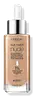
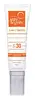
L'Oreal True Match Nude Hyaluronic Tinted Serum Versus Suntegrity 5-IN-1 Tinted Sunscreen Moisturizer - Broad Spectrum SPF 30
This mineral sunscreen covers the full UV range and blocks ~97% of UVB at SPF 30.


What's inside
What's inside
 Key Ingredients
Benefits
Concerns
Ingredients Side-by-side
Water
Skin ConditioningIsododecane
EmollientDimethicone
Emollient

Alcohol Denat.
Antimicrobial




Trimethylsiloxysilicate
Emollient
Butylene Glycol
Humectant

PEG-10 Dimethicone
Skin Conditioning
Perlite
Absorbent

Sodium Hyaluronate
Humectant


Nylon-12

Isopropyl Lauroyl Sarcosinate
Skin ConditioningDiisopropyl Sebacate
EmollientDisteardimonium Hectorite
StabilisingHdi/Trimethylol Hexyllactone Crosspolymer
Bis-PEG/PPG-14/14 Dimethicone
Emollient
Magnesium Sulfate
Synthetic Fluorphlogopite
Ethylhexyl Hydroxystearate
Emollient
Phenoxyethanol
Preservative
Cellulose
Absorbent
Dipentaerythrityl Tetrahydroxystearate/Tetraisostearate
Skin Conditioning
Silica Silylate
Emollient
Disodium Stearoyl Glutamate
CleansingCalcium Aluminum Borosilicate
Tocopherol
Antioxidant



Moroccan Lava Clay
Abrasive
Glycerin
Humectant
Empetrum Nigrum Fruit Juice
Skin ConditioningAluminum Hydroxide
EmollientSilica
Abrasive
Potassium Sorbate
Preservative
CI 77491
Cosmetic ColorantCI 77492
Cosmetic ColorantCI 77499
Cosmetic ColorantCI 77891
Cosmetic ColorantCI 77163
Cosmetic Colorant
Water, Isododecane, Dimethicone, Alcohol Denat., Trimethylsiloxysilicate, Butylene Glycol, PEG-10 Dimethicone, Perlite, Sodium Hyaluronate, Nylon-12, Isopropyl Lauroyl Sarcosinate, Diisopropyl Sebacate, Disteardimonium Hectorite, Hdi/Trimethylol Hexyllactone Crosspolymer, Bis-PEG/PPG-14/14 Dimethicone, Magnesium Sulfate, Synthetic Fluorphlogopite, Ethylhexyl Hydroxystearate, Phenoxyethanol, Cellulose, Dipentaerythrityl Tetrahydroxystearate/Tetraisostearate, Silica Silylate, Disodium Stearoyl Glutamate, Calcium Aluminum Borosilicate, Tocopherol, Moroccan Lava Clay, Glycerin, Empetrum Nigrum Fruit Juice, Aluminum Hydroxide, Silica, Potassium Sorbate, CI 77491, CI 77492, CI 77499, CI 77891, CI 77163
Zinc Oxide 20%
Cosmetic Colorant
Aloe Barbadensis Leaf Juice
Skin Conditioning
Caprylic/Capric Triglyceride
Masking
Polyglyceryl-3 Polyricinoleate
Emulsifying
Glycerin
Humectant
Hydrogenated Castor Oil
Emollient
Sorbitan Sesquioleate
Emulsifying
Hydrogenated Methyl Abietate
Stearyl/Octyldodecyl Citrate Crosspolymer
HumectantMagnesium Sulfate
Glyceryl Caprylate
EmollientSimmondsia Chinensis Seed Oil
Emollient
Cucumis Sativus Extract
Skin Conditioning
Camellia Sinensis Extract
Antioxidant
Helianthus Annuus Seed Oil
Emollient
Punica Granatum Seed Oil
Emollient
Astaxanthin
Skin Conditioning
Sodium Hyaluronate
Humectant
Caprylhydroxamic Acid
ChelatingEthylhexylglycerin
Skin ConditioningGalactoarabinan
Iron Oxides
Zinc Oxide 20%, Aloe Barbadensis Leaf Juice, Caprylic/Capric Triglyceride, Polyglyceryl-3 Polyricinoleate, Glycerin, Hydrogenated Castor Oil, Sorbitan Sesquioleate, Hydrogenated Methyl Abietate, Stearyl/Octyldodecyl Citrate Crosspolymer, Magnesium Sulfate, Glyceryl Caprylate, Simmondsia Chinensis Seed Oil, Cucumis Sativus Extract, Camellia Sinensis Extract, Helianthus Annuus Seed Oil, Punica Granatum Seed Oil, Astaxanthin, Sodium Hyaluronate, Caprylhydroxamic Acid, Ethylhexylglycerin, Galactoarabinan, Iron Oxides
Reviews
Ingredients Explained
These ingredients are found in both products.
Ingredients higher up in an ingredient list are typically present in a larger amount.
Glycerin (or glycerol) is a compound naturally found in your skin. It's a powerhouse humectant that pulls water into the stratum corneum.
Topically, glycerin does several things at once:
Your skin makes glycerin on its own (mostly from sebaceous oil breakdown) and shuttles it to your outermost layer of skin, or your epidermis, via aquaporin-3.
Aquaporin-3 is a transporter that is essential for normal skin hydration, elasticity, and repair. Interestingly, mice lacking in AQP3 have dry and less elastic skin that can be fully corrected with glycerin.
This ingredient is non-irritating, plays well with almost every ingredient, and works across all skin types. Typical use is anywhere between 3-10% but can go up to 79% in some leave-on products.
Just know very high concentrations (>40%) can feel tacky in low humidity.
Glycerin is the name for this ingredient in American English. British English uses Glycerol/Glycerine.
Learn more about GlycerinMagnesium Sulfate is a salt. More specifically, it is an epsom salt, or the bath salt used to help relieve muscle aches.
Despite having ‘sulfate’ in the name, it isn’t a surfactant or cleansing agent like sodium lauryl sulfate. Unlike those sulfates, magnesium sulfate doesn’t have the same cleansing or foaming properties (it's simply a type of salt).
In cosmetics, Magnesium Sulfate is used to thicken a product or help dilute other solids. It is a non-reactive and non-irritating ingredient.
One study shows magnesium deficiency may lead to inflammation of the skin. Applying magnesium topically may help reduce inflammation.
You can find this ingredient in sea water or mineral deposits.
Learn more about Magnesium SulfateSodium Hyaluronate is the salt form of hyaluronic acid. It is a long sugar chain that is naturally found in your skin, joints, and connective tissue that maintains hydration and elasticity.
In skincare, it works as a humectant. It pulls water from the environment and deeper layers of skin and binds it to the surface.
Interestingly, the size of the molecule affects its behavior:
Some clinical evidence links low molecular weight versions to improved wrinkle depth, elasticity, anti-inflammatory effects, and barrier repair.
Many serums use a blend of both weights so you can get surface hydration plus longer-lasting and deeper effects.
You'll typically see concentrations between 0.1-2% for this ingredient.
Learn more about Sodium Hyaluronate

