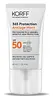
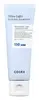
Korff 365 Protection Antiage Matt Face Gelcream SPF 50 Versus COSRX Ultra-Light Invisible Sunscreen SPF 50 PA++++
This chemical sunscreen covers the full UV range and blocks ~98% of UVB at SPF 50.
This chemical sunscreen covers the full UV range and blocks ~98% of UVB at SPF 50.


What's inside
What's inside
 Key Ingredients
Benefits
Concerns
Ingredients Side-by-side
Caprylyl Methicone
Skin Conditioning
C12-15 Alkyl Benzoate
AntimicrobialDiethylamino Hydroxybenzoyl Hexyl Benzoate
UV Filter
Phenethyl Benzoate
Emollient

PEG-12 Dimethicone
Skin Conditioning
Bis-Ethylhexyloxyphenol Methoxyphenyl Triazine
UV Absorber
Ethylhexyl Salicylate
UV Absorber
Ethylhexyl Triazone
UV Absorber
Diethylhexyl Butamido Triazone
UV Absorber
Silica
Abrasive


Silica Dimethyl Silylate
EmollientSodium Hyaluronate
Humectant




Bisabolol
Antioxidant


Tocopheryl Acetate
Antioxidant

Schisandra Chinensis Fruit Extract
Skin Conditioning
Artemisia Umbelliformis Extract
Skin ConditioningBuddleja Davidii Leaf Extract
Skin ConditioningPeucedanum Ostruthium Leaf Extract
Skin ConditioningPinus Pinaster Bark/Bud Extract
Antimicrobial
Glycerin
Humectant
Water
Skin ConditioningEthylhexyl Palmitate
Emollient




Diglycerin
Humectant
Trihydroxystearin
Skin Conditioning
Sodium Benzoate
Masking
Potassium Sorbate
Preservative
Benzyl Benzoate
Antimicrobial

Parfum
Masking
Caprylyl Methicone, C12-15 Alkyl Benzoate, Diethylamino Hydroxybenzoyl Hexyl Benzoate, Phenethyl Benzoate, PEG-12 Dimethicone, Bis-Ethylhexyloxyphenol Methoxyphenyl Triazine, Ethylhexyl Salicylate, Ethylhexyl Triazone, Diethylhexyl Butamido Triazone, Silica, Silica Dimethyl Silylate, Sodium Hyaluronate, Bisabolol, Tocopheryl Acetate, Schisandra Chinensis Fruit Extract, Artemisia Umbelliformis Extract, Buddleja Davidii Leaf Extract, Peucedanum Ostruthium Leaf Extract, Pinus Pinaster Bark/Bud Extract, Glycerin, Water, Ethylhexyl Palmitate, Diglycerin, Trihydroxystearin, Sodium Benzoate, Potassium Sorbate, Benzyl Benzoate, Parfum
Aloe Barbadensis Leaf Water
MaskingDiethylhexyl Succinate
EmollientPropanediol
Solvent
Water
Skin ConditioningDrometrizole Trisiloxane
UV Absorber
Ethylhexyl Triazone
UV Absorber
Niacinamide
Smoothing



Diethylamino Hydroxybenzoyl Hexyl Benzoate
UV Filter
Terephthalylidene Dicamphor Sulfonic Acid
UV Absorber
1,2-Hexanediol
Skin Conditioning
Behenyl Alcohol
Emollient
Methyl Trimethicone
Skin Conditioning
Hamamelis Virginiana Leaf Water
Astringent
Tromethamine
BufferingSodium Polyacryloyldimethyl Taurate
Emulsion StabilisingPolyacrylate Crosspolymer-6
Emulsion StabilisingArachidyl Alcohol
Emollient
Caprylyl Glycol
Emollient
Ethylhexylglycerin
Skin ConditioningArachidyl Glucoside
EmulsifyingSodium Metaphosphate
BufferingAdenosine
Skin Conditioning
Tocopherol
Antioxidant
Sodium Hyaluronate
Humectant
Allantoin
Skin Conditioning
Citric Acid
Buffering
Potassium Sorbate
Preservative
Aloe Barbadensis Leaf Water, Diethylhexyl Succinate, Propanediol, Water, Drometrizole Trisiloxane, Ethylhexyl Triazone, Niacinamide, Diethylamino Hydroxybenzoyl Hexyl Benzoate, Terephthalylidene Dicamphor Sulfonic Acid, 1,2-Hexanediol, Behenyl Alcohol, Methyl Trimethicone, Hamamelis Virginiana Leaf Water, Tromethamine, Sodium Polyacryloyldimethyl Taurate, Polyacrylate Crosspolymer-6, Arachidyl Alcohol, Caprylyl Glycol, Ethylhexylglycerin, Arachidyl Glucoside, Sodium Metaphosphate, Adenosine, Tocopherol, Sodium Hyaluronate, Allantoin, Citric Acid, Potassium Sorbate
Reviews
Ingredients Explained
These ingredients are found in both products.
Ingredients higher up in an ingredient list are typically present in a larger amount.
Diethylamino Hydroxybenzoyl Hexyl Benzoate (DHHB) is a chemical UV-A absorber. It is formulated for high UVA protection (320-400 nm).
DHHB is well-liked for:
DHHB has been approved by the EU, Japan, Taiwan, and South America for use up to 10%. Unfortunately, it has not been approved for use in the US or Canada due to slow regulatory processes.
This ingredient is soluble in oils, fats, and lipids.
Learn more about Diethylamino Hydroxybenzoyl Hexyl BenzoateEthylhexyl Triazone (aka Octyl Triazone) is an oil-soluble organic UVB filter. It has peak absorption around 314 nm, right in the middle of the UVB range.
This ingredient is described as one of the most effective UVB filters available and small concentrations are enough to deliver a high SPF thanks to its strong UV absorbing power.
Formulators love it for its stability; its ability to filter UV stays practically unchanged even under intense radiation and it can also help boost the photostability of less stable filters like avobenzone.
It's also a great pick for water resistant products because it's insoluble in water and has a good affinity for keratin.
Because it's a big, heavy molecule, the European Scientific Committee has found to to have very low dermal penetration and negative results for allergenicity.
In vitro testing also showed a low absorption rate and clean results on irritation.
Typical use levels are 1-5% with 5% being the maximum in the EU, Japan, and other markets that allow it. However, this ingredient is not approved yet in the US or Canada.
Learn more about Ethylhexyl TriazonePotassium Sorbate is a preservative used to prevent yeast and mold in products. It is commonly found in both cosmetic and food products.
This ingredient comes from potassium salt derived from sorbic acid. Sorbic acid is a natural antibiotic and effective against fungus.
Both potassium sorbate and sorbic acid can be found in baked goods, cheeses, dried meats, dried fruit, ice cream, pickles, wine, yogurt, and more.
You'll often find this ingredient used with other preservatives.
Learn more about Potassium SorbateSodium Hyaluronate is the salt form of hyaluronic acid. It is a long sugar chain that is naturally found in your skin, joints, and connective tissue that maintains hydration and elasticity.
In skincare, it works as a humectant. It pulls water from the environment and deeper layers of skin and binds it to the surface.
Interestingly, the size of the molecule affects its behavior:
Some clinical evidence links low molecular weight versions to improved wrinkle depth, elasticity, anti-inflammatory effects, and barrier repair.
Many serums use a blend of both weights so you can get surface hydration plus longer-lasting and deeper effects.
You'll typically see concentrations between 0.1-2% for this ingredient.
Learn more about Sodium HyaluronateWater. It's the most common cosmetic ingredient of all. You'll usually see it at the top of ingredient lists, meaning that it makes up the largest part of the product.
So why is it so popular? Water most often acts as a solvent - this means that it helps dissolve other ingredients into the formulation.
You'll also recognize water as that liquid we all need to stay alive. If you see this, drink a glass of water. Remember to stay hydrated!
Learn more about Water

