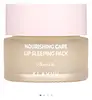
This hydrating lip mask is formulated around Ricinus Communis Seed Oil and Camellia Japonica Seed Oil to hydrate lips and strengthen the lip barrier.
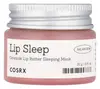
This hydrating lip mask is formulated around Butyrospermum Parkii Butter and Simmondsia Chinensis Seed Oil to hydrate lips and strengthen the lip barrier.

What's inside
What's inside
 Key Ingredients
Benefits
Concerns
Ingredients Side-by-side
Polybutene
Dipentaerythrityl Hexahydroxystearate/Hexastearate/Hexarosinate
Skin ConditioningDiisostearyl Malate
EmollientRicinus Communis Seed Oil
Masking




Octyldodecanol
Emollient
Methyl Hydrogenated Rosinate
Perfuming
Ceresin
Emulsion StabilisingSynthetic Wax
Abrasive

Pyrus Malus Seed Oil
Emollient
Camellia Japonica Seed Oil
Emollient
Copernicia Cerifera Wax
Oenothera Biennis Oil
Emollient




Prunus Amygdalus Dulcis Oil
Skin Conditioning
Simmondsia Chinensis Seed Oil
Emollient
Vanilla Planifolia Fruit Extract
Skin Conditioning
Hydrogenated Castor Oil
Emollient
Ethylene/Propylene Copolymer
Abrasive
Beeswax
Emulsion Stabilising
Disteardimonium Hectorite
StabilisingTocopherol
Antioxidant




Propylene Carbonate
SolventWater
Skin ConditioningButylene Glycol
Humectant
Caprylyl Glycol
Emollient
Caprylhydroxamic Acid
ChelatingGlycerin
Humectant
Dehydroacetic Acid
Preservative
Parfum
Masking
Polybutene, Dipentaerythrityl Hexahydroxystearate/Hexastearate/Hexarosinate, Diisostearyl Malate, Ricinus Communis Seed Oil, Octyldodecanol, Methyl Hydrogenated Rosinate, Ceresin, Synthetic Wax, Pyrus Malus Seed Oil, Camellia Japonica Seed Oil, Copernicia Cerifera Wax, Oenothera Biennis Oil, Prunus Amygdalus Dulcis Oil, Simmondsia Chinensis Seed Oil, Vanilla Planifolia Fruit Extract, Hydrogenated Castor Oil, Ethylene/Propylene Copolymer, Beeswax, Disteardimonium Hectorite, Tocopherol, Propylene Carbonate, Water, Butylene Glycol, Caprylyl Glycol, Caprylhydroxamic Acid, Glycerin, Dehydroacetic Acid, Parfum
Bis-Diglyceryl Polyacyladipate-2
Emollient
Butyrospermum Parkii Butter
Skin Conditioning
Cocos Nucifera Oil
Masking
Ricinus Communis Seed Oil
Masking
Polyglyceryl-3 Distearate
Emulsifying
Phytosteryl/Isostearyl/Cetyl/Stearyl/Behenyl Dimer Dilinoleate
Skin Conditioning
Simmondsia Chinensis Seed Oil
Emollient
Caprylic/Capric Triglyceride
Masking
Beeswax
Emulsion Stabilising
Ozokerite
Emulsion StabilisingPolyethylene
Abrasive
Mangifera Indica Seed Butter
Skin Conditioning
Euphorbia Cerifera Wax
Glyceryl Stearate Citrate
Emollient
Ethylhexylglycerin
Skin ConditioningGlycerin
Humectant
Ceramide NP
Skin Conditioning
Phytosphingosine
Skin Conditioning
Bis-Diglyceryl Polyacyladipate-2, Butyrospermum Parkii Butter, Cocos Nucifera Oil, Ricinus Communis Seed Oil, Polyglyceryl-3 Distearate, Phytosteryl/Isostearyl/Cetyl/Stearyl/Behenyl Dimer Dilinoleate, Simmondsia Chinensis Seed Oil, Caprylic/Capric Triglyceride, Beeswax, Ozokerite, Polyethylene, Mangifera Indica Seed Butter, Euphorbia Cerifera Wax, Glyceryl Stearate Citrate, Ethylhexylglycerin, Glycerin, Ceramide NP, Phytosphingosine
Reviews
Alternatives
Ingredients Explained
These ingredients are found in both products.
Ingredients higher up in an ingredient list are typically present in a larger amount.
Beeswax is natural wax produced by honey bees to build their honeycomb.
Because it forms a protective layer on your skin, it can help lock in moisture and reduce water loss. It is also widely used as a thickener and emulsifier in lip balms and lotions. Research suggests beeswax containing moisturizers can support skin barrier integrity.
In comedogenic testing, Beeswax scored a 0-2, which is on the low end. Whether or not a product clogs your pores really comes down to the formula as a whole (not any single ingredient on its own) and your skin.
Cera Alba is the white, bleached form of this ingredient.
Just so you know, beeswax is not vegan since it is animal-derived. It cannot be removed with water, but can be taken off with an oil cleanser.
People with a known Propolis allergy also report to have reactions from beeswax.
Beeswax's wax esters are derived primarily from palmitic and oleic acid (C16 and C18:1). Both of these fall within the C11-C24 feeding window.
The Malassezia yeast can potentially cleave these esters and release usable fatty acids, so this ingredient may not be fungal acne safe. However, not everyone will react to this ingredient.
Learn more about BeeswaxGlycerin (or glycerol) is a compound naturally found in your skin. It's a powerhouse humectant that pulls water into the stratum corneum.
Topically, glycerin does several things at once:
Your skin makes glycerin on its own (mostly from sebaceous oil breakdown) and shuttles it to your outermost layer of skin, or your epidermis, via aquaporin-3.
Aquaporin-3 is a transporter that is essential for normal skin hydration, elasticity, and repair. Interestingly, mice lacking in AQP3 have dry and less elastic skin that can be fully corrected with glycerin.
This ingredient is non-irritating, plays well with almost every ingredient, and works across all skin types. Typical use is anywhere between 3-10% but can go up to 79% in some leave-on products.
Just know very high concentrations (>40%) can feel tacky in low humidity.
Glycerin is the name for this ingredient in American English. British English uses Glycerol/Glycerine.
Learn more about GlycerinThis ingredient is also known as castor oil. It is a skin conditioning ingredient.
The star component of castor oil is ricinoleic acid, an unusual fatty acid that makes up ~80-92% of its composition.
In skincare, it is an emollient that dries down to a solid film with water-binding properties. This helps keep skin hydrated and helps reduce transepidermal water loss (TEWL).
A 2026 dermatology review pulls together its broader uses:
Human clinical testing found this ingredient to be non-irritating and non-sensitizing.
Because castor oil contains fatty acids in the C11-24 range, this ingredient may not be fungal acne safe.
At this time, the literature does not support castor oil in regrowing hair. A 2022 systematic review found no strong evidence that it supports hair growth and only weak evidence that it improves hair shine.
Castor oil itself carries "perfuming" and "masking" function tags according to the official CosIng database. This is because of its mild odor and odor-dampening properties.
Learn more about Ricinus Communis Seed OilJojoba oil is one of the most well-studied plant-derived ingredients in cosmetics. It is an emollient with a special structure.
Because it is made up of 97-98% wax esters, it closely mirrors the linear monoesters found in human sebum. This makes it skin compatible, non-greasy, and lightweight.
Unlike other plant oils, jojoba wax doesn't easily penetrate skin. It mostly works in the uppermost layers as an emollient. This just means it forms a light barrier on the skin to help retain moisture.
Formulations with jojoba esters up to 90% reduced transepidermal water loss (TEWL) and increased barrier recovery by 81% (outperforming bisabolol at 47%).
Besides barrier support, the science also suggests jojoba to have anti-inflammatory effects and potential applications for skin infections, aging, and wound healing.
Fun fact: Indigenous cultures have used jojoba as a moisturizer and to help treat burns for centuries.
Fungal acne: The Malassezia yeast is known to metabolize fatty acids in the C11-24 range and jojoba's dominant fatty acid components fall into this range. This ingredient may not be fungal acne safe.
Learn more about Simmondsia Chinensis Seed Oil

