Kinship Mint Mud Deep Pore Detox Mask Versus Kinship Brightwave 10% Vitamin C + Peptide Brightening Serum
This wash off mask is formulated around Lactic Acid to exfoliate and smooth skin.
This brightening serum is formulated around Tetrahexyldecyl Ascorbate to brighten dull-looking skin and fade the look of dark spots.

What's inside
What's inside
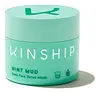 Key Ingredients
Benefits
Concerns
Ingredients Side-by-side
Water
Skin ConditioningKaolin
Abrasive



Bentonite
Absorbent
Glycerin
Humectant


Aloe Barbadensis Leaf Juice
Skin Conditioning
Jojoba Esters
Emollient

Lactic Acid
Buffering






Moringa Oleifera Seed Oil
Emollient

Lactobacillus Ferment
Skin Conditioning
Hydrolyzed Pea Protein
EmollientAllantoin
Skin Conditioning
Xanthan Gum
EmulsifyingOctyldodecanol
Emollient
Sorbitan Oleate
Emulsifying
Phenoxyethanol
Preservative
Ethylhexylglycerin
Skin ConditioningPotassium Sorbate
Preservative
Menthol
Masking

Mentha Piperita Oil
Masking

CI 77492
Cosmetic ColorantCI 77288
Cosmetic ColorantWater, Kaolin, Bentonite, Glycerin, Aloe Barbadensis Leaf Juice, Jojoba Esters, Lactic Acid, Moringa Oleifera Seed Oil, Lactobacillus Ferment, Hydrolyzed Pea Protein, Allantoin, Xanthan Gum, Octyldodecanol, Sorbitan Oleate, Phenoxyethanol, Ethylhexylglycerin, Potassium Sorbate, Menthol, Mentha Piperita Oil, CI 77492, CI 77288
Water
Skin ConditioningTetrahexyldecyl Ascorbate
Antioxidant

Squalane
Emollient
Caprylic/Capric Triglyceride
Masking
Glycerin
Humectant
Isoamyl Laurate
Emollient
Cetearyl Olivate
Glyceryl Stearate Se
Emulsifying
Sorbitan Olivate
Emulsifying
N-Prolyl Palmitoyl Tripeptide-56 Acetate
Skin Conditioning
Lactobacillus Ferment
Skin Conditioning
Haematococcus Pluvialis Extract
Antioxidant
Cetyl Alcohol
Emollient
Hydroxyethyl Acrylate/Sodium Acryloyldimethyl Taurate Copolymer
Emulsion StabilisingTocopherol
Antioxidant
Acacia Senegal Gum
MaskingXanthan Gum
EmulsifyingSodium Gluconate
ChelatingPyrus Malus Fruit Extract
Skin Conditioning
Citrus Aurantium Dulcis Peel Extract
Emulsion Stabilising
Citrus Grandis Fruit Extract
Astringent
Sorbitan Isostearate
Emulsifying
Lavandula Angustifolia Flower/Leaf/Stem Extract
Masking
Olea Europaea Fruit Oil
Masking
Pentylene Glycol
Skin Conditioning
Citrus Aurantifolia Peel Extract
Cleansing
Mentha Piperita Extract
CleansingPrunus Armeniaca Fruit Extract
Skin ConditioningMangifera Indica Fruit Extract
Skin ConditioningRubus Idaeus Fruit Extract
AstringentCucumis Melo Cantalupensis Fruit Extract
AstringentImpatiens Balsamina Flower Extract
AstringentVanilla Planifolia Fruit Extract
Skin Conditioning
Caprylyl Glycol
Emollient
Ethylhexylglycerin
Skin ConditioningPhenoxyethanol
Preservative
Limonene
Perfuming
Linalool
Perfuming
Water, Tetrahexyldecyl Ascorbate, Squalane, Caprylic/Capric Triglyceride, Glycerin, Isoamyl Laurate, Cetearyl Olivate, Glyceryl Stearate Se, Sorbitan Olivate, N-Prolyl Palmitoyl Tripeptide-56 Acetate, Lactobacillus Ferment, Haematococcus Pluvialis Extract, Cetyl Alcohol, Hydroxyethyl Acrylate/Sodium Acryloyldimethyl Taurate Copolymer, Tocopherol, Acacia Senegal Gum, Xanthan Gum, Sodium Gluconate, Pyrus Malus Fruit Extract, Citrus Aurantium Dulcis Peel Extract, Citrus Grandis Fruit Extract, Sorbitan Isostearate, Lavandula Angustifolia Flower/Leaf/Stem Extract, Olea Europaea Fruit Oil, Pentylene Glycol, Citrus Aurantifolia Peel Extract, Mentha Piperita Extract, Prunus Armeniaca Fruit Extract, Mangifera Indica Fruit Extract, Rubus Idaeus Fruit Extract, Cucumis Melo Cantalupensis Fruit Extract, Impatiens Balsamina Flower Extract, Vanilla Planifolia Fruit Extract, Caprylyl Glycol, Ethylhexylglycerin, Phenoxyethanol, Limonene, Linalool
Ingredients Explained
These ingredients are found in both products.
Ingredients higher up in an ingredient list are typically present in a larger amount.
Ethylhexylglycerin is created from glycerin. It is a multitasker ingredient that:
The CIR Expert Panel found minimal skin absorption or sensitization of any kind in a safety assessment. Though this ingredient is considered well-tolerated, a small number of cases of allergic dermatitis have been published since 2002. Just be sure to patch test if you are unsure.
Industry-reported use ranges from 8% in rinse-off products and 2% in leave-on formulations.
Learn more about EthylhexylglycerinGlycerin (or glycerol) is a compound naturally found in your skin. It's a powerhouse humectant that pulls water into the stratum corneum.
Topically, glycerin does several things at once:
Your skin makes glycerin on its own (mostly from sebaceous oil breakdown) and shuttles it to your outermost layer of skin, or your epidermis, via aquaporin-3.
Aquaporin-3 is a transporter that is essential for normal skin hydration, elasticity, and repair. Interestingly, mice lacking in AQP3 have dry and less elastic skin that can be fully corrected with glycerin.
This ingredient is non-irritating, plays well with almost every ingredient, and works across all skin types. Typical use is anywhere between 3-10% but can go up to 79% in some leave-on products.
Just know very high concentrations (>40%) can feel tacky in low humidity.
Glycerin is the name for this ingredient in American English. British English uses Glycerol/Glycerine.
Learn more about GlycerinThis ingredient is made when the Lactobacillus bacteria (the same kind that makes yogurt and kimchi) are allowed to ferment a nutrient medium.
As it ferments, it collects lactic acid, peptides, enzymes, and other bioactive metabolites to provide:
A 2023 review noted that probiotic fermentation ingredients like this one can enhance antioxidant capacity, reduce UV-induced oxidative damage, and support barrier function.
One clinical study from the same year showed a Lactobacillus ferment lysate significantly reduced transepidermal water loss and improved skin hydration.
Another review highlighted that topical Lactobacillus-based preparations can improve ceramide levels in the stratum corneum, support barrier integrity, and even help reduce S. aureus colonization in atopic dermatitis.
Why is this so cool?
Basically, your skin's outer layer works as a brick wall; skin cells are bricks and ceramides are the mortar holding it together. Moisture escapes, irritants get in, and your skin gets dry and reactive when ceramide levels drop. On top of that, "bad" skin bacteria S. aureus loves to move in when your barrier is weak to make inflammation and irritation worse.
So Lactobacillus ferment is basically patching the wall and evicting the troublemaker when it boosts ceramide production and help keep S. aureus in check.
On top of all this, it also acts as a mild antimicrobial preservative booster.
Just so you know, most studies focus on specific strains or the lysate form rather than this generic "Lactobacillus Ferment", so results can vary.
Though it's a promising ingredient, it doesn't have decades of robust clinical data behind it just yet.
Lactobacillus Ferment is generally considered safe for fungal-acne prone skin. The key thing to understand is that it comes from bacteria, not yeast or fungus.
Yeast-derived ferments (like galactomyces) have been shown to activate a protein that's linked to Malassezia-related skin issues whereas lactobacillus doesn't have that problem.
Its byproducts also don't contain the types of fatty acids (C11-24 chain lengths) that Malassezia feeds on.
Learn more about Lactobacillus FermentPhenoxyethanol is one of the most widely used preservatives in skincare (and for good reason!).
It has a large spectrum of antimicrobial activity and especially effective bacteria, yeast, and mold while only having a weak effect on your skin's natural microbiome.
On a cellular level, it disrupts the cell membranes of microbes by poking holes that make the cell leak. This shuts down the chemical reactions the microbe needs to make energy so it can no longer survive.
Another perk of this ingredient is that it stays functional across a wide pH range (3-10).
You'll often see it paired with boosters like Ethylhexylglycerin; one study showed that a 1:9 ratio of Ethylhexylglycerin to Phenoxyethanol damages bacterial membranes as effectively as doubling the Phenoxyethanol concentration on its own.
Typical use concentrations range from 0.3-1% depending on the formula, and this ingredient is capped at 1% int the EU.
Safety-wise, the fear mongering does not hold up to the evidence. The EU's Scientific Committee on Consumer Safety and FDA consider it safe as a preservative at up to 1%, including for children of all ages.
Adverse systemic effects only showed up in animal studies at exposures roughly 200x higher than what people get from cosmetics. And despite its very widespread use, this ingredient is a rare sensitizer and allergic reactions are uncommon.
Learn more about PhenoxyethanolWater. It's the most common cosmetic ingredient of all. You'll usually see it at the top of ingredient lists, meaning that it makes up the largest part of the product.
So why is it so popular? Water most often acts as a solvent - this means that it helps dissolve other ingredients into the formulation.
You'll also recognize water as that liquid we all need to stay alive. If you see this, drink a glass of water. Remember to stay hydrated!
Learn more about WaterXanthan gum is used as a stabilizer and thickener within cosmetic products. It helps give products a sticky, thick feeling - preventing them from being too runny.
On the technical side of things, xanthan gum is a polysaccharide - a combination consisting of multiple sugar molecules bonded together.
Xanthan gum is a pretty common and great ingredient. It is a natural, non-toxic, non-irritating ingredient that is also commonly used in food products.
Learn more about Xanthan Gum

