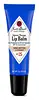
This lip moisturizer is formulated around Petrolatum and Persea Gratissima Oil to hydrate lips.
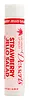
This barrier-repair lip moisturizer is formulated around Aloe Barbadensis Leaf Extract and Cocos Nucifera Oil to strengthen the lip barrier and hydrate lips.

What's inside
What's inside
 Key Ingredients
Benefits
Concerns
Ingredients Side-by-side
Ethylhexyl Methoxycinnamate 7.5%
UV Absorber


Butyl Methoxydibenzoylmethane 3%
UV Absorber
Petrolatum 40.2%
Emollient


Lanolin 13.5%
Emollient


Persea Gratissima Oil
Skin Conditioning
Beeswax
Emulsion Stabilising
Butylparaben
Masking

Camellia Sinensis Leaf Extract
Antimicrobial






Theobroma Cacao Seed Butter
Emollient
Cyclohexasiloxane
Emollient
Cyclopentasiloxane
Emollient
Isobutylparaben
Antimicrobial
Isopropylparaben
Preservative
Polyester-8
Skin Conditioning
Microcrystalline Wax
Emulsion StabilisingAroma


Ozokerite
Emulsion StabilisingPolyglyceryl-3 Beeswax
Emulsifying
Butyrospermum Parkii Butter
Skin Conditioning
Tocopheryl Acetate
Antioxidant
Ethylhexyl Methoxycinnamate 7.5%, Butyl Methoxydibenzoylmethane 3%, Petrolatum 40.2%, Lanolin 13.5%, Persea Gratissima Oil, Beeswax, Butylparaben, Camellia Sinensis Leaf Extract, Theobroma Cacao Seed Butter, Cyclohexasiloxane, Cyclopentasiloxane, Isobutylparaben, Isopropylparaben, Polyester-8, Microcrystalline Wax, Aroma, Ozokerite, Polyglyceryl-3 Beeswax, Butyrospermum Parkii Butter, Tocopheryl Acetate
Butyl Methoxydibenzoylmethane 3%
UV Absorber
Homosalate 5%
Skin Conditioning
Ethylhexyl Salicylate 3%
UV Absorber
Octocrylene 10%
UV Absorber
Aloe Barbadensis Leaf Extract
Emollient
Butyloctyl Salicylate
Skin Conditioning
C18-38 Alkyl Hydroxystearoyl Stearate
EmollientCanola Oil
Emollient
Cocos Nucifera Oil
Masking
Euphorbia Cerifera Wax
Aroma
Glycine Soja Oil
Emollient
Helianthus Annuus Seed Wax
Skin Conditioning
Olea Europaea Fruit Oil
Masking
Ricinus Communis Seed Oil
Masking
Rosmarinus Officinalis Leaf Extract
AntimicrobialSimmondsia Chinensis Seed Oil
Emollient
Stevia Rebaudiana Leaf Extract
EmollientSunflower Seed Oil Glycerides
Emollient
Theobroma Cacao Seed Butter
Emollient
Tocopherol
Antioxidant
Tocopheryl Acetate
Antioxidant
Butyl Methoxydibenzoylmethane 3%, Homosalate 5%, Ethylhexyl Salicylate 3%, Octocrylene 10%, Aloe Barbadensis Leaf Extract, Butyloctyl Salicylate, C18-38 Alkyl Hydroxystearoyl Stearate, Canola Oil, Cocos Nucifera Oil, Euphorbia Cerifera Wax, Aroma, Glycine Soja Oil, Helianthus Annuus Seed Wax, Olea Europaea Fruit Oil, Ricinus Communis Seed Oil, Rosmarinus Officinalis Leaf Extract, Simmondsia Chinensis Seed Oil, Stevia Rebaudiana Leaf Extract, Sunflower Seed Oil Glycerides, Theobroma Cacao Seed Butter, Tocopherol, Tocopheryl Acetate
Reviews
Ingredients Explained
These ingredients are found in both products.
Ingredients higher up in an ingredient list are typically present in a larger amount.
Aroma refers to an ingredient, or mixture of ingredients, that impart or mask a flavor.
The name is slightly confusing. This is because INCI associates aroma with flavor instead of smell.
Here is the official definition from the The International Cosmetic Ingredient Dictionary and Handbook:
“Aroma is a term for ingredient labeling used to identify that a product contains a material or combination of materials normally added to a cosmetic to produce or to mask a particular flavor.”
INCI shows the only purpose of aroma to be "flavouring".
However, due to regulation differences, some companies may use aroma in place of parfum.
In Canada, this ingredient only has to be listed in concentrations above 1%.
Learn more about AromaAlso known as Avobenzone, this ingredient is an oil-soluble used to absorb the full spectrum of UVA rays (peak 357 nm).
It's one of the most effective UVA filters available but has a major caveat of photostability: avobenzone is susceptible to photodegradation.
This means it can lose efficacy when exposed to sunlight without the help of a stabilizing agent.
Studies show antioxidants (like vitamin E or vitamin C) and some UV filters (like octocrylene and Tinosorb S) can meaningfully improve its stability in a formulation.
The maximum allowable concentration according to regulation is 3% in the US + Canada, and 5% in the EU, Australia, China, Korea, and ASEAN countries.
It has a well-support safety profile: a comprehensive 2025 review found minimal toxicity with no evidence of carcinogenicity.
Overall, avobenzone is a safe and regulated ingredient used in sunscreen for over 40 years.
Learn more about Butyl MethoxydibenzoylmethaneThis ingredient is also known as Cocoa butter; it's the fat pressed out of roasted cocoa beans.
Cocoa butter is solid at room temperature and melts right around body temperature, which is why it feels waxy in the jar and slippery on skin.
It has a very saturated profile (stearic acid ~34 to 36%, oleic acid ~30 to 40%, and palmitic acid ~24 to 29%) that makes it a strong occlusive: it sits on top and slows water escaping from skin.
Concentration data shows that it can show up anywhere from a few percent in lotions up to 100% in balms, and the FDA lists cocoa butter as an OTC skin protectant active at 50-100%.
The CIR has reviewed it and concluded it to be safe as used in cosmetics.
This is one of the ingredients with a comedogenic score of 4/5 from the rabbit ear test. Just know that a later human study did find that finished products containing high-comedogenic ingredients like cocoa butter did not increase microcomedone formation.
The fair call here is that this ingredient is most likely fine on body or low-percentage formulas, but can potentially be riskier as a heavy leave-on facial product if you break out easily.
Cocoa butter may not be fungal acne safe; it is a triglyceride of C16-18 fatty acids that the Malassezia yeast can metabolize.
Allergies to cocoa butter are rare and uncommon, but a few cases have been documented (mostly in cases where the person ate chocolate). So if you have a tree nut allergy, be sure to patch test or avoid.
Learn more about Theobroma Cacao Seed ButterTocopheryl Acetate is a stable, shelf-friendly form of vitamin E.
Formulators love it because plain vitamin E oxidizes quickly once it hits air. This acetate version stays stable and resists going off, helping to extend a product's shelf life.
It's actually inactive on its own and works like a slow-release "storage" form; the enzymes in your skin called esterases gradually convert it into active vitamin E over time.
One in vivo study showed 5% of the acetate in the living layer of the epidermis converted to vitamin E after 5 days of application. This study also found the skin gained protection against UV damage even though the conversion was slow and small.
Once converted, vitamin E acts as a skin's main fat-soluble antioxidant that fights free radicals to protect skin from damage.
Topical vitamin E generally boosts the skin's photoprotection, and it reduced UV-damage in animal models.
This ingredient has some brightening potential but it's more of a prevention ingredient than spot-fader. Cell studies show it can slow down melanin production but it's worth noting that it's not the most powerful brightener out there.
Overall, it has a pretty solid safety profile and has been found to be non-irritating and non-comedogenic. Allergic reactions may happen but stay rare due to how widely the ingredient gets used.
The concentration will vary depending on the formula; industry data shows 0.1% in baby lotions, 3% in lipsticks, and 5% in foot powders. You can also find this ingredient at 100% in a pure vitamin E oil.
Most leave-on skincare keeps it at the lower end, often between 0.5-1%.
Learn more about Tocopheryl Acetate

