IT Cosmetics Bye Bye Pores Translucent Loose Setting Powder Versus L'Oreal Infallible Blur-Fection Loose Setting Powder


What's inside
What's inside
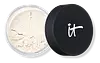 Key Ingredients
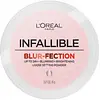
Benefits
Concerns
Ingredients Side-by-side
Silica
Abrasive


Soluble Collagen
Humectant

Magnesium Ascorbyl Phosphate
Antioxidant





Tocopheryl Acetate
Antioxidant
Hydrolyzed Silk
Humectant
Aloe Barbadensis Leaf Juice
Skin Conditioning
Hydrolyzed Collagen
Emollient
Niacinamide
Smoothing



Ascorbyl Palmitate
Antioxidant
Water
Skin ConditioningAlgae Extract
EmollientAvena Sativa Kernel Extract
Abrasive
Butylene Glycol
Humectant
Camellia Sinensis Leaf Extract
Antimicrobial
Carbomer
Emulsion StabilisingCholesteryl Chloride
Skin ConditioningCholesteryl Nonanoate
EmollientCholesteryl Oleyl Carbonate
Skin ConditioningCitric Acid
Buffering

Glycerin
Humectant
Glycyrrhiza Glabra Root Extract
Bleaching
Helianthus Annuus Seed Oil
Emollient
Olea Europaea Leaf Extract
Perfuming
Palmitoyl Oligopeptide
Cleansing
Palmitoyl Tetrapeptide-7
Skin Conditioning
Phenoxyethanol
Preservative
Polysorbate 20
Emulsifying
Potassium Sorbate
Preservative
Retinyl Palmitate
Skin Conditioning
Rosa Canina Flower Extract
AstringentSodium Benzoate
Masking
Sodium Hyaluronate
Humectant
Tocopherol
Antioxidant
Vitis Vinifera Seed Extract
Antimicrobial
CI 77891
Cosmetic ColorantIron Oxides
Silica, Soluble Collagen, Magnesium Ascorbyl Phosphate, Tocopheryl Acetate, Hydrolyzed Silk, Aloe Barbadensis Leaf Juice, Hydrolyzed Collagen, Niacinamide, Ascorbyl Palmitate, Water, Algae Extract, Avena Sativa Kernel Extract, Butylene Glycol, Camellia Sinensis Leaf Extract, Carbomer, Cholesteryl Chloride, Cholesteryl Nonanoate, Cholesteryl Oleyl Carbonate, Citric Acid, Glycerin, Glycyrrhiza Glabra Root Extract, Helianthus Annuus Seed Oil, Olea Europaea Leaf Extract, Palmitoyl Oligopeptide, Palmitoyl Tetrapeptide-7, Phenoxyethanol, Polysorbate 20, Potassium Sorbate, Retinyl Palmitate, Rosa Canina Flower Extract, Sodium Benzoate, Sodium Hyaluronate, Tocopherol, Vitis Vinifera Seed Extract, CI 77891, Iron Oxides
Zea Mays Starch
Absorbent
Synthetic Fluorphlogopite
Cellulose
Absorbent
Lauroyl Lysine
Skin Conditioning
Copernicia Cerifera Cera
Emollient
Squalane
Emollient
Tocopherol
Antioxidant
Sodium Hyaluronate
Humectant
Hydrogen Dimethicone

Helianthus Annuus Seed Oil
Emollient
CI 77163
Cosmetic Colorant

CI 19140
Cosmetic ColorantCI 77491
Cosmetic ColorantCI 77492
Cosmetic ColorantCI 77499
Cosmetic ColorantCI 73360
Cosmetic ColorantCI 77007
Cosmetic ColorantIngredients Explained
These ingredients are found in both products.
Ingredients higher up in an ingredient list are typically present in a larger amount.
Helianthus Annuus Seed Oil is a plant oil derived from the seeds of a sunflower.
It is rich in fatty acids, primarily linoleic acid and oleic acid. This gives it emollient and skin conditioning properties.
The reason this ingredient is so effective is because it forms a thin film on the skin that reduces transepidermal water loss (TEWL) while supplying linoleic acid to the stratum corneum to improve barrier strength.
The high linoleic acid content is particularly noteworthy for acne-prone skin.
Research suggests that acne-prone skin tends to be deficient in linoleic acid in sebum. Topical application may help replenish this to support a healthier follicular environment and less comedone-promoting sebum.
One randomized study found sunflower seed oil preserved skin barrier integrity in adult volunteers with and without atopic dermatitis (outperforming olive oil).
This ingredient is well-studied, gentle, and an effective emollient suitable for most skin types.
On fungal acne: This ingredient may not be Fungal acne (Malassezia folliculitis) safe. This is because it contains fatty acids with carbon chain lengths in the C11-C24 range.
Learn more about Helianthus Annuus Seed OilSodium Hyaluronate is the salt form of hyaluronic acid. It is a long sugar chain that is naturally found in your skin, joints, and connective tissue that maintains hydration and elasticity.
In skincare, it works as a humectant. It pulls water from the environment and deeper layers of skin and binds it to the surface.
Interestingly, the size of the molecule affects its behavior:
Some clinical evidence links low molecular weight versions to improved wrinkle depth, elasticity, anti-inflammatory effects, and barrier repair.
Many serums use a blend of both weights so you can get surface hydration plus longer-lasting and deeper effects.
You'll typically see concentrations between 0.1-2% for this ingredient.
Learn more about Sodium HyaluronateTocopherol is a fat-soluble antioxidant known as Vitamin E.
You'll find this ingredient in the vast majority of skincare (for good reason). It works to neutralize free radicals, or unstable molecules generated by UV exposure, pollution, and other environmental stressors, before they can cause oxidative damage to your skin cells.
Topically applied tocopherol has been shown to protect against UV damage by ramping up the skin's own natural defense enzymes.
It also acts as a skin conditioning agent; some studies show that regular topical use can improve the skin's water-binding capacity over 2-4 weeks.
This ingredient is especially loved for being a team player. When combined with Vitamin C, the photoprotective effect of both ingredients roughly doubles and the combo also helps reduce UV-induced DNA damage.
This ingredient has some brightening potential but it's more of a prevention ingredient than spot-fader. Cell studies show it can slow down melanin production but it's worth noting that it's not the most powerful brightener out there.
In formulations, it also serves as a stabilizer that helps protect other oxidation-prone ingredients from degrading.
Concentrations usually range from 0.1-1% in most leave-on products.
Learn more about Tocopherol
