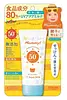
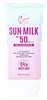
ISEHAN Kiss Me Mommy UV Aqua Milk SPF 50+ PA++++ Versus Sereese Beauty Sun Milk SPF 50 PA+++ 0% White Cast
This chemical sunscreen covers the full UV range and blocks ~98% of UVB at SPF 50.
This chemical sunscreen covers most of the UV range, lighter on the deep UVA that drives aging.


What's inside
What's inside
 Key Ingredients
Benefits
Concerns
Ingredients Side-by-side
Water
Skin ConditioningPropylene Glycol
Humectant


Ethylhexyl Methoxycinnamate
UV Absorber


Diethylamino Hydroxybenzoyl Hexyl Benzoate
UV Filter
Pentylene Glycol
Skin Conditioning
Sodium Hyaluronate
Humectant


Simmondsia Chinensis Seed Oil
Emollient


Glucosyl Ceramide
Skin Conditioning

Malpighia Emarginata Fruit Extract
Skin ConditioningHydrolyzed Collagen
Emollient
Aloe Barbadensis Leaf Extract
Emollient
Rubus Idaeus Extract
Skin ProtectingBis-Ethylhexyloxyphenol Methoxyphenyl Triazine
UV Absorber
Diphenylsiloxy Phenyl Trimethicone
Skin Conditioning
Isononyl Isononanoate
EmollientPPG-7/PEG-30 Phytosterol
EmulsifyingPEG-30 Phytosterol
EmulsifyingPEG-10 Hydrogenated Castor Oil
Emollient
Ethylhexylglycerin
Skin ConditioningDimethicone/Phenyl Vinyl Dimethicone Crosspolymer
Alpha-Glucan Oligosaccharide
Cleansing
Betaine
Humectant
Acrylates/C10-30 Alkyl Acrylate Crosspolymer
Emulsion StabilisingCarbomer
Emulsion StabilisingPotassium Hydroxide
BufferingXanthan Gum
EmulsifyingHydroxypropyl Methylcellulose Stearoxy Ether
Acrylates/Steareth-20 Itaconate Copolymer
PEG-5 Phytosterol
EmulsifyingDisodium EDTA
Butylene Glycol
Humectant
BHT
Antioxidant
Dextrin
AbsorbentWater, Propylene Glycol, Ethylhexyl Methoxycinnamate, Diethylamino Hydroxybenzoyl Hexyl Benzoate, Pentylene Glycol, Sodium Hyaluronate, Simmondsia Chinensis Seed Oil, Glucosyl Ceramide, Malpighia Emarginata Fruit Extract, Hydrolyzed Collagen, Aloe Barbadensis Leaf Extract, Rubus Idaeus Extract, Bis-Ethylhexyloxyphenol Methoxyphenyl Triazine, Diphenylsiloxy Phenyl Trimethicone, Isononyl Isononanoate, PPG-7/PEG-30 Phytosterol, PEG-30 Phytosterol, PEG-10 Hydrogenated Castor Oil, Ethylhexylglycerin, Dimethicone/Phenyl Vinyl Dimethicone Crosspolymer, Alpha-Glucan Oligosaccharide, Betaine, Acrylates/C10-30 Alkyl Acrylate Crosspolymer, Carbomer, Potassium Hydroxide, Xanthan Gum, Hydroxypropyl Methylcellulose Stearoxy Ether, Acrylates/Steareth-20 Itaconate Copolymer, PEG-5 Phytosterol, Disodium EDTA, Butylene Glycol, BHT, Dextrin
Caprylic/Capric Triglyceride
Masking
Cyclopentasiloxane
Emollient
Dimethicone/Vinyl Dimethicone Crosspolymer
Skin Conditioning
Menthyl Salicylate
MaskingEthylhexyl Methoxycinnamate
UV Absorber
Octocrylene
UV Absorber
Benzophenone-3
UV Absorber
Benzophenone-4
UV Absorber
Ethylhexyl Salicylate
UV Absorber
Butyl Methoxydibenzoylmethane
UV Absorber
Caprylyl Methicone
Skin Conditioning
Phenoxyethanol
Preservative
BHT
Antioxidant
Tocopheryl Acetate
Antioxidant

Allantoin
Skin Conditioning
Centella Asiatica Extract
Cleansing
Niacinamide
Smoothing




Glycyrrhiza Glabra Root Extract
Bleaching
Aloe Barbadensis Leaf Extract
Emollient
Water
Skin ConditioningGlycerin
Humectant
Glycogen
HumectantParfum
Masking

Caprylic/Capric Triglyceride, Cyclopentasiloxane, Dimethicone/Vinyl Dimethicone Crosspolymer, Menthyl Salicylate, Ethylhexyl Methoxycinnamate, Octocrylene, Benzophenone-3, Benzophenone-4, Ethylhexyl Salicylate, Butyl Methoxydibenzoylmethane, Caprylyl Methicone, Phenoxyethanol, BHT, Tocopheryl Acetate, Allantoin, Centella Asiatica Extract, Niacinamide, Glycyrrhiza Glabra Root Extract, Aloe Barbadensis Leaf Extract, Water, Glycerin, Glycogen, Parfum
Reviews
Ingredients Explained
These ingredients are found in both products.
Ingredients higher up in an ingredient list are typically present in a larger amount.
Aloe Barbadensis Leaf Extract is a botanical extract pulled from the leaves of aloe vera and one of the most studied plant ingredients in cosmetics.
The inner leaf gel it comes from is mostly water (~99-99.5%) and the remaining fraction is made up of pretty good stuff: polysaccharides, vitamins, phenolics, and enzymes.
Its headline job is hydration.
The star polysaccharide in aloe, acemannan, is a humectant that retains moisture and helps reduce trans-epidermal water loss.
Aloe also has real soothing credentials; it contains anti-inflammatory compounds like bradykinase and C-glucosyl chromone that help calm irritation and redness.
On the repair side, lab work shows that acemannan wakes up your skin's repair cells (fibroblasts), prompting them to multiply and speed up healing.
There's some human data for cosmetic benefit too: a cream containing 10% Aloe Barbadensis leaf extract improved skin hydration and elasticity in a real-use study.
Safety-wise, this ingredient is well-regarded with just one rare downside; there have been some case reports of acute eczema, contact urticaria, and dermatitis in people who applied aloe-derived ingredients topically. Those with a known aloe or Liliaceae sensitivity should patch test.
Typical use levels range widely, from under 1% up to 90%+ depending on the format and the effect you are after.
Learn more about Aloe Barbadensis Leaf ExtractBHT is a synthetic antioxidant and preservative.
As an antioxidant, it helps your body fight off free-radicals. Free-radicals are molecules that may damage your skin cells.
As a preservative, it is used to stabilize products and prevent them from degrading. Specifically, BHT prevents degradation from oxidation.
The concerns related to BHT come from oral studies; this ingredient is currently allowed for use by both the FDA and EU.
However, it was recently restricted for use in the UK as of April 2024.
Learn more about BHTThis ingredient is also known as Octinoxate and is one of the oldest and most widely used chemical UV filters in skincare.
It has a simple job: soap up UVB radiation (290-320 nm), the wavelengths responsible for sunburn and a big chunk of long-term sun damage.
In formulas, it's always paired with a separate UVA filter because octinoxate solely protects skin from UVB.
Because it's an oil-soluble liquid, it's easy to blend into the oil phase of lotions/creams and gives a cosmetically elegant feel.
The one quirk about formulating this ingredient is photostability; the molecule slowly changes shape into a less effective version when sunlight hits it. So the longer you're in the sun, the weaker its protection gets. The drop can be more than 30% in some formulas.
It also doesn't play nice with Avobenzone (the common UVA filter) since avobenzone destabilizes octinoxate and the two degrade each other. But don't worry: brands have solved this issue by adding photostabilizers like Tinosorb S to prevent degradation and keep SPF stable under heavy UV exposure.
The maximum allowed level is 10% in the EU and Australia, 7.5% in the US and Canada, and 20% in Japan.
The Cosmetic Ingredient Review Panel has concluded this ingredient to be safe in cosmetics up to 10%.
One last thing worth knowing for context:
Octinoxate has been the subject of ongoing review in Europe where the Scientific Committee on Consumer Safety's (SCCS) 2025 final opinion is that this ingredient is an endocrine-active substance.
Lab and animal studies suggest it can act a bit like a hormone in the body (mildly mimicking estrogen and slightly blocking male hormones). It's important to know this hasn't really been shown to happen in everyday human use.
This ingredient is also banned in Hawaii over coral reef concerns.
Learn more about Ethylhexyl MethoxycinnamateWater. It's the most common cosmetic ingredient of all. You'll usually see it at the top of ingredient lists, meaning that it makes up the largest part of the product.
So why is it so popular? Water most often acts as a solvent - this means that it helps dissolve other ingredients into the formulation.
You'll also recognize water as that liquid we all need to stay alive. If you see this, drink a glass of water. Remember to stay hydrated!
Learn more about Water

