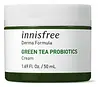
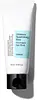
innisfree Derma Formula Green Tea Probiotics Cream Versus COSRX Ultimate Nourishing Rice Overnight Spa Mask
This barrier-repair moisturizer is formulated around Squalane and Hydroxypropyl Bispalmitamide Mea to strengthen the skin barrier and hydrate skin.
This hydrating overnight mask is formulated around Oryza Sativa Extract and Niacinamide to hydrate skin and brighten dull-looking skin.

What's inside
What's inside
 Key Ingredients
Benefits
Concerns
Ingredients Side-by-side
Water
Skin ConditioningButylene Glycol
Humectant

Squalane
Emollient
Glycerin
Humectant
Butylene Glycol Dicaprylate/Dicaprate
EmollientBehenyl Alcohol
Emollient
Hydroxypropyl Bispalmitamide Mea
Emollient
C14-22 Alcohols
Emulsion Stabilising
Stearic Acid
Cleansing


1,2-Hexanediol
Skin Conditioning
Palmitic Acid
Emollient

Cholesterol
Emollient
Hydroxyethyl Acrylate/Sodium Acryloyldimethyl Taurate Copolymer
Emulsion StabilisingC12-20 Alkyl Glucoside
EmulsifyingCamellia Sinensis Seed Extract
Humectant
Tromethamine
BufferingGlyceryl Caprylate
EmollientDextrin
AbsorbentCeramide NP
Skin Conditioning


Ethylhexylglycerin
Skin ConditioningSorbitan Isostearate
Emulsifying
Phytosphingosine
Skin Conditioning
Disodium EDTA
ChelatingHydrogenated Lecithin
Emulsifying
Myristic Acid
Cleansing
Arachidic Acid
Cleansing
Glucose
Humectant
Lactobacillus Ferment Lysate
Skin Conditioning
Tocopherol
Antioxidant



CI 77491
Cosmetic ColorantSelaginella Tamariscina Extract
Skin ConditioningMyrica Cerifera Leaf Extract
Skin ConditioningXanthan Gum
EmulsifyingGlycolipids
Skin ConditioningCaffeine
Skin Conditioning
Theanine
EmollientSodium Benzoate
Masking
Camellia Sinensis Leaf Extract
Antimicrobial

Water, Butylene Glycol, Squalane, Glycerin, Butylene Glycol Dicaprylate/Dicaprate, Behenyl Alcohol, Hydroxypropyl Bispalmitamide Mea, C14-22 Alcohols, Stearic Acid, 1,2-Hexanediol, Palmitic Acid, Cholesterol, Hydroxyethyl Acrylate/Sodium Acryloyldimethyl Taurate Copolymer, C12-20 Alkyl Glucoside, Camellia Sinensis Seed Extract, Tromethamine, Glyceryl Caprylate, Dextrin, Ceramide NP, Ethylhexylglycerin, Sorbitan Isostearate, Phytosphingosine, Disodium EDTA, Hydrogenated Lecithin, Myristic Acid, Arachidic Acid, Glucose, Lactobacillus Ferment Lysate, Tocopherol, CI 77491, Selaginella Tamariscina Extract, Myrica Cerifera Leaf Extract, Xanthan Gum, Glycolipids, Caffeine, Theanine, Sodium Benzoate, Camellia Sinensis Leaf Extract
Oryza Sativa Extract
Absorbent
Butylene Glycol
Humectant
Glycerin
Humectant
Helianthus Annuus Seed Oil
Emollient
Betaine
Humectant
Niacinamide
Smoothing


Dimethicone
Emollient
1,2-Hexanediol
Skin Conditioning
Cetearyl Olivate
Sorbitan Olivate
Emulsifying
Elaeis Guineensis Oil
Emollient
Elaeis Guineensis Kernel Oil
Emollient
Hydroxyethyl Acrylate/Sodium Acryloyldimethyl Taurate Copolymer
Emulsion StabilisingCetearyl Alcohol
Emollient
Ethylhexylglycerin
Skin ConditioningArginine
Masking
Carbomer
Emulsion StabilisingAllantoin
Skin Conditioning
Xanthan Gum
EmulsifyingOryza Sativa Extract, Butylene Glycol, Glycerin, Helianthus Annuus Seed Oil, Betaine, Niacinamide, Dimethicone, 1,2-Hexanediol, Cetearyl Olivate, Sorbitan Olivate, Elaeis Guineensis Oil, Elaeis Guineensis Kernel Oil, Hydroxyethyl Acrylate/Sodium Acryloyldimethyl Taurate Copolymer, Cetearyl Alcohol, Ethylhexylglycerin, Arginine, Carbomer, Allantoin, Xanthan Gum
Reviews
Ingredients Explained
These ingredients are found in both products.
Ingredients higher up in an ingredient list are typically present in a larger amount.
1,2-Hexanediol is a synthetic liquid and another multi-functional powerhouse.
It is a:
- Humectant, drawing moisture into the skin
- Emollient, helping to soften skin
- Solvent, dispersing and stabilizing formulas
- Preservative booster, enhancing the antimicrobial activity of other preservatives
Butylene Glycol (or BG) is used within cosmetic products for a few different reasons:
Overall, Butylene Glycol is a safe and well-rounded ingredient that works well with other ingredients.
Though this ingredient works well with most skin types, some people with sensitive skin may experience a reaction such as allergic rashes, closed comedones, or itchiness.
Learn more about Butylene GlycolEthylhexylglycerin is created from glycerin. It is a multitasker ingredient that:
The CIR Expert Panel found minimal skin absorption or sensitization of any kind in a safety assessment. Though this ingredient is considered well-tolerated, a small number of cases of allergic dermatitis have been published since 2002. Just be sure to patch test if you are unsure.
Industry-reported use ranges from 8% in rinse-off products and 2% in leave-on formulations.
Learn more about EthylhexylglycerinGlycerin (or glycerol) is a compound naturally found in your skin. It's a powerhouse humectant that pulls water into the stratum corneum.
Topically, glycerin does several things at once:
Your skin makes glycerin on its own (mostly from sebaceous oil breakdown) and shuttles it to your outermost layer of skin, or your epidermis, via aquaporin-3.
Aquaporin-3 is a transporter that is essential for normal skin hydration, elasticity, and repair. Interestingly, mice lacking in AQP3 have dry and less elastic skin that can be fully corrected with glycerin.
This ingredient is non-irritating, plays well with almost every ingredient, and works across all skin types. Typical use is anywhere between 3-10% but can go up to 79% in some leave-on products.
Just know very high concentrations (>40%) can feel tacky in low humidity.
Glycerin is the name for this ingredient in American English. British English uses Glycerol/Glycerine.
Learn more about GlycerinThis is a synthetic polymer. It helps improve the texture of products by adding thickness and gel-like feel.
It is also an emulsifer, meaning it prevents ingredients such as oil and water from separating. It also helps evenly disperse other ingredients.
Xanthan gum is used as a stabilizer and thickener within cosmetic products. It helps give products a sticky, thick feeling - preventing them from being too runny.
On the technical side of things, xanthan gum is a polysaccharide - a combination consisting of multiple sugar molecules bonded together.
Xanthan gum is a pretty common and great ingredient. It is a natural, non-toxic, non-irritating ingredient that is also commonly used in food products.
Learn more about Xanthan Gum


