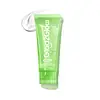
This salicylic acid gel cleanser is formulated around Salicylic Acid to clear breakouts and unclog pores.

What's inside
What's inside
 Key Ingredients
Benefits
Concerns
Ingredients Side-by-side
Water
Skin ConditioningPotassium Cocoyl Glycinate
Surfactant
Hydrogenated Starch Hydrolysate
HumectantAcrylates/Steareth-20 Methacrylate Crosspolymer
Centella Asiatica Extract
Cleansing





Potassium Cocoate
Emulsifying

Salicylic Acid
Masking







Sodium Lauroamphoacetate
CleansingLauryl Hydroxysultaine
CleansingErythritol
Humectant
Caprylyl Glycol
Emollient
Potassium Hydroxide
BufferingSodium Chloride
MaskingDisodium EDTA
ChelatingGlycosyl Trehalose
Emulsion StabilisingHydroxypropyl Cyclodextrin
MaskingAroma


Phenoxyethanol
Preservative
Water, Potassium Cocoyl Glycinate, Hydrogenated Starch Hydrolysate, Acrylates/Steareth-20 Methacrylate Crosspolymer, Centella Asiatica Extract, Potassium Cocoate, Salicylic Acid, Sodium Lauroamphoacetate, Lauryl Hydroxysultaine, Erythritol, Caprylyl Glycol, Potassium Hydroxide, Sodium Chloride, Disodium EDTA, Glycosyl Trehalose, Hydroxypropyl Cyclodextrin, Aroma, Phenoxyethanol
Water
Skin ConditioningLauric Acid
Cleansing


Cocamidopropyl Betaine
Cleansing
Sodium Cocoyl Glycinate
Cleansing
Potassium Hydroxide
BufferingSodium Laureth Sulfate
Cleansing
Myristic Acid
Cleansing
Sodium Chloride
MaskingNiacinamide
Smoothing

Palmitic Acid
Emollient
Acrylates Copolymer
Ceramide NP
Skin Conditioning
Ceramide As
Skin Conditioning
Ceramide Ns
Skin Conditioning
Ceramide AP
Skin Conditioning
Ceramide EOP
Skin Conditioning
Prunus Speciosa Flower Extract
HumectantEctoin
Skin Conditioning
Panthenol
Skin Conditioning
Sodium Cocoyl Glutamate
Cleansing
Betaine
Humectant
Glycerin
Humectant
Butylene Glycol
Humectant
Allantoin
Skin Conditioning
Sodium Lauryl Sulfate
Cleansing
Styrene/Acrylates Copolymer
Polyquaternium-7
Disodium EDTA
ChelatingPolyquaternium-43
Ethylhexylglycerin
Skin ConditioningHydrogenated Lecithin
Emulsifying
CI 14700
Cosmetic ColorantCI 17200
Cosmetic ColorantPhenoxyethanol
Preservative
Sodium Benzoate
Masking
Aroma
Water, Lauric Acid, Cocamidopropyl Betaine, Sodium Cocoyl Glycinate, Potassium Hydroxide, Sodium Laureth Sulfate, Myristic Acid, Sodium Chloride, Niacinamide, Palmitic Acid, Acrylates Copolymer, Ceramide NP, Ceramide As, Ceramide Ns, Ceramide AP, Ceramide EOP, Prunus Speciosa Flower Extract, Ectoin, Panthenol, Sodium Cocoyl Glutamate, Betaine, Glycerin, Butylene Glycol, Allantoin, Sodium Lauryl Sulfate, Styrene/Acrylates Copolymer, Polyquaternium-7, Disodium EDTA, Polyquaternium-43, Ethylhexylglycerin, Hydrogenated Lecithin, CI 14700, CI 17200, Phenoxyethanol, Sodium Benzoate, Aroma
Reviews
Ingredients Explained
These ingredients are found in both products.
Ingredients higher up in an ingredient list are typically present in a larger amount.
Aroma refers to an ingredient, or mixture of ingredients, that impart or mask a flavor.
The name is slightly confusing. This is because INCI associates aroma with flavor instead of smell.
Here is the official definition from the The International Cosmetic Ingredient Dictionary and Handbook:
“Aroma is a term for ingredient labeling used to identify that a product contains a material or combination of materials normally added to a cosmetic to produce or to mask a particular flavor.”
INCI shows the only purpose of aroma to be "flavouring".
However, due to regulation differences, some companies may use aroma in place of parfum.
In Canada, this ingredient only has to be listed in concentrations above 1%.
Learn more about AromaDisodium EDTA is a chelating agent. It grabs onto and deactivates metal ions that sneak into your products from water, packaging, or air.
This ingredient mainly works behind the scenes and helps with:
On top of that, this ingredient can counteract the effects of hard water by binding to the minerals in it.
One thing worth knowing is that Disodium EDTA has been shown to be a mild penetration enhancer. It can help other ingredients absorb into skin more effectively which can be a double-edged sword (great for actives, but can also make the active too strong if you have sensitive skin).
Clinical patch testing showed no significant skin irritation at typical use concentrations and minimal dermal absorption.
You'll most likely see this ingredient near the end of an ingredient list. It's typically found in concentrations less than 1%.
Learn more about Disodium EDTAPhenoxyethanol is one of the most widely used preservatives in skincare (and for good reason!).
It has a large spectrum of antimicrobial activity and especially effective bacteria, yeast, and mold while only having a weak effect on your skin's natural microbiome.
On a cellular level, it disrupts the cell membranes of microbes by poking holes that make the cell leak. This shuts down the chemical reactions the microbe needs to make energy so it can no longer survive.
Another perk of this ingredient is that it stays functional across a wide pH range (3-10).
You'll often see it paired with boosters like Ethylhexylglycerin; one study showed that a 1:9 ratio of Ethylhexylglycerin to Phenoxyethanol damages bacterial membranes as effectively as doubling the Phenoxyethanol concentration on its own.
Typical use concentrations range from 0.3-1% depending on the formula, and this ingredient is capped at 1% int the EU.
Safety-wise, the fear mongering does not hold up to the evidence. The EU's Scientific Committee on Consumer Safety and FDA consider it safe as a preservative at up to 1%, including for children of all ages.
Adverse systemic effects only showed up in animal studies at exposures roughly 200x higher than what people get from cosmetics. And despite its very widespread use, this ingredient is a rare sensitizer and allergic reactions are uncommon.
Learn more about PhenoxyethanolPotassium Hydroxide (also known as potash) is a strong alkaline ingredient that does one job: it nudges a product's pH up so the whole formula lands in a skin-friendly range.
It's also the base that turns oils into liquid soap during the soap making process.
An expert safety panel reviewed it and found it safe when formulations are made to be non-irritating.
As a pH adjuster, it's typically used well under 1% though regulatory caps go much higher: 5% in nail cuticle removers and 2-4.5% in hair straighteners.
Though there is some concern for irritation from raw or high pH material, a well-balanced formula will be a non-issue for the vast majority of people.
Learn more about Potassium HydroxideChances are, you eat sodium chloride every day. Sodium Chloride is also known as table salt. This ingredient has many purposes in skincare: thickener, emulsifier, and exfoliator.
You'll most likely find this ingredient in cleansers where it is used to create a gel-like texture. As an emulsifier, it also prevents ingredients from separating.
You might see people debate whether Sodium Chloride is comedogenic, but there actually haven't been any comedogenic tests done on it. Either way, the overall formulation of a product matters a lot more than any single ingredient.
You might see this ingredient used in scrubs as a primary exfoliating ingredient.
Learn more about Sodium ChlorideWater. It's the most common cosmetic ingredient of all. You'll usually see it at the top of ingredient lists, meaning that it makes up the largest part of the product.
So why is it so popular? Water most often acts as a solvent - this means that it helps dissolve other ingredients into the formulation.
You'll also recognize water as that liquid we all need to stay alive. If you see this, drink a glass of water. Remember to stay hydrated!
Learn more about Water

