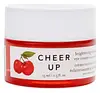
Farmacy Cheer Up Brightening Vitamin C Eye Cream with Acerola Cherry Versus DHC Eye Bright Eye Moisturizer
This brightening eye moisturizer is formulated around Ascorbyl Tetraisopalmitate and Caffeine to fade the look of dark spots.
This calming eye moisturizer is formulated around Caffeine and Dipotassium Glycyrrhizate to calm redness.


What's inside
What's inside
 Key Ingredients
Benefits
Concerns
Ingredients Side-by-side
Water
Skin ConditioningDiisostearyl Malate
EmollientPentaerythrityl Tetraisostearate
Emollient

Pentylene Glycol
Skin Conditioning
Ascorbyl Tetraisopalmitate
Antioxidant


Orbignya Oleifera Seed Oil
Emollient

Phytosterols
Skin Conditioning
Caprylic/Capric Triglyceride
Masking
3-Glyceryl Ascorbate
Antioxidant
Glycerin
Humectant
Acrylates/C10-30 Alkyl Acrylate Crosspolymer
Emulsion StabilisingMalpighia Punicifolia Fruit Extract
Antioxidant
Caffeine
Skin Conditioning
Sodium Hyaluronate
Humectant

Hydrolyzed Sodium Hyaluronate
Skin Conditioning
Sodium Acetylated Hyaluronate
Humectant
Sodium Hyaluronate Crosspolymer
Humectant
Hydrolyzed Plukenetia Volubilis Seed Extract
Emulsion StabilisingLinoleic Acid
Cleansing
Phospholipids
Skin Conditioning
Bisabolol
Antioxidant
Helianthus Annuus Extract
Emollient
Physalis Angulata Extract
Skin ProtectingBis-Diglyceryl Polyacyladipate-1
Emollient
Oryza Sativa Bran Extract
Skin Conditioning
Tocopherol
Antioxidant

Hexamidine Diisethionate
Emollient
Sodium Phytate
ChelatingMelia Azadirachta Extract
Skin ConditioningMoringa Oleifera Seed Oil
Emollient

Ethylhexylglycerin
Skin ConditioningPotassium Hydroxide
BufferingRosmarinus Officinalis Leaf Extract
AntimicrobialButylene Glycol
Humectant
Citric Acid
Buffering
Sodium Benzoate
Masking
Water, Diisostearyl Malate, Pentaerythrityl Tetraisostearate, Pentylene Glycol, Ascorbyl Tetraisopalmitate, Orbignya Oleifera Seed Oil, Phytosterols, Caprylic/Capric Triglyceride, 3-Glyceryl Ascorbate, Glycerin, Acrylates/C10-30 Alkyl Acrylate Crosspolymer, Malpighia Punicifolia Fruit Extract, Caffeine, Sodium Hyaluronate, Hydrolyzed Sodium Hyaluronate, Sodium Acetylated Hyaluronate, Sodium Hyaluronate Crosspolymer, Hydrolyzed Plukenetia Volubilis Seed Extract, Linoleic Acid, Phospholipids, Bisabolol, Helianthus Annuus Extract, Physalis Angulata Extract, Bis-Diglyceryl Polyacyladipate-1, Oryza Sativa Bran Extract, Tocopherol, Hexamidine Diisethionate, Sodium Phytate, Melia Azadirachta Extract, Moringa Oleifera Seed Oil, Ethylhexylglycerin, Potassium Hydroxide, Rosmarinus Officinalis Leaf Extract, Butylene Glycol, Citric Acid, Sodium Benzoate
Water
Skin ConditioningCucumis Sativus Juice
EmollientButylene Glycol
Humectant
Glycerin
Humectant
Pentylene Glycol
Skin Conditioning
Alcohol
Antimicrobial


Carbomer
Emulsion StabilisingPotassium Hydroxide
BufferingCaffeine
Skin Conditioning
Saccharide Isomerate
Humectant
Dipotassium Glycyrrhizate
Humectant
Acrylates/C10-30 Alkyl Acrylate Crosspolymer
Emulsion StabilisingIsodonis Japonicus Leaf/Stalk Extract
MaskingSodium Hyaluronate
Humectant
Allantoin
Skin Conditioning
Placental Protein
HumectantPhenoxyethanol
Preservative
Water, Cucumis Sativus Juice, Butylene Glycol, Glycerin, Pentylene Glycol, Alcohol, Carbomer, Potassium Hydroxide, Caffeine, Saccharide Isomerate, Dipotassium Glycyrrhizate, Acrylates/C10-30 Alkyl Acrylate Crosspolymer, Isodonis Japonicus Leaf/Stalk Extract, Sodium Hyaluronate, Allantoin, Placental Protein, Phenoxyethanol
Ingredients Explained
These ingredients are found in both products.
Ingredients higher up in an ingredient list are typically present in a larger amount.
Acrylates/C10-30 Alkyl Acrylate Crosspolymer is a synthetic polymer. It is used to thicken, emulsify, and improve the texture of products.
As an emulsifier, it helps stabilize oil-in-water emulsions to give products an elegant feel when applied.
It can also form a thin protective film on skin. One study found that a formula using this polymer helped slow down how quickly other ingredients (like DEET) were absorbed through skin.
A 2024 study of over 1,300 patients confirmed that sensitization to this ingredient is rare. It is also non-mutagenic and has a clean track record.
Learn more about Acrylates/C10-30 Alkyl Acrylate CrosspolymerButylene Glycol (or BG) is used within cosmetic products for a few different reasons:
Overall, Butylene Glycol is a safe and well-rounded ingredient that works well with other ingredients.
Though this ingredient works well with most skin types, some people with sensitive skin may experience a reaction such as allergic rashes, closed comedones, or itchiness.
Learn more about Butylene GlycolCaffeine is a naturally occurring plant compound found in coffee beans, tea leaves, cocoa pods, and guarana.
As an antioxidant, caffeine protects your skin from free radical damage caused by UV exposure and envionrmnetal stressors.
Early research also shows that caffeine can help calm redness, soothe irritated skin, and support hair growth by stimulating microcirculation in the scalp.
You might have seen eye creams marketing caffeine as a depuffing ingredient. This is because it is a vasoconstrictor meaning it can temporarily constrict blood vessels, though clinical evidence for this specific use is still limited.
Most skincare products contain this ingredient at concentrations between 1-6%. It is able to penetrate skin easily regardless of skin type or thickness.
Just so you know, a very small number of case reports describe caffeine-induced allergy. This ingredient is generally well-tolerated, non-irritating, and non-sensitizing for the majority of people.
Learn more about CaffeineGlycerin (or glycerol) is a compound naturally found in your skin. It's a powerhouse humectant that pulls water into the stratum corneum.
Topically, glycerin does several things at once:
Your skin makes glycerin on its own (mostly from sebaceous oil breakdown) and shuttles it to your outermost layer of skin, or your epidermis, via aquaporin-3.
Aquaporin-3 is a transporter that is essential for normal skin hydration, elasticity, and repair. Interestingly, mice lacking in AQP3 have dry and less elastic skin that can be fully corrected with glycerin.
This ingredient is non-irritating, plays well with almost every ingredient, and works across all skin types. Typical use is anywhere between 3-10% but can go up to 79% in some leave-on products.
Just know very high concentrations (>40%) can feel tacky in low humidity.
Glycerin is the name for this ingredient in American English. British English uses Glycerol/Glycerine.
Learn more about GlycerinPentylene Glycol (1,2-pentanediol) is a multitasking little diol with three main roles in a formula:
Research on alkanediols (the family pentylene glycol belongs to) show they work by disrupting microbial cell membranes. This disruption helps the primary preservative system in a product work more effectively at lower doses.
On the safety side, the Cosmetic Ingredient Review Expert Panel has concluded this ingredient to be safe as used in current cosmetic practices + concentrations.
Typical use levels in a formula run about 1-5%.
Learn more about Pentylene GlycolPotassium Hydroxide (also known as potash) is a strong alkaline ingredient that does one job: it nudges a product's pH up so the whole formula lands in a skin-friendly range.
It's also the base that turns oils into liquid soap during the soap making process.
An expert safety panel reviewed it and found it safe when formulations are made to be non-irritating.
As a pH adjuster, it's typically used well under 1% though regulatory caps go much higher: 5% in nail cuticle removers and 2-4.5% in hair straighteners.
Though there is some concern for irritation from raw or high pH material, a well-balanced formula will be a non-issue for the vast majority of people.
Learn more about Potassium HydroxideSodium Hyaluronate is the salt form of hyaluronic acid. It is a long sugar chain that is naturally found in your skin, joints, and connective tissue that maintains hydration and elasticity.
In skincare, it works as a humectant. It pulls water from the environment and deeper layers of skin and binds it to the surface.
Interestingly, the size of the molecule affects its behavior:
Some clinical evidence links low molecular weight versions to improved wrinkle depth, elasticity, anti-inflammatory effects, and barrier repair.
Many serums use a blend of both weights so you can get surface hydration plus longer-lasting and deeper effects.
You'll typically see concentrations between 0.1-2% for this ingredient.
Learn more about Sodium HyaluronateWater. It's the most common cosmetic ingredient of all. You'll usually see it at the top of ingredient lists, meaning that it makes up the largest part of the product.
So why is it so popular? Water most often acts as a solvent - this means that it helps dissolve other ingredients into the formulation.
You'll also recognize water as that liquid we all need to stay alive. If you see this, drink a glass of water. Remember to stay hydrated!
Learn more about Water

