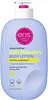
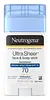
EOS Shea Better Moisture Body Lotion Versus Neutrogena UltraSheer Face & Body Stick Sunscreen SPF 70
This chemical sunscreen covers most of the UV range, lighter on the deep UVA that drives aging.

What's inside
What's inside
 Key Ingredients
Benefits
Concerns
Ingredients Side-by-side
Water
Skin ConditioningGlycerin
Humectant


Isopropyl Palmitate
Emollient




Cetyl Ethylhexanoate
EmollientGlyceryl Stearate Se
Emulsifying
Cetyl Alcohol
Emollient

Parfum
Masking


Dimethicone
Emollient
Butyrospermum Parkii Butter
Skin Conditioning
Butyrospermum Parkii Oil
Emollient
Petrolatum
Emollient
Paraffinum Liquidum
Emollient
Carbomer
Emulsion StabilisingCaprylyl Glycol
Emollient
Hexylene Glycol
EmulsifyingPhenoxyethanol
Preservative
Palmitic Acid
Emollient
Stearic Acid
Cleansing
Myristic Acid
Cleansing
Disodium EDTA
ChelatingSodium Hydroxide
BufferingTocopheryl Acetate
Antioxidant


Citric Acid
Buffering
Water, Glycerin, Isopropyl Palmitate, Cetyl Ethylhexanoate, Glyceryl Stearate Se, Cetyl Alcohol, Parfum, Dimethicone, Butyrospermum Parkii Butter, Butyrospermum Parkii Oil, Petrolatum, Paraffinum Liquidum, Carbomer, Caprylyl Glycol, Hexylene Glycol, Phenoxyethanol, Palmitic Acid, Stearic Acid, Myristic Acid, Disodium EDTA, Sodium Hydroxide, Tocopheryl Acetate, Citric Acid
Homosalate 15%
Skin Conditioning

Octocrylene 10%
UV Absorber
Ethylhexyl Salicylate 5%
UV Absorber
Butyl Methoxydibenzoylmethane 3%
UV Absorber
Benzophenone-3 3%
UV Absorber
Adipic Acid/Diglycol Crosspolymer
BHT
Antioxidant
C12-15 Alkyl Benzoate
AntimicrobialCaprylyl Glycol
Emollient
Cera Alba
Emollient
Diethylhexyl 2,6-Naphthalate
EmollientNeopentyl Glycol Diethylhexanoate
Emollient
Neopentyl Glycol Diisostearate
Emulsifying
Octyldodecyl Neopentanoate
EmollientOzokerite
Emulsion StabilisingParaffin
Skin Conditioning
Parfum
Masking
Polyethylene
Abrasive
Silica
Abrasive

Homosalate 15%, Octocrylene 10%, Ethylhexyl Salicylate 5%, Butyl Methoxydibenzoylmethane 3%, Benzophenone-3 3%, Adipic Acid/Diglycol Crosspolymer, BHT, C12-15 Alkyl Benzoate, Caprylyl Glycol, Cera Alba, Diethylhexyl 2,6-Naphthalate, Neopentyl Glycol Diethylhexanoate, Neopentyl Glycol Diisostearate, Octyldodecyl Neopentanoate, Ozokerite, Paraffin, Parfum, Polyethylene, Silica
Reviews
Ingredients Explained
These ingredients are found in both products.
Ingredients higher up in an ingredient list are typically present in a larger amount.
Caprylyl Glycol is a humectant, skin conditioner, emollient, and preservative booster derived from either caprylic acid or synthetically created.
Typical use levels vary from 0.3-1% as a preservative booster and go up to 2% to condition skin.
Because it is not a free-fatty acid, this ingredient is fungal acne safe (there's nothing for Malassezia to feed on).
Learn more about Caprylyl GlycolParfum is a catch-all term for an ingredient or more that is used to give a scent to products.
Also called "fragrance", this ingredient can be a blend of hundreds of chemicals or plant oils. This means every product with "fragrance" or "parfum" in the ingredients list is a different mixture.
For instance, Habanolide is a proprietary trade name for a specific aroma chemical. When used as a fragrance ingredient in cosmetics, most aroma chemicals fall under the broad labeling category of “FRAGRANCE” or “PARFUM” according to EU and US regulations.
The term 'parfum' or 'fragrance' is not regulated in many countries. In many cases, it is up to the brand to define this term.
For instance, many brands choose to label themselves as "fragrance-free" because they are not using synthetic fragrances. However, their products may still contain ingredients such as essential oils that are considered a fragrance by INCI standards.
One example is Calendula flower extract. Calendula is an essential oil that still imparts a scent or 'fragrance'.
Depending on the blend, the ingredients in the mixture can cause allergies and sensitivities on the skin. Some ingredients that are known EU allergens include linalool and citronellol.
Parfum can also be used to mask or cover an unpleasant scent.
The bottom line is: not all fragrances/parfum/ingredients are created equally. If you are worried about fragrances, we recommend taking a closer look at an ingredient. And of course, we always recommend speaking with a professional.
Learn more about Parfum

