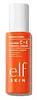
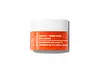
e.l.f. cosmetics Bright Icon Vitamin C + E + Ferulic Serum Versus e.l.f. cosmetics Bright + Brew-tiful Eye Cream
This brightening serum is formulated around 3-O-Ethyl Ascorbic Acid and Ascorbic Acid to brighten dull-looking skin and fade the look of dark spots.
This brightening eye moisturizer is formulated around Caffeine and 3-O-Ethyl Ascorbic Acid to brighten dull-looking skin and soften the look of wrinkles.

What's inside
What's inside
 Key Ingredients
Benefits
Concerns
Ingredients Side-by-side
Water
Skin ConditioningDipropylene Glycol
Humectant3-O-Ethyl Ascorbic Acid
Skin Conditioning





Glycerin
Humectant

Ascorbic Acid
Antioxidant


Laureth-23
Cleansing

Ethoxydiglycol
HumectantTocopherol
Antioxidant
Panthenol
Skin Conditioning
Ferulic Acid
Antimicrobial
Phenoxyethanol
Preservative
Sodium Hydroxide
BufferingBisabolol
Antioxidant
Ethylhexylglycerin
Skin ConditioningCaprylyl Glycol
Emollient
Xanthan Gum
EmulsifyingHippophae Rhamnoides Oil
Emollient


Water
Skin ConditioningSimmondsia Chinensis Seed Oil
Emollient
C9-12 Alkane
SolventGlycerin
Humectant
Dimethicone
Emollient
Dimer Dilinoleyl Dimer Dilinoleate
EmollientButyrospermum Parkii Butter
Skin Conditioning
Polyglyceryl-6 Distearate
Emulsifying
Caffeine
Skin Conditioning
Cyclodextrin
AbsorbentCandelilla/Jojoba/Rice Bran Polyglyceryl-3 Esters
Emulsifying
Polyacrylate-13
3-O-Ethyl Ascorbic Acid
Skin Conditioning
Dimethicone Crosspolymer
Emulsion Stabilising
Polyisobutene
Potassium Cetyl Phosphate
EmulsifyingHydroxyacetophenone
Antioxidant
1,2-Hexanediol
Skin Conditioning
Synthetic Fluorphlogopite
Xanthan Gum
EmulsifyingMica
Cosmetic ColorantTocopherol
Antioxidant
Dipotassium Glycyrrhizate
Humectant
Disodium EDTA
ChelatingAcrylates/C10-30 Alkyl Acrylate Crosspolymer
Emulsion StabilisingPolysorbate 20
Emulsifying
Arginine
Masking
Sorbitan Isostearate
Emulsifying
Helianthus Annuus Seed Oil
Emollient
Tin Oxide
Abrasive
Propanediol
Solvent
Coffea Arabica Seed Extract
Masking
Sodium Benzoate
Masking
Potassium Sorbate
Preservative
CI 77891
Cosmetic ColorantCI 77491
Cosmetic ColorantWater, Simmondsia Chinensis Seed Oil, C9-12 Alkane, Glycerin, Dimethicone, Dimer Dilinoleyl Dimer Dilinoleate, Butyrospermum Parkii Butter, Polyglyceryl-6 Distearate, Caffeine, Cyclodextrin, Candelilla/Jojoba/Rice Bran Polyglyceryl-3 Esters, Polyacrylate-13, 3-O-Ethyl Ascorbic Acid, Dimethicone Crosspolymer, Polyisobutene, Potassium Cetyl Phosphate, Hydroxyacetophenone, 1,2-Hexanediol, Synthetic Fluorphlogopite, Xanthan Gum, Mica, Tocopherol, Dipotassium Glycyrrhizate, Disodium EDTA, Acrylates/C10-30 Alkyl Acrylate Crosspolymer, Polysorbate 20, Arginine, Sorbitan Isostearate, Helianthus Annuus Seed Oil, Tin Oxide, Propanediol, Coffea Arabica Seed Extract, Sodium Benzoate, Potassium Sorbate, CI 77891, CI 77491
Reviews
Ingredients Explained
These ingredients are found in both products.
Ingredients higher up in an ingredient list are typically present in a larger amount.
3-O-Ethyl Ascorbic Acid is one of the most popular "stable" vitamin C derivatives in skincare.
Plain ascorbic acid is fantastic but notoriously fragile; it browns, oxidizes, and loses potency fast. So attaching an ethyl group to the third carbon of the molecule gives it some cool perks:
In a formula, it does the 3 classic vitamin C jobs: it acts as an antioxidant, helps brighten skin tone by inhibiting tyrosinase, and supports collagen.
The evidence is reasonably solid for a cosmetic ingredient; Liao and colleagues (2018) showed it's significantly more stable than ascorbic acid while still being effective.
A 2021 study by Zerbinati and colleagues tested a serum with 30% 3-O-ethyl-l-ascorbic acid and 1% lactic acid significantly increased collagen production, reduced UVB-induced DNA damage, and decreased melanin on a reconstructed pigmented skin model.
Typical real world usage sits around 0.5-5% (and 1-2% is common for daily serums).
Amounts up to 30% have been shown to be non-irritating on human skin samples, but two isolated cases reported allergic contact dermatitis so a patch test is sensible if you have reactive skin.
Learn more about 3-O-Ethyl Ascorbic AcidGlycerin (or glycerol) is a compound naturally found in your skin. It's a powerhouse humectant that pulls water into the stratum corneum.
Topically, glycerin does several things at once:
Your skin makes glycerin on its own (mostly from sebaceous oil breakdown) and shuttles it to your outermost layer of skin, or your epidermis, via aquaporin-3.
Aquaporin-3 is a transporter that is essential for normal skin hydration, elasticity, and repair. Interestingly, mice lacking in AQP3 have dry and less elastic skin that can be fully corrected with glycerin.
This ingredient is non-irritating, plays well with almost every ingredient, and works across all skin types. Typical use is anywhere between 3-10% but can go up to 79% in some leave-on products.
Just know very high concentrations (>40%) can feel tacky in low humidity.
Glycerin is the name for this ingredient in American English. British English uses Glycerol/Glycerine.
Learn more about GlycerinTocopherol is a fat-soluble antioxidant known as Vitamin E.
You'll find this ingredient in the vast majority of skincare (for good reason). It works to neutralize free radicals, or unstable molecules generated by UV exposure, pollution, and other environmental stressors, before they can cause oxidative damage to your skin cells.
Topically applied tocopherol has been shown to protect against UV damage by ramping up the skin's own natural defense enzymes.
It also acts as a skin conditioning agent; some studies show that regular topical use can improve the skin's water-binding capacity over 2-4 weeks.
This ingredient is especially loved for being a team player. When combined with Vitamin C, the photoprotective effect of both ingredients roughly doubles and the combo also helps reduce UV-induced DNA damage.
This ingredient has some brightening potential but it's more of a prevention ingredient than spot-fader. Cell studies show it can slow down melanin production but it's worth noting that it's not the most powerful brightener out there.
In formulations, it also serves as a stabilizer that helps protect other oxidation-prone ingredients from degrading.
Concentrations usually range from 0.1-1% in most leave-on products.
Learn more about TocopherolWater. It's the most common cosmetic ingredient of all. You'll usually see it at the top of ingredient lists, meaning that it makes up the largest part of the product.
So why is it so popular? Water most often acts as a solvent - this means that it helps dissolve other ingredients into the formulation.
You'll also recognize water as that liquid we all need to stay alive. If you see this, drink a glass of water. Remember to stay hydrated!
Learn more about WaterXanthan gum is used as a stabilizer and thickener within cosmetic products. It helps give products a sticky, thick feeling - preventing them from being too runny.
On the technical side of things, xanthan gum is a polysaccharide - a combination consisting of multiple sugar molecules bonded together.
Xanthan gum is a pretty common and great ingredient. It is a natural, non-toxic, non-irritating ingredient that is also commonly used in food products.
Learn more about Xanthan Gum

