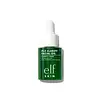
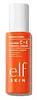
e.l.f. cosmetics Plz Clarify Facial Oil Versus e.l.f. cosmetics Bright Icon Vitamin C + E + Ferulic Serum
This acne oil is formulated around Salicylic Acid and Melaleuca Alternifolia Leaf Oil to clear breakouts and refine the look of pores.
This brightening serum is formulated around 3-O-Ethyl Ascorbic Acid and Ascorbic Acid to brighten dull-looking skin and fade the look of dark spots.

What's inside
What's inside
 Key Ingredients
Benefits
Concerns
Ingredients Side-by-side
Salicylic Acid 2%
Masking










Caprylic/Capric Triglyceride
Masking


Helianthus Annuus Seed Oil
Emollient

Alcohol
Antimicrobial
Glycine Soja Oil
Emollient



Octyldodecanol
Emollient
1,2-Hexanediol
Skin Conditioning
Tocopherol
Antioxidant



Melaleuca Alternifolia Leaf Oil
Antioxidant

Bisabolol
Antioxidant
Aloe Barbadensis Leaf Extract
Emollient
Simmondsia Chinensis Seed Oil
Emollient
Limnanthes Alba Seed Oil
Skin Conditioning
Melia Azadirachta Leaf Extract
Skin ConditioningMelia Azadirachta Flower Extract
Skin ConditioningCorallina Officinalis Extract
Skin Conditioning
Coccinia Indica Fruit Extract
Skin Conditioning
Glabridin
BleachingSolanum Melongena Fruit Extract
Skin ConditioningAloe Barbadensis Flower Extract
EmollientOcimum Sanctum Leaf Extract
Skin ConditioningOcimum Basilicum Flower/Leaf Extract
TonicCurcuma Longa Root Extract
Antioxidant
Daucus Carota Sativa Root Extract
Skin Conditioning
Beta-Carotene
Skin ConditioningDenatonium Benzoate
Masking
Limonene
Perfuming
Linalool
Perfuming
CI 47000
Cosmetic ColorantSalicylic Acid 2%, Caprylic/Capric Triglyceride, Helianthus Annuus Seed Oil, Alcohol, Glycine Soja Oil, Octyldodecanol, 1,2-Hexanediol, Tocopherol, Melaleuca Alternifolia Leaf Oil, Bisabolol, Aloe Barbadensis Leaf Extract, Simmondsia Chinensis Seed Oil, Limnanthes Alba Seed Oil, Melia Azadirachta Leaf Extract, Melia Azadirachta Flower Extract, Corallina Officinalis Extract, Coccinia Indica Fruit Extract, Glabridin, Solanum Melongena Fruit Extract, Aloe Barbadensis Flower Extract, Ocimum Sanctum Leaf Extract, Ocimum Basilicum Flower/Leaf Extract, Curcuma Longa Root Extract, Daucus Carota Sativa Root Extract, Beta-Carotene, Denatonium Benzoate, Limonene, Linalool, CI 47000
Water
Skin ConditioningDipropylene Glycol
Humectant3-O-Ethyl Ascorbic Acid
Skin Conditioning
Glycerin
Humectant
Ascorbic Acid
Antioxidant
Laureth-23
Cleansing
Ethoxydiglycol
HumectantTocopherol
Antioxidant
Panthenol
Skin Conditioning
Ferulic Acid
Antimicrobial
Phenoxyethanol
Preservative
Sodium Hydroxide
BufferingBisabolol
Antioxidant
Ethylhexylglycerin
Skin ConditioningCaprylyl Glycol
Emollient
Xanthan Gum
EmulsifyingHippophae Rhamnoides Oil
Emollient
Reviews
Ingredients Explained
These ingredients are found in both products.
Ingredients higher up in an ingredient list are typically present in a larger amount.
Bisabolol is a gentle skin conditioner, antioxidant, and soothing ingredient.
It's primary claim to fame is soothing and research shows topically applied bisabolol can quiet the chemical messengers that cause your skin to become inflamed, helping to sooth any irritation.
A clinical study found that applying 0.5% bisabolol daily for 8 weeks produced an average 9% decrease in skin pigmentation. Researchers found it can also suppress the process that leads to excess melanin production in skin.
In vitro studies found that bisabolol combined with propylene glycol significantly increased skin permeability by increasing lipid fluidity in the stratum corneum.
You'll likely see use concentrations quite low, usually 0.1-0.2%.
Overall, this is a well-tolerated ingredient that works well in formulas designed for sensitive, reactive, or post-procedure skin.
Learn more about BisabololTocopherol is a fat-soluble antioxidant known as Vitamin E.
You'll find this ingredient in the vast majority of skincare (for good reason). It works to neutralize free radicals, or unstable molecules generated by UV exposure, pollution, and other environmental stressors, before they can cause oxidative damage to your skin cells.
Topically applied tocopherol has been shown to protect against UV damage by ramping up the skin's own natural defense enzymes.
It also acts as a skin conditioning agent; some studies show that regular topical use can improve the skin's water-binding capacity over 2-4 weeks.
This ingredient is especially loved for being a team player. When combined with Vitamin C, the photoprotective effect of both ingredients roughly doubles and the combo also helps reduce UV-induced DNA damage.
This ingredient has some brightening potential but it's more of a prevention ingredient than spot-fader. Cell studies show it can slow down melanin production but it's worth noting that it's not the most powerful brightener out there.
In formulations, it also serves as a stabilizer that helps protect other oxidation-prone ingredients from degrading.
Concentrations usually range from 0.1-1% in most leave-on products.
Learn more about Tocopherol

