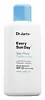
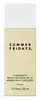
Dr. Jart+ Every Sun Day™ Sun Fluid SPF 50+ Versus Summer Fridays ShadeDrops Broad Spectrum SPF 30 Mineral Milk Sunscreen
This chemical sunscreen covers most of the UV range, lighter on the deep UVA that drives aging.
This hybrid sunscreen covers the full UV range and blocks ~97% of UVB at SPF 30.


What's inside
What's inside
 Key Ingredients
Benefits
Concerns
Ingredients Side-by-side
Water
Skin ConditioningHomosalate
Skin Conditioning

Ethylhexyl Methoxycinnamate
UV Absorber
Propanediol
Solvent

Ethylhexyl Salicylate
UV Absorber
Alcohol
Antimicrobial



Octocrylene
UV Absorber
Butyl Methoxydibenzoylmethane
UV Absorber
Benzotriazolyl Dodecyl P-Cresol
UV AbsorberPentylene Glycol
Skin Conditioning
1,2-Hexanediol
Skin Conditioning
Lavandula Angustifolia Oil
Masking



Silica
Abrasive


Dimethicone/Vinyl Dimethicone Crosspolymer
Skin Conditioning
Ammonium Acryloyldimethyltaurate/Vp Copolymer
Styrene/Acrylates Copolymer
Ethylhexylglycerin
Skin ConditioningHydroxypropyl Methylcellulose Stearoxy Ether
Polyacrylate Crosspolymer-6
Emulsion StabilisingButylene Glycol
Humectant
BHT
Antioxidant
T-Butyl Alcohol
Perfuming
Tocopherol
Antioxidant




Water, Homosalate, Ethylhexyl Methoxycinnamate, Propanediol, Ethylhexyl Salicylate, Alcohol, Octocrylene, Butyl Methoxydibenzoylmethane, Benzotriazolyl Dodecyl P-Cresol, Pentylene Glycol, 1,2-Hexanediol, Lavandula Angustifolia Oil, Silica, Dimethicone/Vinyl Dimethicone Crosspolymer, Ammonium Acryloyldimethyltaurate/Vp Copolymer, Styrene/Acrylates Copolymer, Ethylhexylglycerin, Hydroxypropyl Methylcellulose Stearoxy Ether, Polyacrylate Crosspolymer-6, Butylene Glycol, BHT, T-Butyl Alcohol, Tocopherol
Zinc Oxide 9.4%
Cosmetic Colorant
Water
Skin ConditioningC12-15 Alkyl Benzoate
AntimicrobialSorbitan Oleate Decylglucoside Crosspolymer
CleansingArgania Spinosa Kernel Oil
Emollient

Tocopheryl Acetate
Antioxidant
Ammonium Acryloyldimethyltaurate/Vp Copolymer
Glycerin
Humectant
Caramel
Cosmetic ColorantPolyester-5
Squalane
Emollient
Butyrospermum Parkii Butter Extract
Skin Conditioning
Bisabolol
Antioxidant
Phospholipids
Skin Conditioning
Tocopherol
Antioxidant
Ethyl Ferulate
Antioxidant
Urea
Buffering

Ethylhexylglycerin
Skin ConditioningGluconolactone
Chelating

Triethoxycaprylylsilane
Dimethicone
Emollient
Sodium Chloride
MaskingBenzyl Alcohol
Perfuming
Sodium Benzoate
Masking
Sorbic Acid
Preservative
Chlorphenesin
Antimicrobial
Phenoxyethanol
Preservative
Zinc Oxide 9.4%, Water, C12-15 Alkyl Benzoate, Sorbitan Oleate Decylglucoside Crosspolymer, Argania Spinosa Kernel Oil, Tocopheryl Acetate, Ammonium Acryloyldimethyltaurate/Vp Copolymer, Glycerin, Caramel, Polyester-5, Squalane, Butyrospermum Parkii Butter Extract, Bisabolol, Phospholipids, Tocopherol, Ethyl Ferulate, Urea, Ethylhexylglycerin, Gluconolactone, Triethoxycaprylylsilane, Dimethicone, Sodium Chloride, Benzyl Alcohol, Sodium Benzoate, Sorbic Acid, Chlorphenesin, Phenoxyethanol
Reviews
Ingredients Explained
These ingredients are found in both products.
Ingredients higher up in an ingredient list are typically present in a larger amount.
Ammonium Acryloyldimethyltaurate/Vp Copolymer is a synthetically created polymer. It's used as a film-forming agent and used to thicken the consistency of products.
Think of it as a supportive ingredient that helps your gel-creams feel silky, "cloud cream-like", and spread evenly without being greasy.
The Cosmetic Ingredient Review (CIR) Expert Panel evaluated it (along with 22 other acryloyldimethyltaurate polymers) and concluded it's:
Due to its large molecular size, it sits on the surface of skin rather than penetrating it.
Learn more about Ammonium Acryloyldimethyltaurate/Vp CopolymerEthylhexylglycerin is created from glycerin. It is a multitasker ingredient that:
The CIR Expert Panel found minimal skin absorption or sensitization of any kind in a safety assessment. Though this ingredient is considered well-tolerated, a small number of cases of allergic dermatitis have been published since 2002. Just be sure to patch test if you are unsure.
Industry-reported use ranges from 8% in rinse-off products and 2% in leave-on formulations.
Learn more about EthylhexylglycerinTocopherol is a fat-soluble antioxidant known as Vitamin E.
You'll find this ingredient in the vast majority of skincare (for good reason). It works to neutralize free radicals, or unstable molecules generated by UV exposure, pollution, and other environmental stressors, before they can cause oxidative damage to your skin cells.
Topically applied tocopherol has been shown to protect against UV damage by ramping up the skin's own natural defense enzymes.
It also acts as a skin conditioning agent; some studies show that regular topical use can improve the skin's water-binding capacity over 2-4 weeks.
This ingredient is especially loved for being a team player. When combined with Vitamin C, the photoprotective effect of both ingredients roughly doubles and the combo also helps reduce UV-induced DNA damage.
This ingredient has some brightening potential but it's more of a prevention ingredient than spot-fader. Cell studies show it can slow down melanin production but it's worth noting that it's not the most powerful brightener out there.
In formulations, it also serves as a stabilizer that helps protect other oxidation-prone ingredients from degrading.
Concentrations usually range from 0.1-1% in most leave-on products.
Learn more about TocopherolWater. It's the most common cosmetic ingredient of all. You'll usually see it at the top of ingredient lists, meaning that it makes up the largest part of the product.
So why is it so popular? Water most often acts as a solvent - this means that it helps dissolve other ingredients into the formulation.
You'll also recognize water as that liquid we all need to stay alive. If you see this, drink a glass of water. Remember to stay hydrated!
Learn more about Water

