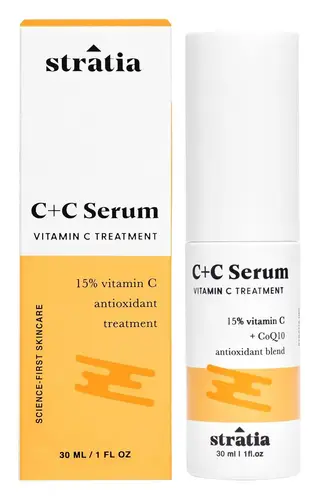

What's inside
What's inside
 Key Ingredients
Benefits
Concerns
No concerns
Ingredients Side-by-side
Water
Skin Conditioning3-O-Ethyl Ascorbic Acid
Skin Conditioning





Tetrahexyldecyl Ascorbate
Antioxidant
Propanediol
Solvent

Coconut Alkanes
Emollient
Polyester-4
Skin ConditioningDimethicone
Emollient
Glycerin
Humectant
Ethylhexyl Olivate
Skin Conditioning
Glyceryl Caprylate
EmollientAscorbic Acid
Antioxidant

Glutathione
Gold
Cosmetic ColorantSodium Acrylates Copolymer
Coco-Caprylate/Caprate
Emollient
Polyglyceryl-4 Oleate
Emulsifying
Ammonium Acryloyldimethyltaurate/Vp Copolymer
Butylene Glycol
Humectant
Polysilicone-11

Citric Acid
Buffering

Butyrospermum Parkii Butter
Skin Conditioning

Caprylhydroxamic Acid
Sorbitol
Humectant
Terminalia Ferdinandiana Fruit Extract
Antioxidant
Alteromonas Ferment Extract
Skin Conditioning
Annona Muricata Fruit Extract
Skin ConditioningEuterpe Oleracea Fruit Extract
Hylocereus Undatus Fruit Extract
Skin ConditioningMangifera Indica Fruit Extract
Skin ConditioningPersea Gratissima Fruit Extract
EmollientPrunus Domestica Fruit Extract
MoisturisingPsidium Guajava Fruit Extract
AstringentTamarindus Indica Extract
SmoothingCaprylyl Glycol
Emollient
Decyl Glucoside
Cleansing
1,2-Hexanediol
Skin Conditioning
Xanthan Gum
EmulsifyingHexylene Glycol
EmulsifyingPhenoxyethanol
Preservative
Water, 3-O-Ethyl Ascorbic Acid, Tetrahexyldecyl Ascorbate, Propanediol, Coconut Alkanes, Polyester-4, Dimethicone, Glycerin, Ethylhexyl Olivate, Glyceryl Caprylate, Ascorbic Acid, Glutathione, Gold, Sodium Acrylates Copolymer, Coco-Caprylate/Caprate, Polyglyceryl-4 Oleate, Ammonium Acryloyldimethyltaurate/Vp Copolymer, Butylene Glycol, Polysilicone-11, Citric Acid, Butyrospermum Parkii Butter, Caprylhydroxamic Acid, Sorbitol, Terminalia Ferdinandiana Fruit Extract, Alteromonas Ferment Extract, Annona Muricata Fruit Extract, Euterpe Oleracea Fruit Extract, Hylocereus Undatus Fruit Extract, Mangifera Indica Fruit Extract, Persea Gratissima Fruit Extract, Prunus Domestica Fruit Extract, Psidium Guajava Fruit Extract, Tamarindus Indica Extract, Caprylyl Glycol, Decyl Glucoside, 1,2-Hexanediol, Xanthan Gum, Hexylene Glycol, Phenoxyethanol


Reviews
Ingredients Explained
These ingredients are found in both products.
Ingredients higher up in an ingredient list are typically present in a larger amount.
Ascorbic Acid is is pure Vitamin C and is the biologically active form used directly by skin.
Not only is vitamin C great for your overall health and immune system, but it also has plenty of benefits for your skin. It is best supported by academic literature for:
Topical vitamin C has been shown to help neutralize oxidative stress from UV and pollution, helping to improve photoaging and hyperpigmentation when used consistently.
One clinical study found that using 5% topical vitamin C for six months improved signs of photodamaged skin, both on the surface and in the deeper structural layers of the skin.
While vitamin C doesn’t replace sunscreen, studies show it can boost photoprotection when combined with Vitamin E and ferulic acid. These two ingredients help improve stability and protective effects.
The big downside of this ingredient is formulation difficulty. Vitamin C is prone to oxidation and doesn't penetrate the skin unless formulated correctly. Research found that vitamin C absorbs into the skin best at a low pH (< 3.5) with about 20% being the upper limit for effective absorption.
Skin levels can saturate after repeated application; this means your skin won’t keep absorbing more once it’s full of vitamin C. This is why more isn’t always better with vitamin C and why very high concentrations don’t necessarily give extra benefits.
Ascorbic acid generally works well with many skincare ingredients but can be irritating when combined with other active ingredients. Strong oxidizing acne treatments like benzoyl peroxide can reduce the effectiveness of vitamin C if they are used at the same time; they are often recommended for use at different times of day.
Read more about other types of Vitamin C:
Foods rich with vitamin C include oranges, strawberries, broccoli, bell peppers, and more. When consuming Vitamin C, your skin receives a portion of the nutrients.
Learn more about Ascorbic AcidDimethicone is a type of synthetic silicone created from natural materials such as quartz. It is also known as polydimethylsiloxane.
What it does:
Dimethicone comes in different viscosities:
Depending on the viscosity, dimethicone has different properties.
Ingredients lists don't always show which type is used, so we recommend reaching out to the brand if you have questions about the viscosity.
This ingredient is unlikely to cause irritation because it does not get absorbed into skin. However, people with silicone allergies should be careful about using this ingredient.
Note: Dimethicone may contribute to pilling. This is because it is not oil or water soluble, so pilling may occur when layered with products. When mixed with heavy oils in a formula, the outcome is also quite greasy.
Learn more about DimethiconePolysilicone-11 is a film-forming silicone that creates a non-tacky and matte finish on the skin. It's commonly used to improve texture, absorb excess oil, and help active ingredients spread evenly.
Due to its "rubber-like" structure, it stays on the skin's surface instead of being absorbed. On the skin, it creates a flexible layer that enhances wearability and stability.

