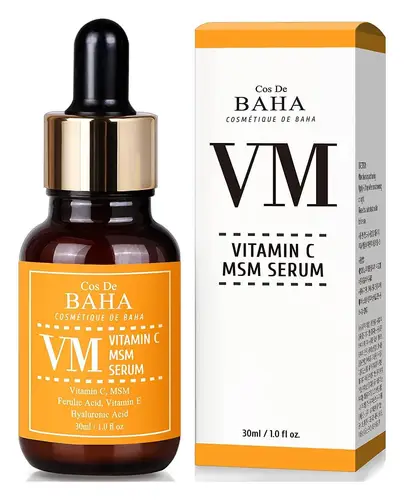
This brightening serum is formulated around Sodium Ascorbyl Phosphate and Aloe Barbadensis Leaf Extract to brighten dull-looking skin and calm redness.
This brightening serum is formulated around Niacinamide and 3-O-Ethyl Ascorbic Acid to brighten dull-looking skin and fade the look of dark spots.

What's inside
What's inside
 Key Ingredients
Benefits
Concerns
No concerns
Ingredients Side-by-side
Aloe Barbadensis Leaf Extract
Emollient


Propanediol
Solvent
Sodium Ascorbyl Phosphate
Antioxidant






Glycereth-26
Humectant
Dimethyl Sulfone
Solvent1,2-Hexanediol
Skin Conditioning
Betaine
Humectant
Hydrogenated Lecithin
Emulsifying
Tocopheryl Acetate
Antioxidant
Ferulic Acid
Antimicrobial
Allantoin
Skin Conditioning
Sodium Hyaluronate
Humectant
Dipotassium Glycyrrhizate
Humectant
Hydroxyethylcellulose
Emulsion StabilisingXanthan Gum
EmulsifyingCitric Acid
Buffering

Camellia Sinensis Leaf Extract
Antimicrobial
Sambucus Nigra Flower Extract
RefreshingMomordica Charantia Fruit Extract
Skin ConditioningLeontopodium Alpinum Extract
Skin ConditioningAloe Barbadensis Leaf Extract, Propanediol, Sodium Ascorbyl Phosphate, Glycereth-26, Dimethyl Sulfone, 1,2-Hexanediol, Betaine, Hydrogenated Lecithin, Tocopheryl Acetate, Ferulic Acid, Allantoin, Sodium Hyaluronate, Dipotassium Glycyrrhizate, Hydroxyethylcellulose, Xanthan Gum, Citric Acid, Camellia Sinensis Leaf Extract, Sambucus Nigra Flower Extract, Momordica Charantia Fruit Extract, Leontopodium Alpinum Extract
Water
Skin ConditioningGlycerin
Humectant
Butylene Glycol
Humectant
Dipropylene Glycol
HumectantDiglycerin
Humectant
Niacinamide
Smoothing


1,2-Hexanediol
Skin Conditioning
Betaine
Humectant
C12-14 Pareth-12
EmulsifyingAcrylates/C10-30 Alkyl Acrylate Crosspolymer
Emulsion StabilisingTromethamine
BufferingSea Water
HumectantEthylhexylglycerin
Skin ConditioningAdenosine
Skin Conditioning
Xanthan Gum
EmulsifyingSodium Hyaluronate
Humectant
Disodium EDTA
ChelatingCitrus Junos Peel Oil
Astringent
Panthenol
Skin Conditioning
3-O-Ethyl Ascorbic Acid
Skin Conditioning
Ascorbyl Glucoside
Antioxidant
Hydroxypropyl Cyclodextrin
MaskingPentylene Glycol
Skin Conditioning
Madecassoside
Antioxidant
Glutathione
Glycine
Buffering
Serine
Masking
Glutamic Acid
Humectant
Aspartic Acid
Masking
Leucine
Skin ConditioningAlanine
Masking
Lysine
Skin ConditioningArginine
Masking
Tyrosine
MaskingPhenylalanine
Masking
Proline
Skin Conditioning
Threonine
Valine
MaskingIsoleucine
Skin ConditioningHistidine
Humectant
Cysteine
Antioxidant
Methionine
Skin ConditioningLimonene
Perfuming



Linalool
Perfuming
Water, Glycerin, Butylene Glycol, Dipropylene Glycol, Diglycerin, Niacinamide, 1,2-Hexanediol, Betaine, C12-14 Pareth-12, Acrylates/C10-30 Alkyl Acrylate Crosspolymer, Tromethamine, Sea Water, Ethylhexylglycerin, Adenosine, Xanthan Gum, Sodium Hyaluronate, Disodium EDTA, Citrus Junos Peel Oil, Panthenol, 3-O-Ethyl Ascorbic Acid, Ascorbyl Glucoside, Hydroxypropyl Cyclodextrin, Pentylene Glycol, Madecassoside, Glutathione, Glycine, Serine, Glutamic Acid, Aspartic Acid, Leucine, Alanine, Lysine, Arginine, Tyrosine, Phenylalanine, Proline, Threonine, Valine, Isoleucine, Histidine, Cysteine, Methionine, Limonene, Linalool
Reviews
Ingredients Explained
These ingredients are found in both products.
Ingredients higher up in an ingredient list are typically present in a larger amount.
1,2-Hexanediol is a synthetic liquid and another multi-functional powerhouse.
It is a:
- Humectant, drawing moisture into the skin
- Emollient, helping to soften skin
- Solvent, dispersing and stabilizing formulas
- Preservative booster, enhancing the antimicrobial activity of other preservatives
Betaine is a humectant. Like hyaluronic acid, it helps attract and retain moisture in the skin. It’s known for being gentle and for helping the skin maintain balanced hydration.
Betaine is mainly used to improve hydration and support calmer skin. It helps skin cells regulate water balance because it functions as an osmolyte.
Some studies suggest betaine may support making skin tone more even.
Fun fact: Betaine naturally exists in the skin and the body. In cosmetic products, it can be either plant-derived (most commonly from sugar beets) or synthetically produced for consistency and stability.
Betaine is also known as trimethylglycine.
Learn more about BetaineSodium Hyaluronate is the salt form of hyaluronic acid. It is a long sugar chain that is naturally found in your skin, joints, and connective tissue that maintains hydration and elasticity.
In skincare, it works as a humectant. It pulls water from the environment and deeper layers of skin and binds it to the surface.
Interestingly, the size of the molecule affects its behavior:
Some clinical evidence links low molecular weight versions to improved wrinkle depth, elasticity, anti-inflammatory effects, and barrier repair.
Many serums use a blend of both weights so you can get surface hydration plus longer-lasting and deeper effects.
You'll typically see concentrations between 0.1-2% for this ingredient.
Learn more about Sodium HyaluronateXanthan gum is used as a stabilizer and thickener within cosmetic products. It helps give products a sticky, thick feeling - preventing them from being too runny.
On the technical side of things, xanthan gum is a polysaccharide - a combination consisting of multiple sugar molecules bonded together.
Xanthan gum is a pretty common and great ingredient. It is a natural, non-toxic, non-irritating ingredient that is also commonly used in food products.
Learn more about Xanthan Gum