Clean & Clear Morning Burst Fruit Infusions Hydrating Cleanser Versus Clarins One-Step Gentle Exfoliating Cleanser with Orange Extract
This oil-control exfoliator is formulated around Cellulose to balance excess oil.


What's inside
What's inside
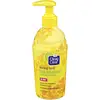 Key Ingredients
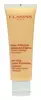
No key ingredients
Benefits
Concerns
Ingredients Side-by-side
Water
Skin ConditioningSodium Laureth Sulfate
Cleansing



Cocamidopropyl Betaine
Cleansing

Glycerin
Humectant


Acrylates Copolymer
Sodium Chloride
MaskingPhenoxyethanol
Preservative
Glycol Distearate
Emollient
Parfum
Masking

Tetrasodium EDTA
ChelatingSodium Hydroxide
BufferingDMDM Hydantoin
Preservative
Styrene/Acrylates Copolymer
Methylparaben
Preservative

Citric Acid
Buffering

Sodium Benzotriazolyl Butylphenol Sulfonate
UV AbsorberFragaria Vesca Seed
AstringentPropylparaben
Preservative
Ethylparaben
Preservative
Ananas Sativus Fruit Extract
Skin ConditioningCocos Nucifera Fruit Extract
Emollient
Euterpe Oleracea Fruit Extract

CI 19140
Cosmetic ColorantCI 15985
Cosmetic ColorantWater, Sodium Laureth Sulfate, Cocamidopropyl Betaine, Glycerin, Acrylates Copolymer, Sodium Chloride, Phenoxyethanol, Glycol Distearate, Parfum, Tetrasodium EDTA, Sodium Hydroxide, DMDM Hydantoin, Styrene/Acrylates Copolymer, Methylparaben, Citric Acid, Sodium Benzotriazolyl Butylphenol Sulfonate, Fragaria Vesca Seed, Propylparaben, Ethylparaben, Ananas Sativus Fruit Extract, Cocos Nucifera Fruit Extract, Euterpe Oleracea Fruit Extract, CI 19140, CI 15985
Water
Skin ConditioningSodium Laureth Sulfate
Cleansing
Cetearyl Alcohol
Emollient

Cellulose
Absorbent
Cocamidopropyl Betaine
Cleansing
Lauramide Mipa
Foam BoostingGlycol Distearate
Emollient
Cetearyl Glucoside
Emulsifying
Glycerin
Humectant
Acrylates/C10-30 Alkyl Acrylate Crosspolymer
Emulsion StabilisingTea-Cocoyl Glutamate
Cleansing
Citrus Aurantium Dulcis Fruit Water
MaskingSilica
Abrasive

Butyrospermum Parkii Butter
Skin Conditioning
Parfum
Masking
Phenoxyisopropanol
Preservative
Sodium Chloride
MaskingPropylene Glycol
Humectant
Sodium Hydroxide
BufferingBenzophenone-2
MaskingButylparaben
Masking
Disodium EDTA
ChelatingMethylchloroisothiazolinone
Preservative
Moringa Oleifera Seed Extract
Skin Conditioning
Methylisothiazolinone
Preservative
Chlorphenesin
Antimicrobial
Ethylparaben
Preservative
Methylparaben
Preservative
BHT
Antioxidant
Benzyl Salicylate
Perfuming
Butylphenyl Methylpropional
Perfuming
Limonene
Perfuming
Linalool
Perfuming
Geraniol
Perfuming
CI 15985
Cosmetic ColorantWater, Sodium Laureth Sulfate, Cetearyl Alcohol, Cellulose, Cocamidopropyl Betaine, Lauramide Mipa, Glycol Distearate, Cetearyl Glucoside, Glycerin, Acrylates/C10-30 Alkyl Acrylate Crosspolymer, Tea-Cocoyl Glutamate, Citrus Aurantium Dulcis Fruit Water, Silica, Butyrospermum Parkii Butter, Parfum, Phenoxyisopropanol, Sodium Chloride, Propylene Glycol, Sodium Hydroxide, Benzophenone-2, Butylparaben, Disodium EDTA, Methylchloroisothiazolinone, Moringa Oleifera Seed Extract, Methylisothiazolinone, Chlorphenesin, Ethylparaben, Methylparaben, BHT, Benzyl Salicylate, Butylphenyl Methylpropional, Limonene, Linalool, Geraniol, CI 15985
Reviews
Ingredients Explained
These ingredients are found in both products.
Ingredients higher up in an ingredient list are typically present in a larger amount.
Ci 15985 is a dye made from petroleum. It is synthetically created and approved by the FDA for use in foods and cosmetics.
The color of this dye is orange/yellow.
This ingredient can be found in makeup, sun care, and skincare.
Learn more about CI 15985Cocamidopropyl Betaine is a fatty acid created by mixing similar compounds in coconut oil and dimethylaminopropylamine, a compound with two amino groups.
This ingredient is a surfactant and cleanser. It helps gather the dirt, pollutants, and other impurities in your skin to be washed away. It also helps thicken a product and make the texture more creamy.
Being created from coconut oil means Cocamidopropyl Betaine is hydrating for the skin.
While Cocamidopropyl Betaine was believed to be an allergen, a study from 2012 disproved this. It found two compounds in unpure Cocamidopropyl Betaine to be the irritants: aminoamide and 3-dimethylaminopropylamine. High-grade and pure Cocamidopropyl Betaine did not induce allergic reactions during this study.
Learn more about Cocamidopropyl BetaineEthylparaben is a preservative, is a paraben, and is not reef safe.
Glycerin (or glycerol) is a compound naturally found in your skin. It's a powerhouse humectant that pulls water into the stratum corneum.
Topically, glycerin does several things at once:
Your skin makes glycerin on its own (mostly from sebaceous oil breakdown) and shuttles it to your outermost layer of skin, or your epidermis, via aquaporin-3.
Aquaporin-3 is a transporter that is essential for normal skin hydration, elasticity, and repair. Interestingly, mice lacking in AQP3 have dry and less elastic skin that can be fully corrected with glycerin.
This ingredient is non-irritating, plays well with almost every ingredient, and works across all skin types. Typical use is anywhere between 3-10% but can go up to 79% in some leave-on products.
Just know very high concentrations (>40%) can feel tacky in low humidity.
Glycerin is the name for this ingredient in American English. British English uses Glycerol/Glycerine.
Learn more about GlycerinGlycol Distearate is an emulsifier and emollient that adds a "pearly" appearance to formulations.
That lustrous look you see in many shampoos is due to this ingredient: when cooled, it crystallizes into small platelets that reflect light to give products that rich, shimmering look.
This ingredient is considered safe at present practices of use and concentration and repeated insult patch test with 50% Glycol Distearate on 125 subjects found no evidence of skin irritation, hypersensitivity, or acute toxicity.
Typical use concentrations range from 0.1-10%.
Because it's an ester of stearic acid, it falls into the range that Malassezia likes to metabolize. This ingredient may not be fungal acne safe.
Learn more about Glycol DistearateMethylparaben is a synthetic preservative and one of the most widely used in the world. It has a simple, but important job: prevent your products from going bad by stopping bacteria, yeast, and mold from growing.
Typical use levels are low, often 0.1-0.3%.
This is also one of the most heavily studied preservatives out there and major regulatory bodies have repeatedly given it the green light.
In 2023, the EU's Scientific Committee on Consumer Safety (SCCS) confirmed that this ingredient is safe up to 0.4% on its own, of up to 0.8% when mixed with other paraben esters.
Here's the science behind the noise behind parabens/hormones as well:
Methylparaben shows very weak estrogen-like activity in vitro tests (more than 1,000x weaker than your body's own estradiol). In vivo (live-organism) studies don't support a meaningful endocrine-disrupting effect either.
You get a stronger estrogenic effect from eating tofu, actually.
It's also a low sensitizer and allergic reactions are uncommon; they usually happen on damage or broken skin.
There is a caveat: France has proposed to formally re-examine its endocrine classification in 2025 so the regulatory conversation isn't fully closed as of yet.
But as it stands today, this ingredient is considered safe at permitted levels.
Learn more about MethylparabenParfum is a catch-all term for an ingredient or more that is used to give a scent to products.
Also called "fragrance", this ingredient can be a blend of hundreds of chemicals or plant oils. This means every product with "fragrance" or "parfum" in the ingredients list is a different mixture.
For instance, Habanolide is a proprietary trade name for a specific aroma chemical. When used as a fragrance ingredient in cosmetics, most aroma chemicals fall under the broad labeling category of “FRAGRANCE” or “PARFUM” according to EU and US regulations.
The term 'parfum' or 'fragrance' is not regulated in many countries. In many cases, it is up to the brand to define this term.
For instance, many brands choose to label themselves as "fragrance-free" because they are not using synthetic fragrances. However, their products may still contain ingredients such as essential oils that are considered a fragrance by INCI standards.
One example is Calendula flower extract. Calendula is an essential oil that still imparts a scent or 'fragrance'.
Depending on the blend, the ingredients in the mixture can cause allergies and sensitivities on the skin. Some ingredients that are known EU allergens include linalool and citronellol.
Parfum can also be used to mask or cover an unpleasant scent.
The bottom line is: not all fragrances/parfum/ingredients are created equally. If you are worried about fragrances, we recommend taking a closer look at an ingredient. And of course, we always recommend speaking with a professional.
Learn more about ParfumChances are, you eat sodium chloride every day. Sodium Chloride is also known as table salt. This ingredient has many purposes in skincare: thickener, emulsifier, and exfoliator.
You'll most likely find this ingredient in cleansers where it is used to create a gel-like texture. As an emulsifier, it also prevents ingredients from separating.
You might see people debate whether Sodium Chloride is comedogenic, but there actually haven't been any comedogenic tests done on it. Either way, the overall formulation of a product matters a lot more than any single ingredient.
You might see this ingredient used in scrubs as a primary exfoliating ingredient.
Learn more about Sodium ChlorideSodium Hydroxide is also known as lye or caustic soda. It is used to adjust the pH of products; many ingredients require a specific pH to be effective.
In small amounts, sodium hydroxide is considered safe to use. However, large amounts may cause chemical burns due to its high alkaline.
Your skin has a natural pH and acid mantle. This acid mantle helps prevent harmful bacteria from breaking through. The acid mantle also helps keep your skin hydrated.
"Alkaline" refers to a high pH level. A low pH level would be considered acidic.
Learn more about Sodium HydroxideSodium Laureth Sulfate (SLES) is a foaming, cleansing, and emulsifying ingredient. It is created from palm kernel oil or coconut oil. SLES is not the same as sodium lauryl sulfate. It is much milder and less likely to irritate.
SLES helps create foam in personal products. It also prevents ingredients from separating, helping to elongate the shelf life.
Sodium Laureth Sulfate is a type of sulfate. It can be drying. We recommend speaking with a professional about using this ingredient if you have concerns.
Learn more about Sodium Laureth SulfateWater. It's the most common cosmetic ingredient of all. You'll usually see it at the top of ingredient lists, meaning that it makes up the largest part of the product.
So why is it so popular? Water most often acts as a solvent - this means that it helps dissolve other ingredients into the formulation.
You'll also recognize water as that liquid we all need to stay alive. If you see this, drink a glass of water. Remember to stay hydrated!
Learn more about Water

