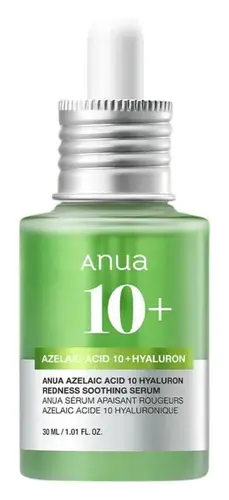
This calming serum is formulated around Potassium Azeloyl Diglycinate and Panthenol to calm redness and strengthen the skin barrier.
This calming serum is formulated around Azelaic Acid and Potassium Azeloyl Diglycinate to calm redness and clear breakouts.


What's inside
What's inside
 Key Ingredients
Benefits
Concerns
Ingredients Side-by-side
Water
Skin ConditioningPotassium Azeloyl Diglycinate
Skin Conditioning




Panthenol
Skin Conditioning


Saccharide Isomerate
Humectant
Pentylene Glycol
Skin Conditioning
4-T-Butylcyclohexanol
Masking

PEG-40 Hydrogenated Castor Oil
Emulsifying


Xanthan Gum
EmulsifyingCaprylhydroxamic Acid
ChelatingPhenoxyethanol
Preservative
Methylpropanediol
SolventSodium Citrate
BufferingCitric Acid
Buffering

Bisabolol
Antioxidant
Vitis Vinifera Fruit Extract
Skin ConditioningDisodium EDTA
ChelatingEthylhexylglycerin
Skin ConditioningWater, Potassium Azeloyl Diglycinate, Panthenol, Saccharide Isomerate, Pentylene Glycol, 4-T-Butylcyclohexanol, PEG-40 Hydrogenated Castor Oil, Xanthan Gum, Caprylhydroxamic Acid, Phenoxyethanol, Methylpropanediol, Sodium Citrate, Citric Acid, Bisabolol, Vitis Vinifera Fruit Extract, Disodium EDTA, Ethylhexylglycerin
Water
Skin ConditioningPropylene Glycol
Humectant
Azelaic Acid
Buffering


Potassium Azeloyl Diglycinate
Skin Conditioning
Niacinamide
Smoothing

Azelamidopropyl Dimethyl Amine
AntimicrobialTranexamic Acid
Astringent
Sodium Ascorbyl Phosphate
Antioxidant
Triethanolamine
BufferingEthylhexylglycerin
Skin ConditioningCapryloyl Salicylic Acid
Exfoliating
Zinc PCA
Humectant
Ectoin
Skin Conditioning
Hyaluronic Acid
Humectant
Panthenol
Skin Conditioning
Tocopherol
Antioxidant
Centella Asiatica Extract
Cleansing
Sodium Phytate
ChelatingAcetyl Tetrapeptide-40
Skin Conditioning
Betaine
Humectant
Bis-PEG-12 Dimethicone
Emollient
1,2-Hexanediol
Skin Conditioning
Carbomer
Emulsion StabilisingXanthan Gum
EmulsifyingDisodium EDTA
ChelatingSodium Hydroxide
BufferingWater, Propylene Glycol, Azelaic Acid, Potassium Azeloyl Diglycinate, Niacinamide, Azelamidopropyl Dimethyl Amine, Tranexamic Acid, Sodium Ascorbyl Phosphate, Triethanolamine, Ethylhexylglycerin, Capryloyl Salicylic Acid, Zinc PCA, Ectoin, Hyaluronic Acid, Panthenol, Tocopherol, Centella Asiatica Extract, Sodium Phytate, Acetyl Tetrapeptide-40, Betaine, Bis-PEG-12 Dimethicone, 1,2-Hexanediol, Carbomer, Xanthan Gum, Disodium EDTA, Sodium Hydroxide
Ingredients Explained
These ingredients are found in both products.
Ingredients higher up in an ingredient list are typically present in a larger amount.
Disodium EDTA is a chelating agent. It grabs onto and deactivates metal ions that sneak into your products from water, packaging, or air.
This ingredient mainly works behind the scenes and helps with:
On top of that, this ingredient can counteract the effects of hard water by binding to the minerals in it.
One thing worth knowing is that Disodium EDTA has been shown to be a mild penetration enhancer. It can help other ingredients absorb into skin more effectively which can be a double-edged sword (great for actives, but can also make the active too strong if you have sensitive skin).
Clinical patch testing showed no significant skin irritation at typical use concentrations and minimal dermal absorption.
You'll most likely see this ingredient near the end of an ingredient list. It's typically found in concentrations less than 1%.
Learn more about Disodium EDTAEthylhexylglycerin is created from glycerin. It is a multitasker ingredient that:
The CIR Expert Panel found minimal skin absorption or sensitization of any kind in a safety assessment. Though this ingredient is considered well-tolerated, a small number of cases of allergic dermatitis have been published since 2002. Just be sure to patch test if you are unsure.
Industry-reported use ranges from 8% in rinse-off products and 2% in leave-on formulations.
Learn more about EthylhexylglycerinPanthenol is a common ingredient that helps hydrate and soothe the skin. It is found naturally in our skin and hair.
There are two forms of panthenol: D and L.
D-panthenol is also known as dexpanthenol. Most cosmetics use dexpanthenol or a mixture of D and L-panthenol.
Panthenol is famous due to its ability to go deeper into the skin's layers. Using this ingredient has numerous pros (and no cons):
Like hyaluronic acid, panthenol is a humectant. Humectants are able to bind and hold large amounts of water to keep skin hydrated.
This ingredient works well for wound healing. It works by increasing tissue in the wound and helps close open wounds.
Once oxidized, panthenol converts to pantothenic acid. Panthothenic acid is found in all living cells.
This ingredient is also referred to as pro-vitamin B5.
Learn more about PanthenolPotassium Azeloyl Diglycinate (PAD) comes from the condensation of azelaic acid mixed with glycine.
This ingredient has similar properties to azelaic acid; it can help reduce sebum production and soothe skin. PAD also inhibits tyrosinase activity to help brighten skin. Tyrosinase is an enzyme that controls melanin production.
A study from 2023 found 5% PAD combined with nicotinamide (a form of niacin) effectively reduced melanin production after 6 weeks.
Several studies from the 2010's also show PAD to be effective in alleviating symptoms of Rosacea.
Though this ingredient is considered a gentle active, higher amounts may result in irritation.
Unlike azelaic acid, this ingredient is water-soluble. This property makes it easier to formulate into skincare products.
Learn more about Potassium Azeloyl DiglycinateWater. It's the most common cosmetic ingredient of all. You'll usually see it at the top of ingredient lists, meaning that it makes up the largest part of the product.
So why is it so popular? Water most often acts as a solvent - this means that it helps dissolve other ingredients into the formulation.
You'll also recognize water as that liquid we all need to stay alive. If you see this, drink a glass of water. Remember to stay hydrated!
Learn more about WaterXanthan gum is used as a stabilizer and thickener within cosmetic products. It helps give products a sticky, thick feeling - preventing them from being too runny.
On the technical side of things, xanthan gum is a polysaccharide - a combination consisting of multiple sugar molecules bonded together.
Xanthan gum is a pretty common and great ingredient. It is a natural, non-toxic, non-irritating ingredient that is also commonly used in food products.
Learn more about Xanthan Gum