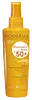
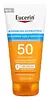
Bioderma Photoderm Max Sunscreen Spray SPF 50+ Versus Eucerin Advanced Hydration Lightweight Sunscreen Lotion SPF50
This chemical sunscreen covers the full UV range and blocks ~98% of UVB at SPF 50.
This chemical sunscreen covers most of the UV range, lighter on the deep UVA that drives aging.


What's inside
What's inside
 Key Ingredients
Benefits
Concerns
Ingredients Side-by-side
Water
Skin ConditioningDicaprylyl Carbonate
EmollientMethylene Bis-Benzotriazolyl Tetramethylbutylphenol
UV Filter
Diisopropyl Sebacate
EmollientButyl Methoxydibenzoylmethane
UV Absorber
Ethylhexyl Triazone
UV Absorber
Glycerin
Humectant


Decyl Glucoside
Cleansing
Methylpropanediol
SolventC20-22 Alkyl Phosphate
EmulsifyingEthylhexyl Methoxycrylene
Skin Conditioning
C20-22 Alcohols
Emulsion Stabilising
Pentylene Glycol
Skin Conditioning
Microcrystalline Cellulose
AbsorbentDisodium EDTA
1,2-Hexanediol
Skin Conditioning
Caprylyl Glycol
Emollient
Mannitol
Humectant
Xylitol
Humectant
Propylene Glycol
Humectant

Cellulose Gum
Emulsion StabilisingCitric Acid
Buffering

Sodium Hydroxide
BufferingRhamnose
HumectantXanthan Gum
EmulsifyingEctoin
Skin Conditioning



Tocopherol
Antioxidant


Fructooligosaccharides
Humectant
Caprylic/Capric Triglyceride
Masking
Laminaria Ochroleuca Extract
Skin Conditioning
Water, Dicaprylyl Carbonate, Methylene Bis-Benzotriazolyl Tetramethylbutylphenol, Diisopropyl Sebacate, Butyl Methoxydibenzoylmethane, Ethylhexyl Triazone, Glycerin, Decyl Glucoside, Methylpropanediol, C20-22 Alkyl Phosphate, Ethylhexyl Methoxycrylene, C20-22 Alcohols, Pentylene Glycol, Microcrystalline Cellulose, Disodium EDTA, 1,2-Hexanediol, Caprylyl Glycol, Mannitol, Xylitol, Propylene Glycol, Cellulose Gum, Citric Acid, Sodium Hydroxide, Rhamnose, Xanthan Gum, Ectoin, Tocopherol, Fructooligosaccharides, Caprylic/Capric Triglyceride, Laminaria Ochroleuca Extract
Butyl Methoxydibenzoylmethane 3%
UV Absorber
Homosalate 9%
Skin Conditioning
Ethylhexyl Salicylate 4.5%
UV Absorber
Octocrylene 9%
UV Absorber
Water
Skin ConditioningC12-15 Alkyl Benzoate
AntimicrobialNeopentyl Glycol Diheptanoate
EmollientStyrene/Acrylates Copolymer
Butylene Glycol
Humectant
Diethylhexyl Syringylidenemalonate
Skin Protecting
Vp/Eicosene Copolymer
Sodium Hyaluronate
Humectant
Glycyrrhiza Inflata Root Extract
Skin Conditioning
Glycyrrhetinic Acid
Skin Conditioning
Tocopherol
Antioxidant
Aloe Barbadensis Leaf Juice
Skin Conditioning
1,2-Hexanediol
Skin Conditioning
Hydroxyacetophenone
Antioxidant
Acrylates/C10-30 Alkyl Acrylate Crosspolymer
Emulsion StabilisingPotassium Hydroxide
BufferingDisodium EDTA
Sodium Ascorbyl Phosphate
Antioxidant


Butyl Methoxydibenzoylmethane 3%, Homosalate 9%, Ethylhexyl Salicylate 4.5%, Octocrylene 9%, Water, C12-15 Alkyl Benzoate, Neopentyl Glycol Diheptanoate, Styrene/Acrylates Copolymer, Butylene Glycol, Diethylhexyl Syringylidenemalonate, Vp/Eicosene Copolymer, Sodium Hyaluronate, Glycyrrhiza Inflata Root Extract, Glycyrrhetinic Acid, Tocopherol, Aloe Barbadensis Leaf Juice, 1,2-Hexanediol, Hydroxyacetophenone, Acrylates/C10-30 Alkyl Acrylate Crosspolymer, Potassium Hydroxide, Disodium EDTA, Sodium Ascorbyl Phosphate
Reviews
Ingredients Explained
These ingredients are found in both products.
Ingredients higher up in an ingredient list are typically present in a larger amount.
1,2-Hexanediol is a synthetic liquid and another multi-functional powerhouse.
It is a:
- Humectant, drawing moisture into the skin
- Emollient, helping to soften skin
- Solvent, dispersing and stabilizing formulas
- Preservative booster, enhancing the antimicrobial activity of other preservatives
Also known as Avobenzone, this ingredient is an oil-soluble used to absorb the full spectrum of UVA rays (peak 357 nm).
It's one of the most effective UVA filters available but has a major caveat of photostability: avobenzone is susceptible to photodegradation.
This means it can lose efficacy when exposed to sunlight without the help of a stabilizing agent.
Studies show antioxidants (like vitamin E or vitamin C) and some UV filters (like octocrylene and Tinosorb S) can meaningfully improve its stability in a formulation.
The maximum allowable concentration according to regulation is 3% in the US + Canada, and 5% in the EU, Australia, China, Korea, and ASEAN countries.
It has a well-support safety profile: a comprehensive 2025 review found minimal toxicity with no evidence of carcinogenicity.
Overall, avobenzone is a safe and regulated ingredient used in sunscreen for over 40 years.
Learn more about Butyl MethoxydibenzoylmethaneDisodium EDTA is a chelating agent. It grabs onto and deactivates metal ions that sneak into your products from water, packaging, or air.
This ingredient mainly works behind the scenes and helps with:
On top of that, this ingredient can counteract the effects of hard water by binding to the minerals in it.
One thing worth knowing is that Disodium EDTA has been shown to be a mild penetration enhancer. It can help other ingredients absorb into skin more effectively which can be a double-edged sword (great for actives, but can also make the active too strong if you have sensitive skin).
Clinical patch testing showed no significant skin irritation at typical use concentrations and minimal dermal absorption.
You'll most likely see this ingredient near the end of an ingredient list. It's typically found in concentrations less than 1%.
Learn more about Disodium EDTATocopherol is a fat-soluble antioxidant known as Vitamin E.
You'll find this ingredient in the vast majority of skincare (for good reason). It works to neutralize free radicals, or unstable molecules generated by UV exposure, pollution, and other environmental stressors, before they can cause oxidative damage to your skin cells.
Topically applied tocopherol has been shown to protect against UV damage by ramping up the skin's own natural defense enzymes.
It also acts as a skin conditioning agent; some studies show that regular topical use can improve the skin's water-binding capacity over 2-4 weeks.
This ingredient is especially loved for being a team player. When combined with Vitamin C, the photoprotective effect of both ingredients roughly doubles and the combo also helps reduce UV-induced DNA damage.
This ingredient has some brightening potential but it's more of a prevention ingredient than spot-fader. Cell studies show it can slow down melanin production but it's worth noting that it's not the most powerful brightener out there.
In formulations, it also serves as a stabilizer that helps protect other oxidation-prone ingredients from degrading.
Concentrations usually range from 0.1-1% in most leave-on products.
Learn more about TocopherolWater. It's the most common cosmetic ingredient of all. You'll usually see it at the top of ingredient lists, meaning that it makes up the largest part of the product.
So why is it so popular? Water most often acts as a solvent - this means that it helps dissolve other ingredients into the formulation.
You'll also recognize water as that liquid we all need to stay alive. If you see this, drink a glass of water. Remember to stay hydrated!
Learn more about Water

