Andalou Naturals Age Defying Hyaluronic DMAE Lift & Firm Cream Versus COSRX Hyaluronic Acid Intensive Cream
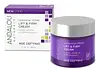
This anti-aging moisturizer is formulated around Sodium Hyaluronate and Resveratrol to soften the look of wrinkles and hydrate skin.
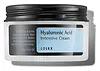
This barrier-repair moisturizer is formulated around Sodium Hyaluronate and Panthenol to strengthen the skin barrier and hydrate skin.


What's inside
What's inside
 Key Ingredients
Benefits
Concerns
Ingredients Side-by-side
Aloe Barbadensis Leaf Juice
Skin Conditioning


Water
Skin ConditioningButyrospermum Parkii Butter
Skin Conditioning





Glyceryl Stearate
Emollient
Argania Spinosa Kernel Oil
Emollient


Simmondsia Chinensis Seed Oil
Emollient
Malus Domestica Fruit Cell Culture Extract
Skin ConditioningDimethylaminoethanol Tartrate
EmollientSodium Hyaluronate
Humectant

Tocopherol
Antioxidant


Resveratrol
Antioxidant
Ubiquinone
Antioxidant
Helianthus Annuus Seed Oil
Emollient
Panthenol
Skin Conditioning
Allantoin
Skin Conditioning
Magnesium Ascorbyl Phosphate
Antioxidant


Bisabolol
Antioxidant
Riboflavin
Cosmetic ColorantBorago Officinalis Seed Oil
Emollient
Oenothera Biennis Oil
Emollient
Camellia Sinensis Leaf Extract
Antimicrobial
Hibiscus Sabdariffa Flower Extract
Skin ConditioningPhenethyl Alcohol
MaskingEthylhexylglycerin
Skin ConditioningRubus Idaeus Fruit
AstringentEthyl Vanillate
Perfuming

Citrus Aurantium Dulcis Peel Oil
Masking
Aloe Barbadensis Leaf Juice, Water, Butyrospermum Parkii Butter, Glyceryl Stearate, Argania Spinosa Kernel Oil, Simmondsia Chinensis Seed Oil, Malus Domestica Fruit Cell Culture Extract, Dimethylaminoethanol Tartrate, Sodium Hyaluronate, Tocopherol, Resveratrol, Ubiquinone, Helianthus Annuus Seed Oil, Panthenol, Allantoin, Magnesium Ascorbyl Phosphate, Bisabolol, Riboflavin, Borago Officinalis Seed Oil, Oenothera Biennis Oil, Camellia Sinensis Leaf Extract, Hibiscus Sabdariffa Flower Extract, Phenethyl Alcohol, Ethylhexylglycerin, Rubus Idaeus Fruit, Ethyl Vanillate, Citrus Aurantium Dulcis Peel Oil
Hippophae Rhamnoides Water
Masking
Glycerin
Humectant
Butylene Glycol
Humectant
Caprylic/Capric Triglyceride
Masking
Betaine
Humectant
Helianthus Annuus Seed Oil
Emollient
Cetearyl Alcohol
Emollient
Cetearyl Olivate
Sorbitan Olivate
Emulsifying
Macadamia Ternifolia Seed Oil
Emollient
1,2-Hexanediol
Skin Conditioning
Sodium Hyaluronate
Humectant
Arginine
Masking
Panthenol
Skin Conditioning
Dimethicone
Emollient
Ethylhexylglycerin
Skin ConditioningCarbomer
Emulsion StabilisingAllantoin
Skin Conditioning
Xanthan Gum
EmulsifyingHippophae Rhamnoides Water, Glycerin, Butylene Glycol, Caprylic/Capric Triglyceride, Betaine, Helianthus Annuus Seed Oil, Cetearyl Alcohol, Cetearyl Olivate, Sorbitan Olivate, Macadamia Ternifolia Seed Oil, 1,2-Hexanediol, Sodium Hyaluronate, Arginine, Panthenol, Dimethicone, Ethylhexylglycerin, Carbomer, Allantoin, Xanthan Gum
Reviews
Ingredients Explained
These ingredients are found in both products.
Ingredients higher up in an ingredient list are typically present in a larger amount.
Allantoin is a soothing ingredient known for its protective and moisturizing properties; it's basically a quiet workhorse ingredient you can find in a huge range of cosmetics.
Though it can be derived from the comfrey plant, allantoin is produced synthetically for cosmetic products to ensure purity.
Research shows it can encourage your skin cells to turn over and renew by stimulating keratinocyte and fibroblast proliferation.
It also has mild keratolytic properties to help loosen and shed dead skin cells without being harsh.
Studies also suggest allantoin can help calm inflammation by dialing down some of the chemical signals your skin sends out when it is irritated.
This ingredient is typically used in the 0.1-0.5% range, and the FDA recognizes it as a skin protectant in OTC products up to 2%.
Overall, allantoin is a wonderful addition to most routines; it is stable across a wide pH range (~4-8), works well with other ingredients, and is considered non-sensitizing/non-irritating.
Fun fact: Allantoin is naturally occurring in comfrey root, beets, chamomile, and wheat sprouts. Our bodies even produce it as a byproduct of uric acid metabolism.
Learn more about AllantoinEthylhexylglycerin is created from glycerin. It is a multitasker ingredient that:
The CIR Expert Panel found minimal skin absorption or sensitization of any kind in a safety assessment. Though this ingredient is considered well-tolerated, a small number of cases of allergic dermatitis have been published since 2002. Just be sure to patch test if you are unsure.
Industry-reported use ranges from 8% in rinse-off products and 2% in leave-on formulations.
Learn more about EthylhexylglycerinHelianthus Annuus Seed Oil is a plant oil derived from the seeds of a sunflower.
It is rich in fatty acids, primarily linoleic acid and oleic acid. This gives it emollient and skin conditioning properties.
The reason this ingredient is so effective is because it forms a thin film on the skin that reduces transepidermal water loss (TEWL) while supplying linoleic acid to the stratum corneum to improve barrier strength.
The high linoleic acid content is particularly noteworthy for acne-prone skin.
Research suggests that acne-prone skin tends to be deficient in linoleic acid in sebum. Topical application may help replenish this to support a healthier follicular environment and less comedone-promoting sebum.
One randomized study found sunflower seed oil preserved skin barrier integrity in adult volunteers with and without atopic dermatitis (outperforming olive oil).
This ingredient is well-studied, gentle, and an effective emollient suitable for most skin types.
On fungal acne: This ingredient may not be Fungal acne (Malassezia folliculitis) safe. This is because it contains fatty acids with carbon chain lengths in the C11-C24 range.
Learn more about Helianthus Annuus Seed OilPanthenol is a common ingredient that helps hydrate and soothe the skin. It is found naturally in our skin and hair.
There are two forms of panthenol: D and L.
D-panthenol is also known as dexpanthenol. Most cosmetics use dexpanthenol or a mixture of D and L-panthenol.
Panthenol is famous due to its ability to go deeper into the skin's layers. Using this ingredient has numerous pros (and no cons):
Like hyaluronic acid, panthenol is a humectant. Humectants are able to bind and hold large amounts of water to keep skin hydrated.
This ingredient works well for wound healing. It works by increasing tissue in the wound and helps close open wounds.
Once oxidized, panthenol converts to pantothenic acid. Panthothenic acid is found in all living cells.
This ingredient is also referred to as pro-vitamin B5.
Learn more about PanthenolSodium Hyaluronate is the salt form of hyaluronic acid. It is a long sugar chain that is naturally found in your skin, joints, and connective tissue that maintains hydration and elasticity.
In skincare, it works as a humectant. It pulls water from the environment and deeper layers of skin and binds it to the surface.
Interestingly, the size of the molecule affects its behavior:
Some clinical evidence links low molecular weight versions to improved wrinkle depth, elasticity, anti-inflammatory effects, and barrier repair.
Many serums use a blend of both weights so you can get surface hydration plus longer-lasting and deeper effects.
You'll typically see concentrations between 0.1-2% for this ingredient.
Learn more about Sodium Hyaluronate

