Marcelle Clari-T Skin Balancing Gel-Cream
A moisturizer with 28 ingredients, including BHA, niacinamide, and exfoliants.
This oil-control moisturizer is formulated around Salicylic Acid and Bakuchiol to balance excess oil and clear breakouts.
Worth noting
Contains Salicylic Acid, an exfoliating acid best introduced gradually.
We independently verify ingredients, backed by peer-reviewed research. Suggest an update.
What's inside
Ingredients List
Water
Skin ConditioningPropanediol
Solvent

Glycerin
Humectant
Octyldodecanol
Emollient
Pentylene Glycol
Skin Conditioning
Silica
Abrasive


Arginine
Masking
Aluminum Starch Octenylsuccinate
Absorbent
Dimethicone
Emollient
Salicylic Acid
Masking








C15-19 Alkane
SolventCetearyl Olivate

1,2-Hexanediol
Skin Conditioning
Sorbitan Olivate
Emulsifying
Dicaprylyl Carbonate
EmollientBakuchiol
Antimicrobial





Chondrus Crispus Extract
Skin Conditioning
Niacinamide
Smoothing
Sodium Hyaluronate
Humectant
Rhodomyrtus Tomentosa Fruit Extract
HumectantTocopheryl Acetate
Antioxidant
Polyacrylate Crosspolymer-6
Emulsion StabilisingXanthan Gum
EmulsifyingSodium Gluconate
Skin ConditioningCaprylhydroxamic Acid
Hydroxyacetophenone
Antioxidant
T-Butyl Alcohol
Perfuming


Tocopherol
Antioxidant
Water, Propanediol, Glycerin, Octyldodecanol, Pentylene Glycol, Silica, Arginine, Aluminum Starch Octenylsuccinate, Dimethicone, Salicylic Acid, C15-19 Alkane, Cetearyl Olivate, 1,2-Hexanediol, Sorbitan Olivate, Dicaprylyl Carbonate, Bakuchiol, Chondrus Crispus Extract, Niacinamide, Sodium Hyaluronate, Rhodomyrtus Tomentosa Fruit Extract, Tocopheryl Acetate, Polyacrylate Crosspolymer-6, Xanthan Gum, Sodium Gluconate, Caprylhydroxamic Acid, Hydroxyacetophenone, T-Butyl Alcohol, Tocopherol
Key Ingredients
Benefits
Concerns
Ingredients Explained
Water. It's the most common cosmetic ingredient of all. You'll usually see it at the top of ingredient lists, meaning that it makes up the largest part of the product.
So why is it so popular? Water most often acts as a solvent - this means that it helps dissolve other ingredients into the formulation.
You'll also recognize water as that liquid we all need to stay alive. If you see this, drink a glass of water. Remember to stay hydrated!
Learn more about WaterPropanediol is an all-star ingredient. It softens, hydrates, and smooths the skin.
It’s often used to:
Propanediol is not likely to cause sensitivity and considered safe to use. It is derived from corn or petroleum with a clear color and no scent.
Learn more about PropanediolGlycerin (or glycerol) is a compound naturally found in your skin. It's a powerhouse humectant that pulls water into the stratum corneum.
Topically, glycerin does several things at once:
Your skin makes glycerin on its own (mostly from sebaceous oil breakdown) and shuttles it to your outermost layer of skin, or your epidermis, via aquaporin-3.
Aquaporin-3 is a transporter that is essential for normal skin hydration, elasticity, and repair. Interestingly, mice lacking in AQP3 have dry and less elastic skin that can be fully corrected with glycerin.
This ingredient is non-irritating, plays well with almost every ingredient, and works across all skin types. Typical use is anywhere between 3-10% but can go up to 79% in some leave-on products.
Just know very high concentrations (>40%) can feel tacky in low humidity.
Glycerin is the name for this ingredient in American English. British English uses Glycerol/Glycerine.
Learn more about GlycerinOctyldodecanol is a fatty alcohol sourced from plant oils like coconut or palm (or made synthetically).
It is:
You'll likely see this in many BHA products because this is the go-to solvent for salicylic acid.
This ingredient is typically used at levels between 2-20%.
Regarding fungal acne:
In 2019, this ingredient was tested against multiple Malassezia species (the yeast that causes fungal acne) and showed no growth.
Pentylene Glycol (1,2-pentanediol) is a multitasking little diol with three main roles in a formula:
Research on alkanediols (the family pentylene glycol belongs to) show they work by disrupting microbial cell membranes. This disruption helps the primary preservative system in a product work more effectively at lower doses.
On the safety side, the Cosmetic Ingredient Review Expert Panel has concluded this ingredient to be safe as used in current cosmetic practices + concentrations.
Typical use levels in a formula run about 1-5%.
Learn more about Pentylene GlycolSilica, also known as silicon dioxide, is a naturally occurring mineral. It is used as a fine, spherical, and porous powder in cosmetics.
Though it has exfoliant properties, the function of silica varies depending on the product.
The unique structure of silica enhances the spreadability and adds smoothness, making it a great texture enhancer.
It is also used as an active carrier, emulsifier, and mattifier due to its ability to absorb excess oil.
In some products, tiny microneedles called spicules are made from silica or hydrolyzed sponge. When you rub them in, they lightly polish away dead skin layers and enhance the penetration of active ingredients.
Learn more about SilicaArginine is a semi-essential amino acid. This just means our bodies can product a bit on its own, but sometimes needs a little boost from food sources.
It is a part of your skin's natural moisturizing factor (NMF), or the water-loving molecules in your outermost layer of skin (stratum corneum) that keeps everything hydrated and happy.
Here's an interesting thing about Arginine: your skin converts it into urea through the Krebs-Henseleit urea cycle. Urea is one of the most effective humectants your skin naturally produces.
A clinical study showed applying 2.5% arginine hydrochloride to atopic dermatitis skin showed significant urea levels in the stratum corneum and improved moisture in just four weeks.
Arginine is also a precursor to nitric oxide; nitric oxide improves microcirculation and supports wound healing and collagen synthesis.
One study found that an amino acid complex containing Arginine reduced skin irritation, improved hydration, and accelerated skin repair in clinical / in-vivo studies.
Arginine itself is an amino acid and not a fatty acid, oil, or ester. On its own, it's not a direct food source for Malassezia, or the yeast that causes fungal acne.
Learn more about ArginineAluminum Starch Octenylsuccinate is a synthetic powder used as an absorbent, thickener, and anti-caking agent.
As an absorbent, it is great at mattifying skin by soaking up the oil. This is why you'll find it in a range of products from makeup to moisturizers.
This ingredient is considered a modified starch. Starch can also be found naturally in plants.
One study from 1991 found that 5% of this ingredient enhanced titanium dioxide SPF by as much as 40%. The study found 1% titanium dioxide had a 5.6 SPF and adding 5% of aluminum starch octenylsuccinate boosted it to an SPF of 8.1
Although “aluminum” in an ingredient name can raise red flags for some consumers, the form and usage context matter significantly. For typical topical applications, there is no substantial evidence of health risks - such as cancer, neurotoxicity, or systemic “aluminum overload.”
Learn more about Aluminum Starch OctenylsuccinateDimethicone is a type of synthetic silicone created from natural materials such as quartz. It is also known as polydimethylsiloxane.
What it does:
Dimethicone comes in different viscosities:
Depending on the viscosity, dimethicone has different properties.
Ingredients lists don't always show which type is used, so we recommend reaching out to the brand if you have questions about the viscosity.
This ingredient is unlikely to cause irritation because it does not get absorbed into skin. However, people with silicone allergies should be careful about using this ingredient.
Note: Dimethicone may contribute to pilling. This is because it is not oil or water soluble, so pilling may occur when layered with products. When mixed with heavy oils in a formula, the outcome is also quite greasy.
Learn more about DimethiconeSalicylic Acid (also known as beta hydroxy acid or BHA) is a well-known ingredient for treating skin that struggles with acne and clogged pores. It exfoliates both the skin's surface and deep within the pores to help clear out buildup, control oil, and reduce inflammation.
Unlike AHAs (alpha hydroxy acids), salicylic acid is oil-soluble. This allows it to penetrate into pores which makes it especially effective for treating blackheads and preventing future breakouts.
Salicylic acid is also known for its soothing properties. It has a similar structure to aspirin and can calm inflamed or irritated skin, making it a good option for acne-prone skin that is also sensitive.
Concentrations of 0.5-2% are recognized by the U.S. FDA as an over-the-counter topical acne product.
It can cause irritation and/or dryness if one's skin already has a compromised moisture barrier, so it's best to focus on repairing that before introducing this ingredient into your routine.
While salicylic acid does not increase sun sensitivity, it’s still important to wear sunscreen daily to protect your skin.
If you are looking for the ingredient called BHA or Butylated Hydroxyanisole, click here.
Learn more about Salicylic AcidC15-19 alkane is a mixture of alkanes. Alkanes are hydrocarbons with carbon atoms held together by single bonds.
It is a synthetically created solvent and emollient often used to replace silicones or mineral oil. As an emollient, C15-19 Alkane helps soften and soothe the skin. Emollients create a barrier to trap moisture inside.
You'll often see this ingredient used with mineral UV filters such as titanium dioxidide and zinc oxide. It helps these UV filter ingredients be more spreadable.
This ingredient is biodegradable. According to a manufacturer, it is also known as Hydrogenated Polyfarnesene.
Learn more about C15-19 AlkaneCetearyl Olivate is a plant-derived emulsifier and texture enhancer. It helps keep the oil and water phases from separating so your formulas stay stable.
You'll likely see it combined with Sorbitan Olivate (together sold as the trade name Olivem 1000). This combination generates a liquid crystal structure that closely resemble the lipid organization of the stratum corneum.
These "skin-like" liquid crystals improve skin barrier integrity and promote the delivery of actives into the skin.
This ingredient is well-tolerated and has no significant sensitization data.
Because it is derived from the fatty acids in olive oil, this ingredient may not be fungal acne safe.
Learn more about Cetearyl Olivate1,2-Hexanediol is a synthetic liquid and another multi-functional powerhouse.
It is a:
- Humectant, drawing moisture into the skin
- Emollient, helping to soften skin
- Solvent, dispersing and stabilizing formulas
- Preservative booster, enhancing the antimicrobial activity of other preservatives
Sorbitan Olivate is created from the fatty acids in olive oil and sorbitol.
This ingredient is an oil in water emulsifier. It helps stabilize a product by preventing oils and waters from separating. Sorbitan Olivate also helps hydrate the skin.
This ingredient is also known as part of Olivem 1000, with Cetearyl Olivate being the other part.
According to a manufacturer, this ingredient helps preserve the natural microbiome of skin. Having a healthy microbiome helps keep our skin healthy and protects against harmful bacteria.
Please note, having a healthy microbiome is different from fungal acne; a healthy microbiome includes small amounts of yeast that normally live on your skin without causing problems.
Fungal acne happens when one type of yeast (Malassezia) grows out of control. This is usually because it's feeding on certain oils or fatty acids. Due to the olive oil base, this ingredient may not be fungal acne safe.
Learn more about Sorbitan OlivateDicaprylyl Carbonate comes from carbonic acid and caprylyl alcohol, a fatty alcohol. It is an emollient and gives skin a velvet feel. The sources of Dicaprylyl Carbonate may be synthetic or from animals.
As an emollient, Dicaprylyl Carbonate creates a film on the skin. This film traps moisture in, keeping your skin soft and hydrated.
Bakuchiol is a plant-derived antioxidant from the seeds of the Psoralea corylifolia plant. It has antimicrobial, emollient, skin conditioning, and antioxidant properties.
You'll likely see it called a "retinol replacement" but the two are technically not related. This is because bakuchiol is able to flip many of the same switches in your skin cells to tell them to:
1) produce more collagen (type I, III, and IV)
2) activate the same genes retinoids do
Unlike retinoids, this ingredient will not increase photosensitivity and is safe to use during pregnancy (but please still check in with your doctor!).
The flagship clinical trial from Dhaliwal et al. 2019 found 0.5% bakuchiol (twice daily) and 0.5% retinol (once daily) reduced wrinkles and hyperpigmentation equally, but bakuchiol had significantly less irritation.
Systematic reviews also back this up:
Bakuchiol is comparable to retinol for photoaging but with better tolerability. It also has mild antibacterial properties against Cutibacterium acnes and antifungal activity in vitro against Candida and dermatophytes.
The reason bakuchiol works well is due to its structure; it is a meroterpene phenol, or a hybrid molecule. The phenol half acts as an antioxidant while the terpene half is fat-loving. This helps the molecule slip through the skin barrier.
This ingredient is usually used between 0.5-2%. Only one case of contact dermatitis has ever been reported for this ingredient.
Learn more about BakuchiolChondrus Crispus Extract comes from a red algae native to the northern Atlantic coasts of Europe and North America. It helps hydrate the skin and is rich in antioxidants.
The antioxidants in chondrus crispus include lutein and zeaxanthin. Lutein has the ability to filter blue light from screens.
Other contents of chondrus crispus include polysaccharides, peptides, and amino acids. These help hydrate the skin.
What's the difference between algae and seaweed?
Algae is a broad term that includes seaweed. Not all algae is seaweed.
Niacinamide is a multitasking form of vitamin B3 that strengthens the skin barrier, reduces pores and dark spots, regulates oil, and improves signs of aging.
And the best part? It's gentle and well-tolerated by most skin types, including sensitive and reactive skin.
You might have heard of "niacin flush", or the reddening of skin that causes itchiness. Niacinamide has not been found to cause this.
In very rare cases, some individuals may not be able to tolerate niacinamide at all or experience an allergic reaction to it.
If you are experiencing flaking, irritation, and dryness with this ingredient, be sure to double check all your products as this ingredient can be found in all categories of skincare.
When incorporating niacinamide into your routine, look out for concentration amounts. Typically, 5% niacinamide provides benefits such as fading dark spots. However, if you have sensitive skin, it is better to begin with a smaller concentration.
When you apply niacinamide to your skin, your body converts it into nicotinamide adenine dinucleotide (NAD). NAD is an essential coenzyme that is already found in your cells as "fuel" and powers countless biological processes.
In your skin, NAD helps repair cell damage, produce new healthy cells, support collagen production, strengthen the skin barrier, and fight environmental stressors (like UV and pollution).
Our natural NAD levels start to decline with age, leading to slower skin repair, visible aging, and a weaker skin barrier. By providing your skin niacinamide, you're recharging your skin's NAD levels. This leads to stronger, healthier, and younger looking skin.
Another name for vitamin B3 is nicotinamide. This vitamin is water-soluble and our bodies don't store it. We obtain Vitamin B3 from either food or skincare. Meat, fish, wheat, yeast, and leafy greens contain vitamin B3.
The type of niacinamide used in skincare is synthetically created.
Learn more about NiacinamideSodium Hyaluronate is the salt form of hyaluronic acid. It is a long sugar chain that is naturally found in your skin, joints, and connective tissue that maintains hydration and elasticity.
In skincare, it works as a humectant. It pulls water from the environment and deeper layers of skin and binds it to the surface.
Interestingly, the size of the molecule affects its behavior:
Some clinical evidence links low molecular weight versions to improved wrinkle depth, elasticity, anti-inflammatory effects, and barrier repair.
Many serums use a blend of both weights so you can get surface hydration plus longer-lasting and deeper effects.
You'll typically see concentrations between 0.1-2% for this ingredient.
Learn more about Sodium HyaluronateWe don't have a description for Rhodomyrtus Tomentosa Fruit Extract yet.
Tocopheryl Acetate is a stable, shelf-friendly form of vitamin E.
Formulators love it because plain vitamin E oxidizes quickly once it hits air. This acetate version stays stable and resists going off, helping to extend a product's shelf life.
It's actually inactive on its own and works like a slow-release "storage" form; the enzymes in your skin called esterases gradually convert it into active vitamin E over time.
One in vivo study showed 5% of the acetate in the living layer of the epidermis converted to vitamin E after 5 days of application. This study also found the skin gained protection against UV damage even though the conversion was slow and small.
Once converted, vitamin E acts as a skin's main fat-soluble antioxidant that fights free radicals to protect skin from damage.
Topical vitamin E generally boosts the skin's photoprotection, and it reduced UV-damage in animal models.
This ingredient has some brightening potential but it's more of a prevention ingredient than spot-fader. Cell studies show it can slow down melanin production but it's worth noting that it's not the most powerful brightener out there.
Overall, it has a pretty solid safety profile and has been found to be non-irritating and non-comedogenic. Allergic reactions may happen but stay rare due to how widely the ingredient gets used.
The concentration will vary depending on the formula; industry data shows 0.1% in baby lotions, 3% in lipsticks, and 5% in foot powders. You can also find this ingredient at 100% in a pure vitamin E oil.
Most leave-on skincare keeps it at the lower end, often between 0.5-1%.
Learn more about Tocopheryl AcetatePolyacrylate Crosspolymer-6 is a texture enhancer and pH adjuster.
It is be used to thicken water-based products and create a gel-texture with a velvet feel.
One manufacturer claims this ingredient to have a pH range of 2-8 and to be biodegradable.
This ingredient is also known as Sepimax Zen.
Learn more about Polyacrylate Crosspolymer-6Xanthan gum is used as a stabilizer and thickener within cosmetic products. It helps give products a sticky, thick feeling - preventing them from being too runny.
On the technical side of things, xanthan gum is a polysaccharide - a combination consisting of multiple sugar molecules bonded together.
Xanthan gum is a pretty common and great ingredient. It is a natural, non-toxic, non-irritating ingredient that is also commonly used in food products.
Learn more about Xanthan GumThis is the synthetic salt of gluconic acid, a form of PHA and mild exfoliant.
It is mainly used to stabilize oil and butter formulations from going bad. Sodium gluconate is a humectant, pH regulator, and chelating agent.
Chelating agents help neutralize unwanted metals from affecting the formulation.
Sodium gluconate is water-soluble.
Learn more about Sodium GluconateCaprylhydroxamic Acid is a chelating agent that helps cosmetics stay fresh, stable, and consistent over time.
Chelating agents help prevent metal ions from binding to other ingredients. This helps prevent unwanted reactions and effects from using the product. It also helps prevent the growth of unwanted microbes in products that contain water.
Caprylhydroxamic Acid is often used with natural antimicrobial products as an alternative to preservatives.
Learn more about Caprylhydroxamic AcidHydroxyacetophenone is a small phenolic molecule that earns its place in a formulas as an antioxidant and preservative booster.
As a phenol, it is able to neutralize free radicals to protect both the product and the skin from oxidative stress.
Though it can't kill microbes on its own, it works as a good supporting agent when combined with other preservatives like Phenoxyethanol or 1,2-Hexanediol.
This ingredient naturally occurs as piceol in Norwegian spruce needles (~0.4-1.1% dry weight and in cloudberries). Though the cosmetic-grade material is synthesized for purity and consistency.
You'll usually see it used at low levels and suppliers recommend up to 1% added to a water phase.
Safety testing was done at concentrations like 0.05% in SPF products and 0.5% in a Human Repeated Insult Patch Test. The safety evidence is assuring; this ingredient is safe for cosmetics in current use and also holds safety status as a food flavoring as well.
An honest caveat: the "soothing" and "anti-inflammatory" claims come mostly from supplier marketing rather than published clinical trials. The Cosmetic Ingredient Review's own literature search found no useful efficacy studies on this ingredient.
So the antioxidant and preservative-boosting roles are the well supported ones while the calming benefit is plausible but thinly evidenced.
Overall, this is a well-tolerated, low-irritation multitasker that quietly helps a formula stay fresh and stable.
Learn more about HydroxyacetophenoneT-Butyl Alcohol (aka tert-butanol) is a small, clear, camphor-smelling alcohol.
It has two main jobs:
On the safety side, it's well-studied and has a solid track record. Human repeat-insult patch testing showed no skin irritation or sensitization even at 100%.
Typical use levels are pretty tiny, usually less than 1%.
You might see some fear-mongering around this ingredient:
Studies in male rats showed kidney effects but that's because of a rat-specific protein that humans don't make. So this study isn't really relevant to humans.
Though it's not a typical fragrance like parfum, it does have a natural scent. That's why the official COSIng database lists it as 'perfuming' ingredient. It can be used to modify the scent of a formula.
Learn more about T-Butyl AlcoholTocopherol is a fat-soluble antioxidant known as Vitamin E.
You'll find this ingredient in the vast majority of skincare (for good reason). It works to neutralize free radicals, or unstable molecules generated by UV exposure, pollution, and other environmental stressors, before they can cause oxidative damage to your skin cells.
Topically applied tocopherol has been shown to protect against UV damage by ramping up the skin's own natural defense enzymes.
It also acts as a skin conditioning agent; some studies show that regular topical use can improve the skin's water-binding capacity over 2-4 weeks.
This ingredient is especially loved for being a team player. When combined with Vitamin C, the photoprotective effect of both ingredients roughly doubles and the combo also helps reduce UV-induced DNA damage.
This ingredient has some brightening potential but it's more of a prevention ingredient than spot-fader. Cell studies show it can slow down melanin production but it's worth noting that it's not the most powerful brightener out there.
In formulations, it also serves as a stabilizer that helps protect other oxidation-prone ingredients from degrading.
Concentrations usually range from 0.1-1% in most leave-on products.
Learn more about TocopherolReviews
No written reviews yet. Be the first to review this product.
Recent searches
Search reviews by skin type, ingredient, or keyword.
Where it's from
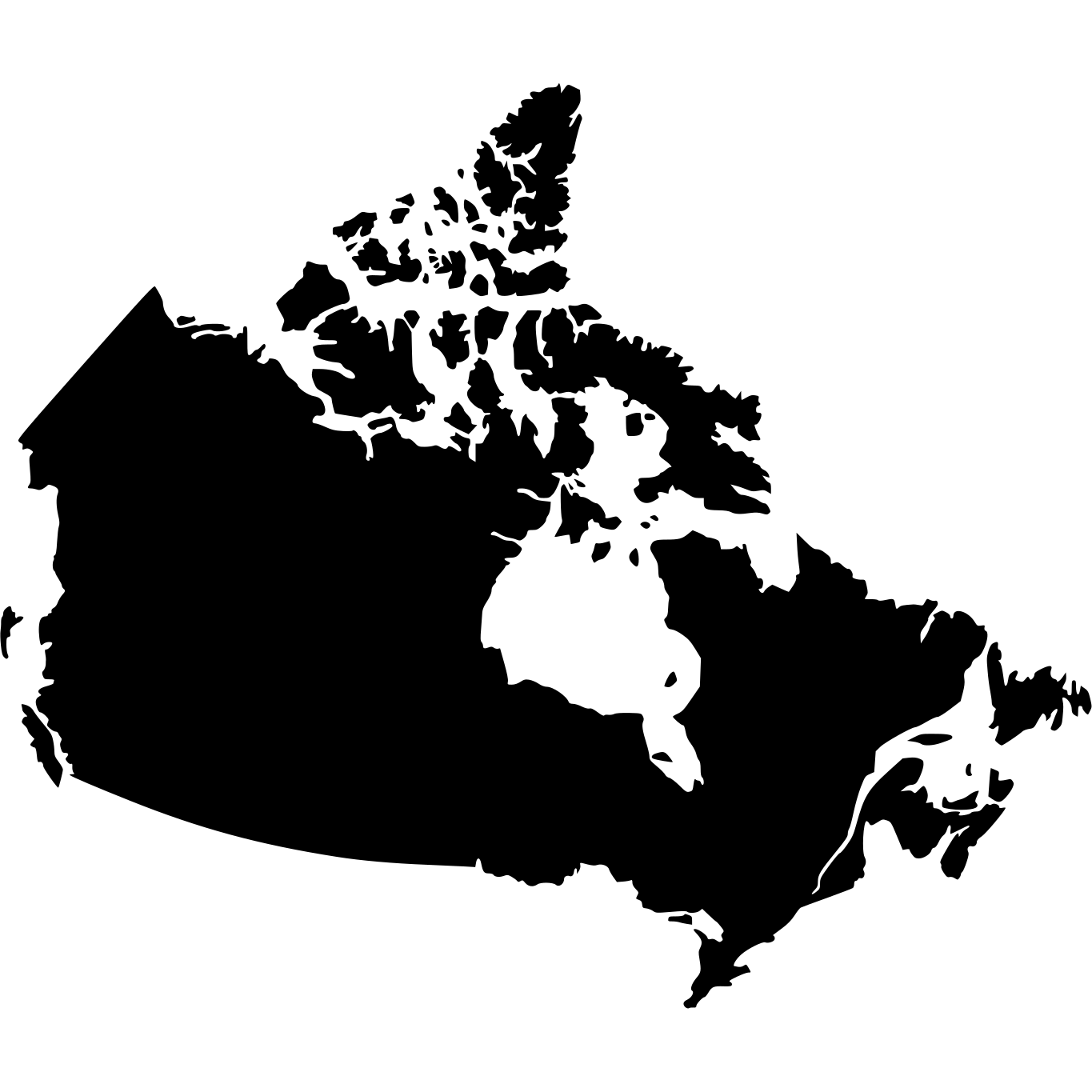
Marcelle is a Canadian brand
Often compared with

We're dedicated to providing you with the most up-to-date and science-backed ingredient info out there.
The data we've presented on this page has been verified by a member of the SkinSort Team.
Read more about us· Updated March 13, 2026 • Added by evagrover


