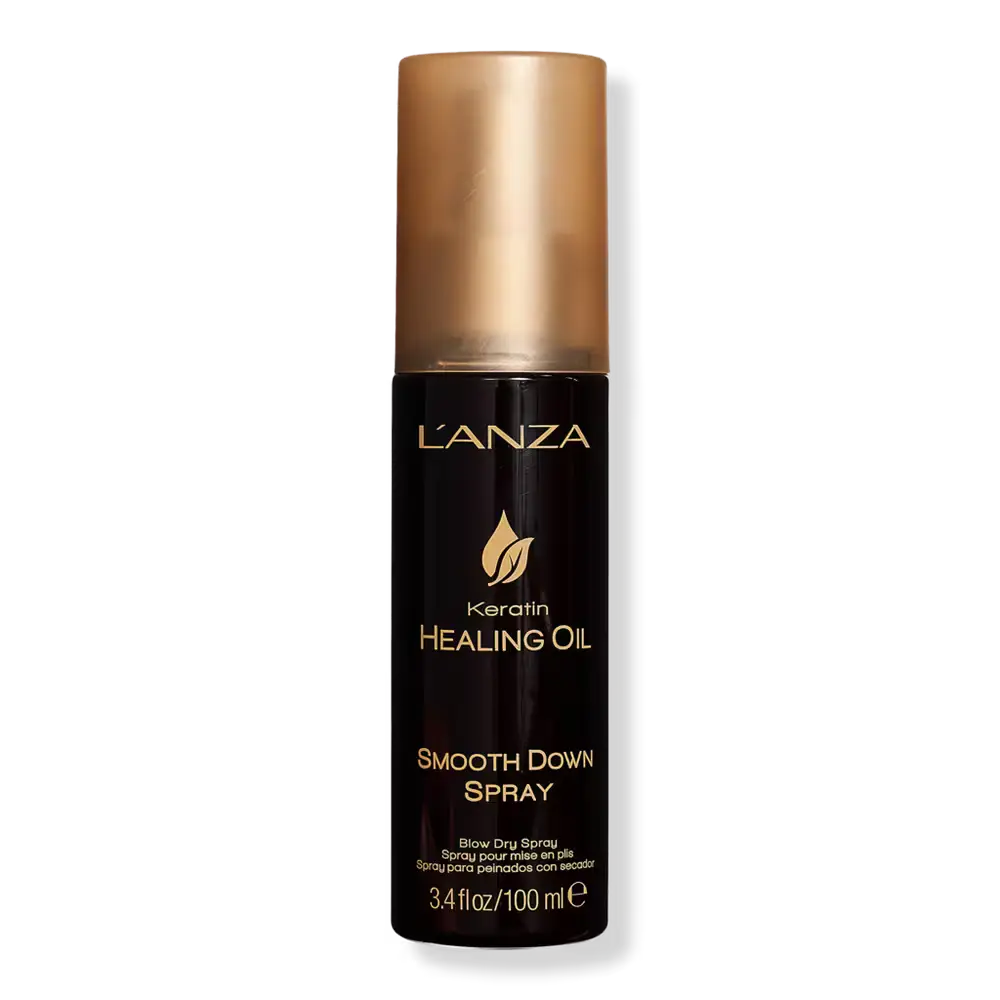
L’ANZA Keratin Healing Oil Smooth Down Spray
A styling creams & spray with 37 ingredients, including vitamin E, peptides, and zinc.
Styling creams & spray with 37 ingredients that contains peptides, Vitamin E and zinc
We independently verify ingredients, backed by peer-reviewed research. Suggest an update.
What's inside
Ingredients List
Isododecane
EmollientTrisiloxane
Skin Conditioning
Caprylyl Methicone
Skin Conditioning
Acrylates Copolymer
Keratin Amino Acids
Skin ConditioningAcetyl Tetrapeptide-17
Skin Conditioning
Colloidal Platinum
Antimicrobial
Cystine Bis-Pg-Propyl Silanetriol
Skin ConditioningAstrocaryum Murumuru Seed Butter
Emollient
Agave Tequilana Stem Extract
Cereus Grandiflorus Flower Extract
Skin ConditioningCrambe Abyssinica Seed Oil
Skin Conditioning
Orbignya Speciosa Kernel Oil
Emollient
Euterpe Oleracea Fruit Oil
Skin Conditioning
Coffea Arabica Seed Oil
Masking
Undaria Pinnatifida Extract
Skin ConditioningDimethiconol Meadowfoamate
EmollientSodium PCA
Humectant


Magnesium PCA
Humectant
Zinc PCA
Humectant




Manganese PCA
HumectantHelianthus Annuus Seed Oil
Emollient
Helianthus Annuus Extract
Emollient
Oryza Sativa
Oryza Sativa Bran Extract
Skin Conditioning
Rosmarinus Officinalis Leaf Extract
AntimicrobialCinnamidopropyltrimonium Chloride
Propylene Glycol
Humectant

Tocopherol
Antioxidant



Silicone Quaternium-3
Trideceth-12
EmulsifyingParfum
Masking

Linalool
Perfuming

Hexyl Cinnamal
Perfuming
Benzyl Salicylate
Perfuming
Limonene
Perfuming
Coumarin
Perfuming
Isododecane, Trisiloxane, Caprylyl Methicone, Acrylates Copolymer, Keratin Amino Acids, Acetyl Tetrapeptide-17, Colloidal Platinum, Cystine Bis-Pg-Propyl Silanetriol, Astrocaryum Murumuru Seed Butter, Agave Tequilana Stem Extract, Cereus Grandiflorus Flower Extract, Crambe Abyssinica Seed Oil, Orbignya Speciosa Kernel Oil, Euterpe Oleracea Fruit Oil, Coffea Arabica Seed Oil, Undaria Pinnatifida Extract, Dimethiconol Meadowfoamate, Sodium PCA, Magnesium PCA, Zinc PCA, Manganese PCA, Helianthus Annuus Seed Oil, Helianthus Annuus Extract, Oryza Sativa, Oryza Sativa Bran Extract, Rosmarinus Officinalis Leaf Extract, Cinnamidopropyltrimonium Chloride, Propylene Glycol, Tocopherol, Silicone Quaternium-3, Trideceth-12, Parfum, Linalool, Hexyl Cinnamal, Benzyl Salicylate, Limonene, Coumarin
Key Ingredients
Benefits
Concerns
Ingredients Explained
Isododecane is a fragrance, emollient, and solvent.
As an emollient, it helps your skin stay soft and hydrated. Emollients help trap moisture into your skin.
Isododecane's role as a solvent makes it a great texture enhancer. It spreads smoothly on skin and does not leave a sticky feeling behind. Isododecane also helps prevent color transfer in makeup products.
Isododecane is not absorbed into skin.
The chemical name for this ingredient is 2,2,4,6,6-PENTAMETHYLHEPTANE.
Learn more about IsododecaneTrisiloxane is a type of silicone.
Caprylyl Methicone is a synthetic and lightweight silicone fluid. It gives products a silky, dry-touch finish without the heaviness of pure oils.
Though the EU CosIng Database lists this ingredient as a skin conditioner, it is also used for sensory reasons. It spreads easily, cuts greasiness, and reduces tackiness.
This ingredient is volatile which means it will mostly evaporate (but it evaporates slower than older cyclomethicones, like Cyclotetrasiloxane).
Typical concentration ranges from 1-30% depending on if it's being used to tweak the feel of a product or acting as the main emollient.
Learn more about Caprylyl MethiconeAcrylates Copolymer is used as a film-forming agent and texture enhancer.
After applied, Acrylates Copolymer forms a thin film cover that helps skin feel more soft. It can help sunscreens become more water-resistant.
It is also used to make a product more thick.
Learn more about Acrylates CopolymerWe don't have a description for Keratin Amino Acids yet.
Acetyl Tetrapeptide-17 is a peptide.
Colloidal Platinum is an antioxidant.
We don't have a description for Cystine Bis-Pg-Propyl Silanetriol yet.
Astrocaryum Murumuru Seed Butter isn't fungal acne safe.
We don't have a description for Agave Tequilana Stem Extract yet.
We don't have a description for Cereus Grandiflorus Flower Extract yet.
This ingredient is also known as Abyssinian Oil. It comes from the seeds of the Crambe abyssinica plant and has skin conditioning properties.
What makes this oil unique is its unusually high content of erucic acid (50-65%). The other fatty acids found in this oil are oleic acid (15%) and linoleic acid (13%).
In cosmetics, abyssinian oil acts as an emollient that forms a protective layer on skin to lock in moisture without adding a heavy, greasy feeling. It also has a silky, silicone-like slip to it and is fairly resistant to oxidation.
Due to its fatty acid content, this ingredient may not be fungal acne safe.
Learn more about Crambe Abyssinica Seed OilOrbignya Speciosa Kernel Oil is an oil.
Acai oil is extracted from the pulp of the acai palm fruit. It is rich in phenolic compounds and fatty acids like oleic and palmitic acid.
Due to the presence of fatty acids, this ingredient may not be Malassezia folliculitis safe.
This plant is native to the Amazon rainforest.
Learn more about Euterpe Oleracea Fruit OilCoffea Arabica Seed Oil is a triglyceride (oil) from the green or roasted beans of the Arabica coffee plant (the same plant your coffee comes from).
Its fatty acid profile is dominated by linoleic acid (>40%), palmitic acid (~30%), and oleic acid. This ingredient also contains compounds like phytosterols, tocopherols, and small amounts of caffeine.
These compounds give it emollient, skin conditioning, and antioxidant properties.
One in vitro and ex vivo study on human skin models found this oil increased collagen, elastin, and glycosaminoglycan production in fibroblasts and upregulated a water-channel protein involved in epidermal hydration.
Some early data suggests modest UVB absorbing properties but this ingredient is not considered a sunscreen on its own.
Because it is rich in fatty acids, it may not be fungal acne safe.
Learn more about Coffea Arabica Seed OilUndaria Pinnatifida Extract comes from a kelp native to the northern Pacific Ocean. It is more commonly known as "wakame".
This kelp contains fatty acids, sodium, calcium, iodine, thiamine, and niacin. Studies show a polysaccharide known as fucoidan exhibits strong antioxidant activities. Fucoidan can be found in the cell walls of many species of brown seaweed.
Wakame prefers cold and temperate oceans. It is used in Japanese and Korean cuisine (yummy!).
Learn more about Undaria Pinnatifida ExtractWe don't have a description for Dimethiconol Meadowfoamate yet.
Sodium PCA (the salt of PCA) is one of the most well-established humectants in skincare.
Why is it so special? Your skin already makes it naturally; it's a natural component of your skin's Natural Moisturizing Factor (NMF), or the mix of water-binding compounds inside your skin cells that keeps things soft and hydrated.
As a cosmetic ingredient, it grabs water and holds it in the upper layers of skin to smooth roughness and ease dehydration.
There's some clinical support for the NMF approach with a study showing that a cream built to mimic the skin's NMF significantly boosted hydration.
Safety-wise, this ingredient non-irritating, non-comedogenic, and non-phototoxic in testing, with minimal skin absorption.
It also works really well with other hydrators like glycerin or hyaluronic acid, and typical usage is somewhere between 0.2-4%.
Learn more about Sodium PCAThis ingredient is the magnesium salt of PCA (Pyrrolidone Carboxylic Acid). It is a great skin hydrator for the top layers of skin.
PCA is a natural humectant, meaning it draws water from the air to your outer layer of skin.
One study found magnesium ions improved skin hydration in the outer layer of skin, or the stratum corneum. However, it did not improve TEWL, or the transepidermal water loss. The TEWL is an indicator of how healthy your skin barrier function is. This study primarily looked at healthy skin with intact skin barrier.
Learn more about Magnesium PCAZinc PCA is a clever two-in-one molecule: the zinc salt of pyrrolidone carboxylic acid (PCA).
Think of it as two useful things bonded together; the PCA half is one of your skin's own natural moisturizing factors (NMF) so it helps hold water in the upper layers. On the other hand, the zinc half does the heavy lifting on oil and bacteria.
The zinc part slows down an enzyme that turns testosterone into DHT, the hormone that tells your oil glands to pump out more sebum. Less of that signal means less oil. It also gently fights acne-causing bacteria and soothes redness/irritation.
This is why Zinc PCA often shows up in products for oily, breakout-prone skin and greasy scalps.
One lab study also hinted it might have a small anti-aging perk because it seemed to protect collagen from UVA damage and even helped the skin make a bit more of it. That last bit is still early research done in a dish and not real skin, so take it as a nice bonus rather than a promise for now.
As for scar healing, the picture is more "maybe" than a firm yes. Zinc itself plays a real role in wound repair because it is a cofactor for the enzymes involved in collagen building, calming inflammation, and helping new skin cells cover a wound. Lower zinc levels are also linked to slower healing.
Most of the scar healing research is on zinc oxide or oral zinc rather than zinc PCA specifically, with a focus on healing fresh wounds instead of scars that are already there.
Direct evidence that zinc PCA improves the look of established scars is still limited at this time. Though it would be fair to say zinc PCA supports the general skin-repair environment thanks to its zinc content .
This ingredient is water-soluble and plays nicely with other actives like niacinamide and salicylic acid. It works best at mildly acidic formulas (~4-6 pH) and is effective at low levels. Around 0.1% is enough to be active and finished products commonly use it anywhere up to 4%.
Overall, this is a well-tolerated, low-drama multitasker that suits oily and acne-prone skin.
Learn more about Zinc PCAWe don't have a description for Manganese PCA yet.
Helianthus Annuus Seed Oil is a plant oil derived from the seeds of a sunflower.
It is rich in fatty acids, primarily linoleic acid and oleic acid. This gives it emollient and skin conditioning properties.
The reason this ingredient is so effective is because it forms a thin film on the skin that reduces transepidermal water loss (TEWL) while supplying linoleic acid to the stratum corneum to improve barrier strength.
The high linoleic acid content is particularly noteworthy for acne-prone skin.
Research suggests that acne-prone skin tends to be deficient in linoleic acid in sebum. Topical application may help replenish this to support a healthier follicular environment and less comedone-promoting sebum.
One randomized study found sunflower seed oil preserved skin barrier integrity in adult volunteers with and without atopic dermatitis (outperforming olive oil).
This ingredient is well-studied, gentle, and an effective emollient suitable for most skin types.
On fungal acne: This ingredient may not be Fungal acne (Malassezia folliculitis) safe. This is because it contains fatty acids with carbon chain lengths in the C11-C24 range.
Learn more about Helianthus Annuus Seed OilHelianthus Annuus Extract comes from the common sunflower.
Sunflowers are rich in vitamin E. Studies show sunflowers contain antimicrobial and antioxidant properties.
The fatty acids found in sunflowers include (from highest amount to least): linoleic acid, myristic acid, palmitic acid, stearic acid, arachidic acid, oleic acid, and linolenic acid.
These fatty acids hydrate your skin. Emollients create a film on the skin to prevent moisture from escaping.
Learn more about Helianthus Annuus ExtractWe don't have a description for Oryza Sativa yet.
Oryza Sativa Bran Extract comes from the outer layer of a rice kernel. It is a byproduct of milling rice, or the operation to produce a whole grain rice product.
This ingredient has moisturizing properties due to its components of polysaccharides and omega-3 fatty acids. It also contains calcium, selenium, phosphorus, iron, and zinc.
Oryza Sativa Bran Extract contains numerous antioxidants such as ferulic acid. Antioxidants help fight free-radical molecules. Free-radical molecules are capable of damaging our cells and other genetic material.
Learn more about Oryza Sativa Bran ExtractThis is a botanical extract from the rosemary plant (the same one you cook with). In skincare, it mostly works as a skin conditioning agent.
Its activity comes from a handful of polyphenols, carnosic acid, carnosol, and rosmarinic acid. Almost 90% of the antioxidant activity of this ingredient can be attributed to canosol and carnosic acid.
These compounds protect your skin two ways:
1) They fight off free radicals, or the unstable molecules from things like sun and pollution that age and damage skin.
2) They help calm inflammation by switching off the chemical signals that tell skin to get red and irritated.
Lab studies also suggest that rosmarinic acid may help protect collagen and slow sugar-related damage to it.
The Cosmetic Ingredient Review has concluded rosemary-derived ingredients to be safe when formulated to be non-sensitizing.
Rosemary can occasionally cause allergic contact dermatitis (due to carnosol), so be sure to patch test if you have reactive or fragrance-sensitive skin.
Learn more about Rosmarinus Officinalis Leaf ExtractWe don't have a description for Cinnamidopropyltrimonium Chloride yet.
Propylene Glycol is a synthetic, colorless, odorless liquid that has been a staple in cosmetics for decades. It is a skin conditioning agent, humectant, and solvent.
As a humectant, it draw water to the skin to reduce flaking and restore suppleness. It's also a solvent that helps dissolve other actives and keeps formulas stable across temperature changes.
The CIR Expert Panel has confirmed this ingredient to be nontoxic and clinical studies show no sensitization at cosmetic use concentrations.
True allergic reactions are quite rare: a 15-year retrospective study of 6,751 patients found only 0.31% had a positive reaction (and less than half were considered clinically relevant).
It seemed that when sensitization does occur, it's most commonly linked to topical medication (like corticosteroids) and not cosmetics. Allergic contact dermatitis also appears largely limited to individuals with underlying skin conditions.
Overall, propylene glycol is a well-studied ingredient that most people can tolerate without issue.
Learn more about Propylene GlycolTocopherol is a fat-soluble antioxidant known as Vitamin E.
You'll find this ingredient in the vast majority of skincare (for good reason). It works to neutralize free radicals, or unstable molecules generated by UV exposure, pollution, and other environmental stressors, before they can cause oxidative damage to your skin cells.
Topically applied tocopherol has been shown to protect against UV damage by ramping up the skin's own natural defense enzymes.
It also acts as a skin conditioning agent; some studies show that regular topical use can improve the skin's water-binding capacity over 2-4 weeks.
This ingredient is especially loved for being a team player. When combined with Vitamin C, the photoprotective effect of both ingredients roughly doubles and the combo also helps reduce UV-induced DNA damage.
This ingredient has some brightening potential but it's more of a prevention ingredient than spot-fader. Cell studies show it can slow down melanin production but it's worth noting that it's not the most powerful brightener out there.
In formulations, it also serves as a stabilizer that helps protect other oxidation-prone ingredients from degrading.
Concentrations usually range from 0.1-1% in most leave-on products.
Learn more about TocopherolSilicone Quaternium-3 is a type of silicone.
We don't have a description for Trideceth-12 yet.
Parfum is a catch-all term for an ingredient or more that is used to give a scent to products.
Also called "fragrance", this ingredient can be a blend of hundreds of chemicals or plant oils. This means every product with "fragrance" or "parfum" in the ingredients list is a different mixture.
For instance, Habanolide is a proprietary trade name for a specific aroma chemical. When used as a fragrance ingredient in cosmetics, most aroma chemicals fall under the broad labeling category of “FRAGRANCE” or “PARFUM” according to EU and US regulations.
The term 'parfum' or 'fragrance' is not regulated in many countries. In many cases, it is up to the brand to define this term.
For instance, many brands choose to label themselves as "fragrance-free" because they are not using synthetic fragrances. However, their products may still contain ingredients such as essential oils that are considered a fragrance by INCI standards.
One example is Calendula flower extract. Calendula is an essential oil that still imparts a scent or 'fragrance'.
Depending on the blend, the ingredients in the mixture can cause allergies and sensitivities on the skin. Some ingredients that are known EU allergens include linalool and citronellol.
Parfum can also be used to mask or cover an unpleasant scent.
The bottom line is: not all fragrances/parfum/ingredients are created equally. If you are worried about fragrances, we recommend taking a closer look at an ingredient. And of course, we always recommend speaking with a professional.
Learn more about ParfumLinalool is a fragrance and helps add scent to products. It's derived from common plants such as cinnamon, mint, citrus, and lavender.
Like Limonene, this ingredient oxidizes when exposed to air. Oxidized linalool can cause allergies and skin sensitivity.
This ingredient has a scent that is floral, spicy tropical, and citrus-like.
Learn more about LinaloolHexyl Cinnamal is a fragrance ingredient with a similar scent to jasmine. It can be naturally found in chamomile essential oil.
This ingredient is a known EU allergen and may sensitize the skin. The EU requires this ingredient to be listed separately on an ingredients list.
Hexyl Cinnamal is not water soluble but is soluble in oils.
Learn more about Hexyl CinnamalBenzyl Salicylate is a solvent and fragrance additive. It is an ester of benzyl alcohol and salicylic acid. This ingredient can be naturally found in some plants and plant extracts.
In fragrances, Benzyl Salicylate may be a solvent or a fragrance component. In synthetic musk scents, it is used as a solvent. For floral fragrances such as lilac and jasmine, it is used as a fragrance component. The natural scent of Benzyl Salicylate is described as "lightly-sweet, slightly balsamic".
While Benzyl Salicylate has been associated with contact dermatitis and allergies, emerging studies show it may not be caused by this ingredient alone.
However, this ingredient is often used with fragrances and other components that may cause allergies. It is still listed as a known allergen in the EU. We recommend speaking with a professional if you have concerns.
Another study from 2021 shows Benzyl Salicylate may have anti-inflammatory properties.
Learn more about Benzyl SalicylateLimonene is a fragrance that adds scent and taste to a formulation.
It's found in the peel oil of citrus fruits and other plants such as lavender and eucalyptus. The scent of limonene is generally described as "sweet citrus".
Limonene acts as an antioxidant, meaning it helps neutralize free radicals.
When exposed to air, oxidized limonene may sensitize the skin. Because of this, limonene is often avoided by people with sensitive skin.
The term 'fragrance' is not regulated in many countries. In many cases, it is up to the brand to define this term. For instance, many brands choose to label themselves as "fragrance-free" because they are not using synthetic fragrances. However, their products may still contain ingredients such as essential oils that are considered a fragrance.
Learn more about LimoneneCoumarins are a group of substances found naturally in plants. There are over 1300 types of coumarins identified. It has a natural vanilla scent.
Coumarin is an identified EU known allergy, meaning it may cause an allergic reaction when applied to the skin.
In many countries, coumarin is banned as a food additive. However, it can be found in soaps, tobacco products, and some alcohol drinks.
Plants use coumarins as a chemical defense. Some plants that have coumarins include lavender, tonka beans, and yellow clovers.
Learn more about CoumarinReviews
No written reviews yet. Be the first to review this product.
Recent searches
Search reviews by skin type, ingredient, or keyword.
Where it's from
L’ANZA is a American brand

Often compared with

We're dedicated to providing you with the most up-to-date and science-backed ingredient info out there.
The data we've presented on this page has been verified by a member of the SkinSort Team.
Read more about us· Published December 18, 2024 • Added by BlackCat808


