Hydracolor The Original Lip Balm
A lip moisturizer with 35 ingredients, including spf, exfoliants, and vitamin E.
Overview
What it is
Lip moisturizer with 35 ingredients that contains exfoliants, SPF and Vitamin E
Cool Features
It is cruelty-free
Suited For
It has ingredients that are good for anti aging, dry skin, brightening skin, oily skin and dark spots
Free From
It doesn't contain any harsh alcohols, parabens, silicones or sulfates
Fun facts
Hydracolor is from Sweden.
We independently verify ingredients and our claims are backed by peer-reviewed research. Does this product need an update? Let us know.
What's inside
Ingredients List
Petrolatum
Emollient


Ethylhexyl Palmitate
Emollient

Ethylhexyl Methoxycinnamate
UV Absorber


Hydroxystearic/Linolenic/Oleic Polyglycerides
EmollientOleic/Linoleic/Linolenic Polyglycerides
Emollient
Candelilla Cera
Emollient
Polybutene
Hydrogenated Vegetable Oil
Emollient
Synthetic Wax
Abrasive
Octyldecanol
Emollient
Lanolin
Emollient
Polyglyceryl-3 Diisostearate
Emulsifying
Ricinus Communis Seed Oil
Masking
Cera Microcristallina
Emulsion StabilisingCera Alba
Emollient
Titanium Dioxide
Cosmetic Colorant
Zinc Oxide
Cosmetic Colorant
Bis-Ethylhexyloxyphenol Methoxyphenyl Triazine
Skin Conditioning
Zea Mays Starch
Absorbent
Decylene Glycol
Skin ConditioningSynthetic Fluorphlogopite
Tocopherol
Antioxidant






Stearic Acid
Cleansing
Passiflora Incarnata Seed Oil
Skin Protecting
Alumina
Abrasive
Helianthus Annuus Seed Oil
Emollient
Parfum
Masking

Vanillin
Masking
Citrus Aurantium Peel Oil

Limonene
Perfuming
CI 77891
Cosmetic ColorantCI 42090
Cosmetic ColorantCI 77492
Cosmetic ColorantCI 15850
Cosmetic ColorantCI 77491
Cosmetic ColorantPetrolatum, Ethylhexyl Palmitate, Ethylhexyl Methoxycinnamate, Hydroxystearic/Linolenic/Oleic Polyglycerides, Oleic/Linoleic/Linolenic Polyglycerides, Candelilla Cera, Polybutene, Hydrogenated Vegetable Oil, Synthetic Wax, Octyldecanol, Lanolin, Polyglyceryl-3 Diisostearate, Ricinus Communis Seed Oil, Cera Microcristallina, Cera Alba, Titanium Dioxide, Zinc Oxide, Bis-Ethylhexyloxyphenol Methoxyphenyl Triazine, Zea Mays Starch, Decylene Glycol, Synthetic Fluorphlogopite, Tocopherol, Stearic Acid, Passiflora Incarnata Seed Oil, Alumina, Helianthus Annuus Seed Oil, Parfum, Vanillin, Citrus Aurantium Peel Oil, Limonene, CI 77891, CI 42090, CI 77492, CI 15850, CI 77491
Key Ingredients
Benefits
Concerns
Ingredients Explained
Petrolatum is more commonly known as petroleum jelly. It is created by mixing waxes and mineral oils.
This ingredient is effective at reducing water loss by 99%. This is because it is an occlusive. Occlusives create a hydrophobic barrier on the skin to prevent evaporation. This property makes it great for hydrating dry skin.
Pro tip: Use occlusives, such as this ingredient, on damp skin for the best results.
The quality or origin of petrolatum is only known when disclosed by the brand. Most cosmetic petrolatum has gone through several purification stages.
Another benefit of occlusives is it protects your skin against infection or allergies.
Petrolatum is fungal acne safe. It is a hydrocarbon with no fatty acid structure, so Malassezia cannot metabolize it. In-vitro studies support negligible growth stimulation as well.
It's also worth noting that petrolatum has a comedogenic rating of 0. In updated rabbit ear testing (and in human testing), petrolatum was found to be not comedogenic. This means it didn’t promote comedone formation in standard models.
Learn more about PetrolatumEthylhexyl Palmitate, also known as octyl palmitate, is created from 2-ethylhexyl alcohol and palmitic acid.
In cosmetics, it plays many roles:
One thing worth noting: a controlled study found this ingredient applied under occlusion to acne-prone subjects increased microcomedones. Just keep in mind this was under occlusive conditions and don't reflect how most products are used day-to-day.
For most people, this is a well-tolerated and lightweight ingredient.
This ingredient may not be fungal acne safe because it is a fatty acid ester.
Learn more about Ethylhexyl PalmitateEthylhexyl Methoxycinnamate is an organic compound that provides UVB protection. It often goes by the more common name of octinoxate. It is created from methoxycinnamic acid and 2-ethylhexanol.
Ethylhexyl Methoxycinnamate absorbs UVB rays with wavelengths between 280-320 nm. UV absorbers protect your skin by using chemical reactions to convert UV rays into heat and energy.
UVB (290-320 nm) rays emit more energy than UVA rays. They are capable of damaging DNA, causing sunburns and are thought to be linked to skin cancer.
The state of Hawaii has banned sunscreens containing octinoxate due to its potential impact on coral reefs. More research is needed to bridge gaps in this research. The European Union allows higher levels of octinoxate in sunscreens than the US and Australia.
Ethylhexyl Methoxycinnamate is oil soluble. It is not stable and may lose efficacy when exposed to sunlight.
Learn more about Ethylhexyl MethoxycinnamateWe don't have a description for Hydroxystearic/Linolenic/Oleic Polyglycerides yet.
Oleic/Linoleic/Linolenic Polyglycerides isn't fungal acne safe.
Candelilla Cera isn't fungal acne safe.
Polybutene is used to help control the viscosity of a product. This just means it helps adjusts the texture.
It is a polymer and does not get absorbed into the skin due to its large size.
Studies found this ingredient did not irritate skin in concentrations below 15%.
Learn more about PolybuteneHydrogenated Vegetable Oil is created by adding hydrogen to vegetable oil in order to give it more stability. This process also raises the melting point of vegetable oil. In cosmetics, it is an emollient.
Emollients help soothe and soften the skin. They do this by creating a protective film on your skin. This barrier helps trap moisture and keeps your skin hydrated. Emollients may be effective at treating dry or itchy skin.
The term "Hydrogenated Vegetable Oil" is an umbrella term and can refer to a variety of vegetable oils and blends of: sunflower oil, soybean oil, olive oil, coconut oil, palm oil, and more.
Due to the differences in vegetables, the benefits may vary.
Learn more about Hydrogenated Vegetable OilSynthetic Wax is a manufactured hydrocarbon wax. In formulas, it works as an occlusive emollient that helps reduce water loss and improves the spreadability of products.
Research comparing synthetic wax to traditional mineral-derived products found that formulas containing it perform as well for skin hydration.
It is considered non-comedogenic and vegan-friendly.
It has a well-established safety record by the CIR Expert Panel for Cosmetic Ingredient Safety.
Learn more about Synthetic WaxOctyldecanol is a fatty alcohol.
Lanolin is a waxy substance secreted by the sebaceous glands of wool-bearing sheep. It is an effective moisturizer that works as both a humectant and emollient.
As a humectant, it is able to absorb up to 400% of its own weight in water; this also gives it emulsifying properties as it can help stabilize water-in-oil emulsions.
On the other hand, lanolin is able to reduce transepidermal water loss (TEWL) by about 20-30%. It can also incorporate into the lipid matrix to surround skin cells and reinforce the skin barrier.
This is why you'll see lanolin as an ingredient for heavy-duty moisturizers.
You might have seen an "allergy concern" that gives lanolin a bad reputation. The rate of lanolin contact allergy in the general population is estimated to be under 0.5%, and most of these are seen in people with compromised-skin dealing with eczema, atopic dermatitis, or leg ulcers.
Healthy, intact skin tolerates lanolin well. Even people who have previously reacted to it test negative on patch tests when the test is done on normal skin.
Because lanolin comes from an animal, it is not considered vegan. Sheep secrete lanolin through sebaceous glands to help protect their skin from the environment.
Learn more about LanolinPolyglyceryl-3 Diisostearate is an emulsifer and emollient. It comes from Isostearic Acid and Polyglycerin-3.
As an emulsifier, it helps stabilize products by preventing oils and water from separating.
This ingredient may not be Malassezia folliculitis, or fungal acne safe.
Learn more about Polyglyceryl-3 DiisostearateThis ingredient is also known as castor oil. It is a skin conditioning ingredient.
The star component of castor oil is ricinoleic acid, an unusual fatty acid that makes up ~80-92% of its composition.
In skincare, it is an emollient that dries down to a solid film with water-binding properties. This helps keep skin hydrated and helps reduce transepidermal water loss (TEWL).
A 2026 dermatology review pulls together its broader uses:
Human clinical testing found this ingredient to be non-irritating and non-sensitizing.
Because castor oil contains fatty acids in the C11-24 range, this ingredient may not be fungal acne safe.
At this time, the literature does not support castor oil in regrowing hair. A 2022 systematic review found no strong evidence that it supports hair growth and only weak evidence that it improves hair shine.
Castor oil itself carries "perfuming" and "masking" function tags according to the official CosIng database. This is because of its mild odor and odor-dampening properties.
Learn more about Ricinus Communis Seed OilThis ingredient is a petroleum-derived wax used to thicken formulas, improve texture, and help lock in moisture.
Like other forms of wax, it forms an occlusive layer on the skin to reduce water loss.
While it can be beneficial for very dry or compromised skin, Cera Microcristallina may not be fungal acne safe; waxes and certain hydrocarbons may contribute to Malassezia growth for those prone to fungal acne.
As with many heavy occlusive ingredients, it may feel too rich for oily or acne-prone skin types. Individual tolerance can vary.
Learn more about Cera MicrocristallinaCera alba is beeswax, or the wax used by bees to make honeycombs. It is a texture-enhancer and emollient. A study from 2003 found beeswax to be a stronger emollient than ingredients such as petroleum jelly.
As an emollient, beeswax helps hydrate the skin by creating a barrier on top. This barrier traps moisture in.
Emulsifiers help prevent ingredients from separating. This helps create consistent texture.
The structure of beeswax is mainly long-chain alcohols and the esters of fatty acids.
There are three types of beeswax: yellow, white, and absolute. Yellow is pure beeswax taken from the honeycomb. White beeswax is created by filtering or bleaching yellow beeswax. Absolute beeswax is created by treating beeswax with alcohol. Beeswax used in cosmetics are purified.
Beeswax has been used throughout history and even in prehistoric times. Some common uses for beeswax still used today are making candles, as a waterproofing agent, and polish for leather.
Learn more about Cera AlbaTitanium dioxide is a mineral UV filter widely used in sunscreens and cosmetics.
It is one of only two UV filters officially classified as “mineral” by regulatory agencies, the other being zinc oxide.
Titanium dioxide provides broad-spectrum protection mostly in the UVB and UVAII range, with some protection in the UVAI range.
While its UVA protection isn’t as strong as zinc oxide’s, the difference is minor.
A common myth is that mineral UV filters reflect UV light. However, modern research shows titanium dioxide absorbs UV radiation like chemical filters (~95% absorption & 5% reflection).
Thanks to its non-irritating nature, titanium dioxide is suitable for sensitive, acne-prone, or redness-prone skin. It is unlikely to cause "eye sting" like other sunscreen ingredients.
A major drawback of this ingredient is its white cast and thick texture. This is why mineral sunscreens often leave a white cast and are less cosmetically elegant than chemical/hybrid sunscreens.
To improve white cast and spreadability, micronized or nano-sized titanium dioxide is often used.
There are ongoing concerns surrounding nano-titanium oxide's impact on marine ecosystems.
There is no conclusive evidence that any form of titanium oxide (or any other sunscreen ingredients) will cause harm to marine ecosystems or coral reefs. The science is still developing but many consumers are keeping a close eye on this issue.
Please note, many destinations have reef-safety sunscreen rules. For instance, the U.S. Virgin Islands advises all visitors to use non-nano mineral sunscreens.
Nano mineral sunscreens once raised safety concerns about absorption into skin.
Extensive research has shown that they do not penetrate healthy or damaged skin; they remain safely on the surface and the top layer of dead skin (stratum corneum).
You'll likely find titanium dioxide bundled with alumina, silica, or dimethicone. These ingredients help make titanium dioxide highly photostable; this prevents it from interacting with other formula components under UV light.
Learn more about Titanium DioxideZinc Oxide is a mineral broad-spectrum UV filter; it is the broadest UVA and UVB reflector approved by the FDA. It also has skin protectant and skin soothing properties.
Zinc oxide is one of the most effective broad-spectrum UV filters. It protects against UVB, UVAII, and UVAI. In comparison to its counterpart titanium dioxide, zinc oxide provides uniform and extended UVA protection.
Another great benefit? This ingredient is highly photostable so it won't degrade easily under sunlight.
A common myth is that mineral UV filters are widely believed to primarily reflect UV light.
However, modern research shows titanium dioxide absorbs UV radiation like chemical filters (~95% absorption & 5% reflection).
Zinc oxide has great skin soothing properties so you'll likely find this in sunscreens formulated for sensitive skin or babies/children. It is unlikely to cause "eye sting" like other sunscreen ingredients.
Regulatory agencies consider zinc oxide to be non-toxic and safe. It has also been shown to not penetrate the skin.
Unfortunately, this ingredient does leave a visible white cast. This is why mineral sunscreens are often less cosmetically elegant than chemical or hybrid ones.
In cosmetics, zinc oxide can be found in both non-nano and nano-sized forms. The nano version is used to reduce white cast and improve the texture of sunscreen formulas.
There are ongoing concerns surrounding nano-zinc oxide's impact on marine ecosystems and whether it can be absorbed into skin.
Regarding marine ecosystems and coral reefs, there is no conclusive evidence that any form of zinc oxide (or any other sunscreen ingredients) will cause harm. The science is still developing but many consumers are keeping a close eye on this issue.
Please note, many destinations have reef-safety sunscreen rules. For instance, the U.S. Virgin Islands advises all visitors to use non-nano mineral sunscreens.
There has also been some stir about whether micronized or nano zinc oxide has potential photoxicity and absorption through the skin/lungs.
An in-vitro (done in a test tube or petri dish) study demonstrated micronized zinc oxide to have potential phototoxicity. There's no need to fret; the EU Commission's Scientific Committee on Consumer Safety has stated, "The relevance of these findings needs to be clarified by appropriate investigations in vivo." Or in other words, further studies done on living organisms are needed to prove this.
Current research shows zinc oxide nanoparticles do not penetrate intact or sunburned skin. They either remain on the surface or in the outermost layer of dead skin (stratum corneum).
Zinc oxide is one of only two classified mineral UV filters with titanium dioxide being the other one.
Fun fact: Zinc has been used throughout history as an ingredient in paint and medicine. An Indian text from 500BC is believed to list zinc oxide as a salve for open wound. The Ancient Greek physician Dioscorides has also mentioned the use of zinc as an ointment in 1AD.
Learn more about Zinc OxideYou might know this ingredient as Tinosorb S or Bemotrizinol. It is a UV filter that covers both UVA and UVB rays.
This ingredient has two peak UV absorption peaks ( 310 and 340 nm) and is able to absorb both UV-A and UV-B rays. This ingredient works by preventing UV rays from reaching and damaging your skin.
On top of that - it is highly photostable and helps prevent the photodegration of other sunscreen ingredients such as avobenzone.
Tinosorb S is allowed in the EU, Australia, and Asia. It is close to being approved by the FDA and we'll hopefully get this ingredient in the U.S. by late 2026.
Fun fact: Tinosorb S is the most effective UV absorber at maximum concentration (measured by SPF) permitted in the EU.
This ingredient is oil-soluble, so your oil-cleansers will take this right off at night.
Learn more about Bis-Ethylhexyloxyphenol Methoxyphenyl TriazineZea Mays Starch is starch made from corn. You might know this as cornstarch . It is used to thicken a product. It can replace talc as an absorbent.
The pH of cornstarch is 5.92.
Cornstarch is a common food ingredient used to thicken soups or to make corn syrup.
Learn more about Zea Mays StarchWe don't have a description for Decylene Glycol yet.
Synthetic Fluorphlogopite is the synthethic version of mica. It consists of fluorine, aluminum and silicate.
Synthetic Fluorphlogopite is used to add volume to products.
It is considered non-irritating on the skin.
Learn more about Synthetic FluorphlogopiteTocopherol is a fat-soluble antioxidant known as Vitamin E.
You'll find this ingredient in the vast majority of skincare (for good reason). It works to neutralize free radicals, or unstable molecules generated by UV exposure, pollution, and other environmental stressors, before they can cause oxidative damage to your skin cells.
Topically applied tocopherol has been shown to protect against UV damage by ramping up the skin's own natural defense enzymes.
It also acts as a skin conditioning agent; some studies show that regular topical use can improve the skin's water-binding capacity over 2-4 weeks.
This ingredient is especially loved for being a team player. When combined with Vitamin C, the photoprotective effect of both ingredients roughly doubles and the combo also helps reduce UV-induced DNA damage.
This ingredient has some brightening potential but it's more of a prevention ingredient than spot-fader. Cell studies show it can slow down melanin production but it's worth noting that it's not the most powerful brightener out there.
In formulations, it also serves as a stabilizer that helps protect other oxidation-prone ingredients from degrading.
Concentrations usually range from 0.1-1% in most leave-on products.
Learn more about TocopherolStearic Acid is a fatty acid that is already found in your skin. It's one of the free fatty acids that works alongside ceramides and cholesterols to maintain your barrier.
In cosmetics, it is a multitasker:
Safety-wise, the CIR Expert Panel has concluded it to be safe in cosmetics when formulated to be non-irritating and non-sensitizing.
Free stearic acid is a C18 fatty acid that the Malassezia yeast can substrate, so this ingredient may not be fungal acne safe.
Learn more about Stearic AcidPassiflora Incarnata Seed Oil is an oil and isn't fungal acne safe.
Alumina is another name for the compound aluminum oxide. It is a white powder used as a thickener, absorbent, and abrasive.
As an absorbent, alumina can give a mattifying effect. It is used in mineral sunscreens to help coat nano-sized filters, such as titanium dioxide. By increasing the size of the UV filters, these ingredients stay on the skin for a longer time. By coating small sized ingredients, alumina helps thicken a product.
Alumina may be used as an abrasive, or exfoliant.
Alumina is naturally occurring in the mineral corundum. Certain varieties of corundum create rubies and sapphires. Corundum is also the crystalline form of alumina.
Learn more about AluminaHelianthus Annuus Seed Oil is a plant oil derived from the seeds of a sunflower.
It is rich in fatty acids, primarily linoleic acid and oleic acid. This gives it emollient and skin conditioning properties.
The reason this ingredient is so effective is because it forms a thin film on the skin that reduces transepidermal water loss (TEWL) while supplying linoleic acid to the stratum corneum to improve barrier strength.
The high linoleic acid content is particularly noteworthy for acne-prone skin.
Research suggests that acne-prone skin tends to be deficient in linoleic acid in sebum. Topical application may help replenish this to support a healthier follicular environment and less comedone-promoting sebum.
One randomized study found sunflower seed oil preserved skin barrier integrity in adult volunteers with and without atopic dermatitis (outperforming olive oil).
This ingredient is well-studied, gentle, and an effective emollient suitable for most skin types.
On fungal acne: This ingredient may not be Fungal acne (Malassezia folliculitis) safe. This is because it contains fatty acids with carbon chain lengths in the C11-C24 range.
Learn more about Helianthus Annuus Seed OilParfum is a catch-all term for an ingredient or more that is used to give a scent to products.
Also called "fragrance", this ingredient can be a blend of hundreds of chemicals or plant oils. This means every product with "fragrance" or "parfum" in the ingredients list is a different mixture.
For instance, Habanolide is a proprietary trade name for a specific aroma chemical. When used as a fragrance ingredient in cosmetics, most aroma chemicals fall under the broad labeling category of “FRAGRANCE” or “PARFUM” according to EU and US regulations.
The term 'parfum' or 'fragrance' is not regulated in many countries. In many cases, it is up to the brand to define this term.
For instance, many brands choose to label themselves as "fragrance-free" because they are not using synthetic fragrances. However, their products may still contain ingredients such as essential oils that are considered a fragrance by INCI standards.
One example is Calendula flower extract. Calendula is an essential oil that still imparts a scent or 'fragrance'.
Depending on the blend, the ingredients in the mixture can cause allergies and sensitivities on the skin. Some ingredients that are known EU allergens include linalool and citronellol.
Parfum can also be used to mask or cover an unpleasant scent.
The bottom line is: not all fragrances/parfum/ingredients are created equally. If you are worried about fragrances, we recommend taking a closer look at an ingredient. And of course, we always recommend speaking with a professional.
Learn more about ParfumVanillin is the main compound of the vanilla bean. It is naturally occuring but can also be artificially created.
This ingredient exhibits antioxidant properties but is also a known skin-irritant.
Vanillism is the term of contact-dermatitis associated with the vanilla plant. The sap of the vanilla plant triggers skin irritation, swelling, and redness.
Learn more about VanillinCitrus Aurantium Peel Oil is an oil.
Limonene is a fragrance that adds scent and taste to a formulation.
It's found in the peel oil of citrus fruits and other plants such as lavender and eucalyptus. The scent of limonene is generally described as "sweet citrus".
Limonene acts as an antioxidant, meaning it helps neutralize free radicals.
When exposed to air, oxidized limonene may sensitize the skin. Because of this, limonene is often avoided by people with sensitive skin.
The term 'fragrance' is not regulated in many countries. In many cases, it is up to the brand to define this term. For instance, many brands choose to label themselves as "fragrance-free" because they are not using synthetic fragrances. However, their products may still contain ingredients such as essential oils that are considered a fragrance.
Learn more about LimoneneCi 77891 is a white pigment from Titanium dioxide. It is naturally found in minerals such as rutile and ilmenite.
It's main function is to add a white color to cosmetics. It can also be mixed with other colors to create different shades.
Ci 77891 is commonly found in sunscreens due to its ability to block UV rays.
Learn more about CI 77891Ci 42090 is a synthetic dye created from petroleum. It is used to give a bright blue color to cosmetics, medicine, and food.
CI 77492 is also hydrated iron III oxide. It's sole purpose is to give a yellow hue to products.
Iron III oxides are classified as inorganic chemicals for coloring.
Synthetically created CI 77492 is considered safer than those naturally found. This is because the synthetically created version may contain less impurities. Iron oxides are generally non-toxic and non-allergenic.
Learn more about CI 77492Ci 15850 is the pigment color red. It is an azo dye and created synthetically.
Azo dyes need to be thoroughly purified before use. This allows them to be more stable and longer-lasting.
This ingredient is common in foundations, lipsticks, and blushes. This color is described as brown/orangey red.
It has many secondary names such as Red 6 and Red 7. According to a manufacturer, Red 6 usually contains aluminum.
Learn more about CI 15850Ci 77491 is also hydrated iron III oxide. It's sole purpose is to give a red/pink hue to products.
Iron III oxides are classified as inorganic chemicals for coloring.
Synthetically created Ci 77491 is considered safer than those naturally found. This is because the synthetically created version may contain less impurities. Iron oxides are generally non-toxic and non-allergenic.
Learn more about CI 77491Reviews
No written reviews yet. Be the first to review this product.
Where it's from
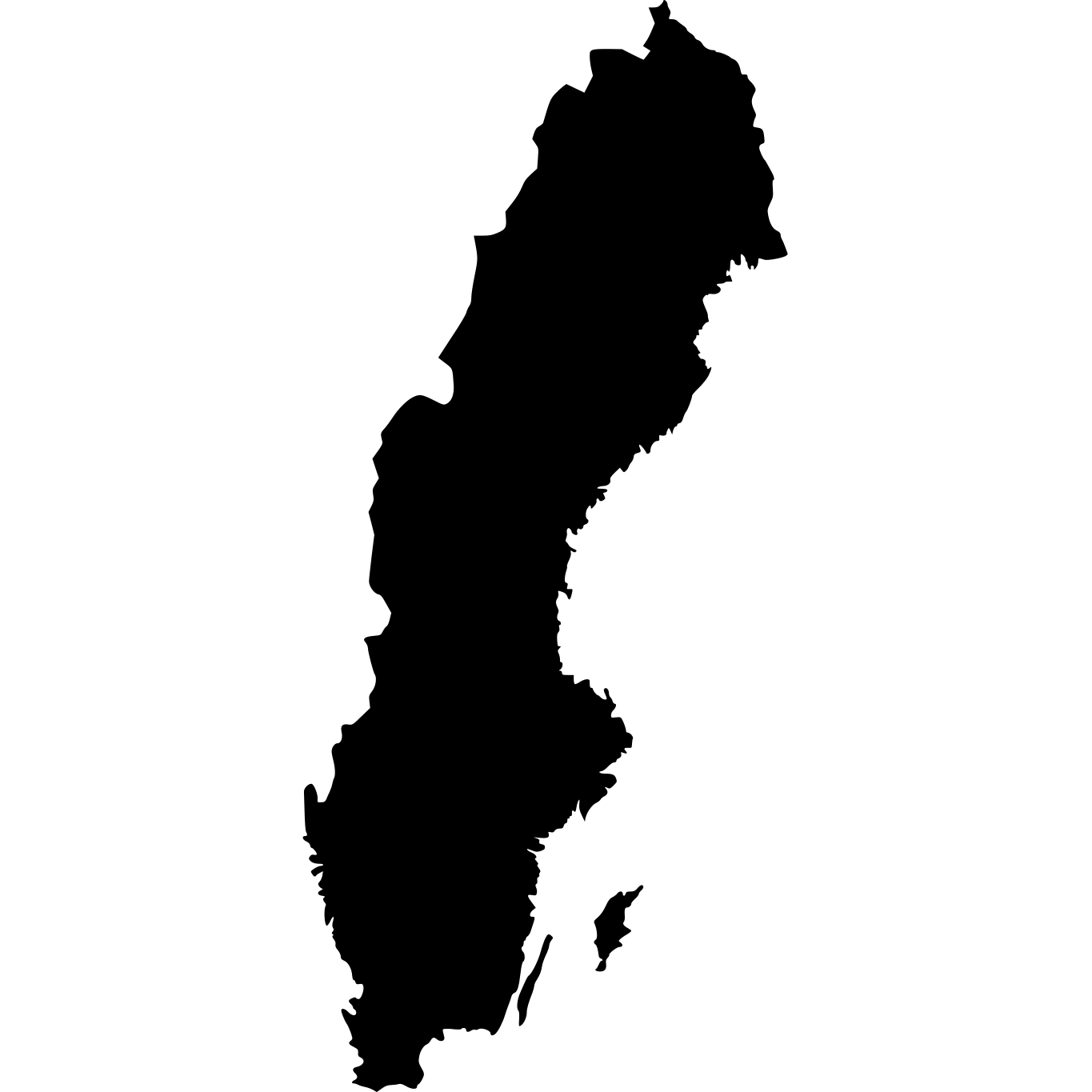
Hydracolor is a Swedish brand

We're dedicated to providing you with the most up-to-date and science-backed ingredient info out there.
The data we've presented on this page has been verified by a member of the SkinSort Team.
Read more about us· Published June 19, 2025 • Added by jnm

