Good Virtues Co. Milk Cleanser With Cica
A face cleanser with 21 ingredients.
This mild cream cleanser is made to cleanse while calming and soothing your skin.
We independently verify ingredients, backed by peer-reviewed research. Suggest an update.
What's inside
Ingredients List
Water
Skin ConditioningGlycerin
Humectant


Cetyl Alcohol
Emollient



Cetearyl Alcohol
Emollient


Isopropyl Myristate
Emollient
Propylene Glycol
Humectant
Centella Asiatica Extract
Cleansing



Nigella Sativa Seed Oil
Emollient

Brassica Oleracea Italica Extract
AstringentAloe Barbadensis Leaf Extract
Emollient
Propanediol
Solvent
Bioflavonoids
Skin ConditioningCetearyl Olivate
Sodium Lauroyl Methyl Isethionate
CleansingSorbitan Olivate
Emulsifying
Xanthan Gum
EmulsifyingParfum
Masking
Butylene Glycol
Humectant
Tetrasodium EDTA
Phenoxyethanol
Preservative
Ethylhexylglycerin
Skin ConditioningWater, Glycerin, Cetyl Alcohol, Cetearyl Alcohol, Isopropyl Myristate, Propylene Glycol, Centella Asiatica Extract, Nigella Sativa Seed Oil, Brassica Oleracea Italica Extract, Aloe Barbadensis Leaf Extract, Propanediol, Bioflavonoids, Cetearyl Olivate, Sodium Lauroyl Methyl Isethionate, Sorbitan Olivate, Xanthan Gum, Parfum, Butylene Glycol, Tetrasodium EDTA, Phenoxyethanol, Ethylhexylglycerin
Benefits
Concerns
Ingredients Explained
Water. It's the most common cosmetic ingredient of all. You'll usually see it at the top of ingredient lists, meaning that it makes up the largest part of the product.
So why is it so popular? Water most often acts as a solvent - this means that it helps dissolve other ingredients into the formulation.
You'll also recognize water as that liquid we all need to stay alive. If you see this, drink a glass of water. Remember to stay hydrated!
Learn more about WaterGlycerin (or glycerol) is a compound naturally found in your skin. It's a powerhouse humectant that pulls water into the stratum corneum.
Topically, glycerin does several things at once:
Your skin makes glycerin on its own (mostly from sebaceous oil breakdown) and shuttles it to your outermost layer of skin, or your epidermis, via aquaporin-3.
Aquaporin-3 is a transporter that is essential for normal skin hydration, elasticity, and repair. Interestingly, mice lacking in AQP3 have dry and less elastic skin that can be fully corrected with glycerin.
This ingredient is non-irritating, plays well with almost every ingredient, and works across all skin types. Typical use is anywhere between 3-10% but can go up to 79% in some leave-on products.
Just know very high concentrations (>40%) can feel tacky in low humidity.
Glycerin is the name for this ingredient in American English. British English uses Glycerol/Glycerine.
Learn more about GlycerinCetyl Alcohol is a fatty alcohol. Fatty Alcohols are most often used as an emollient or to thicken a product.
Its main roles are:
Though it has "alcohol" in the name, it is not related to denatured alcohol or ethyl alcohol.
The FDA allows products labeled "alcohol-free" to have fatty alcohols.
This ingredient may not be fungal acne safe. It is a primary fatty alcohol with a chain length above 12 carbons. A study from 2019 show Malassezia can feed on fatty alcohols in this range, so it may trigger fungal acne in those prone to it.
Learn more about Cetyl AlcoholCetearyl alcohol is a waxy mixture of two fatty alcohols: cetyl alcohol and stearyl alcohol. It is an emollient and emulsifier.
Despite having "alcohol" in its name, it has nothing to do with drying solvent alcohols; the FDA also allows "alcohol-free" products to contain fatty alcohols like this ingredient.
It plays several roles in a formula:
Typical use levels for this ingredient sit around 1-10% and the Cosmetic Ingredient Review Expert Panel has affirmed safety at concentrations up to 25% in leave-on products.
Multiple assessments have found it to be non-irritating and non-sensitizing to most people.
However, there have been some cases of allergic contact dermatitis in patients with chronically compromised skin barriers.
Cetearyl alcohol has a comedogenic rating of 2 and irritancy rating of 1. Both of these numbers come from the 1989 study that used rabbit ears; a "2" means mildly comedogenic and a "1" means low irritancy.
Here's the catch: rabbit skin is more sensitive than human skin and throws a lot of false positives. A 1996 reappraisal found that ingredients rated 1-2 in the rabbit ear tests are generally safe for humans.
Remember comedogenic ratings are unable to assess the entire formula of a product or how it will react on your skin. Just be sure to patch test if you are unsure about certain ingredients.
This ingredient is not fungal acne safe. Cetearyl alcohol is a fatty alcohol with chain lengths that fall within the range that Malassezia can metabolize.
A 2019 study has also observed Malassezia growth in the presence of this ingredient, confirming it to be not-fungal acne safe.
Learn more about Cetearyl AlcoholIsopropyl Myristate is an ester made by combining isopropyl alcohol with myristic acid.
It is primarily an emollient and penetration enhancer that gives products a lightweight, silky feel without the heaviness of oils.
This ingredient is generally considered non-toxic, non-irritating, and has low absorption potential.
You might have heard that this ingredient clogs pores. This reputation comes from the older rabbit ear studies which are more sensitive than human skin to clogging.
Dermatologist Dr. Zoe Draelos has also confirmed in a peer-reviewed paper that products containing comedogenic ingredients are not necessarily comedogenic themselves.
A small subset of people (~2%) may experience contact sensitivity so patch testing is a reasonable idea if you have reactive skin.
Since this ingredient is an ester of myristic acid (a C14 fatty acid), it falls within the carbon chain range that is known to feed Malassezia. This ingredient may not be fungal acne safe.
Learn more about Isopropyl MyristatePropylene Glycol is a synthetic, colorless, odorless liquid that has been a staple in cosmetics for decades. It is a skin conditioning agent, humectant, and solvent.
As a humectant, it draw water to the skin to reduce flaking and restore suppleness. It's also a solvent that helps dissolve other actives and keeps formulas stable across temperature changes.
The CIR Expert Panel has confirmed this ingredient to be nontoxic and clinical studies show no sensitization at cosmetic use concentrations.
True allergic reactions are quite rare: a 15-year retrospective study of 6,751 patients found only 0.31% had a positive reaction (and less than half were considered clinically relevant).
It seemed that when sensitization does occur, it's most commonly linked to topical medication (like corticosteroids) and not cosmetics. Allergic contact dermatitis also appears largely limited to individuals with underlying skin conditions.
Overall, propylene glycol is a well-studied ingredient that most people can tolerate without issue.
Learn more about Propylene GlycolCentella Asiatica Extract (Centella) is one of the most researched botanical extracts in skincare with decades of studies backing its effects on inflammation, collagen, and the skin barrier.
That research keeps pointing back to the same four triterpenoid saponins: Asiaticoside, Madecassoside, Asiatic Acid, and Madecassic Acid.
These compounds allow centella to dial back inflammation, encourage the skin to build and hold onto collagen, support the barrier and hydration, and bring solid antioxidant activity to protect against signs of aging.
Centella also carries a nice supporting cast of Vitamin A, vitamin C, several B vitamins, and amino acids. Put it all together and you get an ingredient that soothes, hydrates, and protects, all at once.
Most of centella's magic comes from the four big compounds (Asiaticoside, Madecassoside, Asiatic Acid, and Madecassic Acid). These are the actives doing the heavy lifting in almost every centella study.
Here is the short version of what they do in the skin:
So it is not just soothing for the sake of soothing. Centella calms the skin AND helps it rebuild.
Just FYI, not all centella on an ingredient list is the same. What you are getting actually depends on the extract:
Fun fact on the ratios: the leaves tend to be richest in Madecassoside and Asiaticoside, and lower in the two acids. The exact amounts shift with where the plant is grown and how it is processed. This means purity really does vary brand to brand.
Centella is one of the most easygoing actives out there.
It layers well with basically everything: niacinamide, hyaluronic acid, peptides, and vitamin C, and also pairs nicely with stronger actives like retinoids and exfoliating acids where it can help take the edge off irritation.
On the safety side, centella and its triterpenes are classified as weak sensitizers, meaning allergic reactions are possible but uncommon.
Patch tests at 1% and 5% came back negative in test panels, and creams at typical use levels did not cause allergic reactions across large groups of people.
But as with any new active, a patch test is still a smart move for very reactive skin.
Centella is widely used because it is effective at low percentages. For context, human safety testing found no meaningful irritation from creams containing centella extract at everyday use levels (the tested amounts were well under 1%).
The irritancy threshold in animal testing was also above 30% (so real-world formulas sit far below anything concerning).
In collagen lab studies, higher concentrations drove more collagen synthesis, so serums built around centella tend to feature it more prominently.
Bottom line: you will find centella working nicely anywhere from a fraction of a percent up to hero-ingredient levels depending on whether it is a supporting soother or the main event.
Fun fact: Centella has been used as a medicine and in food for many centuries. As a medicine, it is used to treat burns, scratches, and wounds.
Learn more about Centella Asiatica ExtractThis ingredient is also known as black seed oil or black cumin. It has emollient, skin conditioning, and perfuming properties.
It is rich in linoleic and oleic acids, making it a great skin hydrator or emollient. Other compounds found in black seed oil include thymoquinone, sterols, and various terpenes; these compounds give it antioxidant, anti-inflammatory, and antimicrobial properties.
Studies show thymoquinone helps reduce oxidative stress and dampens the inflammatory pathways. Combining this with the oils makes this ingredient great for barrier repair and moisturization.
Other studies have found this ingredient to have antimicrobial activity against several acne-causing bacteria.
Learn more about Nigella Sativa Seed OilYou might know Brassica Oleracea Italica as Broccoli. Broccoli is rich in antioxidants.
Broccoli extract is rich in antioxidants. Antioxidants help fight free-radical molecules. These unstable molecules may damage your skin cells. By helping to stabilize them, antioxidants may help with anti-aging. Beta-carotene, vitamin A, and vitamin C are three types of antioxidants found in broccoli.
Broccoli is also rich in fatty acids such as oleic and linoleic acids.
Brassica Oleracea Italica Extract can be extracted from any part of the broccoli plant.
Learn more about Brassica Oleracea Italica ExtractAloe Barbadensis Leaf Extract is a botanical extract pulled from the leaves of aloe vera and one of the most studied plant ingredients in cosmetics.
The inner leaf gel it comes from is mostly water (~99-99.5%) and the remaining fraction is made up of pretty good stuff: polysaccharides, vitamins, phenolics, and enzymes.
Its headline job is hydration.
The star polysaccharide in aloe, acemannan, is a humectant that retains moisture and helps reduce trans-epidermal water loss.
Aloe also has real soothing credentials; it contains anti-inflammatory compounds like bradykinase and C-glucosyl chromone that help calm irritation and redness.
On the repair side, lab work shows that acemannan wakes up your skin's repair cells (fibroblasts), prompting them to multiply and speed up healing.
There's some human data for cosmetic benefit too: a cream containing 10% Aloe Barbadensis leaf extract improved skin hydration and elasticity in a real-use study.
Safety-wise, this ingredient is well-regarded with just one rare downside; there have been some case reports of acute eczema, contact urticaria, and dermatitis in people who applied aloe-derived ingredients topically. Those with a known aloe or Liliaceae sensitivity should patch test.
Typical use levels range widely, from under 1% up to 90%+ depending on the format and the effect you are after.
Learn more about Aloe Barbadensis Leaf ExtractPropanediol is an all-star ingredient. It softens, hydrates, and smooths the skin.
It’s often used to:
Propanediol is not likely to cause sensitivity and considered safe to use. It is derived from corn or petroleum with a clear color and no scent.
Learn more about PropanediolBioflavonoids are secondary metabolites found in plants. They contain antioxidants.
Antioxidants help fight free-radicals. Free-radicals are molecules that may damage your skin cells, such as pollution.
Foods containing high amounts of bioflavonoids include celery, peppers, berries, grapes, citrus fruits, cocoa, and more.
Learn more about BioflavonoidsCetearyl Olivate is a plant-derived emulsifier and texture enhancer. It helps keep the oil and water phases from separating so your formulas stay stable.
You'll likely see it combined with Sorbitan Olivate (together sold as the trade name Olivem 1000). This combination generates a liquid crystal structure that closely resemble the lipid organization of the stratum corneum.
These "skin-like" liquid crystals improve skin barrier integrity and promote the delivery of actives into the skin.
This ingredient is well-tolerated and has no significant sensitization data.
Because it is derived from the fatty acids in olive oil, this ingredient may not be fungal acne safe.
Learn more about Cetearyl OlivateSodium Lauroyl Methyl Isethionate is a gentle, sulfate-free cleansing agent. It's basically a mild "soap" molecule derived from coconut that makes a soft, cream foam and is very soluble in water.
Typical concentration use ranges from ~0.6-10% in rinse off products and only trace amounts (~0.009%) in leave on products.
The Cosmetic Ingredient Review Expert Panel has assessed it and concluded it to be safe as used at these concentrations when formulated to be non-irritating.
Allergy and sensitization risk is low and often when someone reacts to a cleanser it's due to the fragrance or preservatives rather than this ingredient itself.
Learn more about Sodium Lauroyl Methyl IsethionateSorbitan Olivate is created from the fatty acids in olive oil and sorbitol.
This ingredient is an oil in water emulsifier. It helps stabilize a product by preventing oils and waters from separating. Sorbitan Olivate also helps hydrate the skin.
This ingredient is also known as part of Olivem 1000, with Cetearyl Olivate being the other part.
According to a manufacturer, this ingredient helps preserve the natural microbiome of skin. Having a healthy microbiome helps keep our skin healthy and protects against harmful bacteria.
Please note, having a healthy microbiome is different from fungal acne; a healthy microbiome includes small amounts of yeast that normally live on your skin without causing problems.
Fungal acne happens when one type of yeast (Malassezia) grows out of control. This is usually because it's feeding on certain oils or fatty acids. Due to the olive oil base, this ingredient may not be fungal acne safe.
Learn more about Sorbitan OlivateXanthan gum is used as a stabilizer and thickener within cosmetic products. It helps give products a sticky, thick feeling - preventing them from being too runny.
On the technical side of things, xanthan gum is a polysaccharide - a combination consisting of multiple sugar molecules bonded together.
Xanthan gum is a pretty common and great ingredient. It is a natural, non-toxic, non-irritating ingredient that is also commonly used in food products.
Learn more about Xanthan GumParfum is a catch-all term for an ingredient or more that is used to give a scent to products.
Also called "fragrance", this ingredient can be a blend of hundreds of chemicals or plant oils. This means every product with "fragrance" or "parfum" in the ingredients list is a different mixture.
For instance, Habanolide is a proprietary trade name for a specific aroma chemical. When used as a fragrance ingredient in cosmetics, most aroma chemicals fall under the broad labeling category of “FRAGRANCE” or “PARFUM” according to EU and US regulations.
The term 'parfum' or 'fragrance' is not regulated in many countries. In many cases, it is up to the brand to define this term.
For instance, many brands choose to label themselves as "fragrance-free" because they are not using synthetic fragrances. However, their products may still contain ingredients such as essential oils that are considered a fragrance by INCI standards.
One example is Calendula flower extract. Calendula is an essential oil that still imparts a scent or 'fragrance'.
Depending on the blend, the ingredients in the mixture can cause allergies and sensitivities on the skin. Some ingredients that are known EU allergens include linalool and citronellol.
Parfum can also be used to mask or cover an unpleasant scent.
The bottom line is: not all fragrances/parfum/ingredients are created equally. If you are worried about fragrances, we recommend taking a closer look at an ingredient. And of course, we always recommend speaking with a professional.
Learn more about ParfumButylene Glycol (or BG) is used within cosmetic products for a few different reasons:
Overall, Butylene Glycol is a safe and well-rounded ingredient that works well with other ingredients.
Though this ingredient works well with most skin types, some people with sensitive skin may experience a reaction such as allergic rashes, closed comedones, or itchiness.
Learn more about Butylene GlycolTetrasodium EDTA is the salt formed from neutralizing ethylenediamine tetraacetic acid with sodium hydroxide. It is a chelating agent and used to prevent metal ions from binding to other ingredients. This helps keep the product and ingredients stable.
Tetrasodium EDTA comes as a white solid and is soluble in water.
Phenoxyethanol is one of the most widely used preservatives in skincare (and for good reason!).
It has a large spectrum of antimicrobial activity and especially effective bacteria, yeast, and mold while only having a weak effect on your skin's natural microbiome.
On a cellular level, it disrupts the cell membranes of microbes by poking holes that make the cell leak. This shuts down the chemical reactions the microbe needs to make energy so it can no longer survive.
Another perk of this ingredient is that it stays functional across a wide pH range (3-10).
You'll often see it paired with boosters like Ethylhexylglycerin; one study showed that a 1:9 ratio of Ethylhexylglycerin to Phenoxyethanol damages bacterial membranes as effectively as doubling the Phenoxyethanol concentration on its own.
Typical use concentrations range from 0.3-1% depending on the formula, and this ingredient is capped at 1% int the EU.
Safety-wise, the fear mongering does not hold up to the evidence. The EU's Scientific Committee on Consumer Safety and FDA consider it safe as a preservative at up to 1%, including for children of all ages.
Adverse systemic effects only showed up in animal studies at exposures roughly 200x higher than what people get from cosmetics. And despite its very widespread use, this ingredient is a rare sensitizer and allergic reactions are uncommon.
Learn more about PhenoxyethanolEthylhexylglycerin is created from glycerin. It is a multitasker ingredient that:
The CIR Expert Panel found minimal skin absorption or sensitization of any kind in a safety assessment. Though this ingredient is considered well-tolerated, a small number of cases of allergic dermatitis have been published since 2002. Just be sure to patch test if you are unsure.
Industry-reported use ranges from 8% in rinse-off products and 2% in leave-on formulations.
Learn more about EthylhexylglycerinReviews
No written reviews yet. Be the first to review this product.
Recent searches
Search reviews by skin type, ingredient, or keyword.
Where it's from
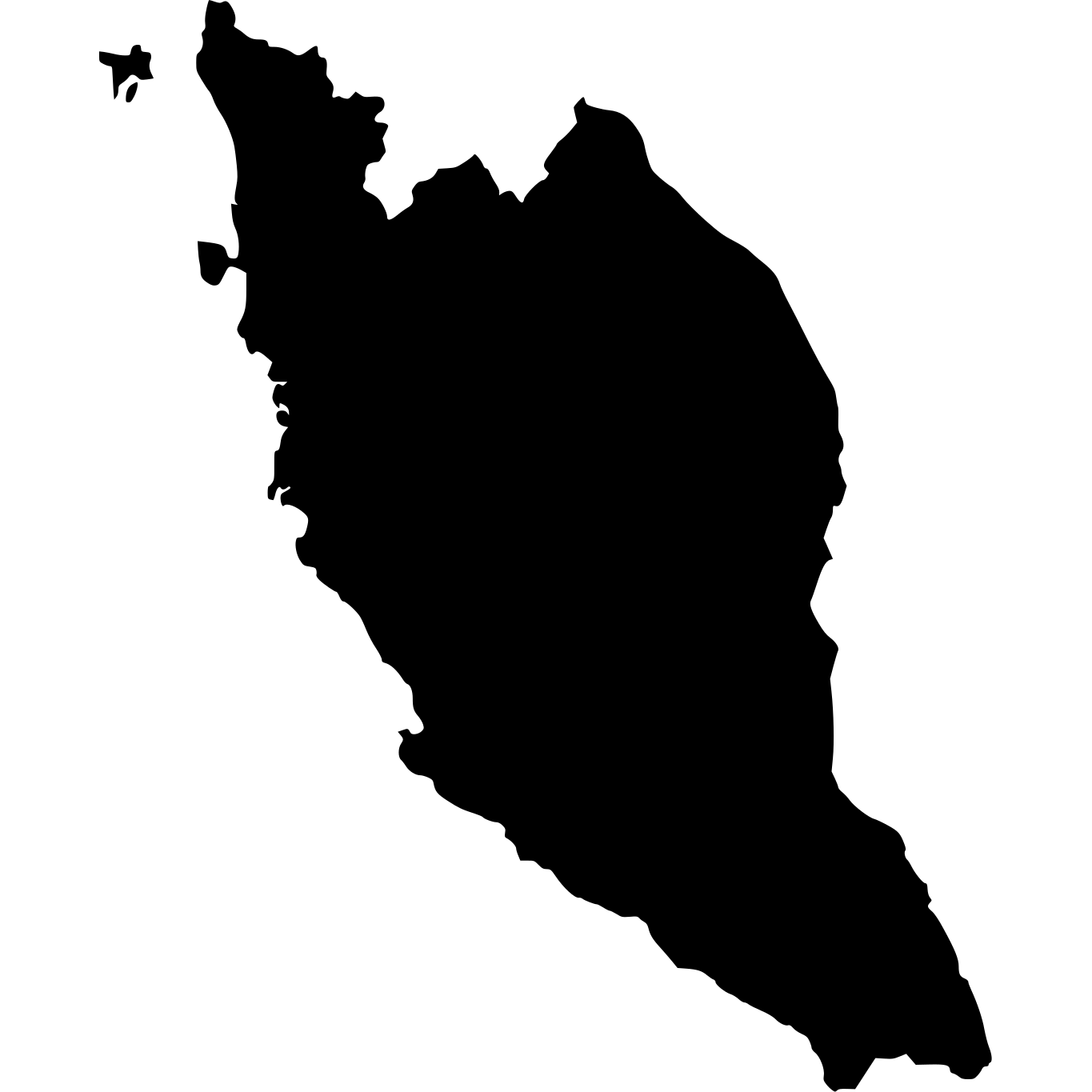
Good Virtues Co. is a Malaysian brand

We're dedicated to providing you with the most up-to-date and science-backed ingredient info out there.
The data we've presented on this page has been verified by a member of the SkinSort Team.
Read more about us· Published May 7, 2026 • Added by Rieza


