Cotril K-Smooth Supreme Keratin Mask
A hair mask with 42 ingredients.
Hair mask with 42 ingredients
We independently verify ingredients, backed by peer-reviewed research. Suggest an update.
What's inside
Ingredients List
Water
Skin ConditioningCetearyl Alcohol
Emollient






Cetyl Esters
Emollient
Behentrimonium Chloride
Preservative
Dimethicone
Emollient

Cocos Nucifera Oil
Masking


Butyrospermum Parkii Butter
Skin Conditioning
Cetrimonium Chloride
Antimicrobial
Amodimethicone
Methicone
Emollient
Trideceth-10
CleansingKeratin
Skin ConditioningPolyquaternium-10
Hydrolyzed Keratin
Humectant
Hydrolyzed Wheat Protein
Skin ConditioningCarbocysteine
AntiseborrhoeicGlycerin
Humectant
Trametes Versicolor Extract
Saccharum Officinarum Extract
MoisturisingSodium PCA
Humectant
Sodium Lactate
Buffering
Arginine
Masking
Aspartic Acid
Masking
PCA
Humectant
Glycine
Buffering
Alanine
Masking
Serine
Masking
Valine
MaskingProline
Skin Conditioning
Threonine
Isoleucine
Skin ConditioningPhenylalanine
Masking
Histidine
Humectant
Citric Acid
Buffering

Dehydroacetic Acid
Preservative
Benzyl Alcohol
Perfuming



Parfum
Masking
Limonene
Perfuming
Hexyl Cinnamal
Perfuming
Linalool
Perfuming
Citronellol
Perfuming
Citral
Perfuming
Water, Cetearyl Alcohol, Cetyl Esters, Behentrimonium Chloride, Dimethicone, Cocos Nucifera Oil, Butyrospermum Parkii Butter, Cetrimonium Chloride, Amodimethicone, Methicone, Trideceth-10, Keratin, Polyquaternium-10, Hydrolyzed Keratin, Hydrolyzed Wheat Protein, Carbocysteine, Glycerin, Trametes Versicolor Extract, Saccharum Officinarum Extract, Sodium PCA, Sodium Lactate, Arginine, Aspartic Acid, PCA, Glycine, Alanine, Serine, Valine, Proline, Threonine, Isoleucine, Phenylalanine, Histidine, Citric Acid, Dehydroacetic Acid, Benzyl Alcohol, Parfum, Limonene, Hexyl Cinnamal, Linalool, Citronellol, Citral
Benefits
Concerns
Ingredients Explained
Water. It's the most common cosmetic ingredient of all. You'll usually see it at the top of ingredient lists, meaning that it makes up the largest part of the product.
So why is it so popular? Water most often acts as a solvent - this means that it helps dissolve other ingredients into the formulation.
You'll also recognize water as that liquid we all need to stay alive. If you see this, drink a glass of water. Remember to stay hydrated!
Learn more about WaterCetearyl alcohol is a waxy mixture of two fatty alcohols: cetyl alcohol and stearyl alcohol. It is an emollient and emulsifier.
Despite having "alcohol" in its name, it has nothing to do with drying solvent alcohols; the FDA also allows "alcohol-free" products to contain fatty alcohols like this ingredient.
It plays several roles in a formula:
Typical use levels for this ingredient sit around 1-10% and the Cosmetic Ingredient Review Expert Panel has affirmed safety at concentrations up to 25% in leave-on products.
Multiple assessments have found it to be non-irritating and non-sensitizing to most people.
However, there have been some cases of allergic contact dermatitis in patients with chronically compromised skin barriers.
Cetearyl alcohol has a comedogenic rating of 2 and irritancy rating of 1. Both of these numbers come from the 1989 study that used rabbit ears; a "2" means mildly comedogenic and a "1" means low irritancy.
Here's the catch: rabbit skin is more sensitive than human skin and throws a lot of false positives. A 1996 reappraisal found that ingredients rated 1-2 in the rabbit ear tests are generally safe for humans.
Remember comedogenic ratings are unable to assess the entire formula of a product or how it will react on your skin. Just be sure to patch test if you are unsure about certain ingredients.
This ingredient is not fungal acne safe. Cetearyl alcohol is a fatty alcohol with chain lengths that fall within the range that Malassezia can metabolize.
A 2019 study has also observed Malassezia growth in the presence of this ingredient, confirming it to be not-fungal acne safe.
Learn more about Cetearyl AlcoholCetyl Esters is an emollient with an interesting backstory: it's a synthetic wax originally designed to be a copy of spermaceti, a waxy material that used to be harvested from whales.
This ingredient delivers the same "velvety" feel without anything animal-derived (usually made from coconut or palm-sourced fatty alcohols/acids).
Chemically, it's a blend of esters from 14-18 fatty acids and alcohols that is a solid at room temperature but melts on contact with skin. It helps soften and smooth the skin while improving the feel and spread of products.
Typical use concentrations range from 1-10% (most commonly 2-5%).
The CIR Expert Panel has concluded it's safe as used and has shown no skin irritation in available studies.
Because it's a blend of fatty acid esters in the chain-length range that Malassezia can feed on, it may not be fungal acne safe.
Learn more about Cetyl EstersThis ingredient is a preservative and often used for it's anti-static properties. You'll most likely see this ingredient in hair conditioners.
It does not cause irritation or sensitization in leave-on products at 1-5%.
Dimethicone is a type of synthetic silicone created from natural materials such as quartz. It is also known as polydimethylsiloxane.
What it does:
Dimethicone comes in different viscosities:
Depending on the viscosity, dimethicone has different properties.
Ingredients lists don't always show which type is used, so we recommend reaching out to the brand if you have questions about the viscosity.
This ingredient is unlikely to cause irritation because it does not get absorbed into skin. However, people with silicone allergies should be careful about using this ingredient.
Note: Dimethicone may contribute to pilling. This is because it is not oil or water soluble, so pilling may occur when layered with products. When mixed with heavy oils in a formula, the outcome is also quite greasy.
Learn more about DimethiconeThis ingredient is also known as coconut oil. It is a plant-derived ingredient with skin conditioning properties.
The fatty acid profile of coconut oil is mostly lauric acid (~54%), followed by capric, caprylic, palmitic, and myristic acids. This profile allows it to penetrate easily into skin, moisturize, and improve dry skin.
A double-blind study confirmed that extra virgin coconut oil is as effective as mineral oil for treating very dry skin. Another study found it outperformed mineral oil for mild to moderate atopic dermatitis in children.
Another study from 2018 found that virgin coconut oil can soothe inflammation and boost key skin barrier proteins. Just know this evidence is still only from lab settings and not human trials.
It has also been shown to reduce Staphylococcus aureus, a bacteria that commonly overgrows in people with eczema.
Clinical testing shows very minimal skin irritation and no evidence of sensitization or phototoxicity.
Coconut oil gets flagged as a "fragrance" because it has a natural mild scent (not because it's a synthetic perfume). The European Cosmetic ingredient database also lists "perfuming" as a function of this ingredient.
Just so you know, the term "fragrance" is completely unregulated. Some brands still use botanical extracts or essential oils in their "fragrance-free" formulas, but regulatory databases technically classify these under "fragrance".
Coconut oil has a tiny and useless bit of natural SPF. Early lab studies clocked it around SPF 7-8 but a more recent study found the real number closer to SPF 1.2. It also offers no meaningful UVA protection (SPF only overs UVB rays).
The comedogenic rating of 4/5 means it has a high potential to clog pores; but it's worth noting that comedogenicity is highly individual and ratings cannot predict how an overall formula will behave on skin.
Since lauric acid is the dominant fatty acid, this ingredient may not be fungal acne safe. The Malassezia yeast feeds on fatty acids with carbon chain lengths between 11-24, and lauric acid falls within these lengths (C12).
Learn more about Cocos Nucifera OilThis ingredient is also known as shea butter. It is a plant-derived extract from the nuts of the Africa shea tree and one of the most well-studied emollients.
Because it has a high concentration of fatty acids (primarily oleic, stearic, and linoleic) it is able to form a protective barrier on the skin's surface. This helps seal in moisture and prevents transepidermal water loss (TEWL).
In vitro research found an increase in skin hydration by 58% and a decrease in TEWL by 37.8% after 24 hours of applying this ingredient (pretty impressive for a single ingredient!).
Besides hydration, shea butter also contains triterpenes that have anti-inflammatory potential. In particule, lupeol cinnamate has shown the highest anti-inflammatory activity in vivo.
Shea butter also contains vitamins A and E which may contribute to antioxidant activity.
While Shea Butter has an SPF rating of about 3-4, it is not a sunscreen replacement.
This ingredient may not be fungal acne safe because its fatty acids fall within the C11-C24 range that the Malassezia yeast can metabolize.
This ingredient shows up on a lot of "pore-clogging" lists but there's no real evidence behind that. It doesn't even have a comedogenic rating from an actual study; the numbers you'll find online come from blogs citing other blogs.
Ratings for other ingredients mostly come from a 1980s rabbit ear test. This test doesn't translate well to human skin or to real products because the ingredient sits at a much lower percentage.
Some people still find it breaks them out. So if that's you, definitely trust your skin. Just know this one's based on experience and not evidence.
Learn more about Butyrospermum Parkii ButterThis ingredient is a preservative, antimicrobial, and emulsifier. It is often used in cosmetics for its ability to cleanse, condition, and reduce static.
Cetrimonium chloride is a quaternary ammonium salt, meaning it has a water-soluble structure.
This water-soluble silicone is used for its hydrating and softening properties. It is used to add a silky feel to skincare products and has great benefits for haircare.
In haircare, this ingredient:
- Adds shine
- Protects color
- Offers thermal protection
- Boosts hair strength
- Does not build up as easily
Methicone is a type of silicone and is a simpler form of dimethicone.
Silicones are used to enhance the texture of products and have emollient properties. Methicone is used to give products a silky texture and improves spreadability.
We don't have a description for Trideceth-10 yet.
Keratin is a protein naturally found in our hair and skin.
In haircare, it has been shown to seal broken cuticles. This can help prevent breakage and split ends.
Polyquaternium-10 is an ammonium salt of hydroxyethylcellulose. It is a white and granular powder used as a film-former and anti-static agent.
This ingredient is commonly found in hair conditioning products. According to a manufacturer, its positive charge makes it great for absorbing hair proteins. The manufacturer also states this ingredient helps with curl retention.
For haircare friends: this ingredient is not a silicone.
Learn more about Polyquaternium-10Hydrolyzed Keratin is derived from keratin. Keratin is a large protein that is naturally found in our hair and skin.
Studies show keratin is able to seal broken hair cuticles, helping to prevent split ends and breakage.
As a humectant, hydrolyzed keratin helps draw moisture from the air to your hair and skin. This helps keep your skin and hair hydrated.
Learn more about Hydrolyzed KeratinThis ingredient is a plant-derived protein made by breaking down wheat proteins into smaller amino acids and peptides. It has skin and hair conditioning properties.
People with known wheat allergy or a history of immediate reactions should be cautious with leave-on products containing hydrolyzed wheat proteins.
We don't have a description for Carbocysteine yet.
Glycerin (or glycerol) is a compound naturally found in your skin. It's a powerhouse humectant that pulls water into the stratum corneum.
Topically, glycerin does several things at once:
Your skin makes glycerin on its own (mostly from sebaceous oil breakdown) and shuttles it to your outermost layer of skin, or your epidermis, via aquaporin-3.
Aquaporin-3 is a transporter that is essential for normal skin hydration, elasticity, and repair. Interestingly, mice lacking in AQP3 have dry and less elastic skin that can be fully corrected with glycerin.
This ingredient is non-irritating, plays well with almost every ingredient, and works across all skin types. Typical use is anywhere between 3-10% but can go up to 79% in some leave-on products.
Just know very high concentrations (>40%) can feel tacky in low humidity.
Glycerin is the name for this ingredient in American English. British English uses Glycerol/Glycerine.
Learn more about GlycerinWe don't have a description for Trametes Versicolor Extract yet.
This ingredient is also called sugarcane extract. It is a moisturizing humectant and has skin soothing properties.
Similar to hyaluronic acid, sugarcane can attract moisture to your skin.
Glycolic acid is a derivative of sugarcane. While glycolic acid is an AHA with exfoliating properties, sugarcane is not an AHA.
A study from 2021 found the compounds in sugarcane extract to have antioxidant, antimicrobial, and anti-inflammatory activity. The study also suggests these compounds can inhibit skin ageing enzymes and promote collagen synthesis.
Learn more about Saccharum Officinarum ExtractSodium PCA (the salt of PCA) is one of the most well-established humectants in skincare.
Why is it so special? Your skin already makes it naturally; it's a natural component of your skin's Natural Moisturizing Factor (NMF), or the mix of water-binding compounds inside your skin cells that keeps things soft and hydrated.
As a cosmetic ingredient, it grabs water and holds it in the upper layers of skin to smooth roughness and ease dehydration.
There's some clinical support for the NMF approach with a study showing that a cream built to mimic the skin's NMF significantly boosted hydration.
Safety-wise, this ingredient non-irritating, non-comedogenic, and non-phototoxic in testing, with minimal skin absorption.
It also works really well with other hydrators like glycerin or hyaluronic acid, and typical usage is somewhere between 0.2-4%.
Learn more about Sodium PCASodium Lactate is the sodium salt of lactic acid, an AHA. It is a humectant and sometimes used to adjust the pH of a product.
This ingredient is part of our skin's NMF, or natural moisturizing factor. Our NMF is essential for the hydration of our top skin layers and plasticity of skin. NMF also influences our skin's natural acid mantle and pH, which protects our skin from harmful bacteria.
High percentages of Sodium Lactate can have an exfoliating effect.
Fun fact: Sodium Lactate is produced from fermented sugar.
Learn more about Sodium LactateArginine is a semi-essential amino acid. This just means our bodies can product a bit on its own, but sometimes needs a little boost from food sources.
It is a part of your skin's natural moisturizing factor (NMF), or the water-loving molecules in your outermost layer of skin (stratum corneum) that keeps everything hydrated and happy.
Here's an interesting thing about Arginine: your skin converts it into urea through the Krebs-Henseleit urea cycle. Urea is one of the most effective humectants your skin naturally produces.
A clinical study showed applying 2.5% arginine hydrochloride to atopic dermatitis skin showed significant urea levels in the stratum corneum and improved moisture in just four weeks.
Arginine is also a precursor to nitric oxide; nitric oxide improves microcirculation and supports wound healing and collagen synthesis.
One study found that an amino acid complex containing Arginine reduced skin irritation, improved hydration, and accelerated skin repair in clinical / in-vivo studies.
Arginine itself is an amino acid and not a fatty acid, oil, or ester. On its own, it's not a direct food source for Malassezia, or the yeast that causes fungal acne.
Learn more about ArginineAspartic Acid is an amino acid that our bodies produce naturally. It is an antioxidant.
Our body uses Aspartic Acid to help build collagen and elastin. It also plays a role in hydrating skin.
PCA is an amino acid derivative and one of the star players in your skin's own Natural Moisturizing Factor (NMF).
The NMF is the built-in cocktail of small molecules that keeps your outer layer of skin hydrated and your body makes it naturally.
This is why it works so well topically; PCA is a humectant that holds water in the stratum corneum and studies link higher skin PCA levels to better hydration + lower water loss. Interestingly, people show more PCA in summer and in normal vs dry skin.
Most of the benefits of this ingredient are related to hydration, softness, and barrier support.
A long-running review found that formulas with at least 2% PCA or its salts improved dry skin over both the short and long term. And the zinc salt is also used for its mild antimicrobial and astringent properties.
The salt forms are more common in cosmetics (like sodium PCA).
This ingredient is compatible with basically everything and pairs well with other humectants like glycerin or hyaluronic acid.
Usage-wise, it's typically used at low percentages (~0.2-2%).
The Cosmetic Ingredient Review Expert Panel has concluded PCA and its salts are safe as used and is non-irritating on skin even at high concentrations.
Learn more about PCAGlycine is the smallest amino acid and a key building block of collagen. It's part if your skin's Natural Moisturizing Factor (NMF), or the water-loving molecules in your outermost layer of skin (stratum corneum) that keeps everything hydrated and happy.
A study from 2022 found that an amino acid complex featuring taurine, arginine, and glycine significantly reduced skin irritation, improved redness, and accelerated the skin repair process.
Alanine is an amino acid and is already found in the human body. Our skin uses alanine to build collagen, elastin, and keratin.
Serine is a non-essential amino acid (your body makes it on its own!). It is a major player in your skin's natural moisturizing factor (NMF), or the water-loving molecules in your outermost layer of skin (stratum corneum) that keeps everything hydrated and happy.
Serine is one of your NMF's most abundant components that works as a skin-identical humectant. Its hydroxyl group grabs onto water molecules to boost hydration without any heaviness or occlusion.
Research on a hydrogel with serine confirmed this serine got delivered to your stratum corneum and demonstrated enhanced skin moisturization.
Interestingly serine also helps your skin produce filaggrin, a protein that keeps your skin barrier strong and used to create collagen.
Learn more about SerineValine is one of the essential amino acids (meaning your body can't make it on its own and has to get it from food).
In skincare, it's usually synthetically-made or pulled from plant proteins like soy.
It's one of the small building blocks that make up your skin's natural moisturizing factor (NMF), or the built-in system that helps skin hold onto water. So its main job in a formula is to give the skin gentle hydration and help it feel more comfortable.
Typical amounts are very tiny: roughly 0.00004%-0.5% in leave on products and up to 1% in rinse-off ones.
The Cosmetic Ingredient Review panel has looked at this ingredient and found no evidence of it being a skin irritant or allergen at cosmetic levels.
Learn more about ValineProline is a non-essential amino acid, meaning your body can make it on its own. In skincare, it is a skin conditioning ingredient that keeps skin soft and hydrated.
It makes up about 23% of the collagen molecule (collagen is the protein responsible for keeping your skin firm) and is involved in your skin's natural hyaluronic acid production. When applied topically, proline can penetrate the skin fairly well due to its small molecular size.
Reviews of this ingredient have found it to be neither a dermal irritant nor a sensitizer.
Fun fact: Proline can be found in protein-rich foods like meat, fish, eggs, and dairy.
Learn more about ProlineThreonine is an amino-acid. It helps hydrate the skin and has antioxidant benefits.
Our skin uses threonine for creating collagen and elastin. Humans are not able to create threonine and must get it through eating foods such as fish, lentils, poultry, sesame seeds, and more.
Isoleucine is an amino acid that helps reinforce our skin barrier. This amino acid plays a role in creating protein for the body.
Fun fact: Isoleucine is found in meat, fish, dairy, legumes, and nuts.
Phenylalanine is an amino acid. It is a skin soothing and hydrating ingredient. Amino acids play a crucial role in wound healing and skin hydration.
This ingredient is also used to help even out skin tone due to its ability to disrupt the melanin production process.
Two structures of phenylalanine exist: L-phenylalanine and D-phenylalanine. L-phenylalanine is essential, this means our bodies cannot produce it naturally and we must get it from foods. Our bodies convert D-phenylalanine to neurotransmitters, and D-phenylalanine is found in our bodies naturally.
Some foods that contain L-phenylalanine include eggs, soybeans, beef, milk.
Learn more about PhenylalanineHistidine is a semi-essential amino acid used by our bodies to create protein. It has humectant and skin conditioning properties.
Our bodies use histidine to create filaggrin - filaggrin is a structural protein that the skin uses in maintaining skin barrier.
One study found histidine and carnosine to be a dynamic duo for your skin:
Oral histidine has also been found to help with filaggrin-deficit skin disorders such as atopic dermatitis.
Why is it considered a semi-essential amino acid? This is because adults are able to create it but children must get it from their diet.
Learn more about HistidineCitric Acid is an alpha hydroxy acid (AHA) naturally found in citrus fruits like oranges, lemons, and limes.
Like other AHAs, citric acid can exfoliate skin by breaking down the bonds that hold dead skin cells together. This helps reveal smoother and brighter skin underneath.
However, this exfoliating effect only happens at high concentrations (20%) which can be hard to find in cosmetic products.
Due to this, citric acid is usually included in small amounts as a pH adjuster. This helps keep products slightly more acidic and compatible with skin's natural pH.
In skincare formulas, citric acid can:
While it can provide some skin benefits, research shows lactic acid and glycolic acid are generally more effective and less irritating exfoliants.
Most citric acid used in skincare today is made by fermenting sugars (usually from molasses). This synthetic version is identical to the natural citrus form but easier to stabilize and use in formulations.
Rosacea skin has a lower threshold for acids generally, with 62.5% of rosacea subjects in one study reacting to lactic acid in a sting test. This is why we mark citric acid as a potential rosacea trigger.
However, this ingredient shows up as a pH adjuster or chelator at roughly 0.1-1% in many products. These low levels are unlikely to be an issue for rosacea skin and becomes a potential trigger at exfoliating concentrations (20%). Because everybody's skin is unique, we recommend a patch test if you are unsure.
Learn more about Citric AcidDehydroacetic Acid is a synthetic preservative that keeps your products safe from microbes.
As an organic acid, it penetrates microbial cell walls and disrupts cellular metabolism. This makes it effective against bacteria, yeast, and mold.
It is effective at low concentrations (<0.6%). Clinical studies have found it to be non-irritating, non-sensitizing, and non-photosensitizing.
Learn more about Dehydroacetic AcidBenzyl Alcohol is an aromatic alcohol with several roles: it's a preservative, solvent, and mild fragrance component with a floral scent.
This ingredient has been deemed safe for use in cosmetic formulations at concentrations up to 5%, and up to 10% in hair dyes. You'll typically see 0.5-2% in most rinse-off or leave-on products.
As a preservative, it works by disrupting the membrane of microbial proteins. This helps keep bacteria and fungi from growing in your products.
The sensitization picture is actually quite assuring as well:of nearly 71,000 patients patch tested with benzyl alcohol, only 0.21% showed a positive reaction with most of them being weakly positive.
This led researchers to conclude that benzyl alcohol cannot be regarded as a significant contact allergen.
It is worth noting this ingredient is classified as one of the EU's regulated fragrance allergens and restricted to 1% in finished products.
Labels must also declare it in concentrations above 0.001% in leave-on products and 0.01% in rinse-off products.
At concentrations around 5%, localized redness and itching can appear as a direct irritant response and not as a true allergic reaction.
Learn more about Benzyl AlcoholParfum is a catch-all term for an ingredient or more that is used to give a scent to products.
Also called "fragrance", this ingredient can be a blend of hundreds of chemicals or plant oils. This means every product with "fragrance" or "parfum" in the ingredients list is a different mixture.
For instance, Habanolide is a proprietary trade name for a specific aroma chemical. When used as a fragrance ingredient in cosmetics, most aroma chemicals fall under the broad labeling category of “FRAGRANCE” or “PARFUM” according to EU and US regulations.
The term 'parfum' or 'fragrance' is not regulated in many countries. In many cases, it is up to the brand to define this term.
For instance, many brands choose to label themselves as "fragrance-free" because they are not using synthetic fragrances. However, their products may still contain ingredients such as essential oils that are considered a fragrance by INCI standards.
One example is Calendula flower extract. Calendula is an essential oil that still imparts a scent or 'fragrance'.
Depending on the blend, the ingredients in the mixture can cause allergies and sensitivities on the skin. Some ingredients that are known EU allergens include linalool and citronellol.
Parfum can also be used to mask or cover an unpleasant scent.
The bottom line is: not all fragrances/parfum/ingredients are created equally. If you are worried about fragrances, we recommend taking a closer look at an ingredient. And of course, we always recommend speaking with a professional.
Learn more about ParfumLimonene is the compound that gives citrus peel its smell.
In skincare, it shows up as a standalone fragrance ingredient or as a natural compound of citrus and other essential oils.
You'll typically see this ingredient used in very small amounts; anything above 0.001% in a leave-on product or 0.01% in a rinse-off has to be named on the label in the EU. The citrus oils that carry it sit around 0.5-1% in a finished formula.
Fresh limonene is a weak allergen; the real issue is that it slowly reacts with air and then breaks down from oxidation to create hydroperoxides (which are strong sensitizers). This is why suppliers are required to keep the peroxide value below 20 mmol.
Positive reactions in people being investigated for eczema vary:
It's worth skipping if you have a known fragrance allergy or a compromised barrier, but the risk is low for most people.
Older or long-opened products are also more likely to bother you than fresh ones due to oxidation.
Learn more about LimoneneHexyl Cinnamal is a fragrance ingredient with a similar scent to jasmine. It can be naturally found in chamomile essential oil.
This ingredient is a known EU allergen and may sensitize the skin. The EU requires this ingredient to be listed separately on an ingredients list.
Hexyl Cinnamal is not water soluble but is soluble in oils.
Learn more about Hexyl CinnamalLinalool is a small, naturally occurring scent molecule found in plants like lavender, coriander, bergamot, and more.
It is one of the two most-used fragrance ingredients in cosmetics and added purely for smell. Since it's not used for a skin benefit, there's no "effective dose". Concentration depends on the fragrance load of the product.
The EU requires it to be named on the label above 0.001% in leave-on and 0.01% in rinse-off products.
Fresh linalool is a weak sensitizer but air exposure turns some of it into hydroperoxides, which are strong sensitizers. Those oxidation products are the actual allergy concern.
Patch-test clinics see positive reactions to linalool hydroperoxides in about 4% to 12% of dermatitis patients depending on country and test concentration.
Resassuringly, one analytical study found hydroperoxide levels in real fragranced products to be orders of magnitude below what induced sensitization in animal studies with no evidence of oxidation building up during normal storage.
The practical takeaway is that linalool is fine for most people but worth avoiding if you have a confirmed fragrance contact allergy or a badly compromised barrier.
Products stored a long time after opening are also the high-risk scenario since that is when oxidation happens.
The scent of linalool is described as floral, spicy tropical, and citrus-like.
Learn more about LinaloolCitronellol is used to add fragrance/parfum to a product. It is often derived from plants such as roses. In fact, it can be found in many essential oils including geranium, lavender, neroli, and more. The scent of Citronellol is often described as "fresh, grassy, and citrus-like".
Since the Citronellol molecule is already unstable, Citronellol becomes irritating on the skin when exposed to air.
Citronellol is a modified terpene. Terpenes are unsaturated hydrocarbons found in plants. They make up the primary part of essential oils.
Citronellol is not able to be absorbed into deeper layers of the skin. It has low permeability,
Citronellol is also a natural insect repellent.
Learn more about CitronellolCitral is the molecule responsible for the fresh lemon scent in lemon, lime, and lemongrass. It is a fragrance ingredient that can be created from plant essential oils or synthetically.
Though Citral has documented antimicrobial activity against acne bacteria (which is where the marketing claims about it being good for acne-prone skin originate), real formulas use it at fragrance-level concentrations under 1% so there's likely no skin benefit.
You should know this ingredient is a known EU fragrance allergen.
Animal studies classifies this ingredient as a weak-to-moderate skin sensitizer and clinical patch testing on eczema patients confirmed it to be both a contact allergen and irritant.
The term 'citral' is a collective term for two geometric isomers: geranial/Citral A and neral/Citral B.
The term 'fragrance' is not regulated in many countries. In many cases, it is up to the brand to define this term. For instance, many brands choose to label themselves as "fragrance-free" because they are not using synthetic fragrances. However, their products may still contain ingredients such as essential oils that are considered a fragrance.
Learn more about CitralReviews
No written reviews yet. Be the first to review this product.
Recent searches
Search reviews by skin type, ingredient, or keyword.
Where it's from
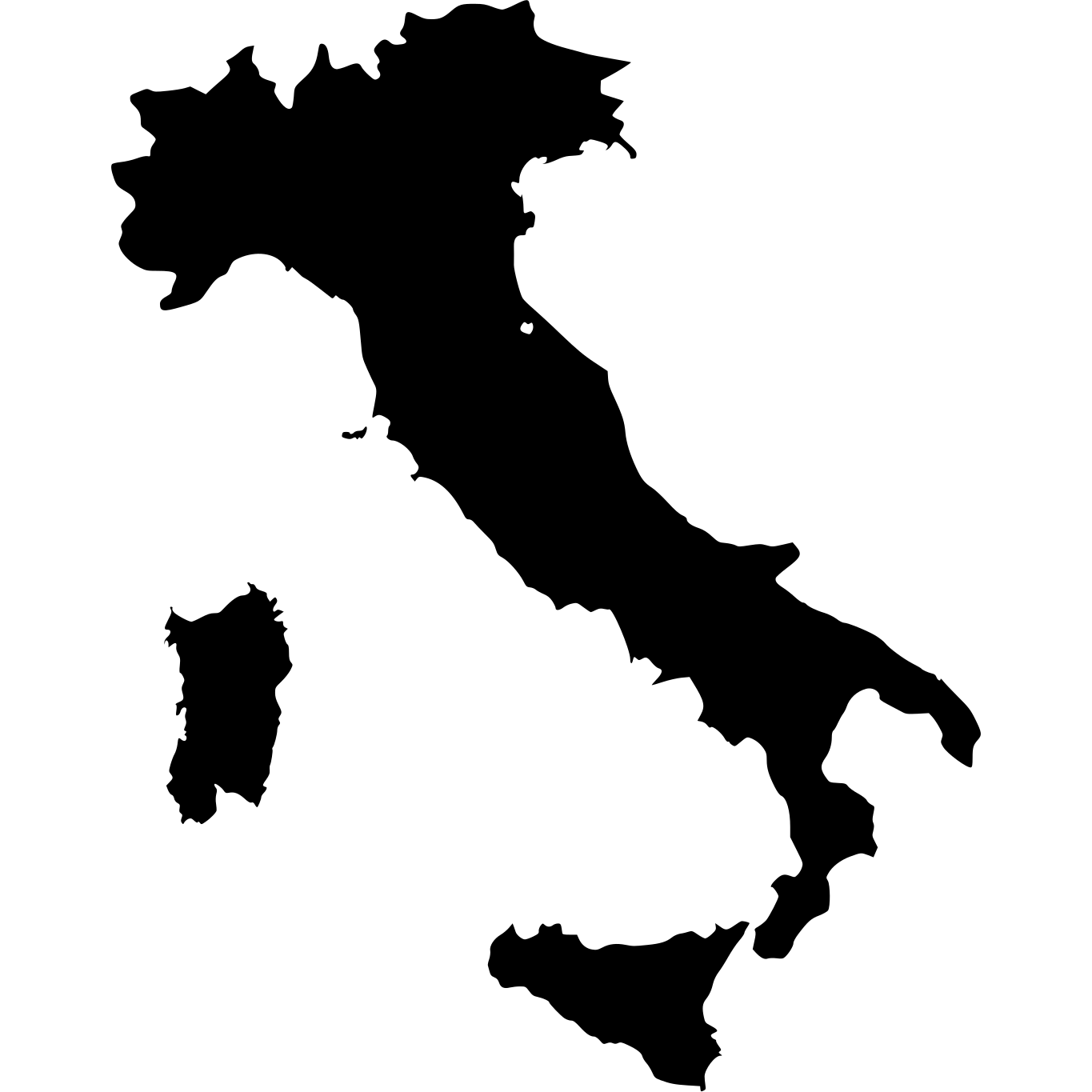
Cotril is a Italian brand
Often compared with

We're dedicated to providing you with the most up-to-date and science-backed ingredient info out there.
The data we've presented on this page has been verified by a member of the SkinSort Team.
Read more about us· Published January 26, 2025 • Added by BlackCat808


