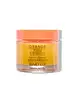
This smoothing exfoliator is formulated around Ascorbic Acid and Lactic Acid to refine skin texture and brighten dull-looking skin.
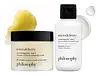
This smoothing exfoliator is formulated around Lactic Acid and Salicylic Acid to refine skin texture and brighten dull-looking skin.

What's inside
What's inside
 Key Ingredients
Benefits
Concerns
Ingredients Side-by-side
PEG-8
HumectantButylene Glycol
Humectant

Glyceryl Stearate Se
Emulsifying




Sodium Bicarbonate
Abrasive
Silica
Abrasive

Zea Mays Oil
Emulsifying

Citrus Aurantium Dulcis Peel Oil
Masking
Steareth-20
CleansingAscorbic Acid
Antioxidant






Helianthus Annuus Seed Oil
Emollient
Beta-Carotene
Skin ConditioningGlycine Soja Oil
Emollient
Daucus Carota Sativa Seed Oil
Emollient
Lactic Acid
Buffering

Tocopherol
Antioxidant

Oryza Sativa Bran Extract
Skin Conditioning
Rosmarinus Officinalis Leaf Extract
AntimicrobialCitrus Limon Peel Oil
Masking

Magnesium Ascorbyl Phosphate
Antioxidant
Ascorbyl Palmitate
Antioxidant
Ethylhexylglycerin
Skin ConditioningPhenoxyethanol
Preservative
PEG-8, Butylene Glycol, Glyceryl Stearate Se, Sodium Bicarbonate, Silica, Zea Mays Oil, Citrus Aurantium Dulcis Peel Oil, Steareth-20, Ascorbic Acid, Helianthus Annuus Seed Oil, Beta-Carotene, Glycine Soja Oil, Daucus Carota Sativa Seed Oil, Lactic Acid, Tocopherol, Oryza Sativa Bran Extract, Rosmarinus Officinalis Leaf Extract, Citrus Limon Peel Oil, Magnesium Ascorbyl Phosphate, Ascorbyl Palmitate, Ethylhexylglycerin, Phenoxyethanol
PEG-6
HumectantSodium Bicarbonate
Abrasive
Oleth-20
CleansingGlyceryl Stearate Se
Emulsifying
Silica
Abrasive
Tocopheryl Acetate
Antioxidant
1,2-Hexanediol
Skin Conditioning
Caprylyl Glycol
Emollient
Magnesium Ascorbyl Phosphate
Antioxidant
Helianthus Annuus Seed Oil
Emollient
Tocopherol
Antioxidant
Beta-Carotene
Skin ConditioningRetinyl Palmitate
Skin Conditioning
Ethylhexyl Palmitate
Emollient
Parfum
Masking
Palmitoyl Oligopeptide
Cleansing
Tribehenin
Emollient
Sorbitan Isostearate
Emulsifying
Limonene
Perfuming
BHT
Antioxidant
Water
Skin ConditioningLactic Acid
Buffering
Hydroxyethylcellulose
Emulsion StabilisingSalicylic Acid
Masking

Linoleamidopropyl Pg-Dimonium Chloride Phosphate
Polyquaternium-10
PEG-6, Sodium Bicarbonate, Oleth-20, Glyceryl Stearate Se, Silica, Tocopheryl Acetate, 1,2-Hexanediol, Caprylyl Glycol, Magnesium Ascorbyl Phosphate, Helianthus Annuus Seed Oil, Tocopherol, Beta-Carotene, Retinyl Palmitate, Ethylhexyl Palmitate, Parfum, Palmitoyl Oligopeptide, Tribehenin, Sorbitan Isostearate, Limonene, BHT, Water, Lactic Acid, Hydroxyethylcellulose, Salicylic Acid, Linoleamidopropyl Pg-Dimonium Chloride Phosphate, Polyquaternium-10
Ingredients Explained
These ingredients are found in both products.
Ingredients higher up in an ingredient list are typically present in a larger amount.
Beta-Carotene is a fat-soluble carotenoid pigment. It is the thing responsible for giving carrots, sweet potatoes, apricots, and other orange-yellow produce their color.
It is a potent antioxidant that neutralizes free radicals (mainly reactive oxygen species) that come at your skin from both the environment and internal processes.
When applied topically, beta-carotene accumulates in your outermost layer of skin and acts as a first-line defense against photo-oxidative stress.
Research has established that carotenoids like beta-carotene boosts your skin's innate resistance against UVB induced erythema. Please know this does not mean beta-carotene can replace your sunscreen.
Newer studies show it can also help inhibit molecular markers of oxidative stress like MMP-1 and MMP-9, enzymes that break down collagen.
In some cases, it can be used as a cosmetic colorant as well (INCI name: CI 40800).
Beta-carotene pairs well with other antioxidants like Vitamin E and Vitamin C for a synergistic effect.
Learn more about Beta-CaroteneGlyceryl Stearate SE is a self-emulsifying (SE) form of Glyceryl Stearate. It comes with a small amount of soap (usually potassium or sodium stearate) that gives it the "SE" part.
That soap lets it pull oil and water together on its own which is why it shows up as an emulsifier, thickener, and emollient.
Industry survey data shows this ingredient is used around 1-5% but Glyceryl Stearate goes as high at 17% in a leave-on deodorant.
Safety-wise, it's pretty boring: it's been deemed safe for topical use in 1982 and again most recently in 2021 by the CIR. Human repeat insult patch tests come back non-irritating, non-sensitizing, non-phototoxic, and non-photoallergenic.
This ingredient does carry a comedogenic rating of 3 from the old rabbit-ear assay. Just remember testing finished products in humans showed that formulas built with "comedogenic" ingredients are not necessarily comedogenic themselves. It's worth patch testing if you're breakout prone, and always listen to your skin.
The Malassezia yeast can potentially metabolize the stearic acid in this ingredient, so it may not be fungal acne safe.
Allergy is rare: a 310-patient patch test study of common emulsifiers found this ingredient was not a meaningful reactor. Isolated case reports do exist so a true contact allergy is possible but uncommon.
Learn more about Glyceryl Stearate SeHelianthus Annuus Seed Oil is a plant oil derived from the seeds of a sunflower.
It is rich in fatty acids, primarily linoleic acid and oleic acid. This gives it emollient and skin conditioning properties.
The reason this ingredient is so effective is because it forms a thin film on the skin that reduces transepidermal water loss (TEWL) while supplying linoleic acid to the stratum corneum to improve barrier strength.
The high linoleic acid content is particularly noteworthy for acne-prone skin.
Research suggests that acne-prone skin tends to be deficient in linoleic acid in sebum. Topical application may help replenish this to support a healthier follicular environment and less comedone-promoting sebum.
One randomized study found sunflower seed oil preserved skin barrier integrity in adult volunteers with and without atopic dermatitis (outperforming olive oil).
This ingredient is well-studied, gentle, and an effective emollient suitable for most skin types.
On fungal acne: This ingredient may not be Fungal acne (Malassezia folliculitis) safe. This is because it contains fatty acids with carbon chain lengths in the C11-C24 range.
Learn more about Helianthus Annuus Seed OilLactic Acid is another well-loved alpha hydroxy acid (AHA). It is gentler than glycolic acid but still highly effective.
Its main role is to exfoliate the surface of the skin by loosening the “glue” that holds dead skin cells together. Shedding those old cells leads to smoother, softer, and more even-toned skin.
Because lactic acid molecules are larger than glycolic acid, they don’t penetrate as deeply. This means they’re less likely to sting or irritate, making it a great choice for beginners or those with sensitive skin.
Like glycolic acid, it can:
Lactic acid also acts as a humectant (like hyaluronic acid). It can draw water into the skin to improve hydration and also plays a role in the skin's natural moisturizing factor (NMF) in the form of sodium lactate.
Studies show it can boost ceramide production to strengthen the skin barrier and even help balance the skin’s microbiome.
To get results, choose products with a pH between 3-4.
Lower strengths (5-12%) focus on surface exfoliation; higher strengths (12% and up) can reach deeper in the dermis (deeper, supportive layer) to improve skin texture and firmness over time.
Though it was originally derived from milk, most modern lactic acid used in skincare is vegan. It is made through non-dairy fermentation to create a bio-identical and stable form suitable for all formulations.
When lactic acid shows up near the end of an ingredient list, it usually means the brand added just a tiny amount to adjust the product’s pH.
Legend has it that Cleopatra used to bathe in sour milk to help reduce wrinkles.
Lactic acid is truly a gentle multitasker: it exfoliates, hydrates, strengthens, and brightens. It's a great ingredient for giving your skin a smooth, glowing, and healthy look without the harshness of stronger acids.
Read more about some other popular AHA's here:
Learn more about Lactic AcidMagnesium Ascorbyl Phosphate (MAP) is a water-soluble form of Vitamin C. It is used in skincare because it tends to be more formulation friendly than pure vitamin C (ascorbic acid).
According to research, MAP has three major benefits:
While MAP is gentler on the skin than ascorbic acid, it is thought to be less easily absorbed into the skin.
In a well-known absorption study, pure vitamin C increased skin vitamin C levels when formulated correctly, but derivatives like MAP did not in that experiment. This suggests MAP may not always convert into active vitamin C in the skin.
Due to MAP's stability up to a pH level of 7, it is more stable to air and sunlight exposure than ascorbic acid. The best pH range for MAP is between 5 and 6.
Learn more about Magnesium Ascorbyl PhosphateSilica, also known as silicon dioxide, is a naturally occurring mineral. It is used as a fine, spherical, and porous powder in cosmetics.
Though it has exfoliant properties, the function of silica varies depending on the product.
The unique structure of silica enhances the spreadability and adds smoothness, making it a great texture enhancer.
It is also used as an active carrier, emulsifier, and mattifier due to its ability to absorb excess oil.
In some products, tiny microneedles called spicules are made from silica or hydrolyzed sponge. When you rub them in, they lightly polish away dead skin layers and enhance the penetration of active ingredients.
Learn more about SilicaSodium Bicarbonate has a more famous name: Baking soda.
In cosmetics, it is used to adjust the acidity. Due to its white crystalline solid form, it can also be an abrasive (exfoliator).
This ingredient is water-soluble.
Learn more about Sodium BicarbonateTocopherol is a fat-soluble antioxidant known as Vitamin E.
You'll find this ingredient in the vast majority of skincare (for good reason). It works to neutralize free radicals, or unstable molecules generated by UV exposure, pollution, and other environmental stressors, before they can cause oxidative damage to your skin cells.
Topically applied tocopherol has been shown to protect against UV damage by ramping up the skin's own natural defense enzymes.
It also acts as a skin conditioning agent; some studies show that regular topical use can improve the skin's water-binding capacity over 2-4 weeks.
This ingredient is especially loved for being a team player. When combined with Vitamin C, the photoprotective effect of both ingredients roughly doubles and the combo also helps reduce UV-induced DNA damage.
This ingredient has some brightening potential but it's more of a prevention ingredient than spot-fader. Cell studies show it can slow down melanin production but it's worth noting that it's not the most powerful brightener out there.
In formulations, it also serves as a stabilizer that helps protect other oxidation-prone ingredients from degrading.
Concentrations usually range from 0.1-1% in most leave-on products.
Learn more about Tocopherol

