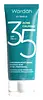
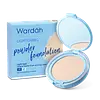
Wardah UV Shield Acne Calming Sunscreen Moisturizer SPF 35 PA+++ Versus Wardah Lightening Powder Foundation
This chemical sunscreen covers most of the UV range, lighter on the deep UVA that drives aging.

What's inside
What's inside
 Key Ingredients
Benefits
Concerns
Ingredients Side-by-side
Water
Skin ConditioningEthylhexyl Methoxycinnamate
UV Absorber


Niacinamide
Smoothing











Butyl Methoxydibenzoylmethane
UV Absorber
Aluminum Starch Octenylsuccinate
Absorbent
Phenoxyethanol
Preservative
Cetearyl Olivate


Propanediol
Solvent
Butylene Glycol
Humectant
Octocrylene
UV Absorber
Acrylates/C10-30 Alkyl Acrylate Crosspolymer
Emulsion StabilisingSorbitan Olivate
Emulsifying
Polymethyl Methacrylate
Aminomethyl Propanol
BufferingAllantoin
Skin Conditioning
Panthenol
Skin Conditioning
Salicylic Acid
Masking

Xanthan Gum
EmulsifyingTriethylene Glycol
Masking

Ethylhexyl Triazone
UV Absorber
Tetrasodium EDTA
ChelatingLecithin
Emollient
BHT
Antioxidant
Water, Ethylhexyl Methoxycinnamate, Niacinamide, Butyl Methoxydibenzoylmethane, Aluminum Starch Octenylsuccinate, Phenoxyethanol, Cetearyl Olivate, Propanediol, Butylene Glycol, Octocrylene, Acrylates/C10-30 Alkyl Acrylate Crosspolymer, Sorbitan Olivate, Polymethyl Methacrylate, Aminomethyl Propanol, Allantoin, Panthenol, Salicylic Acid, Xanthan Gum, Triethylene Glycol, Ethylhexyl Triazone, Tetrasodium EDTA, Lecithin, BHT
Mica
Cosmetic ColorantTalc
Abrasive
Aluminum Starch Octenylsuccinate
Absorbent
Dimethicone
Emollient
Titanium Dioxide
Cosmetic Colorant
Diisostearyl Malate
EmollientPolymethyl Methacrylate
Dimethiconol Stearate
EmollientTriethoxycaprylylsilane
Phenoxyethanol
Preservative
Silica
Abrasive
Ethylhexylglycerin
Skin ConditioningHydrogen Dimethicone
Aluminum Hydroxide
EmollientIsopropyl Titanium Triisostearate
Emollient
Methicone
Emollient
Parfum
Masking
Tocopheryl Acetate
Antioxidant
Glycyrrhiza Glabra Root Extract
Bleaching
Tocopherol
Antioxidant
CI 77891
Cosmetic ColorantCI 77492
Cosmetic ColorantCI 77491
Cosmetic ColorantCI 77499
Cosmetic ColorantMica, Talc, Aluminum Starch Octenylsuccinate, Dimethicone, Titanium Dioxide, Diisostearyl Malate, Polymethyl Methacrylate, Dimethiconol Stearate, Triethoxycaprylylsilane, Phenoxyethanol, Silica, Ethylhexylglycerin, Hydrogen Dimethicone, Aluminum Hydroxide, Isopropyl Titanium Triisostearate, Methicone, Parfum, Tocopheryl Acetate, Glycyrrhiza Glabra Root Extract, Tocopherol, CI 77891, CI 77492, CI 77491, CI 77499
Reviews
Ingredients Explained
These ingredients are found in both products.
Ingredients higher up in an ingredient list are typically present in a larger amount.
Aluminum Starch Octenylsuccinate is a synthetic powder used as an absorbent, thickener, and anti-caking agent.
As an absorbent, it is great at mattifying skin by soaking up the oil. This is why you'll find it in a range of products from makeup to moisturizers.
This ingredient is considered a modified starch. Starch can also be found naturally in plants.
One study from 1991 found that 5% of this ingredient enhanced titanium dioxide SPF by as much as 40%. The study found 1% titanium dioxide had a 5.6 SPF and adding 5% of aluminum starch octenylsuccinate boosted it to an SPF of 8.1
Although “aluminum” in an ingredient name can raise red flags for some consumers, the form and usage context matter significantly. For typical topical applications, there is no substantial evidence of health risks - such as cancer, neurotoxicity, or systemic “aluminum overload.”
Learn more about Aluminum Starch OctenylsuccinatePhenoxyethanol is one of the most widely used preservatives in skincare (and for good reason!).
It has a large spectrum of antimicrobial activity and especially effective bacteria, yeast, and mold while only having a weak effect on your skin's natural microbiome.
On a cellular level, it disrupts the cell membranes of microbes by poking holes that make the cell leak. This shuts down the chemical reactions the microbe needs to make energy so it can no longer survive.
Another perk of this ingredient is that it stays functional across a wide pH range (3-10).
You'll often see it paired with boosters like Ethylhexylglycerin; one study showed that a 1:9 ratio of Ethylhexylglycerin to Phenoxyethanol damages bacterial membranes as effectively as doubling the Phenoxyethanol concentration on its own.
Typical use concentrations range from 0.3-1% depending on the formula, and this ingredient is capped at 1% int the EU.
Safety-wise, the fear mongering does not hold up to the evidence. The EU's Scientific Committee on Consumer Safety and FDA consider it safe as a preservative at up to 1%, including for children of all ages.
Adverse systemic effects only showed up in animal studies at exposures roughly 200x higher than what people get from cosmetics. And despite its very widespread use, this ingredient is a rare sensitizer and allergic reactions are uncommon.
Learn more about PhenoxyethanolThis ingredient is also known as PMMA. It is a polymer microsphere, composed of tiny, perfectly spherical particles formed from repeating units.
In cosmetics, PMMA is mainly used to give a soft or blurring effect. The transparent particles are able to scatter light and help reduce the appearance of fine-lines and imperfections.
PMMA is also able to enhance the texture of products by add a smooth feel.
Learn more about Polymethyl Methacrylate

