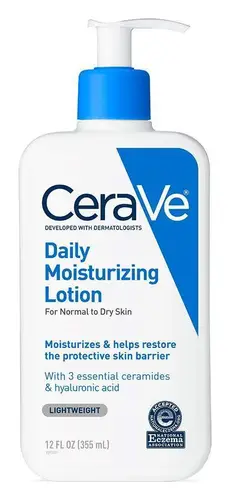
What's inside
What's inside
 Key Ingredients
Benefits
Concerns
Ingredients Side-by-side
Water
Skin ConditioningPetrolatum
Emollient



Stearic Acid
Cleansing

Paraffinum Liquidum
Emollient
Glycerin
Humectant

Glyceryl Stearate
Emollient
Cetyl Alcohol
Emollient

Theobroma Cacao Seed Butter
Emollient

Potassium Hydroxide
BufferingParfum
Masking

Xanthophylls
Skin ConditioningMethylparaben
Preservative


DMDM Hydantoin
Preservative
Propylparaben
Preservative
Disodium EDTA
ChelatingXanthan Gum
EmulsifyingCaramel
Cosmetic ColorantMdm Hydantoin
Antimicrobial
Butyrospermum Parkii Butter
Skin Conditioning
Dm Hydantoin
Potassium Carbonate
BufferingTocopherol
Antioxidant





Benzyl Benzoate
Antimicrobial
Butylphenyl Methylpropional
Perfuming
Coumarin
Perfuming
Hexyl Cinnamal
Perfuming
Hydroxycitronellal
Perfuming
Limonene
Perfuming
Linalool
Perfuming
Water, Petrolatum, Stearic Acid, Paraffinum Liquidum, Glycerin, Glyceryl Stearate, Cetyl Alcohol, Theobroma Cacao Seed Butter, Potassium Hydroxide, Parfum, Xanthophylls, Methylparaben, DMDM Hydantoin, Propylparaben, Disodium EDTA, Xanthan Gum, Caramel, Mdm Hydantoin, Butyrospermum Parkii Butter, Dm Hydantoin, Potassium Carbonate, Tocopherol, Benzyl Benzoate, Butylphenyl Methylpropional, Coumarin, Hexyl Cinnamal, Hydroxycitronellal, Limonene, Linalool
Water
Skin ConditioningGlycerin
Humectant
Cetearyl Alcohol
Emollient
Petrolatum
Emollient
Stearic Acid
Cleansing
C12-15 Alkyl Benzoate
AntimicrobialAluminum Starch Octenylsuccinate
Absorbent
Dimethicone
Emollient
Laureth-3
EmulsifyingCeteareth-20
Cleansing
Methylparaben
Preservative
Allantoin
Skin Conditioning
Phenoxyethanol
Preservative
Arginine
Masking
Sodium Hydroxide
BufferingEthylparaben
Preservative
Carbomer
Emulsion StabilisingPanthenol
Skin Conditioning
Lecithin
Emollient
Pentylene Glycol
Skin Conditioning
Alcohol
Antimicrobial

Ascorbyl Palmitate
Antioxidant
Tocopherol
Antioxidant
Argania Spinosa Kernel Oil
Emollient
Water, Glycerin, Cetearyl Alcohol, Petrolatum, Stearic Acid, C12-15 Alkyl Benzoate, Aluminum Starch Octenylsuccinate, Dimethicone, Laureth-3, Ceteareth-20, Methylparaben, Allantoin, Phenoxyethanol, Arginine, Sodium Hydroxide, Ethylparaben, Carbomer, Panthenol, Lecithin, Pentylene Glycol, Alcohol, Ascorbyl Palmitate, Tocopherol, Argania Spinosa Kernel Oil
Ingredients Explained
These ingredients are found in both products.
Ingredients higher up in an ingredient list are typically present in a larger amount.
Glycerin (or glycerol) is a compound naturally found in your skin. It's a powerhouse humectant that pulls water into the stratum corneum.
Topically, glycerin does several things at once:
Your skin makes glycerin on its own (mostly from sebaceous oil breakdown) and shuttles it to your outermost layer of skin, or your epidermis, via aquaporin-3.
Aquaporin-3 is a transporter that is essential for normal skin hydration, elasticity, and repair. Interestingly, mice lacking in AQP3 have dry and less elastic skin that can be fully corrected with glycerin.
This ingredient is non-irritating, plays well with almost every ingredient, and works across all skin types. Typical use is anywhere between 3-10% but can go up to 79% in some leave-on products.
Just know very high concentrations (>40%) can feel tacky in low humidity.
Glycerin is the name for this ingredient in American English. British English uses Glycerol/Glycerine.
Learn more about GlycerinMethylparaben is a synthetic preservative and one of the most widely used in the world. It has a simple, but important job: prevent your products from going bad by stopping bacteria, yeast, and mold from growing.
Typical use levels are low, often 0.1-0.3%.
This is also one of the most heavily studied preservatives out there and major regulatory bodies have repeatedly given it the green light.
In 2023, the EU's Scientific Committee on Consumer Safety (SCCS) confirmed that this ingredient is safe up to 0.4% on its own, of up to 0.8% when mixed with other paraben esters.
Here's the science behind the noise behind parabens/hormones as well:
Methylparaben shows very weak estrogen-like activity in vitro tests (more than 1,000x weaker than your body's own estradiol). In vivo (live-organism) studies don't support a meaningful endocrine-disrupting effect either.
You get a stronger estrogenic effect from eating tofu, actually.
It's also a low sensitizer and allergic reactions are uncommon; they usually happen on damage or broken skin.
There is a caveat: France has proposed to formally re-examine its endocrine classification in 2025 so the regulatory conversation isn't fully closed as of yet.
But as it stands today, this ingredient is considered safe at permitted levels.
Learn more about MethylparabenPetrolatum is more commonly known as petroleum jelly. It is created by mixing waxes and mineral oils.
This ingredient is effective at reducing water loss by 99%. This is because it is an occlusive. Occlusives create a hydrophobic barrier on the skin to prevent evaporation. This property makes it great for hydrating dry skin.
Pro tip: Use occlusives, such as this ingredient, on damp skin for the best results.
The quality or origin of petrolatum is only known when disclosed by the brand. Most cosmetic petrolatum has gone through several purification stages.
Another benefit of occlusives is it protects your skin against infection or allergies.
Petrolatum is fungal acne safe. It is a hydrocarbon with no fatty acid structure, so Malassezia cannot metabolize it. In-vitro studies support negligible growth stimulation as well.
It's also worth noting that petrolatum has a comedogenic rating of 0. In updated rabbit ear testing (and in human testing), petrolatum was found to be not comedogenic. This means it didn’t promote comedone formation in standard models.
Learn more about PetrolatumStearic Acid is a fatty acid that is already found in your skin. It's one of the free fatty acids that works alongside ceramides and cholesterols to maintain your barrier.
In cosmetics, it is a multitasker:
Safety-wise, the CIR Expert Panel has concluded it to be safe in cosmetics when formulated to be non-irritating and non-sensitizing.
Free stearic acid is a C18 fatty acid that the Malassezia yeast can substrate, so this ingredient may not be fungal acne safe.
This ingredient does have a comedogenic rating of 2-3, but this doesn't mean a formula with this ingredient will clog pores.
Human testing has proved that any finished product with this ingredient won't automatically make you break out; it really comes down to concentration, formula, and your skin.
Learn more about Stearic AcidTocopherol is a fat-soluble antioxidant known as Vitamin E.
You'll find this ingredient in the vast majority of skincare (for good reason). It works to neutralize free radicals, or unstable molecules generated by UV exposure, pollution, and other environmental stressors, before they can cause oxidative damage to your skin cells.
Topically applied tocopherol has been shown to protect against UV damage by ramping up the skin's own natural defense enzymes.
It also acts as a skin conditioning agent; some studies show that regular topical use can improve the skin's water-binding capacity over 2-4 weeks.
This ingredient is especially loved for being a team player. When combined with Vitamin C, the photoprotective effect of both ingredients roughly doubles and the combo also helps reduce UV-induced DNA damage.
This ingredient has some brightening potential but it's more of a prevention ingredient than spot-fader. Cell studies show it can slow down melanin production but it's worth noting that it's not the most powerful brightener out there.
In formulations, it also serves as a stabilizer that helps protect other oxidation-prone ingredients from degrading.
Concentrations usually range from 0.1-1% in most leave-on products.
Learn more about TocopherolWater. It's the most common cosmetic ingredient of all. You'll usually see it at the top of ingredient lists, meaning that it makes up the largest part of the product.
So why is it so popular? Water most often acts as a solvent - this means that it helps dissolve other ingredients into the formulation.
You'll also recognize water as that liquid we all need to stay alive. If you see this, drink a glass of water. Remember to stay hydrated!
Learn more about Water